Startup and Venture Investment News for Wednesday, July 1, 2026: AI Infrastructure, Major Rounds, Defense Technologies, Venture Funds, IPOs, and M&A—Review of Key Trends for Investors and Funds
As of July 1, 2026, the global startup and venture investment market enters the second half of the year with a noticeably altered balance of power. The main theme of the day is the concentration of capital around AI infrastructure: chips for inference workloads, data centers, corporate AI agents, cybersecurity, defense technologies, industrial AI, and robotics. Venture funds are once again ready to write significant checks, but the market no longer resembles the era of cheap money: investors demand revenue, technological defensibility, access to corporate clients, and a clear path to liquidity.
For venture investors and funds, this transition signifies a shift from broad optimism to a more selective strategy. Capital is directed not just towards “artificial intelligence” but specifically towards companies that address narrow infrastructural challenges: reducing computing costs, enhancing the reliability of AI agents, securing corporate systems, automating engineering processes, and developing new platforms for defense and industrial applications.
The Main Trend of the Day: AI Infrastructure Becomes the Core of the Venture Market
AI infrastructure startups continue to be a focal point for venture capital. Investors are increasingly moving away from consumer AI applications and focusing more on the foundational layer of the new economy: chips, computing clusters, models, development tools, monitoring systems, cybersecurity, and platforms for integrating AI into business processes.
Special market interest is directed towards companies working with inference—the stage at which models respond to user queries and create the primary load on data centers. This phase reveals one of the largest bottlenecks in the AI economy: the cost of computations, energy consumption, cooling, latency, and scalability. Hence, startups capable of reducing operational costs for models receive premium valuations.
- AI chips and specialized computing systems become strategic assets.
- Data centers evolve into a distinct investment class within deep tech.
- Corporate AI agents require new solutions for security, control, and auditing.
- Investors are betting on infrastructure rather than solely on interfaces and applications.
Major Rounds: From AI Coding to Semiconductors
At the turn of June and July, the market witnessed a series of notable funding rounds that confirm a renewed concentration of venture investments in technology-intensive segments. Key areas of focus include AI coding, cybersecurity, semiconductors, homebuilding AI, space infrastructure, and data center systems.
Among the most noteworthy deals is the significant funding round for AI coding startup 8090 Labs, aimed at corporate development teams. The interest in this segment is understandable: businesses need not experimental prototypes but production-ready systems with access control, audit trails, security, and integration into existing processes.
The semiconductor sector stands out on its own. Startups offering alternative AI chips and specialized inference systems are attracting heightened attention from funds, strategic investors, and corporations. This signals an important shift for the venture market: capital is willing to finance not only software but also complex capital-intensive developments if they provide an edge in the AI value chain.
Funding Goes Towards the “Shovels and Picks” of the AI Economy
Venture funds are increasingly applying the investment logic of infrastructure cycles: during a technological race, companies selling tools to participants in this race are especially valuable. In the case of artificial intelligence, such “shovels and picks” include computations, security, monitoring, model validation, data infrastructure, and automation of development processes.
This approach reduces investors' dependency on the success of specific consumer products. Even if some AI applications fail to compete, the demand for infrastructure will remain: models need to be trained, launched, cooled, protected, validated, and integrated into corporate systems.
- Computations: demand for GPUs, ASICs, inference clusters, and energy-efficient solutions is growing faster than supply.
- Security: AI agents create new attack vectors, sustaining demand for agentic security.
- Validation: corporate clients demand provable reliability of AI systems.
- Integration: enterprises need tools that adapt AI to their data and regulations.
Venture Funds: Major Players are Again Raising Capital
In addition to individual funding rounds, the activity of the venture funds themselves remains a significant event. Large managers continue to attract capital for AI, early stages, and follow-on investments. This indicates that institutional investors are once again willing to increase their exposure to technological risk, but they are doing so through funds with strong reputations, access to the best deals, and a history of successful exits.
For LP investors, the key question now is not whether AI will be a long-term trend, but which funds will be able to access the best companies. In this concentrated market, three parameters are crucial:
- access to founders prior to the public excitement surrounding a round;
- the ability to support the portfolio in later stages;
- the presence of industry expertise in AI, deep tech, defense tech, and enterprise software.
Early-stage funds are also returning to the spotlight. Despite the mega rounds, the market recognizes that the next wave of "unicorns" is forming now—at pre-seed, seed, and Series A stages, where valuations do not yet fully reflect the potential market scale.
Defense Technologies and Dual-Use: A New Institutional Mainstream
Defense technologies have ceased to be a niche direction in the venture market. Geopolitical tensions, rising military budgets, the development of autonomous systems, drones, satellite infrastructure, and battlefield AI have made defense tech one of the fastest-growing segments for venture investors.
The dual-use model, where technology is applicable in both civilian and defense sectors, is expanding rapidly. This is significant for funds: such startups can generate commercial revenue while also participating in government programs and defense contracts.
The most attractive directions for venture funds include:
- autonomous systems and robotics;
- cybersecurity and critical infrastructure protection;
- satellite analytics and space infrastructure;
- AI platforms for situational analysis and decision-making;
- manufacturing technologies for the defense industry.
IPOs and M&A: The Exit Market Becomes More Important than New Valuations
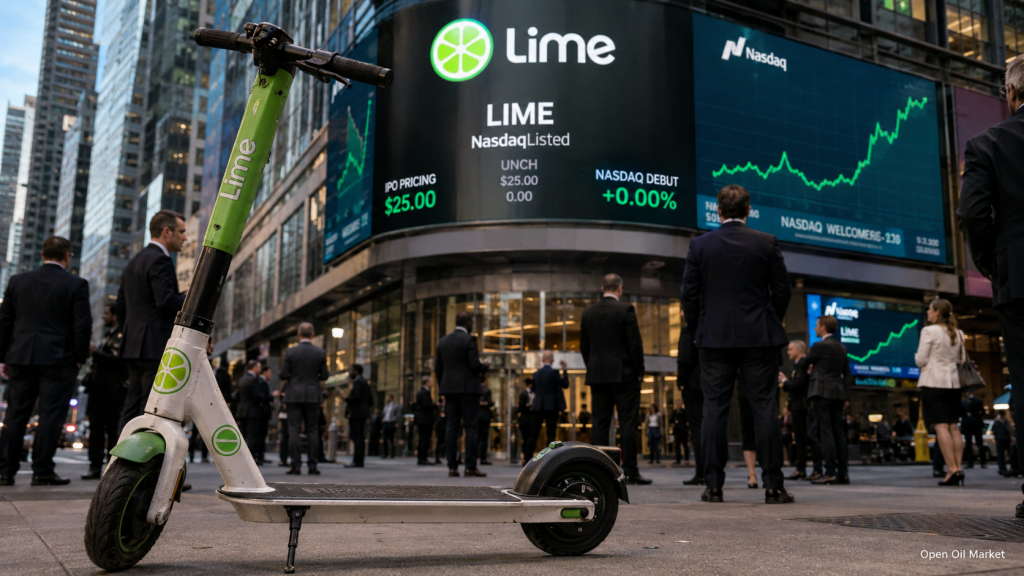
For the venture industry, 2026 is important not just for the volume of investments but also due to the return of major exits. After a period of frozen IPO windows, funds are once again able to demonstrate liquidity rather than merely paper valuation growth. This changes the market psychology: LP investors are more willing to support new funds if they see a real return on capital.
Major IPOs, SPAC deals, and M&A transactions are restoring to the venture ecosystem what it has lacked from 2022 to 2024: proof of exits. However, the market remains selective: public investors are prepared to pay a premium for scale, revenue, technological leadership, and strategic importance, while weak business models are subjected to harsh discounts.
For startups, this means that the path to IPO is once again open, but only for companies with convincing economics. For funds, it suggests that in the upcoming quarters, the role of secondary deals, partial stake sales, and strategic acquisitions will increase.
Asia and Emerging Markets: Fintech, AI, and Local Champions
The Asian market maintains high activity, particularly in fintech, AI services, embedded finance, and corporate SaaS platforms. India, Singapore, Australia, and China continue to establish their own centers of startup growth. In India, there is notable interest in early-stage ventures, AI tools, fintech infrastructure, and companies addressing large local problems—ranging from lending to the automation of business processes.
Fintech remains one of the most resilient categories for venture capital in Asia. The reasoning is straightforward: a large domestic market, high levels of digitization, underserved segments of small businesses, and growing demand for cross-border payments. At the same time, investors are becoming more discerning: growth without unit economics is no longer seen as sufficient grounds for a high valuation.
What Matters to Venture Investors and Funds on July 1, 2026
The venture market enters July with strong momentum but also with increasing risks of overheating. The main task for funds is to separate structural opportunities from the short-term hype surrounding AI. Not every AI startup will become a major company, but infrastructure players that reduce computing costs, enhance security, and accelerate AI integration have a chance to occupy a systemic position in the new technological architecture.
Investors should pay attention to several factors:
- Revenue Quality: long-term corporate contracts are crucial, not just pilot projects.
- Technological Moat: startups must have defensible technology, data, integration, or regulatory barriers.
- Capital Intensity: hardware, chips, and data centers require a different financing model than traditional SaaS.
- Exit Strategy: funds need to foresee potential strategic buyers or public investors.
- Geography: the U.S. remains the center of AI capital, but Europe and Asia are strengthening in deep tech, defense tech, and fintech.
The main takeaway for venture investors is that on July 1, 2026, the startup market remains strong, but it is also more professional and demanding. There is money available, but it is directed towards companies that solve fundamental issues in the AI economy, have access to large clients, and can demonstrate not just growth but also the quality of their business. For funds, this is a time for active selection: the best deals will be in AI infrastructure, defense technologies, corporate automation, fintech, and deep tech, but miscalculation in valuation could cost significantly more than in the previous venture cycle.