Cryptocurrency News for Wednesday, July 1, 2026: Bitcoin Maintains Position Near $60,000 as Investors Monitor ETF Flows, Digital Asset Regulation, and New Competition in the Stablecoin Sector
The cryptocurrency market enters Wednesday, July 1, 2026, in a state of cautious recovery following a volatile June. For global investors, the key intrigue is shifting from merely observing Bitcoin's price to a more complex picture involving outflows from cryptocurrency ETFs, increased regulation in the U.S., the U.K., and Europe, competition in the stablecoin sector, and a reallocation of capital between digital assets, the AI sector, and traditional risk assets.
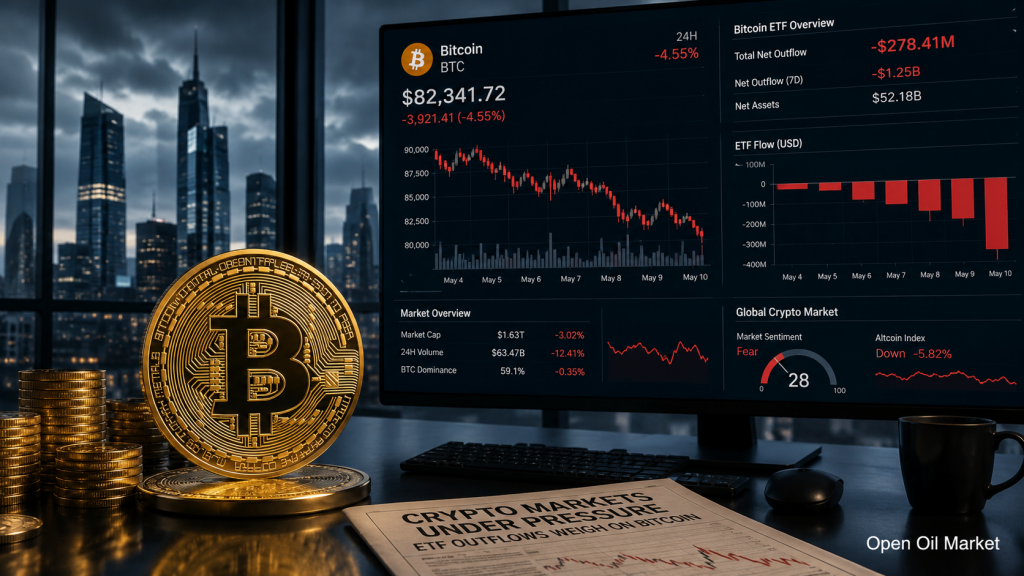
Bitcoin remains the main sentiment indicator. At the time of this report, the leading cryptocurrency is trading near the $58,600–59,000 range, while Ethereum is around $1,570–1,580. The total market capitalization of cryptocurrencies is holding steady at around $2 trillion, with Bitcoin's dominance exceeding 57%. This indicates that investors are maintaining a defensive position within the crypto market, concentrating capital in the largest assets while interest in more speculative tokens remains selective.
Key Topic of the Day: Bitcoin Tests Institutional Demand Resilience
Cryptocurrency news on July 1, 2026, centers around a stress test for Bitcoin. After falling below the psychological level of $60,000, the market is attempting to determine whether this represents a local bottom or the beginning of a prolonged period of reevaluation for digital assets.
Three factors are crucial for investors:
- ETF Dynamics — Outflows from spot Bitcoin ETFs are exerting pressure on prices;
- Interest Rates — The Federal Reserve's tight policy is dampening risk appetite;
- Competition for Capital — Some speculative funds are shifting away from cryptocurrencies towards AI stocks and the semiconductor sector.
Bitcoin is increasingly behaving not as an isolated alternative asset but as an institutional instrument sensitive to liquidity, rates, fund flows, and macroeconomic expectations. This is changing the nature of the market: short-term impulses are more frequently driven not by retail traders but by large funds, market makers, and ETF managers.
Ethereum Under Pressure Yet Retains Strategic Importance
Ethereum greets July in a weak technical position. ETH is trading significantly below last year’s levels, and investors continue to assess the ecosystem's prospects amid declining activity in the DeFi segment and competition from cheaper blockchains.
Nevertheless, Ethereum remains a key infrastructure of the cryptocurrency market. Its significance is defined not only by the price of ETH but also by the network's role in smart contracts, asset tokenization, stablecoins, corporate blockchain solutions, and institutional products. For long-term investors, the question is not whether interest in Ethereum is waning but how quickly the network can regain momentum in fees, applications, and user activity.
Stablecoins Become the Center of Global Competition
The most pressing topic of the day is a new wave of competition in the stablecoin sector. The Open USD initiative, supported by major financial, technology, and cryptocurrency firms, is entering the market. Participants include payment networks, fintech platforms, infrastructure providers, and large technology groups.
This is an important signal for the market: stablecoins are definitively transitioning from a cryptocurrency niche into the infrastructure of global payments. Where USDT and USDC formerly dominated primarily as settlement assets within crypto exchanges, the next stage of development suggests a battle for corporate payments, cross-border transactions, B2B infrastructure, and integration with traditional financial services.
For investors, the stablecoin sector is becoming one of the main areas of observation. Key questions include:
- Can the new standard capture market share from USDT and USDC?
- How will the economics of stablecoin issuers change?
- Which blockchains will benefit from the growth of digital dollar transactions?
- How will regulators monitor reserves, liquidity, and token buybacks?
Cryptocurrency Regulation Intensifies in the U.S., U.K., and Europe
The global cryptocurrency market enters the second half of 2026 in an environment of heightened regulatory scrutiny. In the U.S., regulators are discussing rules for complex ETF products, including cryptocurrency funds, leveraged products, and instruments related to predictive markets. This could impact the pace of new crypto-ETF launches and retail investors' access to riskier strategies.
In the U.K., the final outline of cryptocurrency industry regulation is also becoming stricter. Cryptocurrency companies must prepare for capital requirements, stress tests, risk management, and client protection mandates. For London, this represents an attempt to balance innovation with institutional reliability, but for smaller companies, the new rules may increase the cost of doing business.
In Europe, investors are watching the practical phase of MiCA. Unified rules for crypto assets enhance transparency but simultaneously raise entry barriers for exchanges, custodians, token issuers, and cryptocurrency service providers. For global capital, this creates a new map of jurisdictional risks.
Top 10 Most Popular Cryptocurrencies for Investors
As of July 1, 2026, investor focus remains concentrated on the largest digital assets by market capitalization and liquidity. The top 10 cryptocurrencies are as follows:
- Bitcoin (BTC) — the primary reserve asset of the crypto market and an indicator of institutional demand.
- Ethereum (ETH) — the foundational network for smart contracts, DeFi, NFT infrastructure, and tokenization.
- Tether (USDT) — the largest stablecoin and a key settlement tool on global exchanges.
- BNB (BNB) — a token from the Binance ecosystem, sensitive to exchange activity and regulatory news.
- USD Coin (USDC) — a regulated dollar stablecoin, crucial for institutional transactions.
- XRP (XRP) — an asset associated with cross-border payments and corporate blockchain infrastructure.
- Solana (SOL) — a high-performance blockchain benefiting from interest in fast applications and stablecoins.
- TRON (TRX) — a network with high activity in stablecoin transfers, especially in the USDT segment.
- Hyperliquid (HYPE) — one of the most notable tokens in the new market cycle, linked to derivative infrastructure.
- Dogecoin (DOGE) — a meme cryptocurrency with high recognition and speculative liquidity.
For investors, this list is important not as a buy recommendation but as a liquidity map of the market. The largest cryptocurrencies are the most responsive to changes in rates, regulation, ETF inflows, and news regarding stablecoins.
Solana, TRON, and Infrastructure Networks Benefit from Payment Trends
Against the backdrop of stablecoin developments, the market's infrastructure layer is receiving particular attention. Solana, TRON, and other networks focused on fast and low-cost transactions are becoming direct beneficiaries of the rise in digital payments. For investors, this means that competition among blockchains is increasingly shifting from abstract technological superiority to real transaction volumes, fees, payment scenarios, and business integration.
TRON maintains strong positions in USDT transfers, Solana attracts attention due to its speed and potential support for new stablecoin projects, while Ethereum remains the foundational network for institutional liquidity. The winners in the next phase may not necessarily be the most ideologically robust projects but rather those networks that provide reliable, cost-effective, and scalable infrastructure for digital dollars.
Political Factor: The Crypto Industry Amplifies Its Influence
Cryptocurrencies are increasingly entering the political agenda, especially in the U.S. Major crypto companies, venture funds, and infrastructure players are ramping up spending to support favorable regulation. For the market, this has a dual effect.
On one hand, political influence increases the likelihood of clearer rules for digital assets emerging. On the other hand, it amplifies reputational and regulatory risks, especially if cryptocurrencies begin to be viewed not only as a technological sector but also as a significant lobbying force. For global investors, this indicates that legislative news could become as important a market driver as inflation data or central bank decisions.
What Investors Should Monitor on July 1, 2026
On Wednesday, July 1, investors should closely monitor several market indicators:
- Will Bitcoin maintain its range near $58,000–60,000?
- Will outflows from spot Bitcoin ETFs decrease?
- How will the market respond to the launch of Open USD and its implications for USDC?
- Will pressure on Ethereum and altcoins intensify?
- What signals will come from regulators in the U.S., U.K., and EU?
- Will demand for Solana, TRON, and other payment networks persist?
- Will capital flow back into cryptocurrencies or continue to migrate to the AI sector?
The main takeaway for investors is that the cryptocurrency market in July 2026 is becoming more mature, yet remains no less risky. Bitcoin continues to be the anchor of liquidity, Ethereum serves as the infrastructural bet, stablecoins represent the primary competitive battleground, and regulation is the key factor for evaluation. In such an environment, the advantage goes not to the most aggressive strategies but to a disciplined approach: analyzing liquidity, diversification, risk management, and understanding that digital assets are increasingly intertwined with global financial markets.