Global Cryptocurrency Market April 29, 2026 Analysis of Bitcoin, Ethereum ETFs, Inflows, Impact of the Fed, and Key Trends for Global Crypto Investors
The cryptocurrency market is approaching a cautious consolidation phase as of April 29, 2026. Following a strong recovery in April, Bitcoin has once again captured the attention of investors: the leading cryptocurrency is hovering near a significant psychological zone but has yet to demonstrate a steadfast hold above key resistance. For the global digital asset market, this moment serves as a test: institutional demand is returning via ETFs, stablecoins are becoming part of the traditional financial infrastructure, and the macroeconomic backdrop remains the primary driver of short-term volatility.
For investors, cryptocurrencies today are not merely viewed as speculative assets, but rather as a distinct segment of the global financial market. Bitcoin, Ethereum, Solana, XRP, BNB, stablecoins, and tokenized assets are increasingly dependent on interest rates, liquidity, stock indices, technology company earnings, and regulation. Therefore, cryptocurrency news as of April 29, 2026, must be considered not in isolation, but rather in conjunction with global capital markets.
Bitcoin: The Market Tests the Strength of the $80,000 Zone
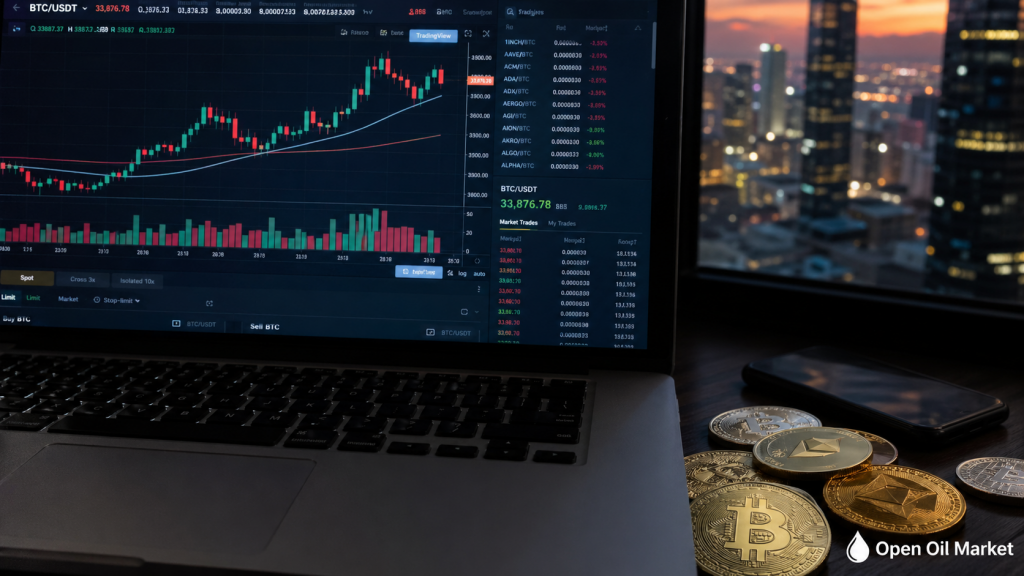
The key focus of the day is Bitcoin's struggle to recover from the spring volatility. In April, the cryptocurrency made a noticeable rebound from local lows, but the move toward the $80,000 zone is currently met with profit-taking. For investors, this indicates that the market has shifted from an impulse growth phase to a demand verification phase.
Key levels are now significant not only for traders but also for long-term market participants. If Bitcoin can secure a position above this psychological resistance, it will bolster expectations for further cryptocurrency growth. Conversely, if buyers fail to maintain momentum, the market may transition to a sideways dynamic with heightened sensitivity to signals from the Fed, ETF inflows, and stock market sentiment.
ETF Inflows Remain the Primary Indicator of Institutional Demand
One of the most crucial signals for the cryptocurrency market is the return of capital to investment products in digital assets. In recent weeks, investors have once again increased their exposure through spot Bitcoin ETFs and other cryptocurrency funds. This indicates that major market participants are not retreating from digital assets but rather using corrections to gradually build positions.
For global investors, ETF inflows carry various implications:
- they confirm demand from institutional capital;
- they enhance liquidity for Bitcoin and Ethereum;
- they make cryptocurrencies more accessible for traditional portfolios;
- they strengthen the connection between digital assets, the stock market, and macroeconomics.
However, ETF inflows alone do not guarantee immediate price growth. The market requires confirmation through volumes, reduced volatility, and sustained demand following short-term pullbacks.
Ethereum: Moderate Recovery and Awaiting New Drivers
Ethereum remains the second key asset in the cryptocurrency market, but its performance appears less aggressive compared to Bitcoin. Investors are assessing not only the price of ETH but also network activity, the development of DeFi, tokenization of real assets, demand for staking, and prospects for Ethereum ETFs.
The primary question for Ethereum in the coming weeks is whether the network can regain its role as the fundamental infrastructure layer for institutional tokenization. Competition from Solana, BNB Chain, TRON, and other blockchains is intensifying, yet Ethereum retains advantages in ecosystem scale, liquidity, and the trust of significant market players.
Stablecoins As a Bridge Between Cryptocurrencies and Wall Street
Investors are placing significant attention on the stablecoin market. USDT and USDC remain crucial liquidity tools in the crypto industry, while traditional financial institutions are increasingly entering reserve infrastructure. The launch of specialized products for managing stablecoin reserves demonstrates that major Wall Street players consider this sector a long-term opportunity.
For the cryptocurrency market, this represents an important structural signal. Stablecoins are no longer merely transactional tools within exchanges and DeFi; they are becoming part of a broader financial system where transparent reserves, short-term government bonds, regulation, and compliance with institutional investors are paramount.
The Top 10 Most Popular Cryptocurrencies for Investors
As of April 29, 2026, global investors remain focused on the largest cryptocurrencies by market capitalization, liquidity, and role in market infrastructure:
- Bitcoin (BTC) - The leading digital asset and indicator of overall market sentiment
- Ethereum (ETH) - The foundational infrastructure for smart contracts, DeFi, and tokenization
- Tether (USDT) - The largest stablecoin and primary liquidity instrument in crypto
- XRP (XRP) - An asset tied to cross-border payments and regulatory developments
- BNB (BNB) - The token of the Binance ecosystem and one of the largest exchange assets
- USD Coin (USDC) - A regulated stablecoin sought after by institutional participants
- Solana (SOL) - A high-performance blockchain with strong activity in DeFi and memecoins
- TRON (TRX) - A network with a high proportion of stablecoin transactions
- Dogecoin (DOGE) - The leading memecoin with significant retail recognition
- Cardano (ADA) - A blockchain platform with a focus on research-driven approaches and proof-of-stake
For investors, it's crucial to recognize that a cryptocurrency's popularity does not equate to investment reliability. Bitcoin and Ethereum remain the most institutionalized assets, stablecoins serve liquidity functions, while altcoins carry higher volatility risks.
Solana, XRP, and Altcoins: Selective Demand Instead of a General Rally
The altcoin market remains heterogeneous. Solana continues to attract interest due to its high throughput, developer activity, and strong position in decentralized trading. XRP remains dependent on news surrounding payment infrastructure, ETF products, and regulatory clarity. BNB maintains its significance as an infrastructural token for a major exchange ecosystem.
However, investors should avoid the illusion of a "general altcoin season." As long as Bitcoin dominates market structure, capital primarily concentrates in the largest and most liquid assets. Altcoins may exhibit sharp local movements, but they require stricter risk management.
Macroeconomics: The Fed's Decision May Set the Market Tone
A key external factor for cryptocurrencies as of April 29 is expectations surrounding monetary policy. The market closely monitors signals from the Fed, bond yield trends, the dollar index, and sentiments in the tech sector. The stricter the rhetoric from the regulator, the more cautious investors become regarding risk assets, including Bitcoin, Ethereum, and altcoins.
Cryptocurrencies are increasingly reactive to the same factors as growth stocks: liquidity, discount rates, inflation expectations, and risk appetite. Thus, the market's next response may hinge not only on cryptocurrency news but also on the overall behavior of the Nasdaq, earnings reports from major tech companies, and comments from central banks.
Risks for Investors: Volatility, Regulation, and Profit-Taking
Despite improved sentiment, the cryptocurrency market remains high-risk. Following a robust recovery in April, some investors may take profits, especially if Bitcoin fails to confidently surpass resistance. Additional risks arise from regulatory delays, potential outflows from ETFs, weakness in tech stocks, and overheated individual altcoins.
Investors should pay close attention to three practical factors:
- whether capital inflow into Bitcoin ETFs and Ethereum products remains steady;
- whether Bitcoin holds key technical levels after pullbacks;
- whether real activity in blockchain networks is growing, not just token prices.
The Cryptocurrency Market Enters a Trust Verification Phase
Cryptocurrency news for Wednesday, April 29, 2026, indicates that the market is in a transitional state. On one hand, Bitcoin has rebounded from a weak start to the year, ETF inflows confirm interest from institutional investors, and stablecoins are becoming integral to the architecture of traditional finance. On the other hand, growth does not yet appear unconditional: the $80,000 zone remains a psychological barrier, macroeconomic risks persist, and altcoins are moving selectively.
For global investors, the main takeaway is as follows: the cryptocurrency market is once again becoming intriguing, yet requires discipline. Bitcoin remains the principal indicator of direction, Ethereum is the key infrastructural bet, stablecoins form the foundation of liquidity, while altcoins offer higher returns and increased risk. In the coming days, decisive factors will include reactions to signals from the Fed, dynamics in ETF inflows, and Bitcoin's ability to secure a position above key resistance levels.