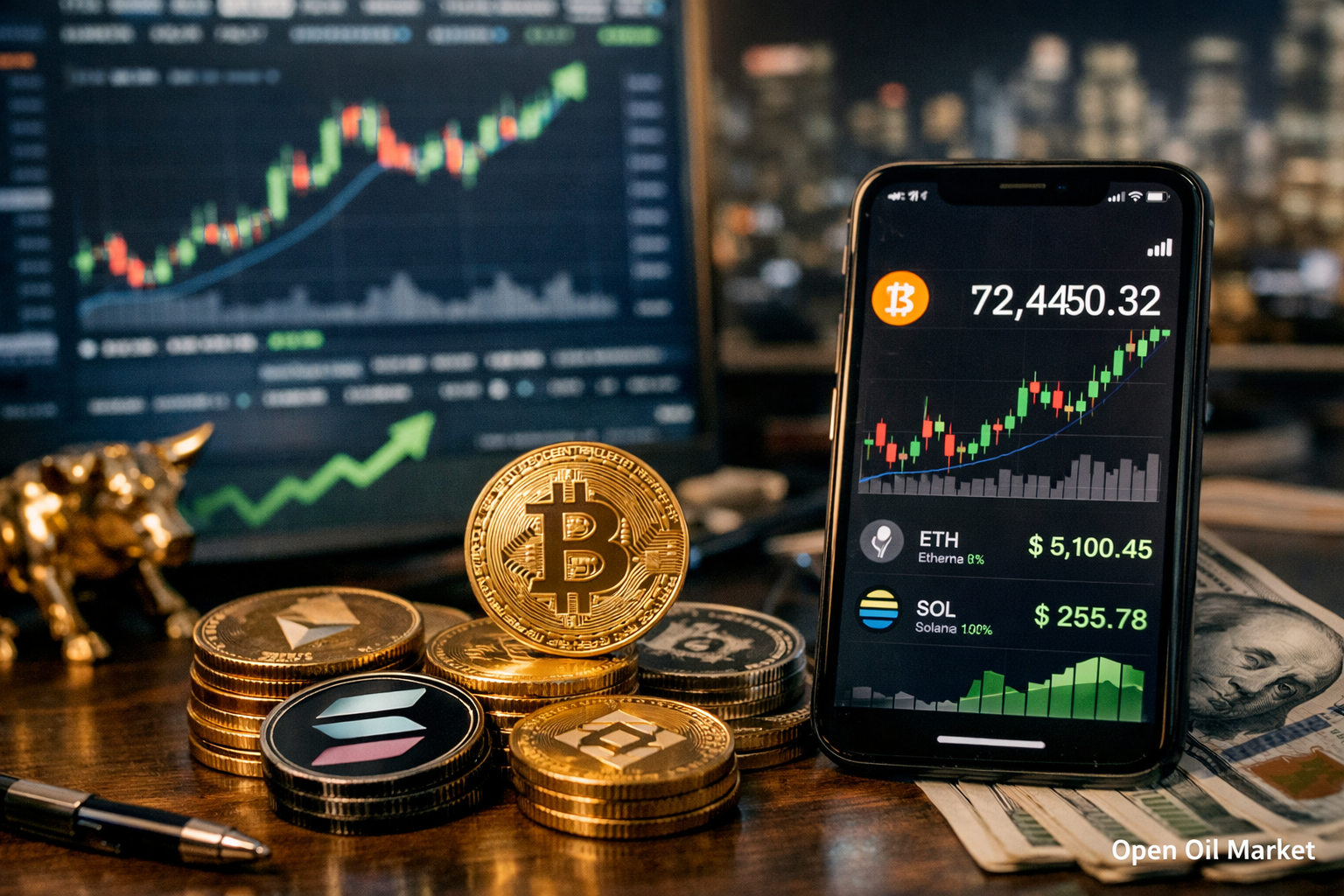
Cryptocurrency News for Saturday, January 31, 2026: Bitcoin Consolidates After Correction, Ethereum and Altcoins Under Pressure, Investor Sentiment and Institutional Trends in the Crypto Market.
By the end of the week, the global cryptocurrency market continues to showcase a persistent correction amidst ongoing macroeconomic uncertainty. Leading digital assets have seen significant price declines: Bitcoin (BTC) is consolidating around the $85,000 mark after recent peaks, while Ethereum (ETH) has dropped below $3,000 (to approximately $2,800). The total market capitalization of cryptocurrencies has decreased to about $2.8 trillion, and the "Fear and Greed Index" has shifted into the "fear" zone, reflecting investor caution. Market participants are assessing how deep the current downturn will be and what factors will influence future price movements.
Bitcoin: Correction After Record Rally
Bitcoin is trading around $85,000 this week, retreating from its historical high achieved earlier in January (approximately $100,000). In recent days, BTC has continued its downward trend, experiencing nearly two weeks of consecutive declines—the longest downturn in over a year. The primary driver of this decline has been a general deterioration in risk appetite across global markets: news of escalating trade relations between the U.S. and Europe (the U.S. ultimatum regarding Greenland with threats of tariffs) triggered sell-offs, further impacting the crypto market. In recent days, margin positions totaling over $2 billion have been liquidated, intensifying the asset's downward movement. Technically, the critical threshold now stands around the $80,000 zone—maintaining this level is crucial to avoid a deeper slump (potentially to around $70,000–75,000, according to some analysts). At this point, BTC continues to show a high correlation with risk assets and is temporarily failing to embody the status of "digital gold": in uncertain conditions, investors prefer to shift to more tangible defensive assets.
Altcoin Market: Widespread Decline
The altcoin market is also facing a broad downturn. Ethereum (ETH), the second-largest cryptocurrency by market capitalization, has decreased by over 3% in the last 24 hours and is holding below $3,000, highlighting altcoins' vulnerability to general market corrections. The overwhelming majority of leading tokens have fallen into the "red zone": over 90 of the top 100 cryptocurrencies have depreciated in recent days. For instance, XRP (the token of Ripple) has dropped to around $1.80 amidst ongoing sell-offs in recent weeks; BNB has dipped to approximately $610 this week, losing about 5% in the last 24 hours; Solana (SOL) has retreated to around $120, despite the fact that the staking share of coins in its network has reached a record ~70%. Many investors are partially converting funds into stablecoins (digital equivalents of the U.S. dollar), which has increased the proportion of such coins in circulation amid market turbulence. In general, the further dynamics of the altcoin sector largely depend on Bitcoin's behavior: if the flagship stabilizes around current levels, the market for alternative coins may find a local bottom and begin to recover.
Top-10 Most Popular Cryptocurrencies
The top 10 largest and most popular cryptocurrencies as of today include the following digital assets:
- Bitcoin (BTC) – the leading cryptocurrency with a dominant market share (about 60% of total capitalization). Current price ~ $85,000; following a strong rally in 2025, Bitcoin is experiencing a correction from historical highs but still confidently holds its first place among digital assets.
- Ethereum (ETH) – the second-largest crypto asset, serving as a foundational platform for smart contracts (decentralized finance, NFTs, and other applications). Current price around $2,800; Ethereum is under pressure following Bitcoin, yet maintains a key role in the industry. Many experts anticipate renewed interest in ETH in 2026 due to further ecosystem development and network upgrades.
- Tether (USDT) – the largest stablecoin pegged to the U.S. dollar (1 USDT ≈ $1). Market capitalization around $80 billion; USDT is widely used by investors to preserve capital during heightened volatility—during periods of uncertainty, funds flow into this digital dollar equivalent, ensuring relative portfolio stability.
- BNB (BNB) – the native token of the Binance ecosystem (the largest cryptocurrency exchange and the BSC blockchain platform). Current price around $620; due to its widespread application on the Binance platform, BNB remains firmly within the top 5, even though it has also declined in recent days amidst the overall negative market sentiment.
- USD Coin (USDC) – the second-largest stablecoin issued by the Centre consortium (fintech company Circle). Fully backed by reserves in U.S. dollars (capitalization around $50–52 billion) and widely used in trading operations and on DeFi platforms, it remains one of the most reliable digital dollars.
- XRP (XRP) – the cryptocurrency associated with the fintech company Ripple (solutions for international payments). Current price is approximately $1.80; following Ripple's high-profile victory over the SEC in 2025, XRP saw significant growth and re-entered the top ten, although the current market correction has partially offset this price increase.
- Solana (SOL) – a rapidly growing blockchain platform focused on high speed and volume of transactions. Current price around $120; Solana remains in the top 10 due to the development of its own DeFi/NFT ecosystem. A record ~70% of all SOL coins are currently engaged in staking, reflecting a high level of community trust in the project.
- Tron (TRX) – a popular platform for smart contracts and digital content in Asia. Current price of TRX is around $0.28; thanks to active use of the Tron network (including for the issuance of stablecoins and for fast transfers with minimal fees), this token sustains its position among the largest cryptocurrencies worldwide.
- Dogecoin (DOGE) – a "meme" cryptocurrency originally created as a joke but gaining widespread popularity. Current price around $0.10; despite its humorous origin, Dogecoin remains one of the most capitalized coins. However, its price is marked by high volatility and substantially depends on community sentiments and activity.
- Cardano (ADA) – a smart contract blockchain platform developing based on academic research and phased protocol updates. ADA is currently trading around $0.32; the project continues its technical development (recent upgrades have enhanced the scalability of the network), allowing Cardano to maintain its position among the leaders in the digital asset market.
Geopolitical and Macroeconomic Risks
External factors continue to exert pressure on cryptocurrencies. An unexpected escalation of trade disputes between the U.S. and Europe has become one of the key triggers for the recent sell-off: at the economic forum in Davos, the U.S. president issued an ultimatum, "Greenland or tariffs," threatening to impose duties, placing transatlantic relations on the brink of a trade war. In response, the European Union expressed readiness to take strict countermeasures, heightening investors' concerns about the global repercussions of the conflict. As a result of this geopolitical noise, market participants have started to exit risk assets (such as stocks and cryptocurrencies) in favor of defensive instruments.
Additional pressure is also created by monetary factors. The yields on U.S. and European government bonds have risen to multiyear highs, signaling potential tightening of financial conditions. Traditional "safe havens" are demonstrating capital inflows: the price of gold has surpassed its historical high, exceeding $4,600 per ounce; similarly, silver is hitting record highs. At the same time, the VIX volatility index has reached its highest level in the last two months, reflecting increased uncertainty in traditional markets. This combination of macro risks has triggered a "risk-off" regime, during which crypto assets temporarily lose their appeal to global investors.
Investor Sentiment and Volatility
Amidst the aforementioned events, market sentiment in the crypto industry has notably deteriorated. The sentiment index (Crypto Fear & Greed Index) remains in the "fear" zone, indicating a predominance of caution among investors. Since the beginning of the week, the total capitalization of the crypto market has decreased by approximately $200 billion, and price volatility has intensified. According to industry analysts, within a single day of sharp price declines, positions worth over $1.7 billion were forcibly liquidated—indicating significant risk reduction and a "cleansing" of the market from excessive leverage. High price fluctuations increase uncertainty, prompting many traders to reduce margin positions in anticipation of stabilization.
Institutional Interest and Adoption
Despite the current volatility, institutional interest in digital assets remains historically high. Major financial organizations continue to view the downturn as an opportunity for long-term investments. Investment funds indicate a net capital inflow into cryptocurrency products in recent weeks, although the pace has slowed. There is also noticeable active adoption of crypto solutions within the traditional financial system: new cryptocurrency ETFs and exchange products are receiving regulatory approval and being launched on major exchanges, expanding investor access to the market. Participation from tech giants and banks in blockchain projects is growing, underscoring institutional confidence in the potential of cryptocurrencies and distributed ledger technology.
Outlook and Predictions
The current correction raises questions for investors regarding the future outlook of the market: will it be a short-term pause within a continuing bullish trend, or does it signal the beginning of a more prolonged decline? Expert opinions are divided. Some analysts view the situation as a healthy correction after rapid growth, expecting that with stabilization in the macroeconomic environment, Bitcoin and leading altcoins will resume growth in the coming months. Some optimistic predictions still anticipate Bitcoin reaching new heights by the end of 2026 (with targets of $150,000–200,000 per BTC), considering the growing recognition of cryptocurrencies globally.
Others caution against potential risks, indicating that increased regulatory pressure or further deterioration in the global economy could prolong the market's consolidation period or even lead to deeper price declines. In the short term, traders are closely monitoring key support levels— for Bitcoin, it is crucial to stay above $75,000–80,000 to maintain recovery potential. Attention is also directed towards external factors: the monetary policies of leading central banks, geopolitical news, and the introduction of new financial products in the crypto market.
Overall, the long-term prospects of the cryptocurrency industry remain positive. Many market participants note that each correction cycle is accompanied by a cleansing of the market from speculative capital and lays the groundwork for a new growth phase. Investors are advised to adhere to a balanced strategy and diversification: the current low price levels may provide opportunities for position entry, but risk management and thorough analysis remain key success factors in the dynamic cryptocurrency market.