Current Cryptocurrency News as of December 2, 2025: Bitcoin and Ethereum Dynamics, Changes in the Top-10 Cryptocurrencies, Institutional Trends, and Market Analysis.
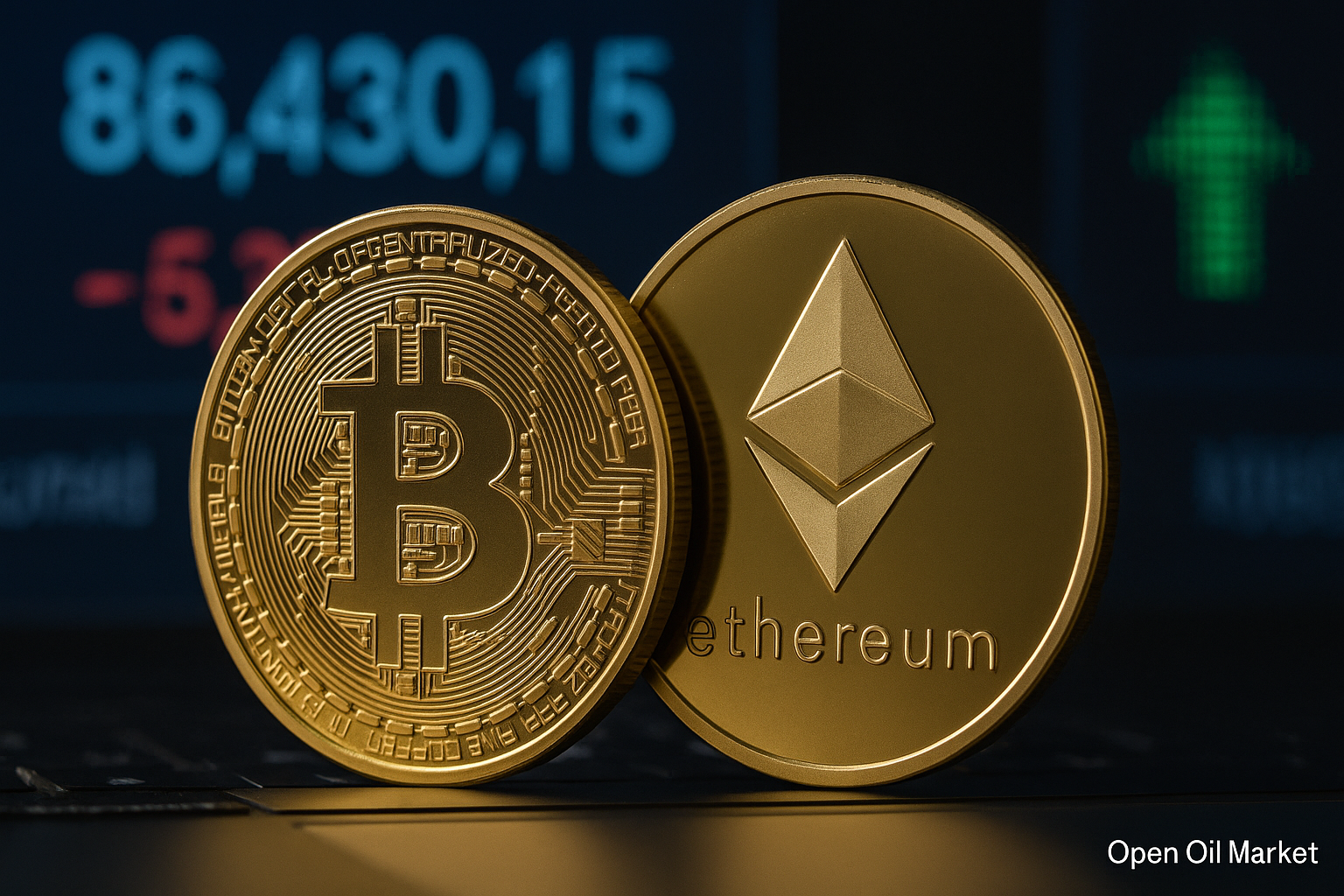
As December begins, global cryptocurrency markets continue to correct after a sharp rise in the fall. Major digital assets are trading in the red: Bitcoin has dropped to around $85–86,000, Ethereum is hovering around $2,800, and many altcoins have lost 4–8% over the past 24 hours. November turned out to be the worst month for Bitcoin since 2021: from a record high of $126,000 in early October, the asset fell by more than $18,000. Such a significant decline, along with general market uncertainty, has created a risk-averse sentiment in the market.
Macroeconomic factors have also intensified the pessimism; for example, the rising yields on Japanese government bonds amid expectations of tightening monetary policy have added pressure on risk assets (including cryptocurrencies). Nonetheless, December is traditionally favorable for BTC (averaging +10% in price), so investors are closely monitoring developments. Bitcoin is currently holding above a key support level of around $80,000, a breach of which could provoke a new wave of sell-offs.
Current Situation: Bitcoin and Ethereum
Bitcoin (BTC) continues to decline, having lost about 5% over the past day. As of Tuesday morning, its price fluctuates in the range of $85–86,000, which is close to November's lows around $80,000. Ethereum (ETH) has fallen by 5–6%, trading around $2,700–2,800, mirroring the bearish market sentiment (in November, ETH dropped nearly 22%, marking its worst monthly performance since February).
Other major altcoins are following the leaders' trajectory: Solana (SOL), Dogecoin (DOGE), and XRP have all dropped by 4–5% at the start of the week, trading at approximately $120, $0.13, and $2, respectively. Binance Coin (BNB) maintains its position around $800, thanks to steady interest in the Binance ecosystem. DeFi tokens (Chainlink, Uniswap, etc.) have also primarily declined in line with the overall sell-off.
DeFi and Security News
Amid the general cryptocurrency sell-off, events in the decentralized finance (DeFi) sector have also impacted the situation. On December 1, Yearn Finance reported an "incident" in the yETH liquidity pool, where an attacker withdrew about 1,000 ETH (around $3 million) through the Tornado Cash mixer. As a result, the protocol suffered a loss of around $9 million, causing a sharp decline in the YFI price. This attack was a significant shock to the market and heightened concerns about the security of DeFi platforms. It is worth noting that last week, the South Korean exchange Upbit suffered a major hack.
Such news leads to additional capital flight: on Monday, long position liquidations in cryptocurrency futures exceeded $400 million, indicating panic selling. These events demonstrate that the infrastructure of the cryptocurrency market remains vulnerable, and negative news is swiftly reflected in prices.
Ethereum: Upcoming Fusaka Upgrade
Against the backdrop of the market decline, there is positive news for the Ethereum ecosystem. The Fusaka upgrade (incorporating changes from Fulu and Osaka) is expected to be activated on the Ethereum blockchain on December 3, 2025. Fusaka includes 12 significant protocol upgrades aimed at enhancing network throughput and reducing fees, especially for layer-2 solutions. A key feature—PeerDAS technology—will allow for verifying only segments of large "blobs" of data instead of full uploads, significantly speeding up verification and reducing node load.
Developers and institutional investors (such as Fidelity) believe that Fusaka will significantly improve Ethereum’s scalability. This could enhance the efficiency of decentralized applications and attract additional interest to the ecosystem. In the short term, the impact on ETH prices may be limited, but in the long term, Fusaka lays the foundation for growth.
Regulation and Global Policy
Market sentiment is largely shaped by regulatory news. In China, the central bank reaffirmed its strict stance on virtual currencies at the last meeting: cryptocurrencies do not have the status of legal tender, and stablecoins can be used for illegal purposes. The regulator pledged to intensify the fight against illegal financial schemes related to virtual assets to "preserve economic stability."
Approaches vary across countries. In the EU, provisions of the MiCA law have already been implemented: it includes protective measures for stablecoins, and regulators are discussing a ban on "multi-issuance" of tokens to prevent the risks of simultaneous mass buyouts. In Japan, on the contrary, talks are underway to ease regulations: authorities plan to reduce taxes on cryptocurrency income and allow banking groups to launch their own cryptocurrency exchanges.
- China: complete ban on cryptocurrency trading and mining, enhanced oversight of stablecoins, and transaction control.
- Europe: current MiCA rules include mechanisms to protect investors from stablecoin risks; a restriction on "multi-issuance" is under discussion to prevent simultaneous mass buyouts of tokens.
- United States: a comprehensive cryptocurrency bill is being prepared (voting scheduled for early 2026) that will clarify the status of digital assets (goods or securities) and strengthen investor protection.
- Japan: measures are being discussed to expand access to the cryptocurrency market—tax incentives and allowing banks to access cryptocurrency services.
Institutional Sentiments and Investments
Interest from large investors in cryptocurrencies has waned: in November, Bitcoin ETFs experienced record outflows—over $3 billion left such funds, and approximately $1.4 billion out of Ethereum. This indicates that institutional investors are unwinding their positions. According to Bloomberg, the total outflow from BTC ETFs for October–November exceeded $4.6 billion, while only a slight inflow (~$70 million) occurred in the last week of November.
Specifically, Strategy Inc (which holds the largest corporate Bitcoin portfolio) has formed a $1.4 billion reserve for future dividend payments, easing concerns about a potential forced sale of its $56 billion hedge fund. However, the majority of institutional players are currently in a wait-and-see position, awaiting signals of stabilization.
- Record outflows from Bitcoin and Ethereum ETFs (several billion dollars in November) reflect reduced interest among institutional investors.
- Major holders (e.g., Strategy Inc) are forming liquidity reserves (safety cushions) to meet obligations, reducing market pressure.
- The inflow of new funds to the market is currently minimal: investors are in a wait-and-see position, focusing on risk management.
Altcoins and Promising Tokens
Among popular altcoins, leaders by market capitalization are primarily showing synchronized movement with Bitcoin and Ethereum. XRP is trading around $2, Solana around $120, Cardano around $0.37, and Polkadot between $4–5. Most "blue chips" (BNB, LINK, DOT, etc.) have declined by 5–8% at the beginning of December. The meme coin Dogecoin is holding at around $0.13, and other meme tokens (Shiba Inu, Floki, etc.) have also decreased amid the overall correction.
Stablecoins play a significant role in the market: Tether (USDT) and USDC are consistently trading around $1 and provide substantial liquidity. They allow investors to quickly move funds to a "safe haven" during high volatility and preserve capital.
New and niche tokens still correlate strongly with the overall trend: DeFi platform tokens and blockchain games have fallen in price, despite upgrade announcements. Recently surging Hyperliquid (HYPE) came under pressure and returned to around $30.
Top 10 Popular Cryptocurrencies
- Bitcoin (BTC) — the first and largest cryptocurrency by market capitalization, often regarded as "digital gold." BTC serves as a benchmark for the entire market.
- Ethereum (ETH) — the second-largest cryptocurrency by market cap, the main platform for smart contracts and decentralized applications (DeFi, NFTs, etc.). A major upgrade named Fusaka is expected in December.
- Tether (USDT) — the largest stablecoin pegged to the US dollar. USDT is used for capital storage and transferring funds between cryptocurrency exchanges.
- Binance Coin (BNB) — the native token of the Binance exchange. It is used to pay fees on the exchange and participates in the Binance ecosystem, including staking and launching new projects.
- XRP — the token of the Ripple network, initially created for fast international payments. XRP is popular due to Ripple's collaboration with banks and financial institutions.
- Solana (SOL) — a high-performance blockchain for smart contracts. Known for fast transaction processing times and low fees, attracting DeFi and NFT projects.
- Cardano (ADA) — a proof-of-stake blockchain focused on scalability and sustainability. ADA is valued for its scientific approach to development and community support.
- Dogecoin (DOGE) — a meme coin created as a joke project that has received widespread community support. DOGE is often used for short-term speculation and internet donations.
- Polkadot (DOT) — a multi-chain platform designed to unite different blockchains. DOT is used to secure the network and vote on the development of the Polkadot ecosystem.
- Avalanche (AVAX) — a blockchain with high throughput and fast consensus. Avalanche competes with Ethereum by offering a platform for creating new DeFi protocols with low fees.
Outlook and Forecasts
Analysts currently note a heightened caution in the market. A key indicator is the $80,000 level for BTC: holding above it may help avoid panic. If Bitcoin breaks this support, further declines are anticipated. Nevertheless, seasonal factors in December are traditionally favorable for cryptocurrencies, so a scenario of moderate stabilization or a rebound by the end of the month remains possible.
Further trends will depend on a combination of factors: monetary policy from central banks, technological innovations, and investor sentiment. Investors are advised to diversify their portfolios and pay close attention to news from regulators and key projects. Announcements of significant upgrades (such as Fusaka for Ethereum) provide some optimism; however, risks remain due to global economic uncertainty and recent incidents. The coming weeks will reveal whether the cryptocurrency market can stabilize and find new momentum for growth.