Cryptocurrency News for Saturday, January 17, 2026: Bitcoin on the Brink of $100,000, Continuing Altcoin Rally, Global Market Trends, Institutional Inflows, Regulation, and Investor Forecasts.
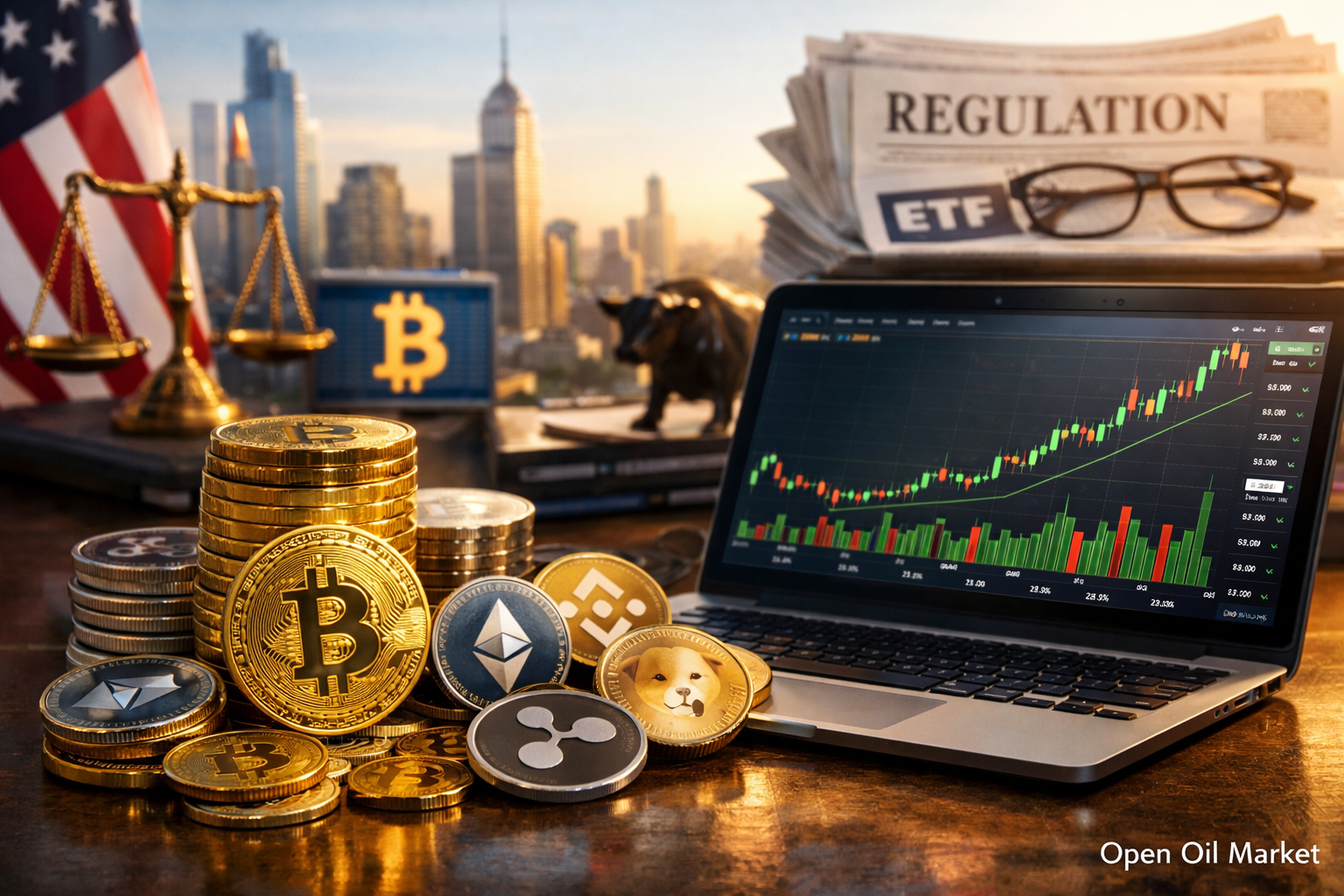
As of the morning of January 17, 2026, the global cryptocurrency market maintains a positive momentum following recent gains. Bitcoin is nearing the psychologically important threshold of $100,000, with its dominant share accounting for approximately 60% of the total capitalization. The total cryptocurrency market capitalization is around $3.25 trillion, reflecting predominantly optimistic investor sentiment.
Favorable macroeconomic conditions (slowing inflation and eased interest rate expectations) and hopes for clearer industry regulation support the current rally of crypto assets. Ethereum remains above $3,300 following a recent network upgrade, while major altcoins continue their upward trajectory alongside the market leader.
Below are the key market indicators as of the morning of January 17:
- The total capitalization of all digital assets is estimated at approximately $3.25 trillion.
- Bitcoin (BTC) is trading in the range of about $95,000–$98,000, approaching the psychological barrier. Bitcoin's share of the total capitalization is approximately 59–60%, reflecting its status as the “digital gold” of the market.
- Ethereum (ETH) remains above $3,300, gaining about 4% over the past week. The market capitalization of Ether exceeds $380 billion (around 12% of the market), confirming its second-place significance.
- The largest altcoins show mixed but predominantly positive dynamics. Coins in the top 10, such as Binance Coin (BNB), XRP, and Solana have gained around 3–5%, while Cardano (ADA) and Dogecoin have seen approximately 6% increases over the past week.
Bitcoin on the Path to $100,000
Bitcoin (BTC) maintains its leadership and acts as the driving force behind the current growth in the cryptocurrency market. In mid-January, its price confidently holds in the upper range of $90,000, nearing $98,000. An increase of about 5% in recent days has strengthened Bitcoin's position following the correction at the end of 2025.
Institutional capital inflows provide additional momentum to the largest cryptocurrency. Analysts estimate that Bitcoin ETF products attracted around $843 million in a single trading session, while total inflows into these funds since the beginning of the year have exceeded $1.5 billion (and some reports indicate they have approached $1.7 billion). Investor confidence is bolstered by corporate purchases: MicroStrategy increased its balance by over 13,600 BTC (around $1.25 billion) in January, capitalizing on the price pullback to build reserves.
Among traders, expectations are rising that the psychological barrier of $100,000 will be surpassed, which could trigger a new phase of the rally. In the short term, the key goal remains to secure the price above this mark; otherwise, Bitcoin may consolidate at current levels before the next attempt at growth.
Ethereum and Leading Altcoins
Ethereum (ETH), the second-largest cryptocurrency by capitalization, strengthens its position following Bitcoin's rise. Earlier in January, a significant technical hard fork (BPO protocol upgrade) occurred within the Ethereum network, aimed at optimizing parameters and enhancing transaction efficiency. Following this upgrade, Ether confidently remains above $3,300 per coin. The active development of Layer-2 solutions and the growth of decentralized finance (DeFi) ecosystems increases investment demand for ETH, with the network's market capitalization approaching $400 billion, affirming Ethereum's status as a key platform for smart contracts.
Leading altcoins, in general, support the market's upward trend. Binance Coin (BNB) and XRP gained around 4–5% over the past week, while Cardano (ADA) and Dogecoin (DOGE) increased by approximately 6-7% in the same period. Additionally, positive news captures investor attention: the launch of the world’s first spot ETF for the Chainlink token (ticker: CLNK) on January 15 increased demand for LINK (its price rose by more than 5% in recent days). The combination of these factors sustains the positive momentum of major alternative cryptocurrencies.
Top 10 Most Popular Cryptocurrencies
- Bitcoin (BTC) — the first and largest cryptocurrency, market leader. Price around $98,000, capitalization over $2.4 trillion.
- Ethereum (ETH) — leading blockchain platform for smart contracts. Value approximately $3,300, market capitalization about $400 billion.
- Tether (USDT) — the largest stablecoin, pegged to the US dollar 1:1. Widely used by traders for transactions on cryptocurrency exchanges.
- Binance Coin (BNB) — the native token of the Binance exchange, providing discounts on fees and participating in ecosystem services. Price around $960, capitalization about $155 billion.
- USD Coin (USDC) — the second-largest stablecoin, backed by the US dollar. Actively used in DeFi and crypto payments.
- XRP (Ripple) — the token of the Ripple payment network for fast international transactions. Price around $2.20, market capitalization ~ $145 billion.
- Solana (SOL) — high-performance blockchain platform for decentralized applications. Price around $150, capitalization approximately $72 billion.
- Cardano (ADA) — next-generation blockchain with a Proof-of-Stake algorithm. Price around $0.44, capitalization around $37 billion.
- Dogecoin (DOGE) — meme cryptocurrency that gained recognition due to community support. Current value approximately $0.16, capitalization ~ $21 billion.
- TRON (TRX) — a blockchain platform focused on the entertainment and content industry. Price around $0.31, market capitalization about $25 billion.
Institutional Investments and ETFs
Institutional interest in cryptocurrencies remains high in early 2026. In mid-January, Bitcoin ETFs are recording record inflows: on certain days, investment volumes reach $800–900 million, and total inflows since the beginning of the year have already exceeded $1.5 billion. Such purchasing scale significantly boosts market confidence: large companies and funds are actively increasing their positions in digital assets.
In addition to investments through funds, interest in direct ownership of cryptocurrencies remains strong. For example, MicroStrategy announced the purchase of approximately 13,600 BTC (around $1.25 billion) during January — a significant acquisition from a publicly traded company. New products aimed at attracting institutional capital are also emerging: on January 15, trading commenced on NYSE Arca for the world’s first spot ETF on the Chainlink token (CLNK), providing investors direct exposure to the LINK cryptocurrency. Analysts believe that the growth of such funds and increased corporate investments create fundamental conditions for further price appreciation in digital assets.
Regulation and Legislation
Regulatory initiatives in the cryptocurrency industry are evolving, which will define the rules of the game in 2026. In the United States, a bill has been introduced that separates oversight between regulators and defines which tokens will be classified as securities and which as commodity assets. It is expected that discussions of this document will help to establish clearer rules for crypto companies in the US market.
Similar steps are being taken in other countries. In Russia, a law is planned that will legalize retail transactions with cryptocurrencies starting in mid-2026, and the European Union is nearing the adoption of the MiCA regulation to integrate digital currencies under the supervision of financial authorities.
Technological Upgrades and Innovations
The technological infrastructure of the cryptocurrency market is continuously improving. The Bitcoin ecosystem has launched the test network "Bitcoin Quantum" — an experimental project that employs post-quantum cryptographic technologies to protect the blockchain from future threats posed by quantum computers. This initiative aims to implement new cryptographic standards resistant to hacking through quantum computing.
In the stablecoin segment, there is a noticeable increase in control and accountability. Issuers are taking proactive measures against abuses: for instance, Tether froze over $180 million USDT on addresses suspected of fraudulent activity. Concurrently, Western Union and Klarna have confirmed the development of regulated stablecoins for international payments. These actions reflect a global trend towards enhanced security and regulatory compliance, which strengthens institutional investors' trust in digital assets.
Global Markets and Macroeconomics
The global macroeconomic environment continues to influence the demand for cryptocurrencies. World stock indices continue to rise, reflecting a resilient appetite for risk. In the US, the Federal Reserve signals a policy easing due to cooling inflation, which supports capital inflows into high-risk assets and weakens the dollar. This prompts some investors to use cryptocurrencies for hedging and diversification, further increasing the capital inflow into the market.
Prospects and Predictions
Experts remain optimistic about the further development of the cryptocurrency market. Increased institutional demand and regulatory progress create fundamental conditions for continued growth. The key benchmark remains the $100,000 mark for Bitcoin: analysts believe that confidently surpassing it could attract new capital inflows and unlock a new phase of growth.
Simultaneously, community participants remind to remain aware of the high volatility. Short-term corrections are still probable, especially with changes in global financial conditions or the emergence of negative news. Among the primary drivers, improved regulatory climate and further integration of crypto assets into the traditional financial system (through new ETFs, central bank digital currencies, and other initiatives) are noted. If events unfold favorably, the medium-term trend will likely remain upward; however, analysts advise investors to adhere to a diversified strategy and employ protective instruments.