Cryptocurrency News for Monday, January 19, 2026: Bitcoin Approaches $100,000, Altcoin Rally, Launch of Crypto ETFs, Top 10 Cryptocurrency Overview, and Key Market Trends for Investors
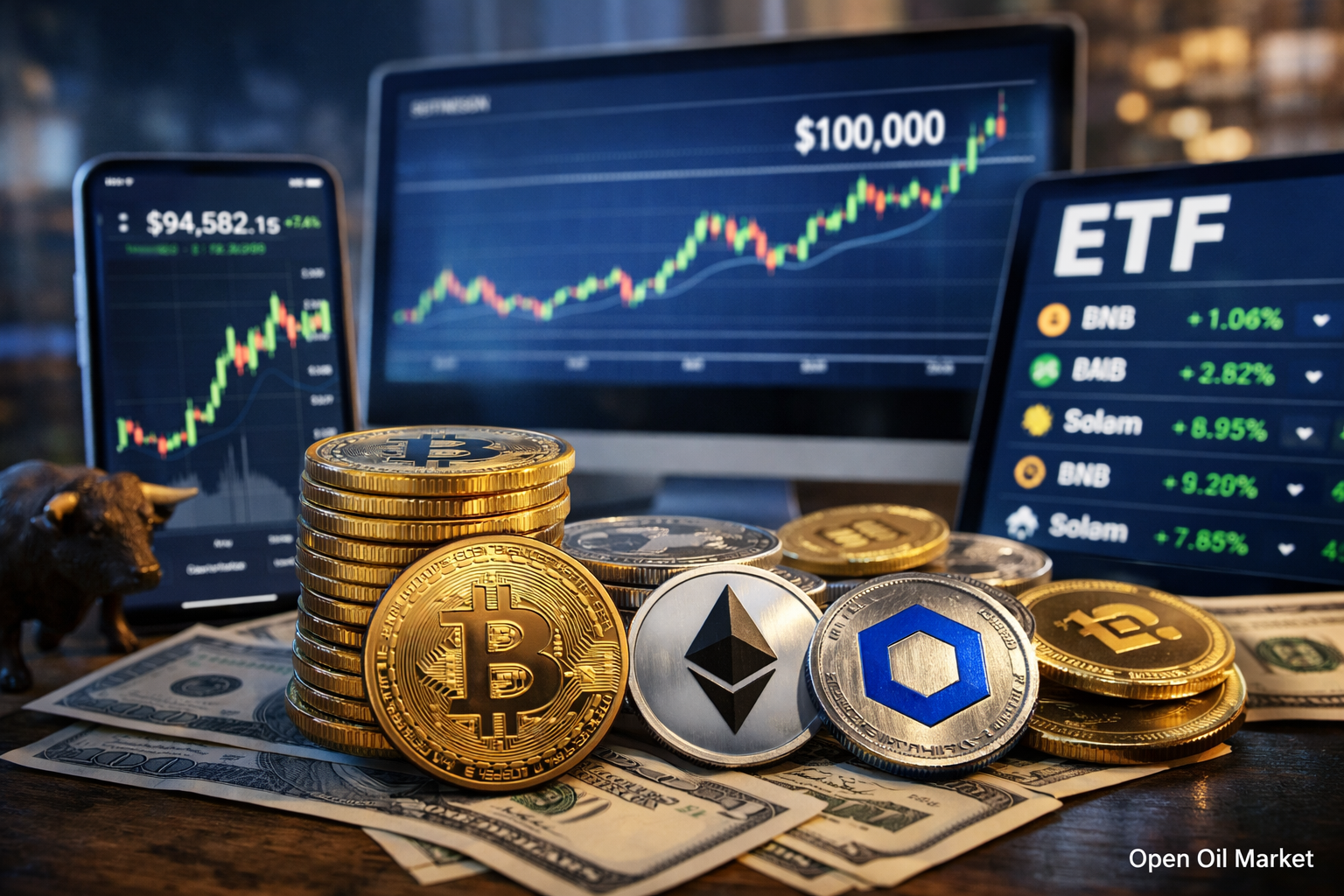
Current cryptocurrency news for Monday, January 19, 2026: the global market is showing growth as Bitcoin approaches the psychological threshold of $100,000. The altcoin rally is fueled by the launch of new ETFs, along with a review of the top 10 cryptocurrencies and key trends for investors worldwide.
Bitcoin: On the Way to a New High
In the second half of January, Bitcoin (BTC) maintains a positive momentum following a volatile end to the previous year. In recent days, the BTC price has surged to levels above $95,000, closing in on this important milestone. As of the morning of January 19, Bitcoin is trading around $94,000, approximately 8% higher than the beginning of the year. Despite the December 2025 downturn (when BTC pulled back from an all-time high of approximately $126,000 recorded in mid-2025), the current recovery signals a return of bullish sentiment to the market.
Analysts note that to confirm a new sustainable upward trend, Bitcoin must surpass the psychologically significant threshold of $100,000 per coin. The nearest technical resistances lie in the $98,000–$100,000 range, while key support zones are assessed at $90,000–$92,000. Increased interest from institutional investors in BTC, along with signs of declining inflation, bolsters optimism around Bitcoin as an asset – it is increasingly referred to as "digital gold" amid global economic uncertainty.
Ethereum: Price Growth and Network Upgrades
Following Bitcoin's lead, Ethereum (ETH), the second-largest cryptocurrency, is also strengthening. As of now, ETH is trading around $3,350, having gained about 10% since the beginning of January. While the price of Ethereum is still below its all-time high (approximately $4,950, reached in August 2025), investor sentiment remains positive due to ongoing developments within the Ethereum network. During the first decade of January, developers successfully activated the "Fusaka" upgrade (BPO-2), which enhanced the blockchain's capacity through increased data volume ("blobs") in each block. This technological improvement reduces fees and enhances scalability, increasing Ethereum's appeal to DeFi developers and users, thereby supporting the fundamental value of the ETH coin in the long run.
Altcoins: Chainlink and Other Growth Leaders
Among the altcoins at the beginning of 2026, Chainlink (LINK) has surged into the ranks of the largest crypto assets. Its price saw a sharp jump (double-digit percentage growth) following the announcement of the launch of the world's first spot ETF based on Chainlink. Key drivers behind the LINK rally include:
- Launch of the Chainlink ETF: On January 15, the first spot ETF linked to Chainlink tokens (ticker CLNK) began trading on the NYSE Arca. This product allows investors to gain direct access to LINK without needing to hold the tokens themselves, significantly increasing interest in the coin from institutional and retail players.
- Increased Use of Oracles: Decentralized oracles in the Chainlink network are in high demand; an increasing number of blockchain projects and large companies are adopting Chainlink solutions for relaying external data (asset prices, events) into smart contracts. The expanding use of the technology strengthens trust in the Chainlink ecosystem and its token.
- Investor Sentiment: LINK has caught the community's attention as a promising altcoin for diversification. Following active discussions in media and social networks after the ETF launch, many investors are considering Chainlink a favorite this season. Additionally, a portion of LINK is now staked or used in DeFi protocols, which reduces the token's supply on exchanges and supports its price.
As a result, Chainlink has shown one of the best performances among major cryptocurrencies in the new year. The rally was not limited to just one coin; several other altcoins also continued to rise. Notably, Binance Coin (BNB) reached an all-time high, surging above $950, indicating strong confidence in the Binance ecosystem. Solana (SOL) strengthened to levels around $145–150 amid a revival of its high-speed network and expectations of the launch of new ETFs for altcoins. Other projects such as Tron (TRX), Cardano (ADA), and the meme token Dogecoin (DOGE) remain in the top ten – while their growth over recent weeks has been more subdued, they retain their positions thanks to active communities and long-term investor faith.
Institutional Interest and New Financial Products
The integration of cryptocurrencies into the global financial sector continues to deepen, as evidenced by the following developments:
- Major Banks Entering the ETF Market: Bank of New York Mellon and Morgan Stanley were among the first global banks to file applications with the SEC for launching cryptocurrency-linked exchange-traded funds (ETFs), including those related to Bitcoin and Solana. These steps enhance the legitimacy of the crypto industry and push competitors to develop similar products.
- Cryptocurrencies in Client Portfolios: Bank of America has officially allowed its financial advisors to include cryptocurrency assets up to 4% in client investment portfolios. This move reflects the recognition of cryptocurrencies as a legitimate asset class within traditional capital management.
- Corporate Reserves: Large publicly traded companies continue to increase their positions in Bitcoin. For example, MicroStrategy – the largest corporate holder of BTC (approximately 687,000 BTC, over 60% of all corporate reserves) – announced a record single-week purchase of 13,627 BTC at the beginning of January. Such activity from corporate investors highlights sustained long-term confidence in Bitcoin’s potential.
- Payment Systems and Stablecoins: Visa reported a 525% increase in spending through its cryptocurrency cards in 2025. Payment networks are expanding support for transactions in stablecoins across various blockchains, reflecting the growing integration of digital assets into the global payment infrastructure.
Cryptocurrency Regulation: A Global Overview
Active discussions continue regarding the legal status of cryptocurrencies and the establishment of unified market rules in many countries:
- Russia: Russian legislators are preparing a bill that will bring digital assets out of the "special regulation" regime and equate them with standard financial instruments. The initiative proposes to allow non-qualified investors to purchase cryptocurrency for amounts up to 300,000 rubles per month, and officially recognize cryptocurrencies as a means of payment. This bill is anticipated to be one of the key issues for the spring parliamentary session.
- USA: In the United States, discussions regarding comprehensive cryptocurrency market regulation are progressing slowly. The Senate has temporarily suspended hearings on the corresponding bill, pointing to the need for further regulatory measures. The delay in implementing clear regulations introduces uncertainty for market participants; however, regulators continue to study the experiences of other countries.
- Other Regions: The European Union’s comprehensive regulation MiCA (Markets in Crypto-Assets) is coming into force, establishing unified requirements for crypto-assets and increasing transparency in the industry for institutional investors. Concurrently, several Asian countries (e.g., Singapore, Hong Kong) and Middle Eastern states are easing regulations for crypto platforms and investors in an effort to attract fintech businesses. Collectively, these global regulatory shifts are creating a more favorable environment for the development of the crypto industry.
Top 10 Most Popular Cryptocurrencies
- Bitcoin (BTC) – the first and most well-known cryptocurrency in the world, possessing the largest market capitalization. BTC is often seen by investors as "digital gold" – a store of value and a hedge against inflation and geopolitical risks. Bitcoin has a capped supply, which supports its scarcity, and has gained widespread recognition among both institutional and retail investors in recent years.
- Ethereum (ETH) – the second-largest cryptocurrency and a leading platform for smart contracts and decentralized applications (DeFi, NFTs, etc.). The Ethereum blockchain supports thousands of protocols, including DeFi exchanges, lending services, and gaming platforms. Ongoing technical upgrades (transition to Proof-of-Stake, network scalability) and an active developer community make Ethereum a key driver of growth in the entire crypto industry.
- Binance Coin (BNB) – the native token of the largest cryptocurrency exchange, Binance. BNB is used to pay for fees on the exchange, participate in token sales, and for applications on the Binance Smart Chain. Due to its widespread application within the Binance ecosystem and a mechanism for regular token burns, BNB maintains high demand and ranks among the most valuable crypto assets.
- Ripple (XRP) – the token of the Ripple payment network, designed for fast and inexpensive cross-border transfers. XRP enables financial institutions to instantly exchange currencies worldwide and is already integrated into products by several banks. Despite some regulatory disputes in the past, the Ripple ecosystem is expanding, and XRP remains one of the largest and most liquid cryptocurrencies.
- Solana (SOL) – a high-speed blockchain capable of processing thousands of transactions per second at minimal fees. SOL has proven popular as a platform for NFT marketplaces, decentralized finance, and gaming applications, thanks to the scalability of its network. Investors are showing interest in Solana as one of the main competitors to Ethereum in the smart contract segment.
- Dogecoin (DOGE) – the well-known “meme cryptocurrency” created as a joke but has gained immense popularity. DOGE is actively used for micropayments and internet tipping, drawing attention due to the support of prominent entrepreneurs and community enthusiasm. While Dogecoin exhibits high volatility and lacks a fixed coin supply, it remains firmly in the top rankings due to its cult status and widespread adoption.
- Cardano (ADA) – a next-generation blockchain platform based on a Proof-of-Stake algorithm and a scientific approach to development. The Cardano project aims to provide high scalability, security, and energy efficiency for decentralized applications. The ADA cryptocurrency attracts investors due to ongoing development (gradual implementation of smart contracts, Hydra network upgrade) and its reputation as one of the most technologically advanced platforms.
- Polkadot (DOT) – a multi-chain protocol that allows different blockchains to unite into a single ecosystem. DOT facilitates data and asset transfer between unrelated networks through so-called “parachains,” expanding interoperability possibilities for various projects. The idea of interoperability embedded in Polkadot makes it one of the critical projects in the development of Web3 and cross-chain solutions.
- Avalanche (AVAX) – a blockchain platform focusing on high transaction speed and architectural flexibility. Avalanche allows the creation of custom subnets (subnets) and blockchains tailored to specific tasks, attracting DeFi projects and corporate users. The AVAX token is used to pay fees and maintain network operations, while the platform competes with Ethereum and Solana due to its scalability and low latency.
- Chainlink (LINK) – a decentralized network of oracles that connects blockchains with external data and events. LINK serves as the payment method within the oracle ecosystem: through Chainlink, smart contracts can access real-time data about prices, weather, match results, and more. In early 2026, the first spot ETF based on Chainlink was launched – this fact has intensified investor interest in the coin, emphasizing the importance of reliable oracles for the future of DeFi and traditional finance.
Macroeconomic Background
External macroeconomic conditions at the beginning of 2026 exert a mixed influence on the cryptocurrency market. On one hand, major central banks signal a shift toward a more accommodative monetary policy. In December 2025, the U.S. Federal Reserve lowered its key interest rate for the first time in several years – this decision prompted a rally in the stock markets. A loosening of monetary policy traditionally enhances the attractiveness of risk assets, including cryptocurrencies, as it reduces the cost of capital and encourages investors to seek higher returns.
However, there are also restraining factors. By the end of 2025, gold reached a record price (approximately $4,300 per ounce) amid geopolitical tensions, indicating a capital outflow into "safe havens." Additionally, although interest rates have begun to decline, they remain relatively high compared to pre-crisis levels – this limits the influx of new funds into high-risk assets like cryptocurrencies. Thus, some investors are increasing their holdings in digital assets in anticipation of further easing conditions, while others continue to adopt a conservative strategy, investing in protective instruments.
Market Prospects
The start of 2026 inspires cautious optimism among market participants. Many analysts believe that the cryptocurrency market experienced a phase of deep correction ("bottom") toward the end of 2025, and a recovery period is likely ahead. Increasing institutional investments, the emergence of new financial products (including ETFs for altcoins), and the easing of monetary policy create the foundations for further growth of digital assets.
If positive trends persist, Bitcoin and leading altcoins could eventually return to their historical peak values, and potentially exceed them. Key levels monitored by market participants are around $100,000 for BTC and the $4,000–$5,000 range for ETH. Experts believe that a confident breakthrough of these thresholds will pave the way for the next phase of the cryptocurrency market rally. Nonetheless, rapid advancement does not preclude risks: tightening geopolitical situations, new waves of inflation, or unforeseen regulatory decisions could dampen investor enthusiasm and trigger increased volatility.
Overall, the industry enters 2026 with a more developed infrastructure and support from major players in the financial market. In the absence of significant upheavals, cryptocurrencies have a chance for a successful year. However, the high volatility necessitates a measured approach: investors are advised to diversify their portfolios and focus on long-term fundamental factors while maintaining discipline and vigilance in the dynamic world of digital assets.