Cryptocurrency Market Approaches June with Caution: Investors Assess Bitcoin, Ethereum, Stablecoins, and Launch of Regulated Perpetual Futures in the U.S.
The cryptocurrency market begins Monday, June 1, 2026, without a clear unified momentum. Following a volatile second half of May, Bitcoin and Ethereum remain under pressure, and investors are more closely monitoring not only price movements but also structural changes in the market: flows into spot ETFs, the development of stablecoins, regulation of digital assets in the U.S. and Europe, and a renewed interest in crypto derivatives.
The main topic of the day is the divergence between the weak dynamics of the largest cryptocurrencies and the ongoing institutionalization of the industry. On one side, Bitcoin is trading in the vicinity of the $73,000–$74,000 range, Ethereum is holding around the psychological level of $2,000, while several major altcoins display weak weekly performance. On the other side, the launch of regulated perpetual futures in the U.S., discussions regarding digital asset legislation, and the growing prominence of stablecoins confirm that cryptocurrencies remain in focus within the global financial markets.
Bitcoin Remains Key Indicator of Risk in the Crypto Market
Bitcoin retains its status as the key benchmark for the entire digital asset market at the start of June. After a decline from spring's higher levels, investors are evaluating whether the current consolidation is a temporary pause or the beginning of a more prolonged cooling off. For institutional participants, three factors are crucial:
- the dynamics of flows into spot Bitcoin ETFs;
- the behavior of long-term holders and the volume of coins on exchanges;
- the correlation of Bitcoin with global risk appetite, stock indices, and dollar liquidity.
Bitcoin’s weakness is particularly evident given that the U.S. stock market showed resilience at the end of May. This suggests that cryptocurrencies have temporarily stopped automatically following the general risk-on sentiment. For investors, this is an important signal: the cryptocurrency market has become more selective, and short-term dynamics are increasingly dependent on its own drivers—ETFs, derivatives, regulation, and liquidity.
Ethereum Holds Crucial Level, Market Awaits New Drivers
Ethereum remains the second most significant cryptocurrency and the foundational infrastructure for DeFi, tokenization, NFTs, stablecoins, and smart contracts. However, at the start of June, ETH is also under pressure. The level around $2,000 is perceived by the market as a psychological boundary: holding above it supports a moderately neutral scenario, while a stable drop below could heighten caution amongst altcoins.
For Ethereum, the key question is whether the network can reclaim its status as the primary beneficiary of institutional interest in blockchain infrastructure. In 2026, competition from Solana, TRON, BNB Chain, and specialized solutions is intensifying. Nevertheless, Ethereum retains strong positions due to:
- the largest developer ecosystem;
- deep liquidity in DeFi;
- widespread use of stablecoins;
- institutional perception as the foundational blockchain for asset tokenization.
Top 10 Cryptocurrencies: Investors Look Beyond Bitcoin and Ethereum
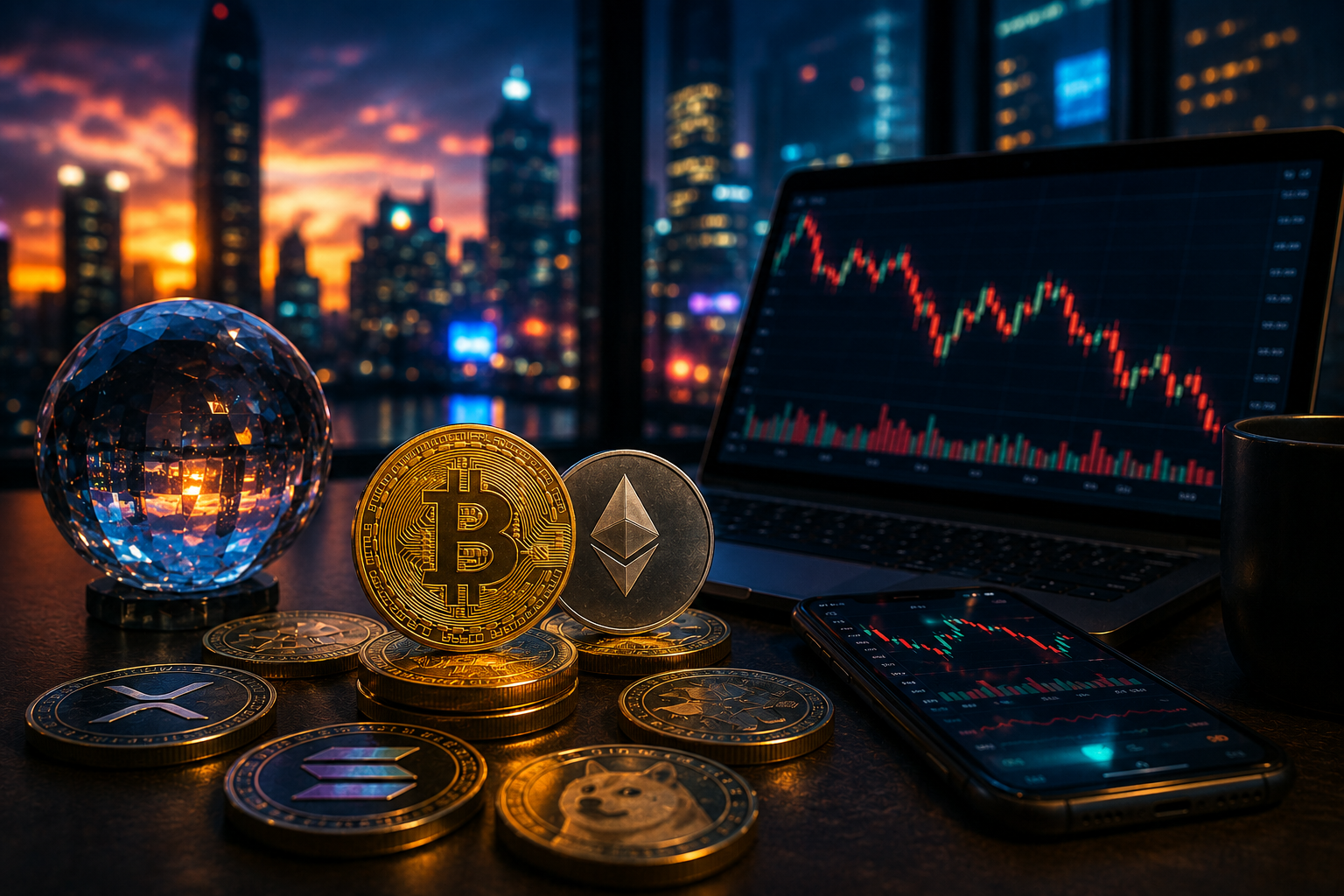
The focus of the global market remains on the top 10 most popular cryptocurrencies by market capitalization, liquidity, and significance for investors. As of early June, this list includes Bitcoin, Ethereum, Tether, BNB, XRP, USDC, Solana, TRON, Hyperliquid, and Dogecoin. Each of these cryptocurrencies reflects a distinct segment of the digital economy.
- Bitcoin — digital gold and the primary asset for institutional portfolios.
- Ethereum — infrastructure for smart contracts, DeFi, and tokenization.
- Tether — the largest stablecoin and the main unit of account in the crypto market.
- BNB — token of the exchange and blockchain ecosystem of Binance.
- XRP — asset oriented towards cross-border payments.
- USDC — regulated dollar stablecoin favored by institutional participants.
- Solana — high-performance blockchain for DeFi, meme coins, and consumer applications.
- TRON — network with strong positions in stablecoin transfers.
- Hyperliquid — a representative of the new generation of on-chain derivatives.
- Dogecoin — meme cryptocurrency with high recognizability and speculative liquidity.
For investors, it is important to note that the top 10 cryptocurrencies are no longer a homogeneous list. It simultaneously features defensive assets, infrastructure blockchains, stablecoins, exchange tokens, payment solutions, and speculative instruments. This maturation of the cryptocurrency market also complicates analysis.
ETF Flows Remain Key Short-term Factor for Bitcoin
One of the main sources of pressure on Bitcoin has been outflows from spot cryptocurrency ETFs at the end of May. Following a period of active institutional demand, investors began to take profits and reduce exposure. This does not indicate a withdrawal of major players from cryptocurrencies as an asset class, but rather a sign of more cautious positioning.
The market is now closely monitoring not only the overall assets under management in ETFs but also daily net inflows or outflows. If outflows continue at the beginning of June, Bitcoin may remain within a sideways range. Conversely, if ETFs show sustained inflows again, this will signal a recovery in institutional demand.
Regulated Perpetual Futures in the U.S. Reshape Market Structure
An important event for the crypto market has been the opening of access to regulated perpetual futures for American investors through domestic platforms. Perpetual futures are perpetual contracts that allow trading price directions without owning the underlying asset. Previously, significant trading activity in this space occurred on offshore platforms.
This event has dual implications for the market. On one hand, the regulated infrastructure increases transparency and may attract professional participants. On the other hand, high-leverage derivatives increase the risk of liquidations and short-term volatility. For retail investors, this is a crucial caution: an increase in the availability of instruments does not imply a reduction in risk.
Stablecoins Become Arena for Competition Among Banks, Fintech, and Crypto Companies
Stablecoins remain one of the most practical segments of the cryptocurrency market. Tether and USDC are used for payments, trading, liquidity storage, and cross-border transfers. In 2026, attention on stablecoins has intensified due to regulation, rising competition, and interest from the banking sector.
The key trend is the competition among three models of digital money:
- private stablecoins backed by fiat reserves;
- tokenized bank deposits;
- central bank digital currencies.
For investors, this means that stablecoins can no longer be viewed solely as a technical tool for crypto exchanges. They are becoming part of the global competition in payments, banking transactions, and the international financial infrastructure.
Altcoins: The Market Has Become More Selective
Altcoins enter June without unified dynamics. Solana, XRP, TRON, BNB, Dogecoin, and Hyperliquid are reacting to different factors: developer activity, trading volumes, regulatory news, demand for DeFi, and interest in on-chain derivatives. This distinguishes the current cycle from previous periods, where a rise in Bitcoin automatically triggered a widespread rally across the market.
Investors are now evaluating altcoins based on several practical criteria:
- the presence of genuine user demand;
- the size of the ecosystem and liquidity;
- network stability and security;
- regulatory risks;
- dependence on speculative capital.
Against this backdrop, projects with a clear infrastructural role appear stronger than tokens whose growth relies solely on short-term hype.
Key Considerations for Investors on June 1, 2026
Monday may be an important day for gauging sentiment in the crypto market following a volatile end to May. Investors should monitor several indicators:
- Bitcoin ETF — will net inflows return or will outflows continue?
- Bitcoin Level Around $73,000–$74,000 — will the market hold above this range?
- Ethereum Around $2,000 — will ETH retain its status as the anchor asset for altcoins?
- Stablecoin Dynamics — will the growth in their role in global transactions continue?
- Derivatives — will the launch of regulated perpetual futures lead to increased liquidity or a new wave of volatility?
Cryptocurrencies Enter Summer Without Euphoria but with Growing Institutional Base
The cryptocurrency market on June 1, 2026, appears more mature but less emotionally charged than during sharp rallies. Bitcoin and Ethereum remain under pressure, ETF flows require careful monitoring, and altcoins are traded selectively. Meanwhile, the fundamental infrastructure of the market continues to evolve: the U.S. is expanding regulated access to derivatives, stablecoins are becoming part of the global financial agenda, and blockchain projects are competing for real-use cases.
For investors, the main takeaway is that the cryptocurrency market is no longer a single speculative asset. Distinct classes are forming within it: Bitcoin as a reserve digital asset, Ethereum and Solana as technological infrastructure, Tether and USDC as payment tools, BNB and TRON as ecosystem solutions, and Hyperliquid and Dogecoin as representatives of the more risky segments. Thus, the strategy for June should be based not on expecting a general increase but on analyzing liquidity, regulation, real demand, and the resilience of each asset.