Current Cryptocurrency News for Saturday, June 20, 2026: Bitcoin Under Pressure from the Fed, Investor Caution, ETF Flows, Stablecoins, Ethereum, Altcoins, and the Top 10 Popular Cryptocurrencies
The cryptocurrency market approaches Saturday, June 20, 2026, with a cautious outlook. Following a brief recovery, Bitcoin and the largest altcoins have once again come under pressure due to a global decline in risk appetite, firm signals from the U.S. Federal Reserve, and weak institutional flows. For investors, this is not merely another volatile session: the digital asset market increasingly relies on macroeconomic conditions, liquidity, ETF products, stablecoins, and regulation.
The key theme of the day is the resilience check for the crypto market after a period of uncertainty. Bitcoin remains the key indicator of sentiment, Ethereum shows sensitivity to capital flows, while altcoins react more strongly due to lower liquidity. On the global cryptocurrency market, investors are increasingly assessing not only the price of tokens but also the quality of infrastructure, regulation, real-world use cases for blockchain, and the role of digital assets in global portfolios.
The Main Picture of the Day: The Crypto Market Remains in the Caution Zone
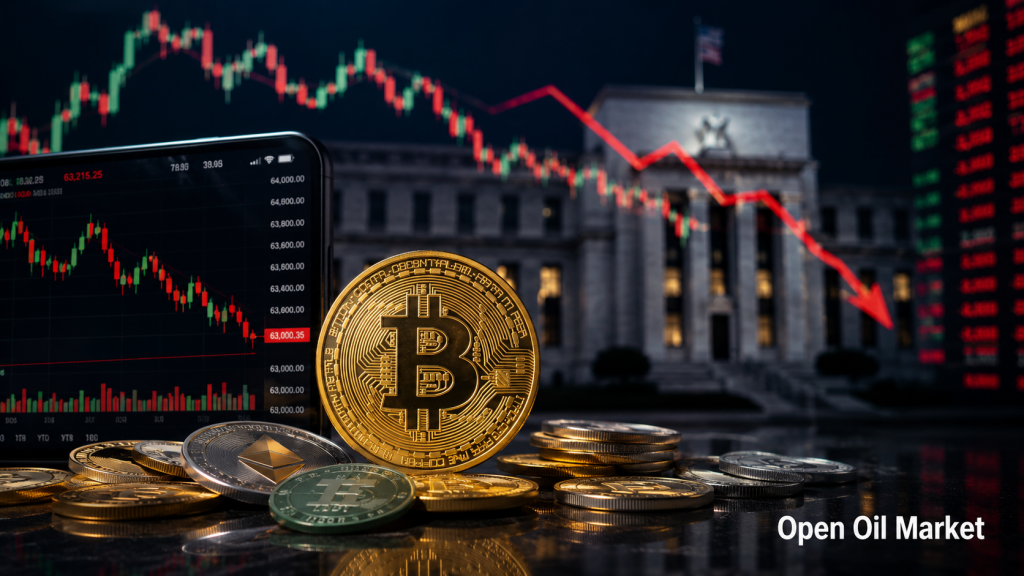
Cryptocurrency news for June 20, 2026, revolves around three factors: U.S. monetary policy, ETF dynamics, and the state of demand for risky assets. Following the Fed's meeting, the market received indications that the period of high rates may extend longer than traders anticipated. For cryptocurrencies, this is a significant factor as Bitcoin, Ethereum, and altcoins compete for capital with bonds, money markets, and tech stocks.
On a global scale, investors are acting selectively. The focus remains on:
- Bitcoin as the primary indicator of demand for digital assets;
- Ethereum as the foundational infrastructure for DeFi, tokenization, and stablecoins;
- ETF flows as a measure of institutional interest;
- Stablecoins as a bridge between traditional finance and blockchain;
- Regulatory measures in the U.S., Europe, and Asia as a factor for long-term trust.
Bitcoin: The Market Tests the Lower Bound of the Range
Bitcoin remains the main asset of the cryptocurrency market, but its momentum now resembles that of a high-risk macro asset rather than an independent safe-haven tool. Pressure intensifies amid a strengthening dollar, expectations of a more stringent Fed policy, and caution among institutional investors. For market participants, this means that the coming days could be marked by a struggle between long-term buyers and short-term sellers.
It's important for investors to note that Bitcoin is increasingly moving in sync with global risk assets. If stock indices and the tech sector remain under pressure, cryptocurrencies typically react more sharply. Nevertheless, Bitcoin's long-term investment logic remains tied to its limited supply, the development of ETF infrastructure, and its use as an element of alternative portfolios.
Ethereum and Infrastructure Tokens: Attention to Real Network Use
Ethereum retains its status as the key platform for smart contracts, DeFi, asset tokenization, and the issuance of stablecoins. However, in a weak market, investors are scrutinizing not only the technological potential but also real transaction fees, user activity, transaction volumes, and competition from other networks.
For Ethereum, the key question is whether the network can maintain its leadership in institutional infrastructure. The tokenization of funds, settlements, bonds, equities, and monetary instruments generates long-term demand for blockchain platforms. However, in the short term, ETH remains sensitive to overall liquidity, ETF flows, and sentiment surrounding altcoins.
Top 10 Most Popular Cryptocurrencies for Investors to Watch
As of June 20, 2026, the global list of the most popular cryptocurrencies by market capitalization, liquidity, and institutional attention includes the following:
- Bitcoin (BTC) — the main digital asset and indicator of the entire crypto market.
- Ethereum (ETH) — the foundational network for smart contracts, DeFi, and tokenization.
- Tether (USDT) — the largest stablecoin and primary instrument for dollar liquidity on exchanges.
- BNB (BNB) — the token of the Binance ecosystem and BNB Chain.
- USD Coin (USDC) — a regulated dollar stablecoin, important for institutional settlements.
- XRP (XRP) — an asset linked to payment infrastructure and cross-border transfers.
- Solana (SOL) — a high-performance network for applications, DeFi, payments, and user services.
- TRON (TRX) — a blockchain with a significant role in stablecoin turnover.
- Dogecoin (DOGE) — the largest meme token, sensitive to retail demand and market sentiment.
- Cardano (ADA) — a blockchain platform focused on sustainable development and an academic approach to technology.
For investors, this list should not be seen as a recommendation to buy. It shows which digital assets remain at the forefront of global attention and most often dictate market sentiment in the cryptocurrency sector.
ETF Flows: The Primary Indicator of Institutional Demand
Bitcoin and Ethereum ETFs remain the key channel for institutional capital entering cryptocurrencies. When funds experience stable inflows, the market receives confirmation of demand from major investors. Conversely, when outflows occur, the crypto market quickly shifts into a defensive mode.
Investors are currently monitoring whether Bitcoin ETFs and Ethereum ETFs can restore sustainable momentum following a period of weak flows. For the market, this is more critical than short-term news, as ETFs have become one of the main mechanisms for demand formation. If inflows return, Bitcoin may receive support. Conversely, if outflows continue, pressure on digital assets will persist.
Stablecoins: The Center of New Financial Infrastructure
Stablecoins are emerging as one of the most important topics in the cryptocurrency market in 2026. USDT and USDC are used not only for cryptocurrency trading but also as tools for settlements, international transfers, DeFi operations, and corporate liquidity. For the global market, this indicates a gradual convergence of blockchain infrastructure with the traditional financial system.
Investors should focus not only on the volume of stablecoin issuance but also on the quality of reserves, issuer regulation, transparency of reporting, and resilience to stress scenarios. The more actively stablecoins are integrated into payments and settlements, the higher the reliability requirements for this segment. In the long term, stablecoins could become one of the main drivers of widespread digital asset adoption.
Regulation and Tokenization: The Crypto Market Moves Towards Wall Street
One of the most critical topics for the global market is the potential expansion of the tokenization of traditional assets. This refers to the digital representation of shares, funds, bonds, and other financial instruments on the blockchain. For the crypto industry, this could signify a new stage of development: moving from a speculative token market to an infrastructure for global finance.
The U.S. remains a key jurisdiction for crypto regulation. Clearer rules for stablecoins, exchanges, brokers, custodians, and tokenized assets could enhance trust among institutional investors. Europe continues to develop regulations for digital assets through its own standards, while Asia competes for the role of a center for cryptocurrency liquidity and blockchain innovations.
Altcoins: High Volatility and Selective Resilience
Altcoins remain the most sensitive part of the crypto market. In periods of declining liquidity, they typically fall faster than Bitcoin, but they can also exhibit sharper rebounds when risk appetite recovers. Investors should differentiate between altcoins based on quality: infrastructure projects, payment networks, exchange tokens, meme tokens, and experimental DeFi assets have varying risk profiles.
The most resilient projects tend to possess:
- real user activity;
- a stable ecosystem of developers;
- liquidity on major exchanges;
- transparent tokenomics;
- an understandable role in the infrastructure of digital assets.
What Investors Should Pay Attention to on June 20, 2026
For investors, Saturday, June 20, 2026, becomes a day of risk assessment rather than aggressive growth. Cryptocurrencies remain in focus, but the market demands discipline and a cautious approach. The key signals for the coming days will be the Fed's rhetoric, dollar dynamics, ETF flows, activity in stablecoins, and Bitcoin's behavior relative to major altcoins.
Key benchmarks for investors:
- Monitor demand for Bitcoin through ETFs and derivatives;
- Evaluate Ethereum based on network activity and institutional products;
- Do not view short-term altcoin gains as confirmation of a market turnaround;
- Consider the influence of the Fed and global liquidity on cryptocurrencies;
- Differentiate between speculative tokens and infrastructure digital assets.
The crypto market on June 20, 2026, remains a market of opportunities, but only for those investors who are skilled in risk management. Bitcoin retains its status as the primary benchmark, Ethereum as the infrastructural nucleus, and stablecoins as the connecting element between blockchain and traditional finance. The main intrigue in the coming days will be whether the global digital asset market can restore confidence after the Fed's pressure and weak capital flows, or whether investors will continue to reduce risk while awaiting clearer macroeconomic signals.