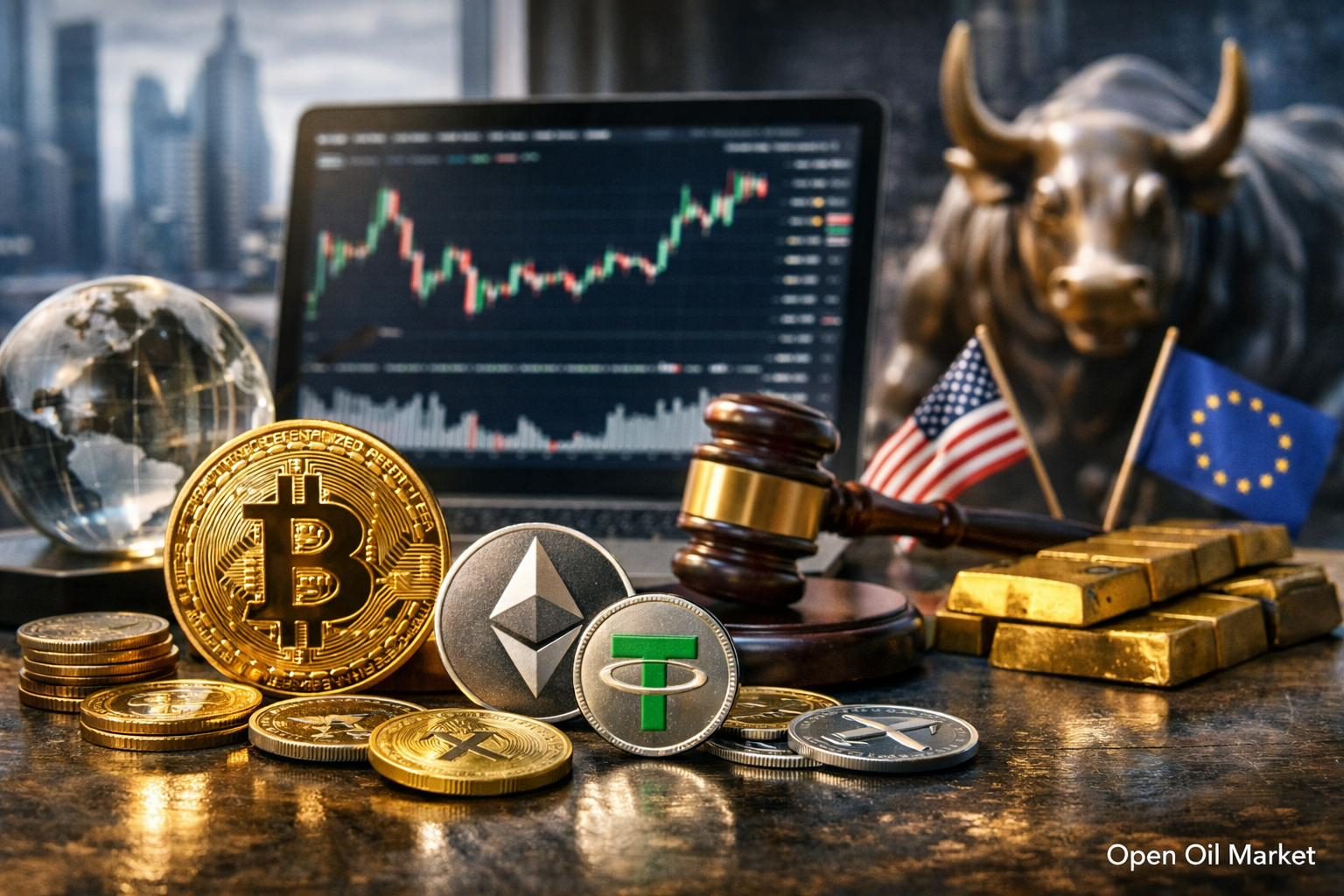
Current Cryptocurrency News as of March 23, 2026: Bitcoin and Ethereum Dynamics, Top 10 Cryptocurrencies, Regulatory Trends, Stablecoins, and Asset Tokenization. An Analysis for Investors
The cryptocurrency market approaches Monday, March 23, 2026, with a heightened selectiveness. After significant movements in previous months, investors are increasingly evaluating not just price momentum but also the quality of demand, liquidity structure, regulatory prospects, and the level of institutional involvement. Consequently, the key theme at the start of the week shifts from mere growth or correction of major digital assets to the market's transition into a phase of more mature idea selection.
The primary benchmark for global investors is the resilience of Bitcoin and the market's ability to maintain its capitalization in the face of cautious macroeconomic policies from leading central banks. Concurrently, interest in infrastructure segments is on the rise: stablecoins, asset tokenization, exchange products, and digital settlements. All this makes the cryptocurrency market more complex, yet more appealing for long-term capital.
What's Happening in the Global Crypto Market Ahead of March 23
At the beginning of the new week, the cryptocurrency market appears relatively composed, although volatility remains. Investors continue to consider several factors:
- a challenging macroeconomic backdrop and the cautious stance of the U.S. Federal Reserve;
- slowing expectations for the rapid adoption of new crypto regulations in the U.S.;
- increased institutional interest in tokenization and digital settlement infrastructure;
- Bitcoin’s strong position within the market structure;
- a shift of attention from "speculative stories" to major and liquid crypto assets.
For investors, this signifies an important point: cryptocurrencies are increasingly responding not just to internal industry events but also to the global monetary cycle, regulation, and movements of institutional capital. The market is becoming less chaotic and, at the same time, more sensitive to the quality of news.
Bitcoin Remains the Key Barometer for Risk Appetite
Bitcoin continues to hold its status as the key reference point for the entire cryptocurrency market. It sets the overall tone for assessing risk, liquidity, and the behavior of large investors. When Bitcoin maintains leadership in market share, it generally indicates that capital prefers the most understandable and institutionally recognized digital asset.
The current backdrop shows that demand for Bitcoin remains relatively stable even amid a cooling short-term optimism. For the market, this is a positive signal for several reasons:
- Bitcoin remains the primary entry point for institutional investors into digital assets.
- It reflects global risk appetite better than other cryptocurrencies.
- Bitcoin’s high market capitalization percentage reduces the likelihood of chaotic overheating in weaker assets.
For professional market participants, this means that Bitcoin's dynamics remain the main indicator of whether the cryptocurrency market is ready for the next medium-term upward impulse or is still in consolidation mode.
Ethereum and Major Altcoins: The Market Awaits Strength Confirmation
Ethereum maintains its role as the second systematic asset in the industry; however, its performance is currently being scrutinized closely by investors. While Bitcoin reflects the overall belief in digital gold and institutional demand, Ethereum is seen as a bet on activity within the blockchain economy: DeFi, tokenization, digital settlements, and app development.
Major altcoins are also moving unevenly. Some investors prefer liquid ecosystem assets that stand to benefit from real blockchain usage rather than just speculative hype. The focus remains on:
- Solana – as a high-throughput infrastructure story;
- XRP – as an asset closely associated with cross-border payments;
- BNB – as a bet on a major cryptocurrency exchange ecosystem;
- TRON – as a notable beneficiary in the stablecoin turnover;
- Dogecoin and Hyperliquid – as examples of the market still leaving room for high beta exposure.
This signals to a global audience of investors that cryptocurrencies are no longer a singular asset class. Separate segments are forming within the market, each with its valuation logic, risks, and potential returns.
Regulation Back in Focus for the Crypto Market
One of the key topics for the cryptocurrency market on Monday is regulation. Market participants are closely monitoring how the positions of American and European regulators are changing, as this determines the future scale of institutional demand.
The current picture appears mixed. On one hand, there are new signals in the U.S. indicating a more flexible approach to crypto assets and possible exceptions for startups. On the other hand, the progress toward a broader legislative framework is not happening as quickly as the market had hoped, which is tempering expectations for a new impulse for ETFs, tokens, and cryptocurrency platforms.
For the cryptocurrency market, this means:
- regulatory clarity remains a powerful potential growth driver;
- delays in rule adoption limit the speed of new capital influx;
- Bitcoin, Ethereum, and major infrastructure projects appear most resilient in this environment.
Asset Tokenization Strengthens the Investment Case for Blockchain
Another crucial theme for the global crypto market is asset tokenization. Increasingly, major financial organizations view blockchain not just as a trading environment for cryptocurrencies but as a technological basis for issuing, settling, and transacting traditional financial instruments.
This is why news surrounding tokenization today is just as significant as the price fluctuations of Bitcoin or Ethereum. For investors, this alters the very structure of the industry:
- the blockchain market is receiving fundamental, rather than just speculative, demand;
- a bridge is emerging between traditional finance and digital assets;
- the importance of networks and projects related to settlement infrastructure, value storage, and compliance with institutional requirements is increasing.
This also enhances the significance of cryptocurrencies and blockchain platforms that can service large cash flows, corporate settlements, and the issuance of tokenized products.
Stablecoins Become One of the Main Topics of 2026
While Bitcoin remains the main symbol of the crypto market, stablecoins are gradually becoming its most practical component. It is in the stablecoins segment that a real demand from businesses, fintech, cross-border transfers, and payment infrastructure is currently visible.
In 2026, this theme has notably strengthened in several areas:
- central banks and regulators are actively discussing rules for stablecoins;
- major payment companies are intensifying their interest in digital settlements;
- the market increasingly regards stablecoins as infrastructure for international liquidity;
- European and British regulators are scrutinizing systemic risks and their impact on the banking system more closely.
This marks an important structural shift for the crypto market. Where previously many investors viewed stablecoins as mere facilitators of trading, they are now becoming a distinct area of investment analysis. This is particularly significant for assessing Ethereum, TRON, and other networks through which a significant portion of settlement activity flows.
Top 10 Most Popular Cryptocurrencies as of March 23, 2026
For global investors, the largest and most liquid cryptocurrencies still hold the utmost significance. At the start of the week, the following top 10 cryptocurrencies by market capitalization are in the spotlight:
- Bitcoin (BTC) – the primary indicator of institutional demand and market sentiment.
- Ethereum (ETH) – the key asset of the smart contract, DeFi, and tokenization ecosystem.
- Tether (USDT) – the main source of dollar liquidity within the crypto market.
- BNB – the systemic asset of the largest cryptocurrency exchange infrastructure.
- XRP – one of the most widely discussed assets in the context of payments and cross-border transfers.
- USDC – an important stablecoin for institutional and regulated use cases.
- Solana (SOL) – one of the main contenders for further expansion of ecosystem cases.
- TRON (TRX) – a notable player in the stablecoin settlement infrastructure.
- Dogecoin (DOGE) – a high-risk yet still widely recognized digital asset.
- Hyperliquid (HYPE) – a new noteworthy player in the market’s upper tier, reflecting interest in more specialized crypto platforms.
The fact that the top list simultaneously features classic leaders along with rapidly growing new projects indicates that the cryptocurrency market embodies both maturity and a quest for new growth opportunities.
What This Means for Investors at the Start of the Week
For investors, Monday, March 23, 2026, begins with a rather coherent logic. The cryptocurrency market is not in a phase of unconditional euphoria; however, it retains fundamental grounds for capital interest. In such an environment, the most reasonable approach typically revolves around three principles:
Focus on Quality
Cryptocurrencies with high liquidity, recognizability, and infrastructural significance come to the forefront.
Assessment of the Regulatory Landscape
Regulation remains key to the next stage of institutional growth for the cryptocurrency market.
Understanding Demand Structure
It's more important not just to monitor asset growth but to understand what supports it: ETFs, stablecoins, tokenization, payment solutions, or speculative capital.
For the global investor, this signifies that the cryptocurrency market continues to offer opportunities but demands a deeper filtering of ideas and greater attention to fundamental drivers.
Conclusion: The Cryptocurrency Market Becomes More Mature, and Therefore More Demanding of the Investor
As the new week begins, the cryptocurrency market finds itself at an interesting juncture. Bitcoin holds its role as the anchor asset, Ethereum remains the barometer of the digital economy, stablecoins enhance the infrastructural significance of the industry, and tokenization gradually integrates blockchain into the global financial system.
The main takeaway for March 23, 2026, is that cryptocurrencies are increasingly moving away from isolated logic and are embedding themselves more deeply into the global financial architecture. Consequently, cryptocurrency news today is crucial not only for traders but also for institutional investors, asset managers, fintech companies, and participants in the global capital market.
If this trend continues, 2026 could mark a period when the cryptocurrency market fully transitions from a speculative perception to that of a legitimate segment of international finance.