Cryptocurrency News for March 9, 2026: Global Trends in the Digital Asset Market, Stablecoin Regulation, Institutional Demand, and Key Cryptocurrency Analysis
The global cryptocurrency market enters a new week with heightened sensitivity to macroeconomic factors, regulation, and institutional demand. For investors, this means that the focus is gradually shifting from merely tracking the movements of Bitcoin and altcoins to a more complex picture: decisions made by regulators, the behavior of stablecoin issuers, the resilience of demand from funds, and the liquidity dynamics of the largest digital assets.
As of March 9, 2026, the central theme for the global crypto market is not only volatility but also the struggle for the rules of the game. Consequently, cryptocurrency news is increasingly dependent on politics, oversight, the functioning of exchange infrastructure, and the industry's ability to integrate into the global financial system. For investors, this is a key moment: the digital asset market resembles less a niche segment and increasingly becomes a part of the global financial landscape.
The Main Story of the Day: The Crypto Market Awaits Clarity on Regulation
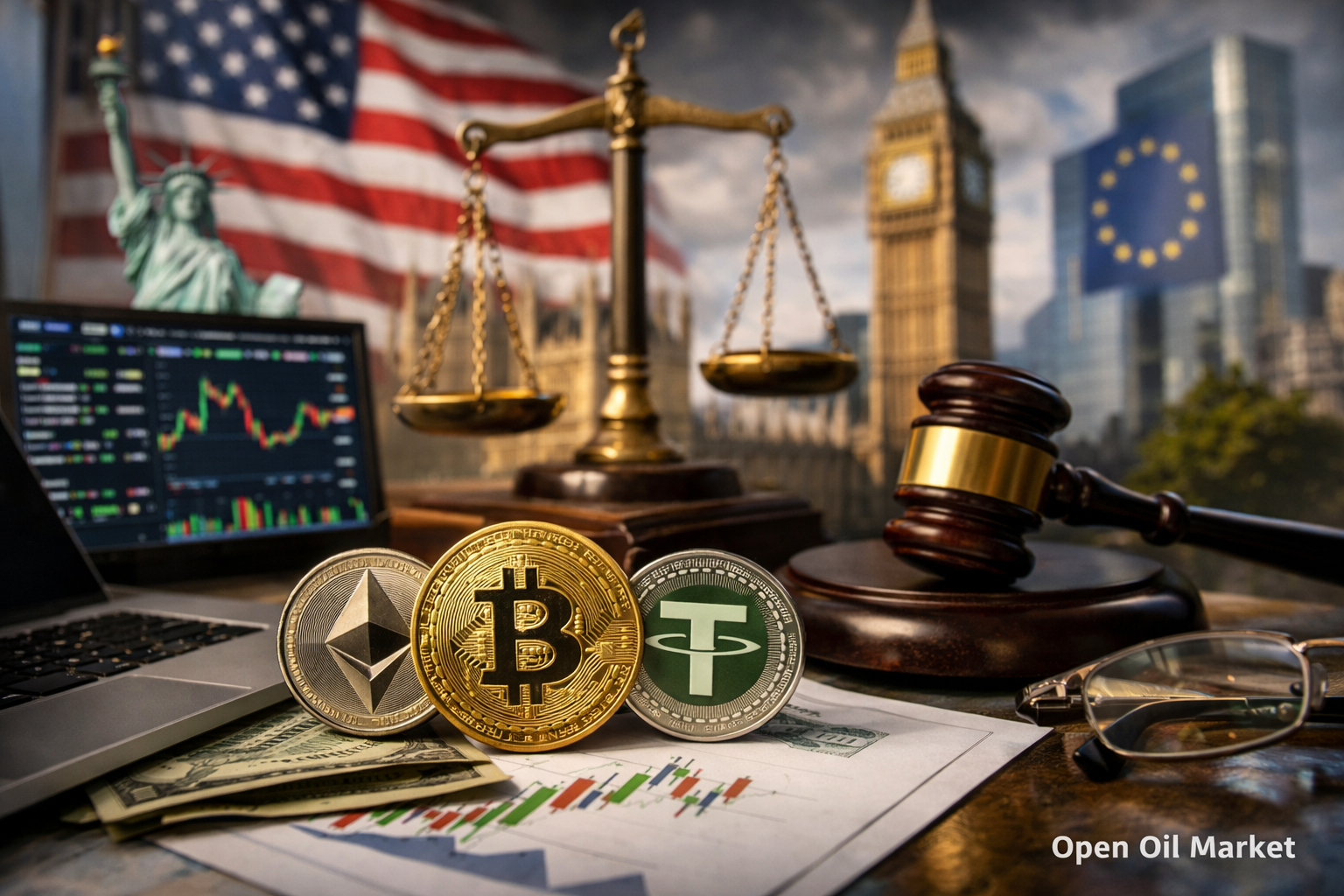
One of the most significant factors for the cryptocurrency market at the start of the week is the ongoing discussion around the American model of digital asset regulation. For market participants, this issue is not merely about legal technicalities but also the future structure of the industry. The delineation of powers among regulators will significantly impact the prospects of exchanges, token issuers, custodians, DeFi projects, and stablecoins.
Investors are closely monitoring whether the market can achieve a more predictable regulatory environment. Should a regulatory framework materialize, it could strengthen the positions of institutional players, enhance market transparency, and support long-term demand for the largest cryptocurrencies. Conversely, if the process drags on, the digital asset market risks remaining under ambiguous regulations, which traditionally heightens volatility.
Stablecoins Become a Systemic Theme for the Global Market
In 2026, stablecoins have definitively transitioned from being mere technical tools within the crypto ecosystem to becoming a central theme for central banks, commercial banks, payment infrastructures, and legislators. Stablecoins are increasingly seen as a bridge between traditional finance and digital assets.
This shift is why the market is not only assessing the capitalization of major tokens but also how rapidly stablecoins begin to influence:
- Liquidity movement within crypto exchanges;
- International settlements and cross-border transfers;
- Competition with bank deposits;
- New models of tokenized financial products.
For investors, this is a crucial signal. The rising role of stablecoins makes the cryptocurrency market more mature while simultaneously increasing regulatory pressure. The closer digital dollars and other stable tokens come to the actual financial system, the higher the likelihood of new requirements regarding reserves, reporting, audits, and AML controls.
Compliance and Operational Oversight Take Center Stage
An important line in cryptocurrency news is the stringent amplification of compliance themes. For the global market, this is fundamental: 2026 sets a new standard whereby the crypto industry must not only demonstrate technological innovation but also prove its ability to operate within financial oversight frameworks.
This shift alters sector perceptions across several dimensions:
- Major institutional investors are given more grounds to enter the digital asset market.
- Projects with weak transparency now appear more vulnerable.
- Stablecoins, exchanges, and payment services find themselves closer in requirements to traditional financial institutions.
This presents a dual-edged factor for the market. On one hand, stringent oversight pressures some transactions and reduces sector flexibility. On the other hand, the increase in transparency standards could enhance global investors' trust in the largest cryptocurrencies and infrastructure players.
Bitcoin and Ethereum Remain Core to Global Demand
At the start of the week, Bitcoin and Ethereum maintain their status as the primary benchmarks for the entire cryptocurrency market. Bitcoin continues to be perceived as the main indicator of risk appetite within digital assets, while Ethereum serves as the key infrastructural platform for smart contracts, DeFi, tokenization, and on-chain economy.
It is significant for investors that the market is increasingly assessing these assets based on different logics:
- Bitcoin - as a quasi-macro asset sensitive to capital flows, ETF interest, and global risk appetite.
- Ethereum - as an infrastructural asset dependent not only on price but also on network activity, application ecosystems, and technological evolution.
Therefore, any cryptocurrency news regarding regulation, ETF movements, institutional purchases, and the tokenization of financial assets primarily reflects the perceptions of these two market leaders.
Altcoins Compete for Investors' Attention Again
After periods of Bitcoin dominance, the market is redistributing attention among the largest altcoins. However, unlike previous cycles, investors are now evaluating not just speculative potential but also the quality of ecosystems, practical demand, token models, and community resilience.
The most noticeable areas of interest in the global market include:
Platform Blockchains
- Solana
- BNB
- Cardano
- TRON
Payment and Settlement Stories
- XRP
- Stablecoins USDT and USDC
High-Risk Market Beta Assets
- Dogecoin
- Some large speculative tokens from the second echelon
This implies that the cryptocurrency market remains multi-layered. Investors now require more than a general understanding of market direction; they need to differentiate between infrastructural, transactional, speculative, and institutionally significant assets.
Top 10 Most Popular Cryptocurrencies as of March 9, 2026
From the perspective of global investor attention, liquidity, and market capitalization, the following digital assets remain at the center:
- Bitcoin (BTC)
- Ethereum (ETH)
- Tether (USDT)
- XRP (XRP)
- Solana (SOL)
- BNB (BNB)
- Dogecoin (DOGE)
- USD Coin (USDC)
- Cardano (ADA)
- TRON (TRX)
For publication on the website, it’s important to note: cryptocurrency popularity today is determined not only by capitalization but also by market depth, brand recognition, role in payment infrastructure, exchange support, and involvement from institutional participants.
What the Current Agenda Means for Investors
The cryptocurrency news for March 9, 2026, delineate several practical conclusions for investors.
- First: the market remains global and increasingly dependent on decisions made in the U.S., Europe, and major financial centers.
- Second: stablecoins are becoming not an ancillary element, but one of the centers of the entire digital economy.
- Third: institutional interest supports the market but does not negate its high sensitivity to news flows.
- Fourth: within cryptocurrencies, the gap is widening between quality infrastructural assets and weaker speculative stories.
This means that in the current market phase, a passive strategy of following overall growth appears less effective than selectively allocating capital among industry leaders, infrastructural projects, and high-liquidity assets.
What to Watch for in the Coming Days
At the start of a new week, participants in the digital asset market should pay attention to several indicators:
- New signals from the U.S. regarding cryptocurrency and stablecoin regulation;
- The dynamics of institutional demand for the largest digital assets;
- News related to the tokenization of financial instruments;
- Liquidity movements in Bitcoin, Ethereum, and the largest altcoins;
- Shifts in global risk sentiment in light of macroeconomic and geopolitical factors.
If this agenda remains constructive, the cryptocurrency market could establish a foundation for a more robust restoration of trust. However, if regulatory disputes intensify and the external environment worsens, investors may once again shift their focus toward defensive positioning within the crypto market.
Cryptocurrencies as of March 9, 2026, encompass more than just a narrative of the rise or fall of individual coins. This is a market where technology, politics, payment infrastructure, institutional funds, and global competition in financial models intersect. Hence, the main theme of the day—regulation and stablecoins—emerges as the most significant for the global audience of investors.
For professional market participants, the current week could serve as a benchmark: it will reveal how prepared the crypto industry is to advance as a mature segment of global finance, rather than merely as a territory of high volatility. In this environment, the key advantage lies not with those who chase every fluctuation but with those who can distinguish short-term noise from fundamental changes in the architecture of the digital market.