Global Cryptocurrency Market Outlook for May 25, 2026: Bitcoin Retains Leadership, Ethereum and Solana Attract Investors, XRP Strengthens Its Position, While the Global Digital Asset Market Awaits a New Phase of Regulation and Institutional Capital Growth
The global cryptocurrency market enters Monday, May 25, 2026, in a state of cautious equilibrium. Following significant movements in recent weeks, investors are scrutinizing not only the dynamics of Bitcoin and Ethereum but also the broader context: capital flows into spot ETFs, regulatory decisions, liquidity conditions, institutional interest, and the resilience of major altcoins.
The main theme of the day is a cooling risk appetite amid outflows from Bitcoin ETFs and increasing focus on U.S. digital asset regulation. For global investors, cryptocurrencies remain a high-yielding yet volatile asset class, where short-term fluctuations are increasingly influenced by macroeconomic factors, bond yields, Federal Reserve policy, and SEC decisions.
As the new week unfolds, the digital asset market seeks to balance two opposing forces. On one hand, institutional acceptance of cryptocurrencies is progressing: banks, funds, and asset management companies are expanding their infrastructure to work with tokenized assets. On the other hand, investors are locking in profits after previous growth phases and closely monitoring regulatory risks.
Bitcoin Remains the Key Indicator of Market Sentiment
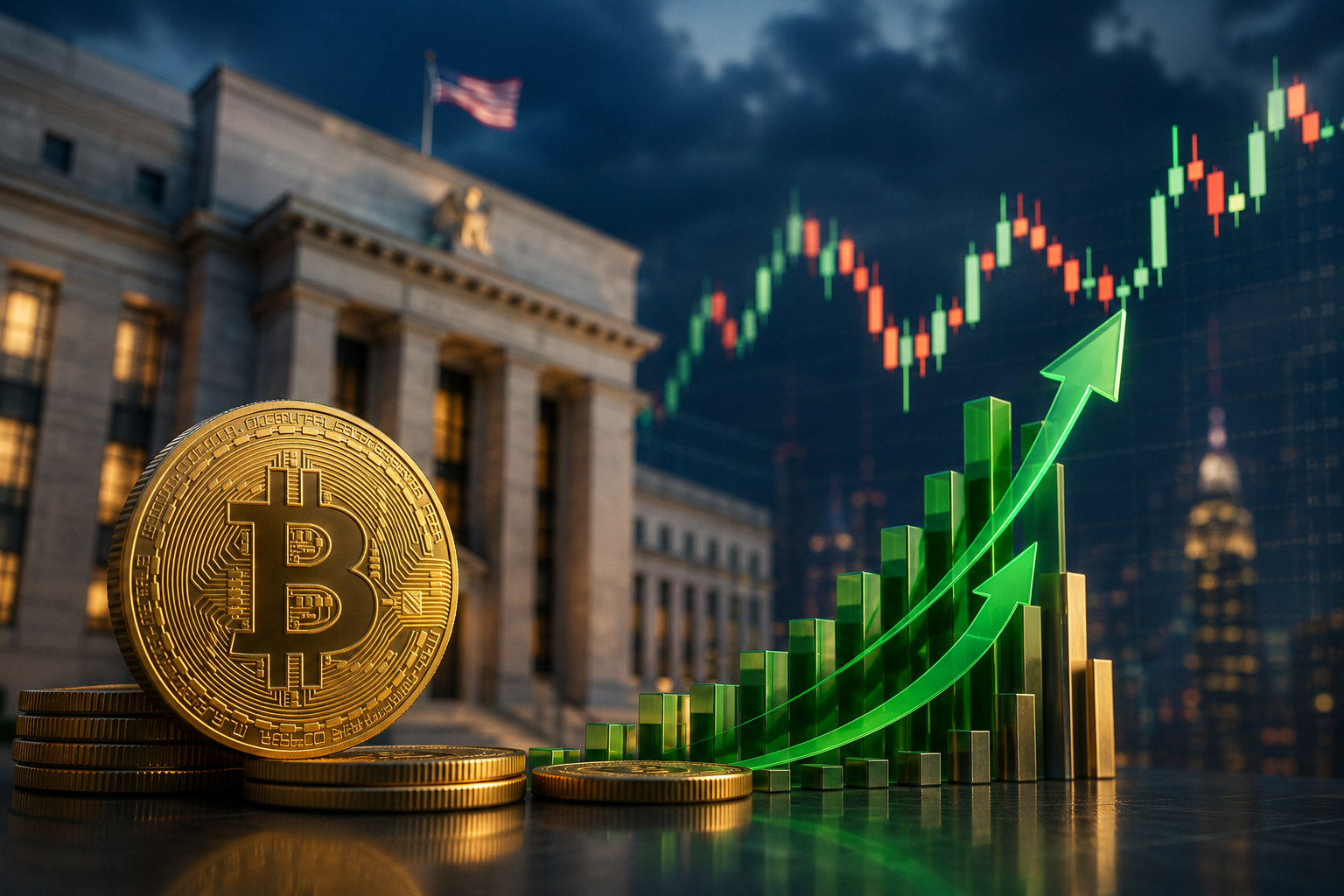
Bitcoin continues to hold its status as the foundational asset of the cryptocurrency market and the primary benchmark for institutional investors. It is primarily through Bitcoin ETFs that large capital gains regulated access to digital assets, making the dynamics of fund flows one of the key indicators of demand.
In recent days, investor attention has focused on outflows from spot Bitcoin ETFs. This has heightened market caution and demonstrated that institutional demand is not linear: major players are willing to increase positions in favorable macroeconomic conditions but quickly reduce exposure when bond yields rise and sentiment towards risk assets deteriorates.
For long-term investors, Bitcoin remains a digital reserve asset; however, in the short term, its dynamics are increasingly influenced by traditional financial factors:
- Federal Reserve monetary policy;
- U.S. Treasury bond yields;
- Inflows and outflows in Bitcoin ETFs;
- Dollar liquidity conditions;
- Institutional interest in risk assets.
If demand for ETFs stabilizes, Bitcoin could again become a center of capital attraction. Conversely, if outflows continue, the cryptocurrency market may enter a more defensive mode.
Ethereum Maintains a Strategic Role Despite Investor Caution
Ethereum remains the second most significant asset in the cryptocurrency market and a key infrastructure platform for smart contracts, DeFi, tokenization, and corporate blockchain solutions. Despite periodic pressure from weak demand and competition from faster networks, Ethereum retains fundamental importance in the digital economy.
Investors evaluate Ethereum not just as a cryptocurrency, but as a technological platform. Key factors include developer activity, the volume of liquidity locked in DeFi, developments in layer two solutions, and growing interest in staking.
The market continues to debate whether Ethereum can regain leadership among infrastructure blockchains amid competition from Solana, BNB Chain, Sui, and other networks. For institutional investors, Ethereum remains a more mature and proven asset, though the market demands new growth drivers.
Solana, XRP, and BNB Remain in the Spotlight of the Altcoin Segment
The altcoin segment at the end of May 2026 appears heterogeneous. Investors are increasingly moving away from broad speculative approaches and opting for selective project evaluations. Solana, XRP, and BNB are at the forefront—assets with high liquidity, developed infrastructure, and clear investment scenarios.
Solana continues to garner attention due to its high network speed, low fees, and activity in consumer applications, DeFi, and Web3 services. XRP remains a significant asset for investors monitoring the cross-border payments segment and potential development of institutional payment solutions. BNB retains its importance as an ecosystem token linked to one of the largest cryptocurrency infrastructures.
A key question for altcoins is whether they can demonstrate independent growth drivers instead of merely following Bitcoin. The market needs real use cases, an increasing number of users, and sustained institutional interest.
Cryptocurrency Regulation Becomes a Central Theme of 2026
Regulatory agendas remain one of the principal factors for the cryptocurrency market. In the U.S., discussions surrounding rules for digital assets continue, including the distribution of authorities between regulators, requirements for exchanges, regulations governing tokenized assets, and the status of stablecoins.
This is crucial for investors. The clearer the legal environment, the easier it becomes for large funds, banks, and brokers to work with digital assets. However, any delays or controversial initiatives have the potential to increase volatility, particularly in the stocks of cryptocurrency exchanges and tokens associated with infrastructure projects.
There is particular attention on tokenized equities and digital versions of traditional financial instruments. This segment could become a bridge between the classical capital market and blockchain infrastructure, but more precise legal frameworks are still required.
Stablecoins Strengthen their Role as Digital Liquidity
Stablecoins remain a key component of the cryptocurrency ecosystem. For traders, they serve as a unit of account and a tool for transitioning between risk assets and dollar liquidity. For banks and payment companies, stablecoins become a potential foundation for faster international transactions.
In 2026, interest in stablecoins is increasing amid developing regulations and rising competition among private issuers, financial institutions, and blockchain platforms. For the global market, this is an important trend as stablecoins have effectively become the infrastructure for the digital dollar in the crypto economy.
Investors must keep in mind that stablecoins are not by themselves a classic bet on growth; rather, they reflect the state of liquidity within the cryptocurrency market. An increase in stablecoin market capitalization often indicates the presence of free capital that could be directed toward Bitcoin, Ethereum, and altcoins.
Tokenization of Real Assets Strengthens the Link Between the Crypto Market and Wall Street
The tokenization of real assets is emerging as one of the most promising areas of digital finance. Banks, asset management companies, and technology platforms are increasingly testing the issuance of tokenized bonds, money market funds, equities, and other instruments.
For investors, this means a gradual convergence of the cryptocurrency market and the traditional financial system. Blockchain is no longer solely an environment for speculative tokens; it is becoming an infrastructure for transactions, rights management, liquidity management, and financial product issuance.
The main advantages of tokenization include:
- Accelerated transactions between market participants;
- Reduction in operational costs;
- Increased transparency in asset ownership;
- Access to round-the-clock trading;
- Expanded international liquidity.
This trend could become one of the key investment narratives in the second half of 2026.
Top 10 Most Popular Cryptocurrencies for Global Investors
As of May 25, 2026, the global market's focus is on the largest and most liquid digital assets. When assessing popularity, investors consider market capitalization, liquidity, infrastructure, exchange availability, and the asset's role within the cryptocurrency ecosystem.
- Bitcoin (BTC) — the primary digital reserve asset and main benchmark of the crypto market.
- Ethereum (ETH) — the leading platform for smart contracts, DeFi, and tokenization.
- Tether (USDT) — the largest stablecoin and key tool for dollar liquidity.
- BNB (BNB) — an ecosystem token associated with a major cryptocurrency infrastructure.
- XRP (XRP) — an asset focused on cross-border payments and payment solutions.
- USD Coin (USDC) — a regulated stablecoin sought after by institutional participants.
- Solana (SOL) — a high-performance blockchain platform for DeFi, Web3, and consumer applications.
- TRON (TRX) — a network actively used for stablecoin transfers and digital payments.
- Dogecoin (DOGE) — a highly liquid meme token with sustained retail interest.
- Cardano (ADA) — a blockchain platform focusing on scalability and an academic approach to development.
It is essential for investors to distinguish the purposes of these assets. Bitcoin is often viewed as a digital analog of gold; Ethereum and Solana are seen as infrastructure platforms; XRP and TRON are viewed as payment solutions; USDT and USDC are considered liquidity tools.
What Investors Should Monitor on May 25 and in the Coming Week
The cryptocurrency market remains sensitive to external signals. In the week of May 25, investors should monitor not only Bitcoin and Ethereum price charts but also capital flows, regulatory news, and the state of global risk appetite.
Key factors to watch for the week include:
- Dynamics of inflows and outflows into spot Bitcoin ETFs;
- Statements from regulators regarding digital assets and tokenized securities;
- Changes in expectations regarding Federal Reserve rates;
- Movements in U.S. bond yields;
- Activity of institutional investors;
- The state of liquidity in stablecoins;
- The performance of major altcoins relative to Bitcoin.
For long-term market participants, the current phase could serve as a period for assessing asset quality. The focus shifts from short-term impulses to the resilience of ecosystems, regulatory compliance, and the practical use of blockchain technology.
The Cryptocurrency Market Becomes More Mature, Yet Volatility Remains High
Cryptocurrency news for Monday, May 25, 2026, indicates that the digital asset market is gradually transitioning into a more mature phase. Institutional investors are playing an increasingly important role, ETFs have become a key channel for capital flow, and regulation is determining the pace of further industry growth.
However, high volatility remains an integral part of the cryptocurrency market. Bitcoin, Ethereum, Solana, XRP, and other major assets continue to be influenced by macroeconomic factors, liquidity, and the sentiment of global investors. In such an environment, a rational approach for investors is to assess not only potential returns but also project quality, liquidity, regulatory risks, and the asset's role in the long-term digital economy.
The primary focus for the week ahead is whether the market will stabilize after ETF outflows and gain support from regulatory clarity. If institutional demand rebounds, cryptocurrencies may once again enter a growth phase. Conversely, if macroeconomic pressures intensify, investors may opt for a more cautious strategy, concentrating solely on the most liquid digital assets.