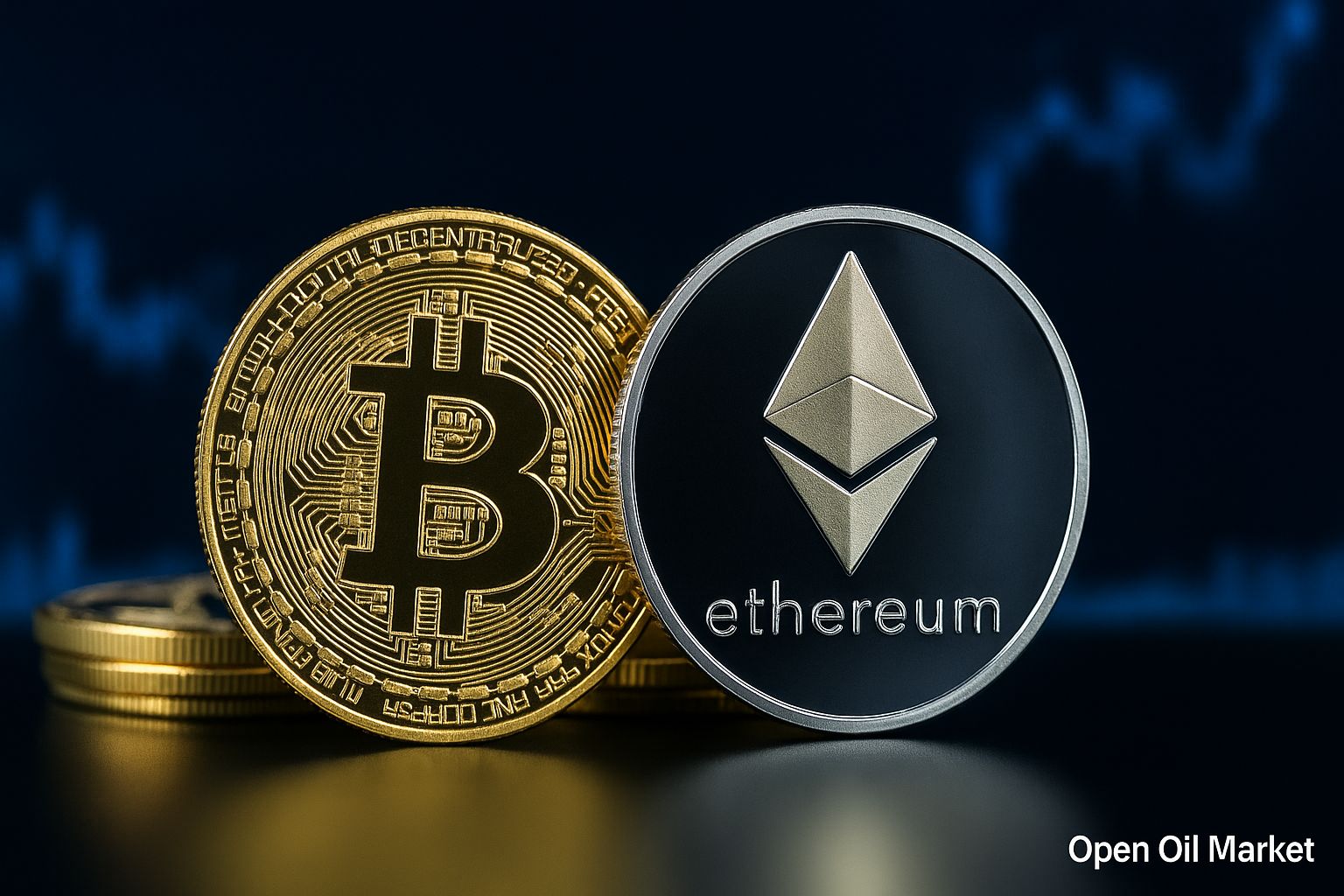
Global Cryptocurrency News as of November 7, 2025: Bitcoin Maintains Upward Trend, Ethereum Prepares for Major Upgrade, Altcoins Exhibit Mixed Dynamics. Institutional Interest in Digital Assets Grows Amidst Fed's Accommodative Policy.
Bitcoin: Consolidation After Correction
The largest cryptocurrency, Bitcoin (BTC), reached a historic high exceeding $125,000 in the fall, followed by the expected correction. At the beginning of November, the price briefly dipped to around $105,000, but soon stabilized around $110,000. The area near $105,000 serves as critical support: maintaining BTC above this level preserves the upward trend. The nearest resistance zone is around $120,000—sustained growth above this mark would pave the way for Bitcoin to reach new records.
The factors fueling the BTC rally remain intact. Investors anticipate an upcoming easing of monetary policy in the U.S. (with expectations for the Fed to lower interest rates), which traditionally increases demand for risk assets, including cryptocurrencies. Institutional players continue to increase their investments in Bitcoin via exchange-traded funds (ETFs) and other products. However, risks remain: an unexpected spike in inflation or hawkish statements from the Federal Reserve could temporarily cool the market.
Ethereum: Upward Trend Ahead of Upgrade
The leading altcoin, Ethereum (ETH), is also demonstrating solid growth in 2025. After a brief decline in early November (down to about $3,600), Ether returned to levels around $3,800–4,000, significantly higher than the beginning of the year and close to its historical peak (approximately $4,867). ETH is supported by strong institutional interest and solid fundamental factors. The launch of the first spot ETF for Ether is anticipated in the U.S., and a significant network upgrade aimed at enhancing scalability and reducing fees is scheduled for early December. The ongoing development of the smart contract ecosystem and a deflationary issuance model strengthen Ethereum's position as a high-tech asset. Many market participants expect that in the upcoming months, ETH will surpass the $4,600 mark and set new highs.
Altcoin Market: Trends
Major altcoins have seen substantial growth over recent months, although volatility increased at the end of October and beginning of November, leading to a pullback for several coins from their peaks. Some top assets are holding near multi-year highs: for instance, XRP is currently trading around $3.0 (exceeding $3 for the first time since 2018, following Ripple’s victory over the SEC), while BNB recently reached approximately $850. Solana (SOL) has solidified around $180 amid the expansion of its ecosystem and the launch of its first SOL-based fund. Overall dynamics in the altcoin market are mixed, but investor interest remains strong—especially towards projects with a robust technological foundation and prospects for launching ETFs.
Record Interest from Institutional Investors
One of the main trends of 2025 has been the sharp increase in institutional capital involvement in the cryptocurrency market. Banks, funds, and corporations are increasing investments in digital assets at record levels, reflected in the influx of capital into crypto funds and the emergence of new instruments (including exchange-traded ETFs). Experts compare the current situation to the early 2010s in the gold market when major players incorporated gold into their reserves—now a similar process is occurring with Bitcoin, which many institutions view as a strategic reserve asset. Although there was some profit-taking post-peak in prices this fall (over $1 billion was withdrawn from American crypto ETFs in the last week of October), the overall trend remains upward. Large investors utilize each significant price dip to buy more, establishing a solid foundation for further market growth.
Regulation in the U.S. and Europe: New Rules
In the U.S., decisions are brewing that could define the "rules of the game" for the crypto industry for a long time. In the summer, the House of Representatives approved the Digital Asset Market Clarity Act (CLARITY Act), which aims to create a clear regulatory framework for cryptocurrencies and exchanges; now a relevant Senate committee is considering its own version. The industry holds high hopes for these initiatives, but investors remain cautious until the law is enacted. At the same time, regulators are showing signs of a thawing attitude: the new SEC leadership states that only a small portion of tokens falls under securities laws and is preparing clear criteria for digital assets. The SEC has already withdrawn several lawsuits against major exchanges, marking a shift towards a more flexible policy. Additionally, the Trump administration made an unprecedented move by pardoning Binance founder Changpeng Zhao (CZ), previously convicted of financial regulations violations. Collectively, these actions are creating a more favorable regulatory environment for the U.S. cryptocurrency market. In Europe, the MiCA regulation is coming into effect, establishing common requirements for the industry. Several major crypto companies have already received licenses under the new rules, ensuring predictability for businesses and a balance between innovation and investor protection.
Global Trends and Initiatives
Important developments are also occurring in other regions of the world. In China (via the financial hub of Hong Kong), plans are underway to launch the first stablecoin pegged to the yuan, while Brazil is discussing including Bitcoin in its national reserve (up to 5% of its foreign reserves). Many countries are striving to become crypto hubs—examples include the UAE and Singapore, which attract blockchain businesses through progressive regulation. These steps indicate that governments worldwide are integrating cryptocurrencies into their financial systems, recognizing their increasing role in the economy.
Top 10 Most Popular Cryptocurrencies
- Bitcoin (BTC) — ~$110,000 (≈55% of the market). Limited supply (21 million coins) gives BTC characteristics of "digital gold," with steady demand.
- Ethereum (ETH) — ~$4,000 (≈13% of the market). Leading smart contract platform. Transition to PoS and a deflationary issuance model have strengthened ETH’s position as a high-tech asset.
- Tether (USDT) — ~$1.00. The largest stablecoin pegged to the U.S. dollar 1:1. A key source of liquidity in the crypto market, enabling rapid "parking" of capital between trades.
- Binance Coin (BNB) — ~$800. Token of the Binance exchange ecosystem (BNB Chain network). Used for paying fees and accessing services. Despite regulatory pressures, BNB remains in the top five due to its wide range of applications.
- USD Coin (USDC) — ~$1.00. The second-largest stablecoin (issued by the Circle and Coinbase consortium). Full reserved backing and regular audits have made USDC a model of reliability and regulatory compliance.
- XRP (Ripple) — ~$3.0. Token of the Ripple network for quick cross-border payments. In 2025, XRP surpassed $3 for the first time since 2018 due to Ripple’s victory over the SEC and expectations for an XRP ETF launch.
- Solana (SOL) — ~$180. Layer one blockchain known for its high transaction speeds and low fees. SOL saw a significant price increase due to the expansion of its ecosystem (DeFi, NFTs) and the launch of its first ETF based on Solana.
- Cardano (ADA) — ~$0.80. Blockchain platform with a Proof-of-Stake algorithm and a research-driven approach to development. While ADA’s price is far from its record highs, the coin remains in the top 10 due to significant market capitalization and an active community.
- Dogecoin (DOGE) — ~$0.22. The most well-known "meme" cryptocurrency, ranking among the top ten largest coins. Popular for micropayments and online tipping. Thanks to a devoted community and spikes in excitement, DOGE maintains its position among leaders, although it is characterized by high volatility.
- TRON (TRX) — ~$0.35. Token of the Tron platform. Strengthened amid increased usage of the network for issuing stablecoins and asset tokenization. Low fees and high throughput have helped TRX enter the top ten coins.
Thus, as of November 7, 2025, the cryptocurrency market continues to hold high levels. Fundamental factors—an influx of institutional capital, technological advancements in blockchain platforms, and a softening regulatory environment—create a positive backdrop for further growth. Nevertheless, some uncertainty remains. Upcoming events, such as the possible approval of new crypto ETFs and the forthcoming Ethereum upgrade, could provide new impulses for the market by year-end.