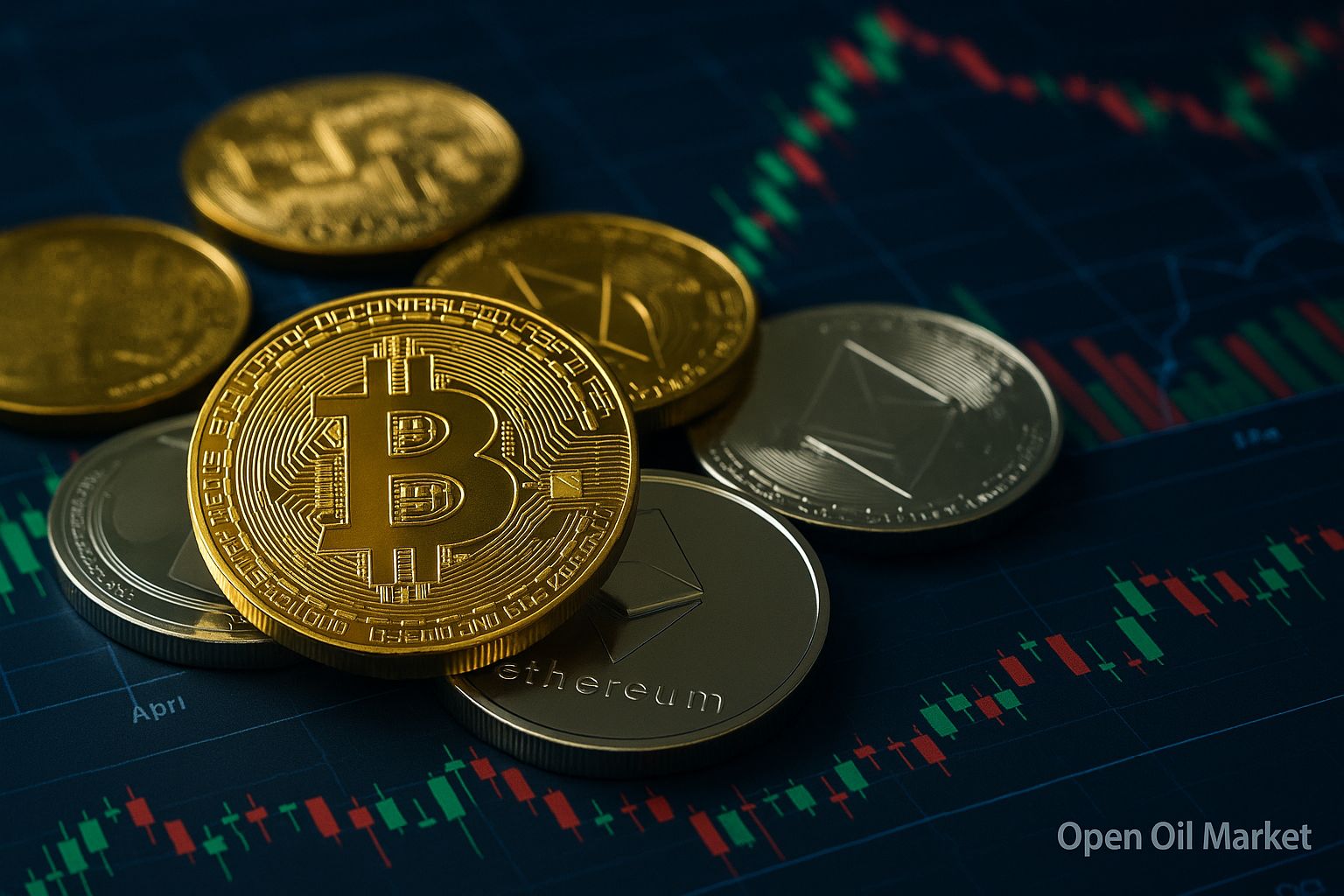
Global Cryptocurrency News for November 9, 2025: Bitcoin Holds Above $100,000, Ethereum Recovers, Altcoins Show Mixed Dynamics, Institutional Interest Grows, and the Market Prepares for a New Growth Phase.
As the cryptocurrency market approaches the end of the first week of November, signs of stabilization are emerging following a recent downturn. Bitcoin is holding above the psychological threshold of $100,000, while leading altcoins are gradually reclaiming lost positions. Investors are maintaining cautious optimism amidst expectations for an imminent easing of monetary policy and positive news, such as the upcoming major network upgrade for Ethereum. At the same time, institutional interest in digital assets is on the rise, supported by an improved regulatory environment.
Bitcoin: Stabilization Above $100,000
The largest cryptocurrency, Bitcoin (BTC), reached a new all-time high in October (around $125,000 at the beginning of the month) before entering the anticipated correction phase. In the first days of November, amid sell-offs, BTC briefly dropped below $100,000 for the first time since June but quickly found support and regained this level. Currently, Bitcoin is consolidating in a range around $105,000, about 15% lower than its record peak. The $99,000–100,000 region serves as a critical support zone, confirming the retention of a long-term upward trend. The nearest significant resistance is around $115,000–120,000; rising above these levels would pave the way for BTC to reach new highs.
The factors that fueled Bitcoin's rally in 2025 continue to support the market. Investors are anticipating gradual easing of monetary policy in the U.S.—the Fed is expected to lower interest rates for the first time in several years within the coming months. This typically enhances demand for risk assets, including cryptocurrencies. Institutional players continue to increase their investments in BTC through exchange-traded funds (ETFs) and other products, bolstering the market. However, risks remain: a sudden spike in inflation or hawkish statements from regulators could temporarily dampen interest in digital assets. For instance, at the end of October, a tightening rhetoric from the Fed triggered a wave of profit-taking and a brief outflow of funds from crypto funds, but buyers quickly returned during the dip, demonstrating market resilience. Overall, BTC shows relative stability: long-term holders are not rushing to sell, and large companies are buying coins on corrections, forming a strong foundation for further growth.
Ethereum: Recovery Ahead of the Upgrade
Leading altcoin Ethereum (ETH) significantly strengthened during 2025, although it also experienced a correction alongside the broader market recently. In early November, the ETH price fell nearly 20%, briefly dipping below $3,100 (a three-month low). However, Ethereum bounced back and recovered to around $3,400–3,500. Despite the recent volatility, Ethereum's current price remains well above early-year levels and about 20–25% below its all-time high (~$4,867, reached in 2021). The market capitalization of ETH now exceeds $500 billion (around 12% of the overall crypto market cap).
Both fundamental factors and expectations for upcoming events are supporting Ethereum. By the end of the year, the sector anticipates the approval of the first spot ETF for Ethereum in the U.S., which could significantly broaden access for institutional investors to this asset and serve as a trigger for a new price increase. Additionally, a major Ethereum network upgrade aimed at enhancing scalability and reducing fees is scheduled for early December. This technological factor is drawing market attention: participants expect that the network's modernization will strengthen Ethereum's position as a key platform for decentralized applications (DeFi, NFTs, etc.). Structural changes—such as Ethereum's transition to a Proof-of-Stake algorithm and deflationary issuance model—have reduced the supply of ETH, which supports its value growth in the long term. Many analysts believe that Ethereum could approach its peak values in the coming months if the circumstances are favorable.
Altcoins: Mixed Dynamics
Following Bitcoin's impressive rise in the fall, investor interest has partially shifted toward other cryptocurrencies. The broader altcoin market has also risen, but volatility in this segment has significantly increased. At the end of October and into early November, many altcoins retreated from recent highs, and their current dynamics are mixed. Certain leading digital assets are maintaining proximity to multi-year peaks, while others have declined more significantly. For example, XRP (the token of Ripple) surpassed $3 for the first time since 2018 following Ripple's legal victory over the SEC and remains near this mark due to expectations surrounding the launch of an XRP ETF. Binance Coin (BNB) reached approximately $850 during the autumn rally; it is currently trading around $750 and remains in the top 5 despite ongoing regulatory pressure on the Binance exchange.
The Solana (SOL) platform has confidently appreciated this fall, with its price settling around $170, driven by the expansion of the Solana-based projects ecosystem. However, some previously fast-growing coins have seen significant declines from their peaks: Cardano (ADA) has retreated to around $0.75 following its summer peak, and the popular meme token Dogecoin (DOGE) is trading around $0.20, losing some ground after an initial surge. Nevertheless, interest in alternative cryptocurrencies remains, especially for projects with a strong technological foundation or positive news background. Investors continue to monitor plans for launching ETFs for specific altcoins—such as Solana, Cardano, and XRP—reflecting a belief in the continued integration of these assets into traditional financial markets.
Market Sentiments and Volatility
At the beginning of November, the cryptocurrency market experienced sharp price fluctuations and shifts in investor sentiment. The "fear and greed" index dropped to approximately 20–25 points, which corresponds to the "extreme fear" zone—a stark contrast to the readings from a month earlier. This suggests heightened caution among participants following the price drop; simultaneously, extreme fear is often seen by some investors as a buying signal at market "lows" before the market turns.
The sharp decline in prices was accompanied by a massive liquidation of margin positions, exacerbating the depth of the downturn. From November 4 to 5, the total volume of forced liquidations on crypto exchanges exceeded $1.7 billion, with approximately 76% of this amount attributed to the liquidation of long positions. Ethereum traders suffered significantly, with losses from liquidations exceeding $570 million in a single day. These episodes underscore the high risks associated with using large leverage: the wave of position closures amplifies short-term price fluctuations. Meanwhile, the price decrease has already brought several indicators into the oversold territory, and the reduction in leveraged positions could facilitate stabilization. If Bitcoin holds above ~$100,000 and Ethereum above ~$3,100, the market may soon transition to a recovery phase and recuperate some recent losses.
Institutional Interest at Record Levels
One of the key trends of 2025 has been the unprecedented participation of institutional investors in the cryptocurrency market. Major banks, investment funds, and publicly traded companies worldwide are actively adding cryptocurrencies to their portfolios, contributing to record capital inflows into the sector. The emergence of the first spot ETFs for Bitcoin and Ethereum in the U.S. has simplified access to digital assets, with demand for these instruments rapidly rising. Year-to-date, the total assets under management in crypto ETFs have increased to approximately $150 billion. In late October, there was a brief profit-taking episode—over the last week of the month, more than $1 billion was withdrawn from U.S. Bitcoin and Ethereum ETFs combined. However, by early November, institutions resumed buying during dips, quickly compensating for that outflow. Currently, total institutional investments in cryptocurrencies are approaching historical highs, and the proportion of Bitcoin and Ethereum in the reserves of some corporations continues to grow. Many companies view BTC as a strategic reserve asset alongside gold. Such inflows "from above" are forming a solid market foundation and fueling expectations for a sustained bullish trend.
Regulation: The U.S. and Europe
The regulatory environment surrounding cryptocurrencies is gradually improving, instilling confidence in investors. In the U.S., 2025 has marked a turning point in authorities’ approach to the digital assets industry. Congress is advancing legislation (e.g., the Digital Asset Market Clarity Act) aimed at establishing clear rules for cryptocurrency exchanges and token issuers. Concurrently, the new leadership at the Securities and Exchange Commission (SEC) has softened its stance: the regulator stated that only a small portion of tokens should be regulated as securities and is preparing clear criteria for classifying digital assets. The SEC has already withdrawn several lawsuits against major cryptocurrency exchanges, signaling a readiness to work with the industry rather than against it. Moreover, the Trump administration pardoned Binance founder Changpeng Zhao (CZ), who was previously convicted for financial law violations—a unprecedented move that demonstrated the authorities' desire for compromise with the crypto business. Collectively, these measures are creating a more favorable environment for the cryptocurrency market in the U.S., promising legal clarity and better investor protection.
In Europe, by the end of the year, the Markets in Crypto-Assets (MiCA) regulation will come into effect, establishing unified rules for the industry across EU countries (including the operations of exchanges, wallets, and stablecoin issuance). Several major crypto companies have already obtained licenses under the new regulations, creating more predictable business conditions and balancing innovation with safety. European regulators continue to engage in dialogue with the industry, striving to make regulation adaptable and keeping pace with market developments.
Global Trends and Initiatives
- China (via Hong Kong) — In Hong Kong, with the support of Chinese authorities, the launch of the first regulated stablecoins pegged to the yuan is being prepared. This pilot project aims to lay the foundation for the use of digital currencies in international settlements under the supervision of Chinese regulators.
- Brazil — In Latin America, interest in cryptocurrencies is growing among governments. In Brazil, parliament is considering an initiative to include Bitcoin in the national foreign exchange reserves (up to 5%). Such a decision could make Brazil one of the first major economies to officially add cryptocurrency to its state reserves.
- UAE and Singapore — Countries in the Middle East and Southeast Asia are striving to become global crypto hubs. The United Arab Emirates is attracting blockchain businesses with progressive regulations and special economic zones for crypto companies. Singapore is also implementing friendly rules and licensing crypto exchanges, becoming one of the centers of global crypto finance.
- Russia — Russian regulators are tightening control over cryptocurrency circulation within the country. Banks are implementing systems to track and block suspicious transactions with digital assets, and measures against illegal crypto transactions are being intensified. At the same time, Russia is promoting its own digital national currency project: a prototype of the digital ruble has already been tested, with an official launch expected in 2026. These steps are aimed at ensuring financial security and legality of transactions, integrating cryptocurrencies into the existing banking system.
Top 10 Most Popular Cryptocurrencies
- Bitcoin (BTC) — ~$105,000 (≈55% of the market). The first and largest cryptocurrency with a capped supply (21 million coins). Despite recent volatility, BTC maintains key price levels. Institutional demand and Bitcoin's reputation as "digital gold" support its long-term growth.
- Ethereum (ETH) — ~$3,500 (≈12% of the market). The leading smart contract platform and the second-largest cryptocurrency by market capitalization. The transition to Proof-of-Stake and a deflationary issuance model have solidified Ethereum's standing as a technological asset. The anticipated network upgrade and potential launch of an ETH ETF are increasing investor interest in ETH.
- Tether (USDT) — ~$1.00. The largest stablecoin, pegged to the U.S. dollar (1:1 exchange rate). USDT provides high liquidity to the crypto market, serving as a "safe haven" for capital between trades. The market capitalization of the coin is approximately $160 billion, and it consistently maintains parity with the dollar.
- Binance Coin (BNB) — ~$750. The token of the largest cryptocurrency exchange Binance (BNB Chain network). It is used for paying trading fees, participating in new projects on the platform, and other exchange services. Despite regulatory challenges surrounding Binance, BNB remains in the top 5 due to its wide range of applications and community support.
- USD Coin (USDC) — ~$1.00. The second-largest stablecoin (issued by the Circle and Coinbase consortium). Fully backed by U.S. dollar reserves and undergoes regular audits, making USDC one of the most reliable digital assets. It is actively used by institutional investors and in the DeFi sector.
- XRP (Ripple) — ~$3.00. The token of the Ripple payment network for fast cross-border transactions. In 2025, XRP surpassed $3 for the first time in 7 years, thanks to Ripple's legal victory over the SEC and expectations for the launch of an XRP ETF. This asset attracts banks and funds due to the efficiency of Ripple's technology and has reentered the top three by market capitalization.
- Solana (SOL) — ~$170. A high-performance layer-one blockchain known for its fast transaction speeds and low fees. SOL has surged due to the expansion of its ecosystem (decentralized finance, NFTs) and the prospects for launching an ETF based on Solana. Despite overall market fluctuations, Solana remains close to its recent highs.
- Cardano (ADA) — ~$0.75. A blockchain platform with a Proof-of-Stake algorithm, emphasizing a scientific approach to development. Although ADA's price is far from its record highs, the coin remains in the top ten due to its large market capitalization and active community. Investors believe in Cardano's long-term potential, considering plans for an ETF launch and network modernization.
- Dogecoin (DOGE) — ~$0.20. The most well-known "meme" cryptocurrency, originally created as a joke. DOGE maintains its place among the largest coins thanks to a devoted community and periodic spikes in popularity (e.g., following public mentions by prominent entrepreneurs). The coin is used for micropayments and tips online but remains extremely volatile.
- TRON (TRX) — ~$0.33. The token of the Tron platform, focused on decentralized services, multimedia applications, and tokenized asset issuance. Tron attracts users with low fees and high throughput. TRX has strengthened its position and entered the top ten largely due to its network's active use for stablecoin issuance and the growth of DeFi applications.
Thus, as of November 9, 2025, the cryptocurrency market is holding at historically high levels overall, despite the recent volatility. Fundamental factors remain positive: the inflow of institutional capital, technological development of blockchain platforms, and easing regulation create favorable conditions for further industry growth. However, certain uncertainty persists, so in the short term, market participants should monitor key events—potential approvals of new crypto ETFs, successful implementation of the Ethereum upgrade, and macroeconomic signals (dollar exchange rate, central bank policy). These factors could set new market impulses by the end of the year. For now, investors are balancing caution with hope. Many are counting on Bitcoin and Ethereum's retention of critical support levels to allow the market to resume its growth. Nevertheless, they are proceeding cautiously in light of recent volatility. On the brink of mid-November, the crypto industry is holding its achieved positions and preparing for new movements, offering investors both risks and opportunities.