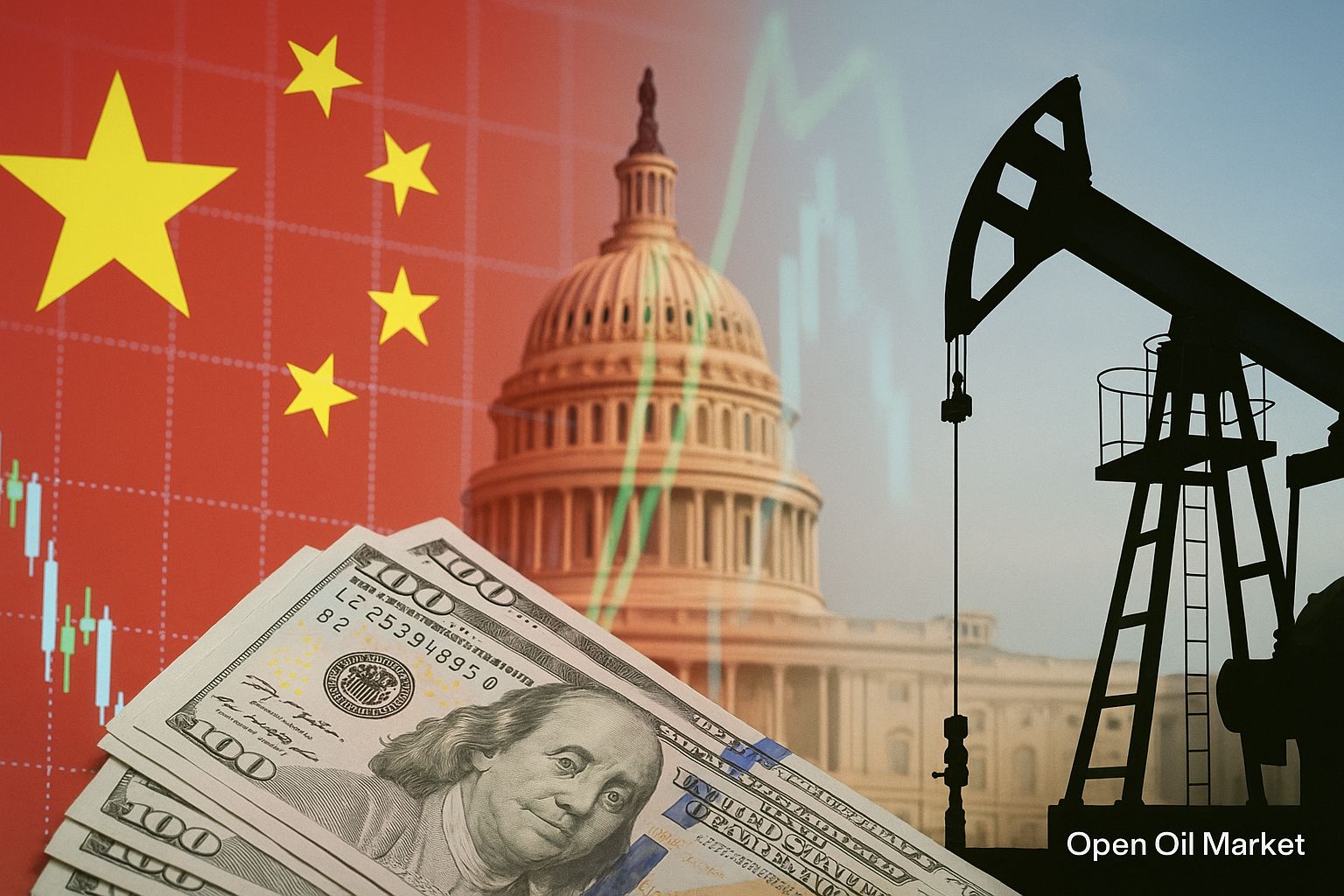
Key Economic Events and Corporate Reports for Saturday, November 8, 2025: Inflation in China, U.S. Government Shutdown, Conclusion of Earnings Season, and Macro Data’s Influence on Global Markets.
The Saturday agenda is relatively calm; however, investors are closely monitoring the release of key indicators and the week's outcomes. Focus is on inflation in China, with data to be published over the weekend, which could impact commodity markets and sentiment at the start of the upcoming trading week. In the U.S., the government shutdown continues, resulting in the cancellation of significant economic report releases (such as Non-Farm Payrolls), heightening uncertainty regarding the health of the world's largest economy. Nevertheless, global stock markets remain optimistic, buoyed by the Federal Reserve’s recent rate cut and the outcomes of corporate earnings season: most companies in the S&P 500 and Euro Stoxx 50 have already reported their third-quarter results, creating a generally positive market trend. In the Russian market, investors are assessing fresh issuer results and dividend decisions, while the ruble shows relative stability. In such conditions, it is important to pay attention to macroeconomic signals over the weekend and prepare for the new week ahead.
Macroeconomic Calendar (MSK)
- 04:30 (Sun) - China: Consumer Price Index (CPI) and Producer Price Index (PPI) for October.
Inflation in China: Expectations and Impact
- The rate of price growth in China remains subdued, with CPI expected around 0% year-on-year, nearing deflation. Sustaining low inflation signals weak domestic demand and may prompt Chinese authorities to consider additional stimulus to support the economy.
- The Producer Price Index (PPI) is likely to remain in negative territory, reflecting a decrease in industrial goods prices. The decline in producer prices is linked to both a high base from last year and subdued global demand for Chinese industrial products.
- Inflation data from China is crucial for commodity markets and emerging economies: ongoing deflationary trends could pressure metal and energy prices, while any signs of a revival in price pressure could bolster currencies and stocks of China’s trading partners. Investors will factor in these indicators when formulating strategies for the new week.
Oil and Commodity Markets
- Oil: Brent crude prices are holding steady at the mid-$60 range per barrel following a recent decrease. Market pressure has intensified due to OPEC+'s decision to increase production—this move stabilized the fuel market, but led to a decline in Urals and Brent prices to several-month lows. Additionally, concerns over a slowing global economy and weak inflation in China are limiting price growth, although potential geopolitical risks continue to support price premiums.
- Precious Metals: Gold is trading near record levels (≈ $3400 per ounce) amid heightened uncertainty and anticipation of monetary policy easing. Investors are using precious metals as a safe haven during the U.S. shutdown and weak macro data. Silver shows similar dynamics, lingering around $38 per ounce, with price fluctuations increasing in response to changes in inflation expectations and bond yields.
- Industrial Metals: Copper, nickel, and aluminum markets are reacting to news from China. Weak PPI and signs of declining industrial activity are putting downward pressure on metal prices: copper fluctuates near $4.5 per pound, reflecting a balance between supply shortages and demand declines. Prices for nickel and aluminum fell over the week by more than 1%, signaling expectations of an oversupply amid moderate consumption. Any stimulus measures from Beijing or improvement in statistics could reverse this trend.
Major Corporate Reports
- Palantir Technologies (PLTR) – An American developer of big data and artificial intelligence solutions. The third-quarter report reflected solid revenue growth driven by commercial demand for the AIP (Artificial Intelligence Platform). The company increased profit and margin; however, its capitalization remains under discussion: after substantial stock growth, investors evaluate how justified current multiples are amid a slowdown in government contracts and the need to maintain high growth rates.
- Advanced Micro Devices (AMD) – A U.S. semiconductor giant making strides in the AI chip segment. The latest quarterly report reflected double-digit revenue growth (+30% year-on-year) and a sharp jump in net income, driven by record orders from cloud providers. Its partnership with OpenAI (an agreement to supply 6 GW of GPU capacity in exchange for warrants) confirmed AMD's ambitions to compete with market leader NVIDIA. Investors view such strategic deals positively; however, they're closely monitoring margin dynamics and contract fulfillment.
- AstraZeneca (AZN) – One of Europe’s largest pharmaceutical companies. The British-Swedish company continued to expand revenue across all key segments—oncology, cardiology, and rare diseases show sales growth. AstraZeneca is investing significantly in expanding its drug portfolio (over 20 projects in late-stage clinical trials), laying the foundation for future growth. Shareholders appreciate the balance between innovation and stability: the company pays stable dividends (~2% annual yield), which is above the market average, enhancing its appeal to long-term investors.
- Samsung Electronics – A flagship of the Asian technology sector and a barometer of global electronics demand. The quarterly report from the South Korean corporation indicates the beginning of recovery in its semiconductor division: increased orders for memory chips and AI server components improved profitability following last year's slump. Simultaneously, Samsung's mobile business maintains steady sales of flagship smartphones, though competition in the segment is intensifying. Investors expect that the company’s diversification (from consumer electronics to chips) will help Samsung maintain its leading position and capitalize on the global trend towards artificial intelligence development.
- PhosAgro (MOEX: PHOR) – One of the largest fertilizer producers in the world and a representative of the Russian market. The company released its financial results for the first nine months of 2025: despite fertilizer price volatility, PhosAgro increased production by approximately 4% year-on-year and maintained stable profitability. A weak ruble and steady demand for phosphate fertilizers supported export revenue, although sanctions and logistical restrictions remain a focal point. Investors in the Russian market reacted positively to the company's report, anticipating continued generous dividend payouts for the year.
Other Regions and Indices: S&P 500, Euro Stoxx 50, Nikkei 225, MOEX
- Euro Stoxx 50: The earnings season in Europe is nearing completion—overwhelmingly, companies from the Euro Stoxx 50 have reported. The absence of new major releases means that markets are shifting their focus to macroeconomic factors. Next week, GDP data from the UK and Eurozone are expected, which will help assess the risk of recession amid high but slowing inflation. European indices ended the week on a positive note, reflecting the optimism from central banks' policy easing, and their dynamics will now depend on statistics and signals from the ECB.
- Nikkei 225 / Japan: In Japan, results for the first half of the 2025 financial year continue to be released. Major manufacturing and technology companies (automakers, electronics corporations) are generally pleasing investors with improved profits, thanks to a weak yen and recovering external demand. The Nikkei 225 index reached multi-year highs this week, supported by strong corporate earnings and the Bank of Japan's continued accommodative monetary policy. However, further yen strengthening or global risks could correct this growth, so the Japanese market is sensitively reacting to external signals.
- MOEX / Russia: The Russian stock market concluded the week with robust growth: the MOEX index surpassed the 2570-point mark amid an influx of capital into blue-chip stocks. Investors viewed local factors positively—specifically, Rosneft’s board approved recommendations for interim dividends for the first nine months, enhancing interest in the oil and gas sector. Additionally, the stability of the ruble (around 80–82 ₽ per US dollar) and moderate inflation in Russia boost the appeal of ruble-denominated assets. In the coming weeks, market participants await remaining corporate reports and monitor potential actions from the Bank of Russia, given the declining inflationary pressure.
Day's Summary: What Investors Should Focus On
- 1) Data from China: The release of Chinese CPI/PPI indexes over the weekend will act as the first indicator for markets before Monday. Any surprises—such as deepening deflation or an unexpected acceleration of inflation—could be reflected in commodity prices (oil, metals) and set the tone for trading in Asia. Investors should be prepared to react to these figures, especially companies dependent on Chinese demand.
- 2) U.S. Shutdown: The inaction of the U.S. government leads to an unprecedented pause in official statistics. The absence of the labor market report for October and uncertainty surrounding the release of U.S. inflation data (CPI) raises uncertainty regarding future Fed policy. Investors must monitor alternative indicators (private employment estimates, consumer surveys) and news regarding budget negotiations in Washington—any progress towards resuming government functions could sharply influence Treasury yields, the dollar's exchange rate, and sentiment in global markets.
- 3) Oil Prices and the Energy Market: Following OPEC+'s decision to increase production quotas, oil prices remain under pressure. Investors in the energy sector should pay attention to further OPEC+ rhetoric, statistics on oil reserves, and news from major producing regions. Price volatility in oil is possible, which in turn will affect the stocks of oil and gas companies and high-yield bonds of emerging markets.
- 4) Corporate Guidance: Though the peak earnings season has passed, the impact of corporate news remains. Guidance and comments from management of several tech giants (semiconductors, AI) and consumer companies will shape sentiments in specific sectors. Special attention should be given to updated sales forecasts from retailers for the holidays and order dynamics in industry—these leading indicators could redirect investors' focus from macroeconomic risks to specific industry growth stories.
- 5) Risk Management Over the Weekend: Given the high levels of stock indices and uncertainty (shutdown, geopolitics, data from China), investors are advised to maintain caution. Ahead of the new trading week, it is beneficial to review stop-loss levels on key positions, assess the need for hedging (for instance, through gold or options), and prepare for potential price gaps at Monday's market open. A well-thought-out action plan will help tackle the new week equipped, regardless of developments.
Markets on November 8, 2025: Cryptocurrencies, Commodities, and Currencies
Cryptocurrencies: Bitcoin (BTC/USD) is correcting -2.1% on Friday, dropping to $125,300, losing about $2,700 during the day. After hitting multi-month highs above $128,000 last week, the largest cryptocurrency has encountered profit-taking. Ethereum and other altcoins are also primarily in the negative, reflecting a decrease in risk appetite over the weekend.
Stock Indices and Futures:
- Shanghai Composite: 3,715.8 (+0.4%)
- Hang Seng Futures: 25,100 (+0.8%)
- Nikkei 225 Futures: 43,850 (+1.2%)
- Euro Stoxx 50 Futures: 5,410 (+0.3%)
- S&P 500 Futures: 6,450.5 (+0.1%)
Commodities:
- Brent Oil: $67.20/barrel (+0.5%)
- Natural Gas (HH): $3.01/MMBtu (-0.3%)
- Gold: $3,389.50/ounce (-0.3%)
- Silver: $37.80/ounce (+0.2%)
- Copper: $4.47/pound (+0.4%)
- Nickel: $13,200/ton (-1.0%)
- Aluminium: $2,560/ton (-0.9%)
Foreign Exchange Market (Forex):
- EUR/USD: 1.1625 (+0.1%)
- USD/RUB: 81.23 ₽ (-0.2%)