Global Economic Events on May 30, 2026: China's PMI, U.S. Monetary Policy, Bank of England Comments, Oil, and Investors Preparing for a New Trading Week
Saturday, May 30, 2026, does not appear to be a busy day in terms of classic corporate earnings reports: major stock exchanges in the U.S., Europe, Japan, and Russia are closed for the weekend, and the calendar for significant public company announcements has noticeably emptied after an active week. However, this day should not be considered entirely uneventful for investors. The focus is shifting to economic events related to China, U.S. and UK monetary policy, and market preparations for the beginning of June.
For investors from the CIS, the key importance lies not so much in Saturday's trading activity, but in the formation of expectations ahead of Monday. Data on China's business activity, signals from the Federal Reserve, comments from Bank of England representatives, and trends in raw material markets can influence the dollar, yuan, oil, industrial metals, exporter stocks, the banking sector, and bonds in emerging markets.
The Main Feature of the Day: A Saturday Pause in the Stock Markets
May 30 falls on a Saturday, meaning that the main exchanges—NYSE, Nasdaq, LSE, Euronext, Deutsche Börse, Tokyo Stock Exchange, and the Moscow Exchange—will not hold their usual trading sessions. This reduces the volume of market transactions but does not cancel the flow of information. For investors, Saturday becomes a day for analysis, portfolio reassessment, and risk evaluation ahead of the new trading week.
The most critical questions of the day include:
- Will China's industrial activity remain in the expansion zone?
- What signals will emerge from the U.S. monetary agenda?
- Will oil prices hold their decline post-geopolitical premium?
- How are investors preparing for June data on inflation, employment, and industry?
- Which sectors might gain an advantage at the start of the new week?
China's PMIs: The Key Macroeconomic Indicator of the Day
The main economic event on May 30, 2026, is the publication of China's PMI indices for May. For the global market, this is one of the most sensitive indicators, as China remains a key center for industrial demand, raw material consumption, logistics, exports, and technological production.
Investors will pay special attention to three components:
- Manufacturing PMI – reflects the state of industry, export orders, and enterprise capacity.
- Non-Manufacturing PMI – shows the dynamics of services, construction, and domestic demand.
- Composite PMI – provides a broader picture of business activity in the world’s second-largest economy.
In April, China's manufacturing PMI was hovering around the 50-point mark, the threshold separating growth from contraction in business activity. If the May figure stays above 50, markets may interpret this as a signal of resilience in the industrial cycle. Conversely, should the index fall below this level, pressure may intensify on Asian stocks, commodity currencies, industrial metals, and companies reliant on Chinese demand.
Why China's PMI Matters for CIS Investors
For the CIS audience, Chinese statistics hold direct practical significance. China influences global prices for oil, gas, coal, copper, steel, aluminum, fertilizers, and transportation services. A weak PMI could point to cooling demand, while a strong figure may support expectations for raw material and industrial product exports.
For Russian and regional investors, the following channels of influence are crucial:
- Oil and Oil Products: A weak Chinese industry could limit demand for energy resources.
- Metals: Copper, aluminum, and steel are sensitive to construction and China's industrial cycle.
- Emerging Market Currencies: A decline in PMI may intensify investor shifts towards the dollar and safe havens.
- Exporter Stocks: Companies in the resource sector depend on expectations of Asian demand.
- Logistics and Transport: PMI helps assess future activity in international trade.
United States: Monetary Policy Remains in the Spotlight
On the American calendar for May 30, the semiannual monetary policy report for Congress stands out. Even though Saturday's format does not trigger immediate trading reactions, the document's content is crucial for evaluating the future trajectory of the Federal Reserve, the yield on U.S. Treasuries, and the global risk appetite.
Investors will seek answers to several questions:
- How concerned is the Fed with inflationary pressures?
- Does the regulator see signs of a cooling labor market?
- Is the Fed prepared to maintain a hawkish stance longer than the market anticipates?
- How are risks to financial stability assessed?
- Could the Fed's policy support the dollar and pressure emerging market assets?
For CIS markets, this is vital in terms of the dollar exchange rate, bond yields, the cost of external funding, and the reassessment of global risk assets. The more hawkish the Fed's rhetoric, the more cautious investor behavior is likely to be regarding equities, commodity currencies, and debt instruments in emerging countries.
United Kingdom: Speaking Engagement by Bank of England Representative
Another event of the day is a speaking engagement by Bank of England representative Catherine Mann. For global investors, such comments are significant not only for the British pound but also for the entire European yield curve. The UK remains an indicator of how resilient inflation is in developed economies.
If comments lean hawkish, this could support the pound and yield on British bonds. If the emphasis shifts to economic slowdown and risks to consumption, investors may intensify their expectations for a more dovish stance from the Bank of England. This would provide additional guidance for European stocks and bonds ahead of June’s central bank decisions.
Corporate Reports: Major Companies Take a Pause
Corporate earnings reports on May 30, 2026, appear limited. According to current calendars, no significant reports from leading companies in the S&P 500, Euro Stoxx 50, Nikkei 225, or MOEX are scheduled for Saturday. This is a typical situation for the weekend: major releases from American, European, Japanese, and Russian public companies are usually announced on weekdays, either before market opening or after trading has closed.
For investors, this means that the focus will shift from individual issuers to the macroeconomic background. Instead of quarterly profits, attention will turn to the following factors:
- The dynamics of global stock indices following the week’s closing;
- Expectations regarding the Fed, ECB, and Bank of England rates;
- Prices for oil, gas, and industrial metals;
- China’s PMI as an indicator of global demand;
- Preparation for the new week of corporate announcements.
The absence of major reports does not diminish the significance of the day; on the contrary, investors gain an opportunity to assess macroeconomic risks and recalibrate trading scenarios without the noise of corporate releases.
Market Holidays and Regional Liquidity
May 30 also coincides with the closure of various regional exchanges due to holidays, including those in Egypt and Turkey. For global investors, this is not a systemic factor at the level of the U.S., Europe, Japan, or China, but it may affect local liquidity, regional ETFs, Middle Eastern instruments, North African bonds, and related debt markets.
For CIS investors, this is particularly important in the context of the Turkish lira, regional bonds, the banking sector, commodity trading, and capital flows into emerging markets. Low liquidity during holiday periods can exacerbate movements in response to unexpected news.
Commodity Market: Oil Remains a Key Risk Indicator
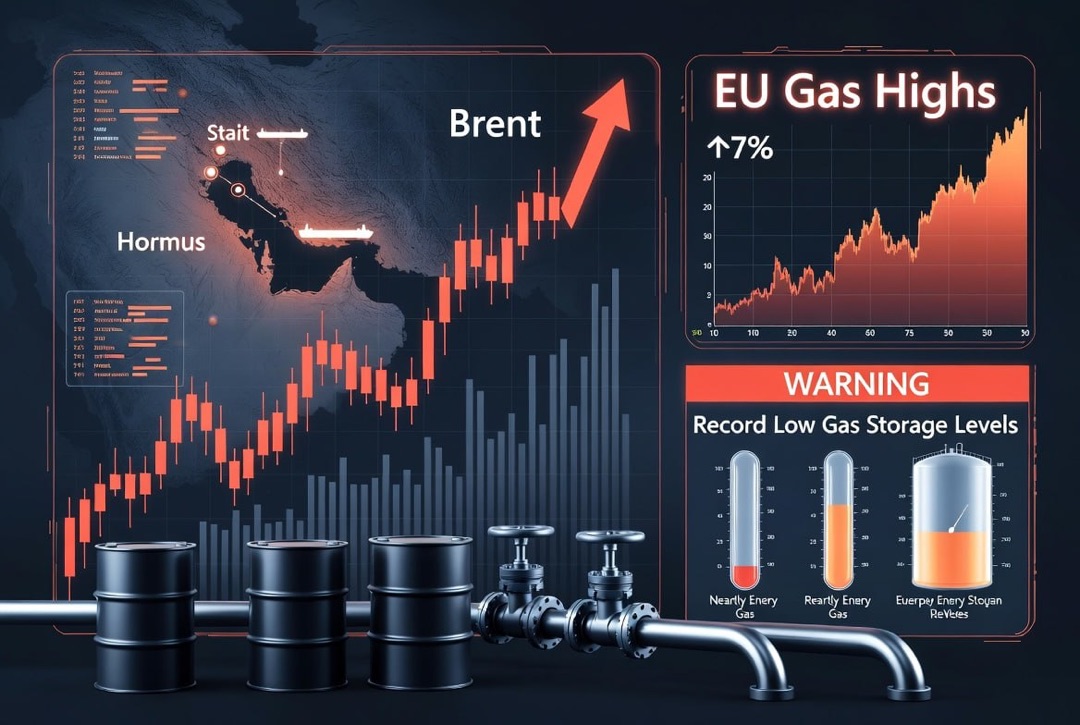
Oil continues to be one of the primary barometers of the global economy. Following a period of heightened geopolitical tension, markets are closely watching whether the decline in oil prices will persist and whether the risk premium in energy prices will diminish. This is critically important for inflation: cheaper oil reduces pressure on consumer prices, transportation costs, and central bank rate expectations.
For CIS countries, the oil factor has a dual nature. On one hand, falling oil prices may lessen inflationary pressures worldwide and bolster risk appetite. On the other hand, for resource exporters, this signifies potential pressure on budget revenues, currency inflows, and stocks in the oil and gas sector.
Preparing for Monday: What Markets Will Evaluate After the Weekend
Since Saturday does not provide a full trading session on the largest exchanges, significant attention shifts to Monday, June 1. Markets will be gearing up for the publication of the ISM Manufacturing PMI in the U.S., construction spending data, and new signals regarding the labor market, inflation, and the debt market.
Investors should outline several scenarios in advance:
- Strong Chinese PMI and dovish central bank rhetoric: a positive scenario for stocks, commodities, and currencies from emerging markets.
- Weak Chinese PMI and a hawkish Fed stance: a negative scenario for risk assets, industrial metals, and commodity currencies.
- Mixed data: selective demand for quality stocks, defensive sectors, and bonds is likely.
- Rising geopolitical premium: possible return of demand for oil, gold, the dollar, and protective instruments.
What Investors Should Pay Attention to on May 30, 2026
The main takeaway of the day is that Saturday, May 30, 2026, is not a day of mass corporate reporting but remains vital for assessing the global macroeconomic backdrop. Investors should focus not on individual companies, but rather on the interplay of macro data, interest expectations, and commodity dynamics.
Key benchmarks for investors include:
- monitoring China's PMI and the market reaction to figures around the 50-point mark;
- evaluating Fed signals through the U.S. monetary agenda;
- considering Bank of England comments on inflation and rates;
- checking portfolio sensitivity to oil, the dollar, yuan, and industrial metals;
- preparing scenarios for Monday, especially regarding exporter stocks, banks, bonds, and commodity companies;
- not to overestimate the absence of corporate reports: a pause in reporting often enhances the significance of macroeconomic signals.
For the long-term investor, May 30 marks a day for strategic adjustment. As global markets enter June with high sensitivity to rates, inflation, China, and oil, the most rational approach is not to seek short-term impetus in a sparse earnings calendar, but to pre-define which macroeconomic data could alter the portfolio structure at the beginning of the following week.