Latest Energy Sector News as of April 24, 2026: Dynamics of the Oil and Gas Market, Development of Power Generation, and Investments in Renewable Energy Sources
Oil, gas, and energy news for Friday, April 24, 2026, presents a dominant theme: global energy markets are trading not only on the balance of supply and demand but also on the physical risk of supply. For investors, oil companies, fuel companies, traders, refineries, and other participants in the energy sector, this signals a shift into a phase of heightened volatility where oil prices, gas markets, petroleum products, electricity, and renewable energy sources are intertwined more closely than usual.
As Friday begins, the global energy sector appears as follows: oil remains above a psychologically significant level, the gas market operates under flexibility constraints, refining faces risks concerning diesel and jet fuel, and the power sector is rapidly adjusting to increased load and expensive molecules. As a result, energy is once again becoming the primary channel through which geopolitical influences impact inflation, industry, and corporate margins.
- Oil: the market remains in a heightened premium zone due to logistical and military risks.
- Gas and LNG: Europe and Asia are restructuring their purchasing strategies, but system flexibility remains limited.
- Oil products and refineries: the risk is now shifting towards diesel and jet fuel.
- Electricity and renewables: increasing demand is accelerating investments in networks, gas generation, solar generation, and storage solutions.
The Oil Market is Again Governed by Geopolitical Laws
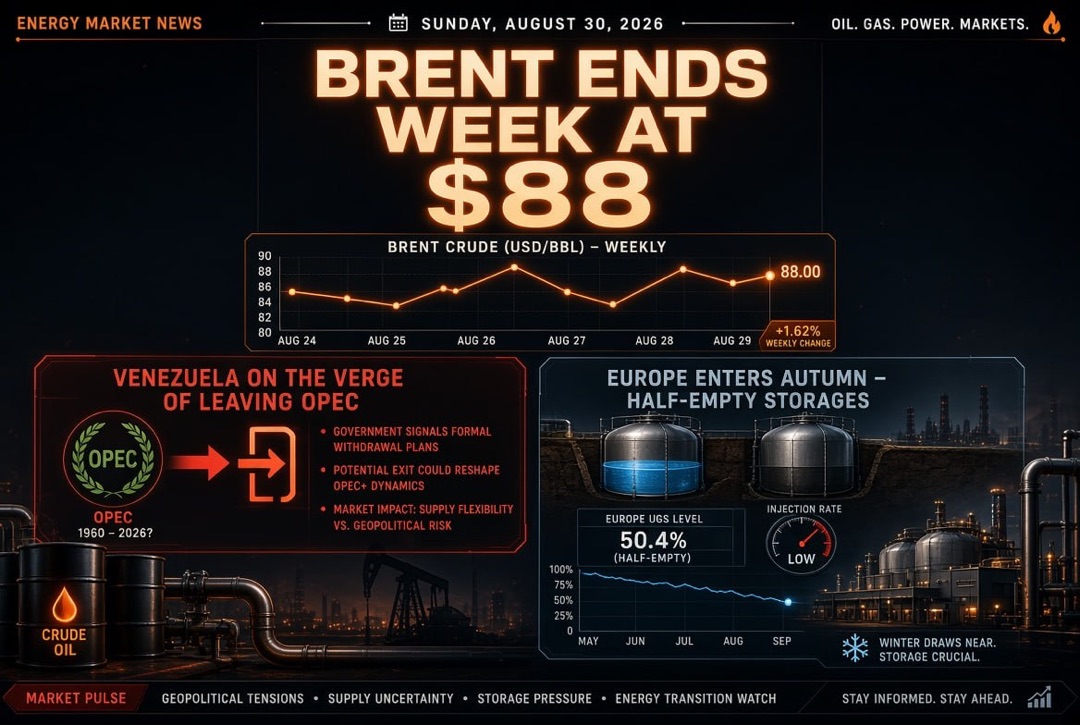
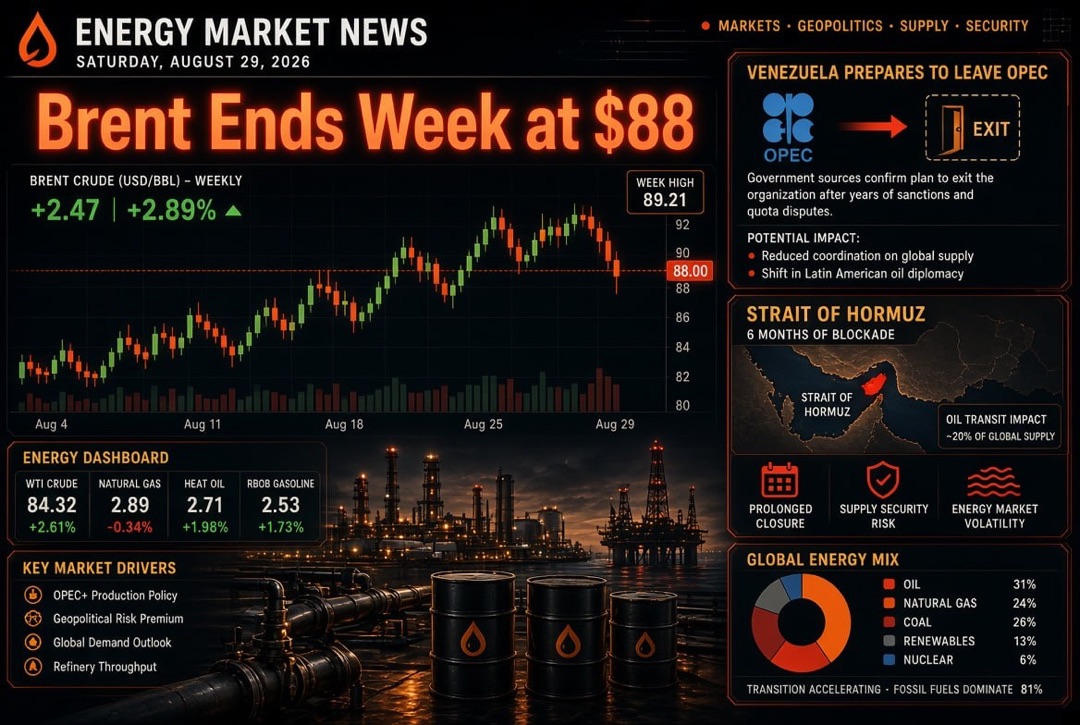
The global oil market enters Friday with a stringent sensitivity to geopolitical factors. A key element is the prevailing restrictions and high uncertainty surrounding shipping through the Strait of Hormuz, which before the crisis accounted for around one-fifth of the world’s maritime oil supplies. This is no longer just background news: the risk premium is embedded in quotes, physical differentials, and buyers' decisions regarding alternative feedstocks.
For oil companies and investors, there is another crucial point: the current rise in oil prices does not appear to be a sustainable bull cycle of the classic type. International and private analysts are already cutting forecasts for consumption, indicating that the market is facing both reduced available supply and weaker demand in the second quarter. In other words, oil prices are rising not due to the strength of the global economy, but due to supply and logistics shocks.
Against this backdrop, the position of OPEC+ remains cautious. Formally, the group continues to gradually increase quotas, but for the market, this is more of a political signal than a real increase in barrels. As long as logistics in the region are not normalized, additional volumes on paper do not equate to additional oil in tankers. Therefore, in the short-term perspective, the market will focus less on cartel decisions and more on the actual passability of routes, vessel insurance, and the condition of export infrastructure.
Gas and LNG Enter a Phase of Rigorous Reevaluation of Routes
While pricing dominates oil discussions, the gas and LNG markets highlight flexibility and replacement themes. Europe is entering the injection season following winter with a more strained starting position than the previous year, shifting focus to the speed of filling storage, coordination of purchases, and temporary measures to support consumers and industry. For the gas market, this indicates that the summer season no longer appears as a "calm window" but is becoming part of the struggle for winter security.
In Asia, the situation is equally telling. LNG imports in the region are declining, with China effectively acting as a buffer for the system: internal demand is cooling, some cargoes are being resold, and the market is receiving a temporary respite. However, this respite is misleading. Should summer electricity demand in Asia accelerate, the market will again confront competition for spot cargoes. For sensitive importers, this already translates into rising costs and a return to more expensive fuel types.
A telling example is Pakistan, which has returned to the spot LNG market amid a fuel shortage to meet rising electricity demand. For the global energy sector, this is an important signal: developing markets remain the first victims of gas volatility. For gas suppliers and traders, this raises the cost of flexibility, portfolio diversification, and access to alternative logistics.
Oil Products and Refineries Come into Focus
The primary risk for the oil products sector is currently not in crude oil itself, but in refining. Asian refineries are reducing their throughput as they are compelled to replace Middle Eastern medium-sulfur grades with lighter crude from the U.S., West Africa, and Kazakhstan. This restructuring negatively impacts the yield of middle distillates. Consequently, the market is receiving the most sensitive blow here: less diesel, less jet fuel, and higher margins on scarce fractions.
The diesel market is particularly affected. Diesel remains a critical product for freight logistics, industry, agriculture, and parts of the electric power sector in developing countries. If the middle distillate shortage persists, diesel and jet fuel will become the primary channels for transmitting shocks to end tariffs and inflation.
European refineries operate under a challenging dual reality. On one hand, the region requires maximum refining and fuel inventory control. On the other hand, rising raw material costs are eroding part of the margins, particularly for less complex plants. Thus, for the refining sector, the coming weeks will be determined not by absolute oil prices but by spreads in diesel, jet fuel, and the ability to swiftly adjust product mixes.
Electricity Becomes the Second Front in the Energy Crisis
The electricity market is increasingly living its own life, but pressure from oil and gas directly affects it. Demand growth in the U.S. and parts of other markets continues due to electrification, industrial demand, and especially data centers. This signifies a vital structural shift: the energy sector can no longer rely on the flat consumption profile characteristic of the previous decade.
Hence, a new investment rationale emerges. Companies capable of simultaneously developing networks, gas-powered peak and backup generation, solar power, and storage receive the best positioning. Consequently, the market is closely monitoring not only fuel prices but also the project portfolios of utilities. For investors, this indicates that the shares of electricity providers, networking equipment, storage, and certain gas generation remain essential protective segments within the global energy sector.
Electricity is now also inseparable from macroeconomic analysis. The higher the volatility in gas prices, the greater the pressure on tariffs, government subsidies, and discussions surrounding energy accessibility for industry. Therefore, in 2026, the electricity market encapsulates not just a theme of rising demand but also a topic of new industrial policy.
Renewables and Storage Transition from Climate Issues to Energy Security
Renewables in the current cycle appear not only as a decarbonization story but also as a hedging tool against energy prices. Europe has seen a noticeable increase in interest in rooftop solar, home storage, and combined self-supply solutions. This is no longer a niche consumer trend but a rational response to high electricity costs and dependency on imported fuel.
Structurally, this shift is reinforced by a longer-term trend. According to IEA forecasts, solar and wind generation will cover an increasing share of demand growth, with renewable energy sources effectively meeting all consumption increases in the medium term within the European Union. For the global market, this means that investments in renewables, storage, inverters, networks, and system flexibility are becoming part of the core energy infrastructure rather than an "alternative."
Attention should also be given to the evolving pricing strategies. More countries are striving to loosen the connection between expensive gas prices and electricity costs by transitioning green generation to longer and more stable price mechanisms. For investors, this is a positive signal: the market is seeking not only new capacity but also a new model for monetizing energy.
Coal Remains a System Insurance Rather Than a Long-Term Bet
Coal in 2026 does not return as an unconditional favorite but instead fulfills its role as a contingency cushion. When gas is expensive or physically constrained, many systems rely on existing coal capacities to avoid electricity shortages during peak demand. This is particularly evident in Asia, where coal remains the bedrock of the energy balance.
India exemplifies this: the country maintains significant coal reserves and prepares its system for summer demand increases, recognizing that gas may not always provide the needed flexibility at acceptable prices. For fuel producers and market participants, this suggests that the coal segment may remain tactically strong, but strategically, its narrative is still limited by the growth of renewables, network modernization, and future environmental regulations.
Russia and Eurasia Maintain Significance for the Global Energy Market
The Eurasian direction remains crucial for the global energy balance. Despite infrastructural limitations and attacks on facilities, Russia continues to supply oil to the world market; however, its infrastructure has become a weak link. Attacks on ports, terminals, and refineries have already reduced production and refining, adding another layer of risk to global supply.
For buyers, this means a simple reality: even if Russian barrels continue to flow, the reliability of the channel can no longer be assessed solely by the discount price. Now, export routes, the resilience of port logistics, the possibility of blending grades, and the willingness of Asian refiners to accept more volatile supplies have become important. Therefore, Russian oil remains a crucial part of the global balance yet is traded not in terms of "cheaper than Brent," but rather based on "availability plus operational risk."
What This Means for Investors, Refineries, and Energy Sector Participants
As of the morning of Friday, April 24, 2026, the global energy market highlights the following key takeaways:
- Oil remains expensive due to supply risks, not due to overheated demand. This makes the market particularly sensitive to news regarding logistics and diplomacy.
- The most vulnerable link right now is oil products. Diesel, jet fuel, and complex refining appear more crucial than abstract price increases in Brent.
- Gas and LNG are entering a season of intense competition for flexibility. Portfolio players with access to alternative sources and routes will come out on top.
- Electricity, networks, storage, and renewables are gaining additional momentum. This is no longer just a climate issue but a direct response to a new wave of energy instability.
- Coal and backup capacities temporarily enhance their roles in energy systems. However, this is a tactical insurance measure and does not negate the long-term energy transition.
The conclusion for the oil, gas, electricity, renewables, coal, oil products, and refiners market tomorrow appears as follows: the global energy sector is entering a phase where the price of a barrel, a cubic meter, and a megawatt-hour is increasingly defined not just by fundamentals but also by the resilience of the entire supply chain. For investors and energy companies, this elevates the value of diversification, logistical optionality, complex refining operations, and infrastructure resilience.