Current News in Oil and Gas and Energy for Friday, July 10, 2026: Fuel Deficits, Risks in the Strait of Hormuz, Brent and WTI Trends, Gas and LNG Markets, Electricity, Renewables, Coal, Refineries, and Key Signals for Global Energy Sector Investors
Energy Sector News for Friday, July 10, 2026 is presenting a complex yet critical picture for investors: global oil prices appear less panic-driven than during the acute phase of the Middle Eastern crisis, yet the market for fuels, LNG, gas generation, coal, and electricity remains tense. The main topic of the day is the divergence between relatively moderate prices for Brent and WTI and the ongoing deficit of gasoline, diesel, and refining capacities.
For oil companies, fuel traders, refineries, energy holdings, and institutional investors, the key question now is not just the price per barrel, but the stability of the entire supply chain: extraction, transportation, refining, storage, export, electricity, and end demand. The geography of risks is global: the Middle East, Europe, the USA, Russia, China, India, Southeast Asia, and the LNG markets simultaneously impact the balance of the global fuel and energy complex.
Oil: Brent and WTI Decline, but Geopolitical Premium Remains
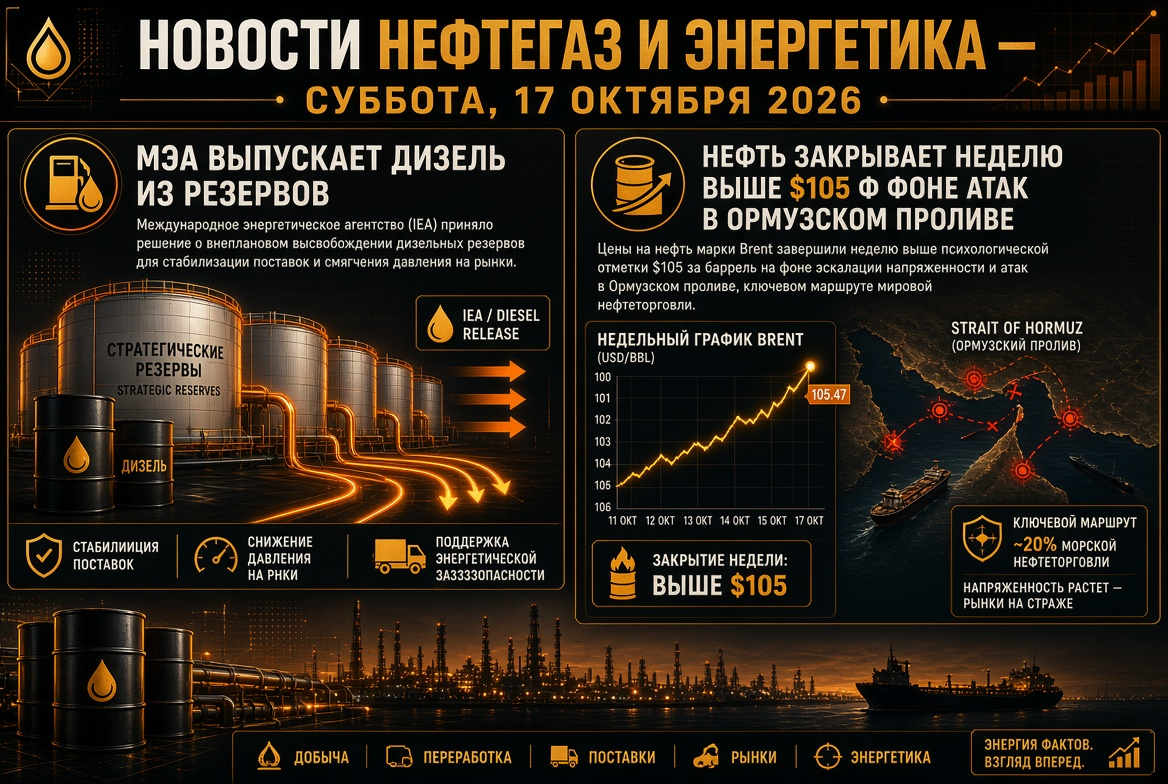
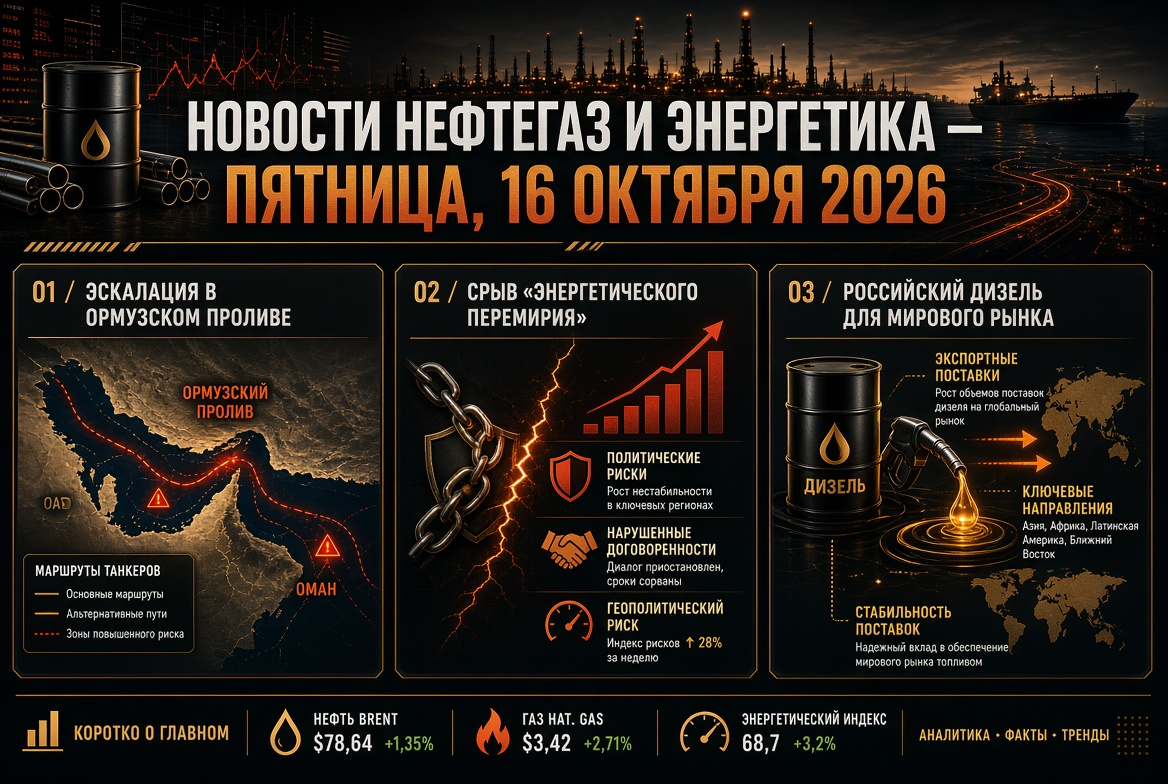
The oil market maintains a nervous balance. Brent trades near the upper part of the $70 range per barrel, while WTI hovers around the low $70s, below the peak levels observed during the escalation of the conflict in the Strait of Hormuz. Formally, the oil market has gained some relief due to expectations of a recovery in part of the supplies, but the premium for geopolitical risk remains significant.
Key factors for the oil market include:
- uncertainty surrounding the stability of shipping through the Strait of Hormuz;
- an increase in supply from OPEC+ countries following the decision to raise production quotas;
- expectations of a rise in global oil inventories in the second half of 2026;
- seasonal fuel demand in the USA, Europe, and Asia;
- logistical adjustments involving Russian, Middle Eastern, and American oil.
For investors, this indicates a transition of the oil market from a mode of direct price shock to heightened volatility. Even if Brent fails to secure levels above $80 per barrel, the oil and gas sector remains sensitive to any news regarding tanker routes, sanctions, export restrictions, and refinery loadings.
OPEC+ and Supply Balance: More Oil, but Less Confidence
OPEC+ continues to gradually return part of its production to the market. The additional quota increases starting in August strengthen expectations for a rise in supply; however, this factor alone does not eliminate risks. For the global energy sector, not only extraction matters but also the ability to physically deliver raw materials to refineries, process them, and bring fuels to consumer markets.
This is why market reactions remain subdued. An increase in production may exert downward pressure on oil prices, but it does not necessarily lead to a rapid decline in the costs of gasoline, diesel, and aviation fuel. If logistical bottlenecks arise, such as shipping, tanker insurance, port capacity, and refinery access, then an excess of raw materials does not automatically result in an excess of fuel.
For oil companies, this creates a mixed effect: the upstream segment may face margin pressure with declining oil prices, while the downstream and refining sectors benefit from high crack spreads—the difference between the cost of crude oil and refined products.
Fuels and Refineries: Gasoline and Diesel Become the Main Center of Tension
The most significant signal for the energy sector on July 10, 2026, is the tension in the fuels market. Despite a calmer oil dynamic, gasoline, diesel, and middle distillates remain expensive due to low inventories, limited refining capacities, and disruptions in export flows.
Key risks for the fuels market include:
- rising refining margins in Europe and the USA;
- decreasing availability of diesel on the international market;
- restrictions on Russian diesel exports following attacks on refinery infrastructure;
- peak summer demand for gasoline and aviation fuel;
- the deficit of insurable and predictable logistical routes.
For fuel companies and market participants, this means maintaining high operational loads. Fuel buyers are concerned not only with price and volume but also with guaranteed supply. Against this backdrop, the role of digital B2B platforms, long-term contracts, transparent logistics, supply insurance, and credit tools for industrial consumers is increasing.
Gas and LNG: Europe Competes with Asia for Flexible Supplies
The gas market remains one of the most sensitive segments of the global energy sector. In Europe, TTF prices remain elevated, and gas inventories appear less comfortable than in periods of market calm. Meanwhile, the USA remains a key supplier of LNG, but the distribution of American cargoes is changing: some volumes are heading to Asia and markets with more attractive premiums.
For Europe, the main risk is the urgent need to prepare for the winter of 2026–2027. The low levels of storage relative to historical norms increase the market's sensitivity to hot weather, LNG disruptions, competition from Asia, and new geopolitical events.
For Asia, the situation is also ambiguous. China, India, Japan, South Korea, and Southeast Asian countries are competing for LNG supplies, but different economies exhibit varying price stability. The higher the gas price, the stronger the incentive to temporarily revert to coal generation or refined products in industry becomes.
Electricity: Demand Grows Faster than System Flexibility
Global electricity demand continues to rise due to data centers, industrial electrification, air conditioning, transportation, and the digital economy. For investors, this is one of the most resilient long-term trends in energy. Electricity is becoming the central asset of the new energy sector rather than just a final generation product.
Key investment areas in the electricity sector include:
- upgrading networks and intersystem connections;
- gas generation as a backup for peak demand;
- energy storage and industrial batteries;
- demand management systems;
- infrastructure for data centers and energy-intensive production.
The issue is that the introduction of renewable energy sources and the growth in consumption is occurring faster than the development of networks and storage systems. As a result, the electricity sector remains dependent on gas, coal, and hydropower, particularly during hot weather, weak winds, or low solar output periods.
Renewables and Energy Transition: Capital Flows into Clean Energy, Yet Traditional Energy Remains Relevant
Renewable energy continues to be the main long-term investment direction. Solar and wind generation, storage systems, grids, hydrogen projects, and low-carbon technologies are receiving increasing amounts of capital. However, the 2026 energy crisis shows that the energy transition does not negate the need for reliable baseline and backup capacity.
For investors, the key is not in the slogan "oil versus renewables," but in achieving a practical portfolio balance. In the coming years, companies that succeed in combining:
- sustainable cash flow from oil, gas, and refined products;
- investments in electricity, grids, and storage;
- access to LNG and flexible gas generation;
- energy efficiency technologies;
- low debt loads and capital expenditure control.
Renewables are growing, but without grids, storage, and balancing generation, their investment value is limited. Thus, the largest energy companies increasingly view electricity, gas, and refined products as part of a unified risk management system.
Coal: Asia Supports Demand Despite Climate Agenda
Coal remains a crucial element of the global energy balance, particularly in Asia. Chinese coal generation showed renewed growth in 2026 after a period of decline due to rising electricity demand and the heatwave putting pressure on the power system. India continues to rely on coal as a basic resource for both industry and consumers.
For the global market, this indicates that decarbonization will be uneven. Europe and some developed economies are reducing their share of coal, while Asia leverages it as an energy security tool. At high gas prices, coal becomes an alternative backup, especially for countries with limited currency resources and high sensitivity to electricity costs.
For coal companies, the outlook remains mixed: in the long term, the sector faces regulatory pressures, but in the short term, it receives support from increasing electricity demand, industrial production, and disruptions in the gas market.
Russia, Europe, the USA, and Asia: The Global Energy Sector Enters a Phase of Regionalization
The global energy market is increasingly dissimilar to a unified, open system. Flows of oil, gas, LNG, coal, and refined products are being redistributed for political, sanction-related, insurance, and logistical reasons. Russia is intensifying its internal control over the fuels market, Europe is heightening its focus on gas reserves, the USA is leveraging its status as the largest producer and exporter of LNG, and Asia is competing for long-term supplies.
This regionalization creates new opportunities for companies that can operate across multiple markets simultaneously. Value is not only conferred to production assets but also to trading, storage, logistics, digital platforms, oil depots, fleets, refineries, and electric power infrastructure.
What Matters to Investors in the Energy Sector on July 10, 2026
For investors in oil and gas, energy, renewables, coal, refineries, and refined products, the main takeaway of the day is that the market remains profitable but more complex. A simple bet on rising oil prices no longer captures the full picture. It is essential to analyze refining margins, fuel inventories, gas prices, LNG availability, grid conditions, electricity demand, and geopolitical supply routes.
What to Watch for in the Coming Days:
- the dynamics of Brent and WTI after new signals regarding the Strait of Hormuz;
- OPEC+ decisions and the actual performance of production quotas;
- prices for diesel, gasoline, and aviation fuel;
- utilization rates of refineries in the USA, Europe, Russia, and Asia;
- levels of European gas storages;
- redistribution of LNG between Europe and Asia;
- the growth of coal generation in China and India;
- investments in electric grids, energy storage, and renewables.
Friday, July 10, 2026, illustrates that the global energy sector remains in a transitional phase between the old oil and gas model and the new energy architecture. However, this transition does not diminish the significance of oil, gas, coal, and refined products—instead, it underscores the management of supplies, refining, and energy infrastructure as the key competitive advantage for companies and investors.