Oil and Gas News and Energy – Wednesday, February 11, 2026: Sanctions Pressure, Oil Supply Redirecting, and Record LNG Imports
By early February 2026, the global energy market is navigating a set of conflicting factors. On one side, oil and gas supply is starting to outpace demand, creating conditions for a surplus that is maintaining prices at moderate levels. On the other hand, persistent geopolitical tensions and sanctions pressure prevent oil prices from sharply declining. Western countries continue to tighten restrictions on Russian hydrocarbons: new measures have been introduced in early February, including a reduction in the price cap on Russian oil and additional bans on maritime shipments.
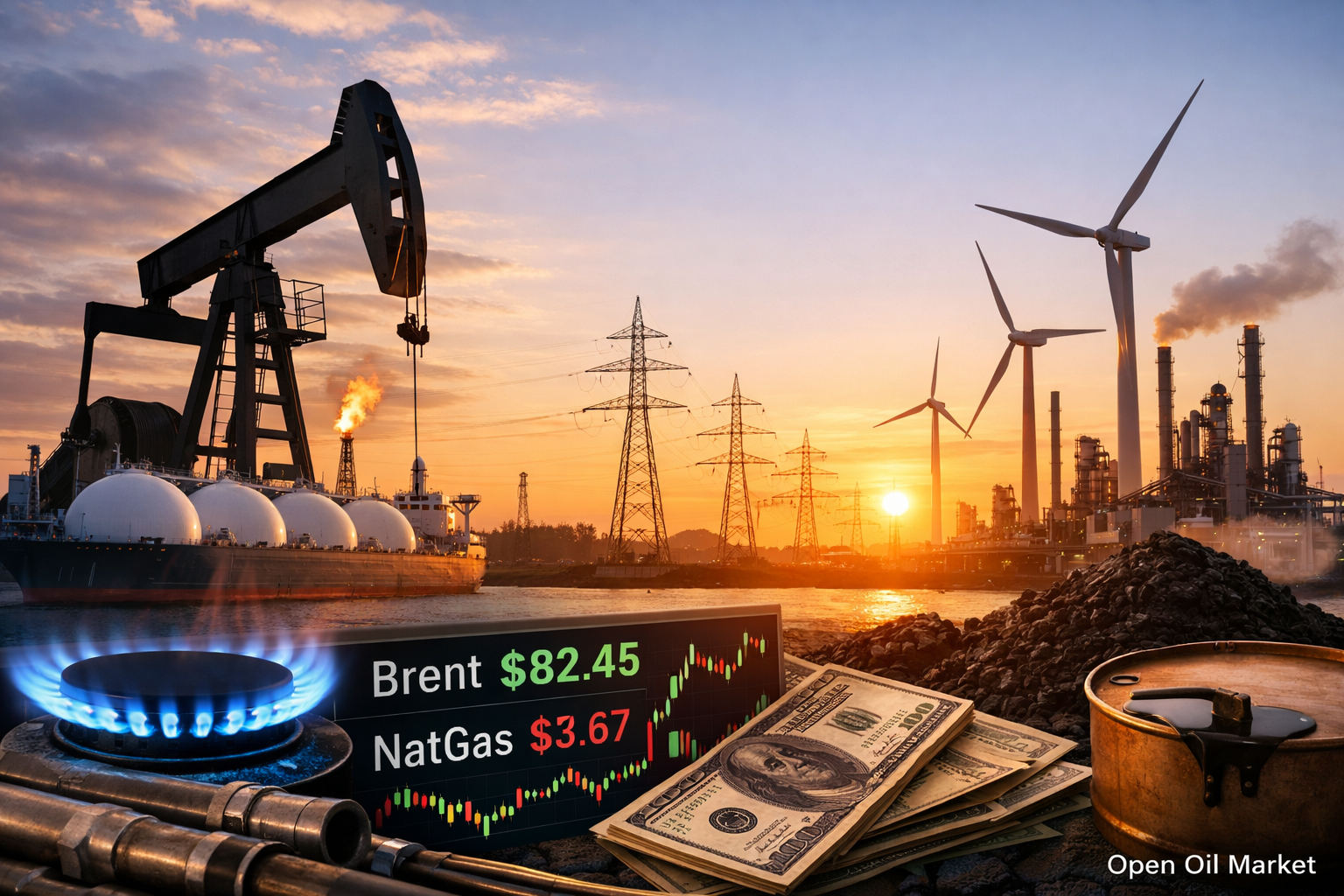
Under external pressure, key importers like India are cutting back on purchases of Russian energy resources, redirecting demand towards alternative suppliers. Oil quotes remain relatively stable (Brent around $68–69 per barrel) thanks to expectations of supply excess. The European gas market is enduring the winter without much commotion: despite the rapid depletion of reserves, mild weather and record LNG imports are helping to stabilize the situation. At the same time, the global energy transition is gaining momentum — record capacities of clean energy are being commissioned, although oil, gas, and coal still constitute the core of the global energy balance. Below is an overview of key events and trends in the energy sector as of mid-February 2026.
Oil Market: Supply Surplus Amid Sanctions
At the beginning of February, global oil prices stabilized following a slight increase. The North Sea Brent is trading around $68–69 per barrel, while the U.S. WTI is about $64–65. The oil market is balancing between excess supply and geopolitical risks. Analysts forecast a significant oil surplus in the first quarter of 2026 — the International Energy Agency (IEA) estimates that global supply could exceed demand by approximately 4 million barrels per day. However, various threats of supply disruptions prevent prices from dropping significantly below current levels.
- Sanctions and Geopolitical Risks. In February, another round of sanctions went into effect: the EU and the UK lowered the price cap on Russian oil to $44 per barrel and expanded restrictions on tanker shipments of crude from Russia. The U.S. has adopted a tougher stance towards Iran, not ruling out military actions against its oil infrastructure. The political crisis in Venezuela has temporarily reduced exports from there. All these factors increase the risk premium in the oil market, partially offsetting the pressure from supply surplus.
- Redirection of Export Flows. Major Asian buyers are adjusting oil imports under the influence of Western diplomatic pressure. India, which had recently imported over 2 million barrels per day of Russian crude, has begun to sharply reduce these supplies. In January 2026, Russian oil imports to India fell to approximately 1.2 million barrels per day — a nearly year-to-year low. According to U.S. President Donald Trump, the new trade deal with India entails a de facto withdrawal of Indian refineries from purchasing Russian oil. Although New Delhi has not officially announced an embargo, the largest Indian companies have already stopped placing orders for Russian crude. As a result, Moscow is redirecting exports to other markets, primarily to China, where refiners are eagerly purchasing Russian oil at a discount, strengthening the energy partnership between Beijing and Moscow.
Gas Market: Depleting Reserves in Europe and Record LNG Imports
By February, the European gas market remains relatively calm, although underground gas storage (UGS) facilities are rapidly emptying as winter progresses. Gas reserves in the EU dropped to about 44% of total capacity by the end of January — the lowest level for this time of year since 2022 and significantly below the ten-year average (~58%). Nevertheless, a mild winter and high LNG deliveries allow avoiding shortages and price shocks. Futures prices for gas (TTF index) are holding at moderate levels, reflecting market confidence in the availability of resources.
- Depletion of Reserves and Need for Replenishment. Winter withdrawals are leading to a rapid decrease in fuel volumes in storage. If current trends continue, by the end of March, European UGS facilities may only be filled to around 30%. To raise reserves to 80–90% before the next winter, the EU will need to inject about 60 billion cubic meters of gas during the inter-season. Meeting this target will require ramping up purchases significantly during the warmer months — a significant portion of current imports is immediately consumed. Replenishing underground reserves by autumn will present a serious challenge for traders and infrastructure.
- Record LNG Deliveries. The decline in pipeline deliveries to Europe is compensated by unprecedented LNG imports. In 2025, EU countries purchased around 175 billion cubic meters of LNG (+30% year-over-year), and in 2026, the import volume is forecast to reach 185 billion. The increase in supplies is backed by an expanding global offer: the commissioning of new LNG plants in the U.S., Canada, Qatar, and other countries is increasing global production by approximately 7%. The European market hopes to navigate the 2026/27 heating season through high LNG purchases, especially as the EU aims to fully abandon Russian gas by 2027 (with a need to replace approximately 33 billion cubic meters per year with additional LNG volumes).
Oil Products Market: Stabilization Following Upheavals
- As of early 2026, the global oil products market (including gasoline, diesel fuel, jet fuel, etc.) shows gradual normalization following a period of shortages. Fuel demand remains high due to the recovery of transportation and industry; however, the commissioning of new refining capacities in Asia and the Middle East has helped eliminate acute imbalances. Prices for gasoline and diesel have retreated from peaks observed in 2022–2023, although localized spikes are still possible (during extreme cold or supply disruptions). Many governments are implementing measures to smooth price fluctuations — decreasing taxes, selling fuel from reserves, or temporarily limiting exports. Specifically, in Russia, following the fuel crisis in 2025, restrictions on the export of gasoline and diesel are still in effect, and a damping compensation mechanism for refineries is keeping domestic prices stable against spikes.
Electricity: Rising Demand and Strengthening Infrastructure
- Global electricity consumption is steadily increasing (by over 3.5% annually as projected by the IEA) amid accelerated electrification of transportation, digitalization of the economy, and more active use of air conditioning units. Even in developed countries, demand is again increasing following stagnation in previous years. These trends necessitate substantial investments in energy networks and storage systems to maintain supply reliability. Many governments are launching programs to modernize and expand electric grids, accelerating transmission line construction. Concurrently, large battery farms are being constructed in several regions to smooth out peak loads and integrate variable renewable generation. Energy companies are also enhancing cybersecurity and protecting networks from extreme weather, striving to prevent outages amid a growing dependence of the economy on electricity.
Renewable Energy: Record Achievements and Growth Challenges
The transition to clean energy continues to accelerate. The year 2025 was a record year for new capacity installations in renewable energy sources (primarily solar and wind). According to the IEA, in 2025, the share of renewables in global electricity generation for the first time matched that of coal (~30%). In 2026, green energy will continue its expansion. Global investments in the energy transition are reaching new heights: according to BloombergNEF, over $2.3 trillion was invested in clean energy and electric transport projects in 2025 (+8% compared to 2024). Governments of major economies are increasing support for environmentally friendly technologies, seeing them as drivers of sustainable growth. The European Union has tightened climate targets, requiring accelerated commissioning of non-carbon power capacities and reform of the emissions market. However, the rapid growth of the sector is accompanied by certain difficulties:
- Integration of Renewable Energy into Energy Systems. The increasing share of solar and wind power plants imposes new demands on energy networks. The variable nature of renewable energy generation dictates the need for developing backup capacities and energy storage systems for balancing — from fast-reserve gas plants to large battery parks and pumped hydro storage stations. Additionally, the electricity grid infrastructure is being modernized to transmit electricity from remote locations of renewable energy installations to consumers. Active development in these areas will help mitigate CO2 emissions growth even with increased electricity demand, provided there is timely commissioning of sufficient new low-carbon capacity.
Coal Sector: Demand in Asia Amid Western Withdrawal
- Despite global efforts to decarbonize, coal consumption remains at historically high levels. In 2025, global demand reached approximately 8.85 billion tonnes (+0.5% year-over-year), and a similar level is expected in 2026. Growth is driven by developing economies in Asia (China, India, etc.), where coal continues to be a key fuel for electricity generation and industry. Meanwhile, Western countries are rapidly phasing out coal-fired power plants and banning new projects, aiming to fully abandon coal by the 2030s. This situation provides coal mining companies with high revenues in the short term, but tightening climate policies and the exit of investors limit the long-term prospects of the sector.
Outlook and Forecast
Overall, the global energy sector enters 2026 without sharp disruptions, although uncertainty remains. The oil market is likely to remain relatively balanced: the expected supply surplus will be offset by geopolitical risks, preventing prices from either falling sharply or soaring. The main intrigue in the gas sector will be Europe’s ability to replenish its depleted gas reserves by next winter through increased LNG imports and alternative supplies. Energy companies and investors are navigating the balance between capitalizing on the steady demand for traditional energy resources and investing in new technologies — from renewable generation to energy storage systems — to align with long-term energy transition trends.