Current News in the Oil, Gas, and Energy Market as of November 24, 2025: Global Events, Analysis, Refining, Gas, Power Generation, and Oil Products.
As the new week begins, global oil and gas markets react to key geopolitical signals and industry events. Amid efforts for a diplomatic resolution to the Ukraine conflict, oil prices have dipped to a monthly low, while noticeable shifts are occurring in the energy sector—from increased LNG exports to Europe to record profits in refining and the compromise outcomes of the COP30 climate summit. Below is an overview of the main news and trends in the fuel and energy complex (FEC) as of November 24, 2025.
Global Oil Market: Hopes for Peace and New Sanctions
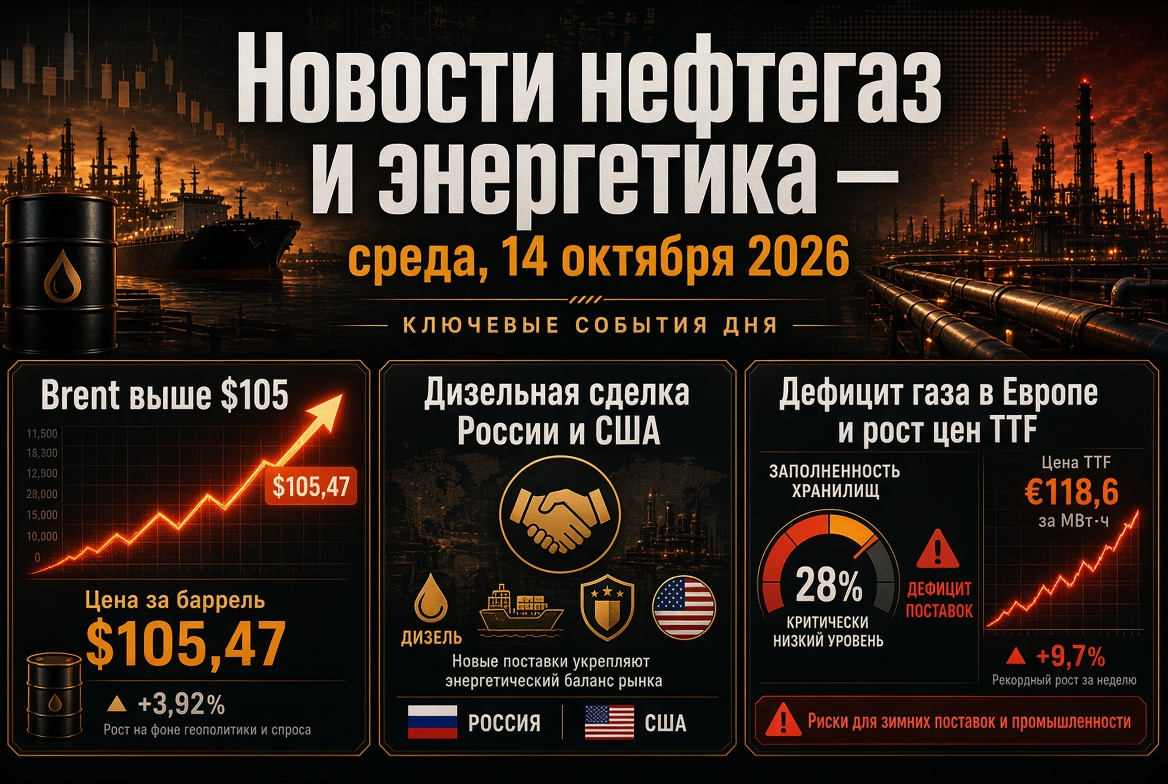
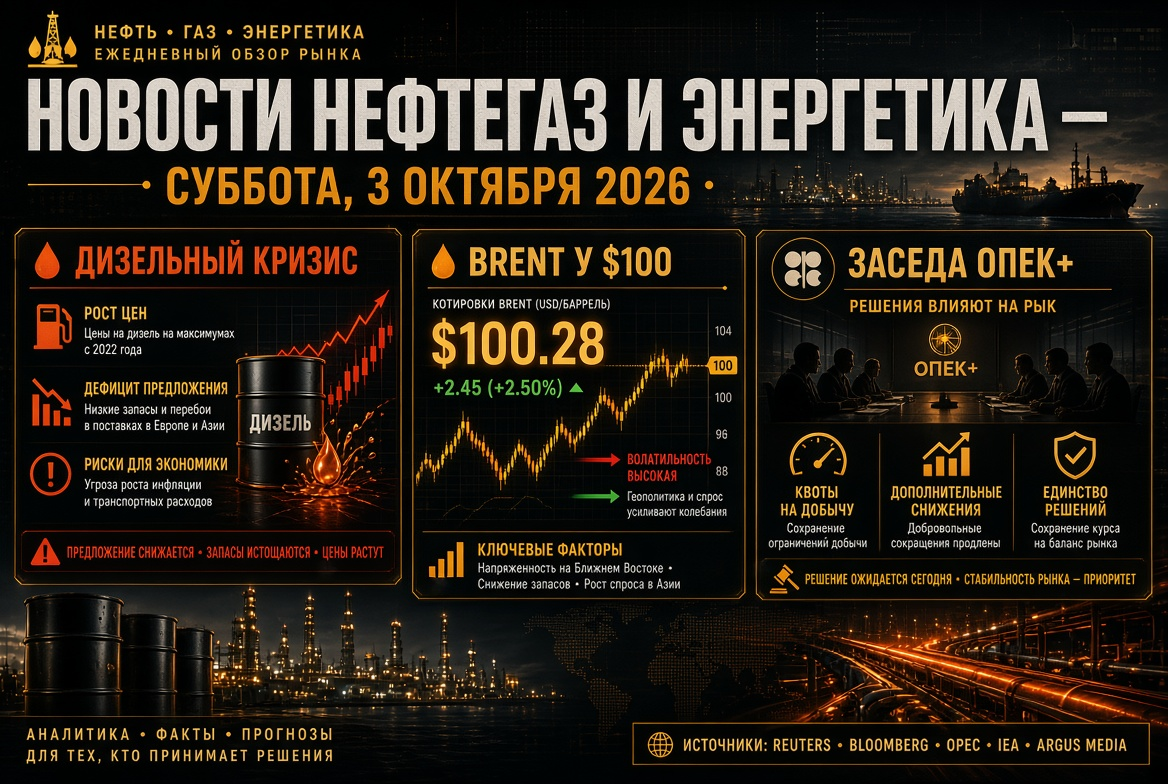
Oil prices are declining. Global oil prices ended last week at their lowest point in a month. Brent fell to approximately $62.5 per barrel, while WTI dropped to $58.1, marking a 3% decrease from the previous week. The decline in prices was influenced by the U.S. initiative to achieve a peace agreement between Russia and Ukraine, with investors pricing in the possibility of an end to the protracted conflict and the easing of some sanctions, which could reintroduce additional volumes of Russian oil to the market. Simultaneously, risk sentiment is tempered by high interest rates in the United States and a strengthening dollar, making commodities more expensive for buyers using other currencies.
Sanctions and prospects for their lifting. New U.S. sanctions against major Russian oil companies Rosneft and Lukoil came into effect on Friday, November 21. These restrictions aim to further reduce Russia's oil export revenues. However, the approved U.S. peace plan for Ukraine suggests that these sanctions could be lifted if agreements are realized. The market has begun to price in this possibility: the risk of interruptions in Russian supplies has somewhat decreased, though experts caution that a real peace agreement is far from guaranteed. Both Moscow and Kyiv remain skeptical about the terms of the plan, and analysts note that a final agreement may take considerable time.
Supply and demand balance. Fundamental factors in the oil market are shifting towards potential oversupply. The Organization of the Petroleum Exporting Countries (OPEC) has revised its forecast in its latest report: it expects a slight global oil market surplus by 2026. OPEC+ plans to maintain a cautious policy—earlier the cartel signaled a pause in production increases in Q1 2026 to prevent an oversupply in the face of rising shipments from non-OPEC countries. Banking analysts (including Goldman Sachs) also forecast a moderate decline in oil prices over the next one to two years due to a premature rise in supply. An additional indicator of excess supply is the record volume of oil stored on tankers at sea: traders estimate that due to sanctions, a significant portion of Russian crude is accumulating in floating storage awaiting buyers. These factors collectively keep oil prices under pressure.
U.S. Shale Production: Testing Price at $60
Low oil prices are beginning to affect the U.S. shale sector. In the largest U.S. oil basin—the Permian (Texas and New Mexico)—there is a noticeable reduction in drilling activity. Companies are shutting down drilling rigs, and a wave of layoffs has swept through the industry: the production cost of shale oil for several independent producers is approaching the current market price of about $60 per barrel, which jeopardizes the profitability of new wells. Reports from the region indicate that dozens of drilling rigs have been halted in recent weeks, and some oil service companies are streamlining their personnel.
Nevertheless, experts note that the U.S. shale industry has encountered similar downturn cycles before and has shown resilience. Large players with stable financing are seizing the moment to acquire assets: amidst declining production, mergers and acquisitions are on the rise. Recent news of ExxonMobil's significant acquisition of a shale producer has sent ripples through the industry, strengthening the major's position in the Permian Basin. It is expected that consolidation will continue as smaller producers prefer to sell or merge rather than endure price pressures. If prices remain relatively low, a slowdown in U.S. production could help balance the market and lead to a new tightening of supply in the second half of 2026, thereby supporting prices.
Oil Products and Refining: Margin Surge and Infrastructure Challenges
Record profits for refiners. In contrast to crude oil, the oil products markets are exhibiting heightened tension. In November, refining margins for oil in many key markets reached multi-year highs. According to industry analysts, European refineries are earning around $30–34 per barrel of oil in net profits from fuel sales—levels not seen since 2023. A similar situation is observed in the U.S. (the 3-2-1 crack index is nearing record values) and in Asia. Several factors have favored refiners:
- Capacity reductions: A series of planned and unplanned refinery shutdowns worldwide has led to reduced supplies of gasoline, diesel, and jet fuel. In the U.S. and Europe, some facilities have closed in recent years, while in Nigeria and the Middle East, major new refineries (e.g., Dangote, Al-Zour) have temporarily reduced output due to repairs and adjustments.
- Drone attacks and sanctions: Drone strikes on refineries and pipelines in Russia during the conflict have decreased the country's oil product exports. Concurrently, embargoes and tariffs on Russian oil products (imposed by Western nations) have limited the availability of diesel fuel in the global market, particularly in Europe.
- High diesel demand: Europe is experiencing a structural diesel fuel deficit—economic growth and cold weather are sustaining demand, while local refining cannot fully meet it. Import supplies from Asia, the Middle East, and the U.S. are not always timely enough to close the gap, pushing diesel prices higher.
The International Energy Agency (IEA) notes that due to this rally in refining margins, oil companies are revising their forecasts: despite bleak expectations at the beginning of the year, Q3 2025 proved extremely successful for the downstream segment. For example, French TotalEnergies reported a 76% year-on-year profit growth in its refining business attributable to favorable market conditions. Experts believe that high margins will last at least until the end of the year, encouraging refineries to increase capacity utilization following autumn maintenance.
Pipeline accident in the U.S. Infrastructure issues are also affecting the oil products market. In November, a leak occurred in one of the largest product pipelines in the U.S.—the Olympic Pipeline system, which transports gasoline, diesel, and jet fuel from Washington State to neighboring Oregon. The leak was detected on November 11 near Everett, WA, prompting the operator (BP) to halt pumping. The state authorities declared a state of emergency as the shutdown disrupted jet fuel supply to Seattle International Airport. By the end of the week, emergency crews excavated over 30 meters of pipe in a search for the source of damage, but the leak could not be immediately identified. One of the two pipeline strands has been partially restarted, but the system is currently not operating at full capacity. The incident highlights the vulnerability of fuel infrastructure: regional fuel supplies had to be replenished through truck transport and backup supplies, resulting in a brief rise in local jet fuel and gasoline prices. It is expected that the pipeline will return to full operation only after repairs and inspections.
Gas Market and European Energy Security
The European gas market enters the winter season relatively stable, but energy security issues remain paramount. Thanks to active liquefied natural gas (LNG) purchasing and consumption savings over the past months, gas storage facilities in EU countries are filled close to record levels at the start of winter. This mitigates the risks of a spike in prices in the event of cold weather. Meanwhile, European governments continue to diversify gas sources, reducing dependence on supplies from Russia:
- New LNG terminals in Germany: The largest EU economy is expanding its LNG reception capabilities. A fifth floating storage regasification unit (FSRU) is set to launch in 2026 at the mouth of the Elbe (Stade port). Currently, LNG accounts for about 11% of Germany's total gas imports for the first three quarters of 2025. The construction of permanent terminals is progressing rapidly—Berlin aims to fully replace the lost pipeline gas from Russia that occurred in 2022–2023.
- Balkan gas pipeline supported by the U.S.: In Southeastern Europe, the long-discussed alternative gas pipeline project is getting underway. Bosnia and Herzegovina, with the support of the U.S., has revived plans to construct a connection with Croatia—the so-called "Southern Interconnector." Gas will flow from the Croatian LNG terminal on the island of Krk, allowing Bosnia to reduce its dependence on Russian gas, which currently comes via the Turkish Stream. American partners have expressed willingness to act as leading investors in the project. Earlier, internal political disagreements in BiH hindered implementation, but now the project has garnered new support and momentum.
- Ukraine increases imports: Amid escalating conflict with Russia, Ukraine faces severe gas supply challenges. Infrastructure attacks in recent months have led the country to lose up to half of its own gas production. To survive the winter, Kyiv has sharply increased imports from neighboring countries. In November, the trans-Balkan supply route was again utilized—with imports of about 2.3 million cubic meters of gas per day from Greece (where there is an LNG terminal) initiated via Romania and Bulgaria. Additionally, Ukraine is steadily receiving gas from Hungary, Poland, and Slovakia. These measures are enabling the country to mitigate the deficit arising from the attacks and support energy supply for Ukrainian consumers during the winter period.
Energy security and politics. In several European countries, there is heightened scrutiny over critical energy infrastructure. For instance, the Italian government has expressed concerns regarding the participation of Chinese investors in the capital of companies that own national electric grids and gas pipelines. Officials assert that strategic networks must remain under reliable domestic control—measures are being discussed to limit the share of foreign shareholders in such assets. This move aligns with the broader EU trend towards enhancing energy independence and protecting infrastructure from geopolitical risks.
Price situation. Thanks to high stocks and diversification of supply sources, spot gas prices in Europe remain relatively moderate for the season. Regulators in individual countries continue to protect consumers: in the UK, the price cap for households will see a slight increase of 0.2% from December, reflecting stability in wholesale prices. Nevertheless, electricity and heating bills remain above pre-crisis levels, prompting governments to balance between market prices and support measures for the population.
Electricity Generation and Coal: Conflicting Trends
Two opposing trends are evident in global electricity generation: the rise of "green" energy sources and a simultaneous increase in coal use to meet demand. This is particularly evident in China and several developing countries in Asia:
Record electricity production in China. Electricity demand in the People's Republic of China is soaring—October 2025 marked a historical peak in generation for that month (over 800 billion kWh, +7.9% year-on-year). Meanwhile, output at thermal power plants (particularly coal-fired) increased by more than 7%, compensating for a seasonal decline in output from wind and solar stations. Despite efforts to develop renewables, around 70% of electricity in China is still produced from coal, thus rising consumption inevitably leads to increased coal combustion.
Coal shortage and rising prices. Paradoxically, while coal usage in China is breaking records, actual coal production in the country has decreased slightly. This is due to restrictions imposed by Beijing on mine operations (safety measures and a crackdown on excess capacity). Consequently, official data show that coal production in October was down by 2.3% year-on-year. The reduction in domestic market supply has led to price increases: the benchmark price for thermal coal at the largest port of Qinhuangdao has risen to 835 yuan per ton (approximately $117), which is 37% higher than the summer low. The shortfall is also being supplemented by imports—China is ramping up coal purchases from Indonesia and Australia, sustaining high demand in the global market.
Global record for coal. According to the IEA's projections, global coal production in 2025 is expected to rise to a new record of approximately 9.2 billion tons. The primary contributors to this increase are China and India, where economic growth still relies significantly on coal power. International experts express concern that persistently high coal consumption complicates the achievement of climate targets. Nonetheless, in the short term, many countries are forced to balance between environmental commitments and the need for reliable energy supply.
Energy systems under the impact of war. Meanwhile, Europe continues to contend with targeted attacks on Ukraine's energy infrastructure. According to the operator Ukrenergo, as of the morning of November 23, over 400,000 consumers were left without electricity, especially in eastern regions that faced overnight bombardments. Repair crews are working around the clock, connecting backup circuits and restoring power lines, but each new damage complicates navigating the fall-winter peak load. Ukraine's electricity system is integrated with the European ENTSO-E, which allows for emergency electricity imports during shortages, but the situation remains extremely tense. International partners are providing equipment and financing to sustain Ukraine's energy grid.
Renewable Energy: Projects and Achievements
The renewable energy sector continues to develop progressively worldwide, showcasing new records and initiatives:
- Pakistan transitions to solar energy. The country is gearing up for a significant milestone: government statements suggest that by 2026, electricity generation from rooftop solar panels will surpass daytime consumption in several major industrial zones. This will mark the first such occurrence in Pakistan's history. The active development of solar generation forms part of the strategy to reduce dependency on expensive imported fuels. The installation of solar panels on factory and enterprise roofs is subsidized by the government and attracts foreign investors. It is anticipated that any excess daytime generation will be utilized for energy storage and fed into the grid, thus improving electricity supply during evening peak loads.
- New offshore wind energy project in Europe. The consortium Ocean Winds (a joint venture of Portugal's EDP and France's Engie) has won rights to build a large floating wind farm in the Celtic Sea (southwest coast of the UK). The planned capacity is several hundred MW, which will supply "green" electricity to hundreds of thousands of households. The project underscores the growing interest in floating turbines that can be installed at great depths, unlocking new bodies of water. The UK and EU countries are actively holding auctions for offshore wind farms, striving to meet goals for increasing renewables' share in their energy balance.
- Investments in grid infrastructure. The German conglomerate Siemens Energy has announced plans to invest €2.1 billion (approximately $2.3 billion) in the construction of manufacturing plants for electrical grid equipment by 2028. The projects will span several countries and target the elimination of "bottlenecks" in power grids that require modernization for integrating renewable sources. Amid ongoing challenges in the wind energy division, Siemens Energy is banking on a more reliable business—energy transmission and distribution. The expansion of production capacities for transformers, switching equipment, and power electronics is being supported by EU governments, as improving electricity grids has been recognized as critical to the success of the Energy Transition.
- Corporations procuring "green" energy. The trend of entering direct supply agreements for renewable energy between energy companies and large businesses continues. For instance, French TotalEnergies signed an agreement with Google to supply renewable electricity to its data centers in Ohio (USA) from new solar and wind farms. The deal is long-term and will help the tech giant move closer to its goal of using 100% renewable energy, while also guaranteeing the sale of capacity from its renewable projects for the energy company. Such corporate PPAs (power purchase agreements) are becoming a significant component of the market, stimulating the construction of new renewable energy facilities worldwide.
Corporate News and Investments in the FEC
Several significant events have occurred in the corporate segment of the fuel and energy complex, reflecting the restructuring of the industry under new realities:
- ExxonMobil pauses hydrogen project. American oil and gas giant ExxonMobil has taken a pause in executing one of its most ambitious "blue" hydrogen production projects. The planned major hydrogen plant (presumably in Texas) has been postponed due to insufficient demand from potential consumers. According to Exxon CEO Darren W. Woods, clients are not prepared to purchase large volumes of hydrogen at economically justified prices. This situation reflects a broader trend: the transition of traditional oil and gas companies to low-carbon technologies is proceeding slower than expected, as many of these projects do not yet yield quick profits. Analysts note that ExxonMobil and other majors are reassessing timelines for achieving their emission reduction goals, focusing more on profitable areas—oil and gas production—amid the current pricing environment.
- Mega mining company targets copper. In the realm of raw material mega deals, a new potential consolidation process is underway. Australian company BHP Group has made a renewed bid for the acquisition of British Anglo American. Anglo recently agreed to merge with Canadian Teck Resources to focus jointly on copper mining—a metal that is crucial in the era of energy transition (for electric vehicles, cables, renewable energy). Now BHP, already a leader in copper, aims to create an unprecedentedly large copper mining company capable of dominating the market. The management of Anglo American is currently refraining from comments, and details of the discussions are not disclosed. If the deal goes through, it would redistribute power in the mining industry, granting BHP control over strategic copper reserves in South Africa, South America, and other regions.
- The U.S. invests $100 billion in critical resources. The American Export-Import Bank (US EXIM) has announced an unprecedented financing program aimed at ensuring sustainable supplies of critically important raw materials for the U.S. and its allies. This involves allocating up to $100 billion for projects related to the extraction and processing of rare-earth metals, lithium, nickel, uranium, and for developing liquefied gas production capacities and nuclear energy components. The first package of deals has already been formed: it includes $4 billion in insurance for U.S. LNG exports to Egypt and a $1.25 billion loan for the development of a large copper-gold deposit, Reko Diq, in Pakistan. The EXIM initiative aligns with the U.S. administration's policy of strengthening "energy dominance" and reducing dependency on China for raw materials crucial for the high-tech and energy sectors. With Congress' approval for the bank's funding, an active U.S. presence in raw materials projects worldwide can be expected in the coming years.
- Nuclear project in Hungary receives exemption. In the context of sanctions policy, notable news comes from Europe: the U.S. Department of the Treasury has issued a special license allowing certain companies to conduct transactions related to the construction project of the new Paks II nuclear power plant in Hungary. This project involves the Russian state corporation Rosatom, and prior sanctions had created uncertainty regarding its financing. However, now an exception has been made, likely at Budapest's request and to support the energy security of a NATO ally. The license pertains to non-nuclear aspects of construction, reflecting a pragmatic approach—while the sanctions regime remains strict, targeted easing is possible if it meets the energy stability interests of European partners.
COP30 Climate Summit: Compromise Without a Phase-Out of Oil and Gas
The 30th UN Climate Change Conference (COP30) concluded in the Brazilian city of Belém, with final agreements reflecting the complexity of international negotiations in the energy sphere. The summit's final document was adopted with great difficulty and constituted a compromise between a group of developed countries advocating for more decisive actions and a bloc of fuel-exporting states and developing economies:
Financial support for vulnerable countries. One of the main achievements of COP30 was the promise to triple climate financing for developing countries by 2035. Wealthy nations are prepared to increase assistance for projects aimed at climate adaptation—be it constructing protective infrastructure, transitioning to renewable energy, or combating desertification and flooding. This was a fundamental demand from Global South countries, which highlighted their disproportionately high vulnerability to climate risks. Though the European Union criticized the initial draft of the agreement as "insufficiently ambitious," it ultimately refrained from blocking its adoption, primarily to initiate financial mechanisms supporting the poorest nations. An EU negotiator stated that the agreement is "not perfect but allows for the much-needed financing of the most vulnerable."
Disagreement on fossil fuels. The most contentious issue in the negotiations was the fate of oil, gas, and coal. Attempts were made to include plans for a "gradual phase-out of fossil fuels" in the preliminary draft decisions; however, this phrasing was absent in the final text. Countries within the so-called "Arab group" and several other oil and gas producers strongly opposed any references to direct reductions in fossil fuel use. They insisted that discussing carbon capture technologies and "clean" utilization of oil and gas was much more important than curtailing production. As a result of the compromise, the topic of energy transition was outlined in broad strokes, without quantitative commitments to reduce the share of oil and coal. This concession disappointed several Latin American countries (Colombia, Uruguay, Panama openly demanded tougher phrasing) but was deemed necessary for consensus.
Reaction and prospects. The COP30 compromise agreement received mixed evaluations. On one hand, it managed to preserve the multilateral climate process and secure the influx of funds for adaptation and "green" technologies. On the other hand, experts deemed the lack of specifics regarding the phase-out of hydrocarbons as a missed opportunity to accelerate the implementation of the Paris Agreement. UN Secretary-General António Guterres, who previously called for a "roadmap" for the gradual phase-out of coal, oil, and gas, expressed cautious optimism, noting that the dialogue continues and key decisions lie ahead. Meanwhile, the location for the next conference has already been decided: COP31 in 2026 will be hosted by Turkey. Ankara has reached an agreement with Australia to co-organize the summit on Turkish soil. The world will be watching closely to see whether bolder steps toward decarbonizing the global economy can be taken at the next meeting.
Prepared for investors and market specialists in the FEC. Stay tuned to keep updated on the latest developments in the global oil, gas, and energy sectors.