Global News from the Oil, Gas, and Energy Sector for Thursday, January 22, 2026: Oil, Gas, Electricity, Renewable Energy, Coal, Oil Products, Geopolitics, and Key Trends for Investors and Industry Participants.
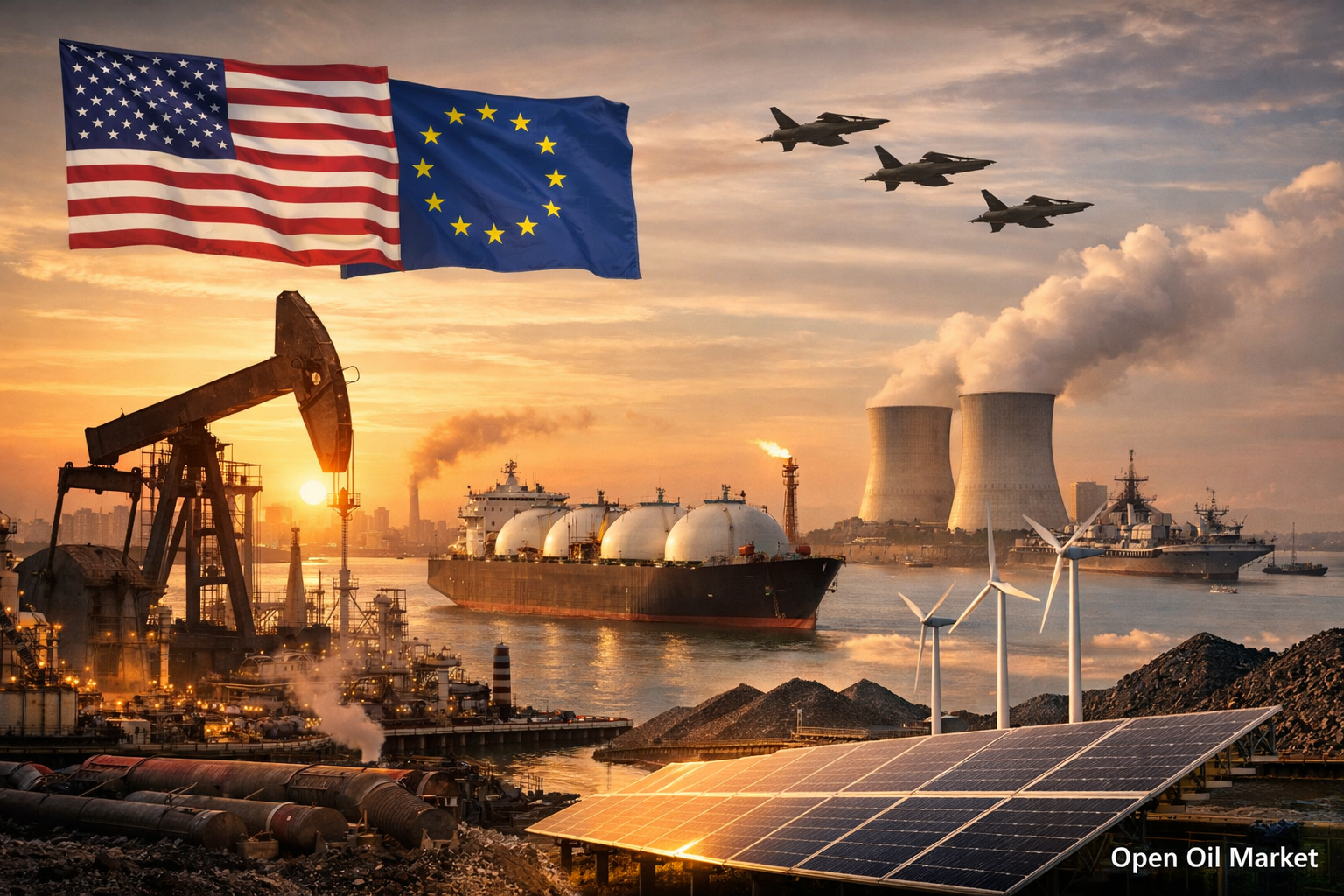
Current events in the global fuel and energy complex (FEC) as of January 22, 2026, create a mixed backdrop for investors and market participants. The geopolitical situation is escalating, with a trade conflict igniting between the U.S. and Europe over Washington's attempts to assert control over Greenland, posing the risk of a significant tariff war across the Atlantic. The European Union has already signaled its readiness for a tough response to potential American tariffs, increasing uncertainty for the global economy. At the same time, global markets are buoyed by positive factors: China's economy is showing faster growth than expected, stimulating demand for energy resources, while tensions have de-escalated in certain regions of the Middle East, reducing the geopolitical risk premium in oil prices.
The global oil market remains in a fragile equilibrium. Brent quotes are holding around $64–66 per barrel, while American WTI stands near $60, reflecting a balance between ample supply and recovering demand. The subdued price dynamics are largely linked to surplus supply amid record production levels in the U.S. and increasing exports from several non-OPEC countries; however, price optimism is bolstered by positive demand signals: recent robust economic data from the U.S. and China has raised consumption growth expectations. The European gas market in the midst of winter continues to demonstrate resilience: natural gas storage in the EU, although declining with withdrawals, remains approximately half full relative to total capacity — significantly above the average level for late January. Record LNG imports into Europe and a relatively mild start to the winter season are keeping wholesale gas prices at moderate levels (around €35-40/MWh, significantly lower than the peaks of 2022). Meanwhile, the global energy transition is gaining new heights: many countries are witnessing fresh records in electricity generation from renewable sources (RES), although support from traditional coal and gas plants remains necessary for the reliability of energy systems. In Russia, the energy sector is adapting to ongoing sanctions: oil companies continue to redirect exports to friendly countries, utilizing workaround logistics schemes, while authorities maintain control over the domestic fuel market, preventing shortages and sharp price spikes following last year’s crisis. Below is a detailed overview of key news and trends in the oil, gas, energy, and raw materials sectors for this date.
Oil Market: Prices Balance Between Demand Growth and Trade Risks
Global oil prices are maintaining relative stability, although opposing forces are present in the market. On one hand, optimism is growing regarding fuel demand, particularly due to positive signals from Asia: the revival of economic growth in China and other countries is contributing to increased oil consumption. On the other hand, investors are cautiously assessing the potential repercussions of the trade standoff between the U.S. and the European Union, which could slow down global economic growth and impact demand for energy resources. As a result, Brent and WTI quotes are moving within a narrow range, lacking sufficient momentum for either a rise or a decline.
- Ample Supply: The OPEC+ alliance maintained its production constraints for the first quarter of 2026 during its December meeting; however, global oil supply is still increasing. Record production in the U.S. (over 13.5 million barrels per day) combined with rising exports from Brazil, Guyana, Canada, and other countries provide additional volumes to the market. The influx of new barrels is putting pressure on prices and preventing significant price hikes.
- Demand Recovery: The pace of global oil consumption growth remains moderate but steady. According to the International Energy Agency, global demand increased by approximately 1.3 million barrels per day in 2025, with a similar increase expected in 2026. Rapidly growing economies in Asia, particularly China and India, continue to increase oil imports, compensating for stagnant demand in Europe. This provides support for the oil market on the demand side.
- Geopolitical Risks: The international arena remains tense. New sanction threats against the oil sector (for instance, the U.S. plans to tighten control over Russian oil sales through third countries) and the threat of tariffs between Western partners exacerbate uncertainty. Although actual supply disruptions have yet to materialize, the mere increase in rhetoric surrounding sanctions and trade disputes prompts market participants to act cautiously. At the same time, the weakening of the U.S. dollar amidst these risks favors raw materials, partially supporting oil prices.
Gas Market: Winter Demand Rises, Yet Supplies and LNG Stabilize Prices
The gas market is currently focused on Europe, navigating the winter period without significant upheavals. Despite January's cold weather and increased heating demand, the gas supply situation appears secure. High starting inventories and active LNG imports have helped smooth the seasonal spikes in consumption, allowing the region to avoid repeating crisis scenarios from previous years.
- Comfortable Inventories: EU countries entered winter with record-high gas storage levels (over 80% capacity at the start of the heating season). As of the end of January, European UGS remains approximately 50% full, which, although lower than the year-ago level, is significantly above the multi-year average for this time of year. The substantial reserves in storage mean that even if further cold weather occurs, Europe has a buffer to meet demand.
- Record LNG Imports: Throughout 2025, European countries ramped up LNG purchases to historical highs to offset the reduction in pipeline supplies from Russia. By early 2026, LNG accounted for over 35% of Europe's gas supply structure. Major suppliers, including the U.S., Qatar, and other Middle Eastern exporters, are directing significant LNG volumes to the European market. This inflow has helped fill storage and currently keeps prices at relatively low levels, around $400 per thousand cubic meters, despite increased winter demand.
- Price Dynamics: Gas exchange quotes in Europe remain far from the extremes of 2022. Although on certain days, amid cold snaps, prices at the TTF hub rise above €40/MWh, the overall market remains stable. Moderate prices ease the burden on industry and consumers, reducing energy costs compared to the recent crisis period. Experts note that if current trends persist, Europe is likely to emerge from the 2025/26 winter without gas shortages. Key risks are shifting to the summer months when storage replenishment for the next heating season will be required — competition with Asian LNG importers may intensify, affecting price dynamics.
International Politics: Escalation of U.S.-EU Trade Conflict and Increased Sanction Pressure
Geopolitical factors increasingly influence energy markets. In January, relations between the U.S. and its European allies sharply deteriorated due to Washington's contentious initiative to purchase Greenland. President Donald Trump publicly declared an intention to impose significant tariffs (ranging from 10% to 25%) on goods imported from several European countries — including Denmark, Norway, Germany, France, and the UK — in response to the Europeans' refusal to discuss the sale of Greenland. This unprecedented measure alarmed the European Union: Brussels expressed readiness for coordinated retaliatory actions, including imposing mirror tariffs on American goods. The prospect of a transatlantic trade war has come to the forefront, threatening economic growth on both sides of the Atlantic.
The exchange of sharp statements is intensifying market nerves. Investors are concerned that the escalation of conflict between the world's largest economies could negatively impact demand for oil and gas. It has already been observed that news about potential trade barriers prompts a flight to safe assets and a weakening of the U.S. dollar, which indirectly supports raw materials. However, if these threats materialize into actual tariffs, they may impact European industry and reduce fuel consumption. On the sidelines of the World Economic Forum in Davos, EU and U.S. representatives are attempting to unofficially soften the tone, but so far, neither side demonstrates any willingness to soften principled positions.
Meanwhile, the sanction policy against Russian oil and gas is tightening further. The U.S. administration indicates that it does not intend to ease pressure on Moscow. The head of the U.S. Treasury Department criticized some countries at Davos for covertly purchasing Russian energy resources through third countries and threatened extraordinary measures. Washington is discussing the possibility of imposing 500% tariffs on energy carriers for those states that are found to be violating the price cap and embargo against Russia. While these radical steps remain in the discussion stage, the rhetoric is firm. Existing restrictions (the EU oil embargo, G7 price cap, etc.) are upheld in full, and Western regulators emphasize their readiness to monitor compliance strictly. Thus, hopes for a weakening of the sanction standoff, which had emerged earlier, have shifted to the understanding that pressure on the Russian FEC may only intensify. Energy companies and investors will need to factor this aspect into their strategies for 2026, as further confrontation will impact both supply routes and price conditions in global markets.
Asia: India and China Balance Between Imports and Domestic Production
- India: New Delhi is striving to ensure energy security amidst sanction constraints and market volatility. Despite Western pressure to reduce cooperation with sanctioned suppliers, India continues to procure significant volumes of Russian oil and oil products, deeming a swift exit impossible. At the same time, Indian refiners are obtaining raw materials under favorable conditions — with substantial discounts to world prices. According to traders, the discount on Urals for India reaches $4-5 per barrel versus Brent, making these supplies highly attractive. As a result, India retains its status as one of the largest importers of Russian oil while simultaneously increasing fuel purchases on the global market to meet domestic demand. Concurrently, the government is actively developing its resource base: under the initiative of Prime Minister Narendra Modi, a large-scale exploration and production program has been launched in the offshore region since August last year. The state-owned ONGC is drilling ultra-deep wells in the Bay of Bengal and the Andaman Sea, with the first results being deemed promising. This strategy aims to open new fields and gradually reduce India's dependency on imports in the long term.
- China: The largest economy in Asia is ramping up imports of energy resources while simultaneously increasing domestic production volumes. Beijing has not joined sanctions against Moscow and has taken advantage of the situation to procure record levels of raw materials at reduced prices. According to the General Administration of Customs of China, China imported around 577 million tons of oil in 2025 (approximately 11.5 million barrels per day), which is a 4.4% increase from the previous year, while total spending on oil imports declined nearly 9% due to lower raw material costs. Russia remains China’s largest oil supplier (around 101 million tons, 7% less than in 2024), accounting for one-fifth of China’s imports, followed by Saudi Arabia, Iraq, and Malaysia, which acts as a transit point for supplies from Iran and Venezuela. Concurrently, China is breaking its own production records: in 2025, the country produced over 216 million tons of oil (+1.5% year-on-year) and 262 billion cubic meters of gas (+6.2%). Although the increase in production does not keep pace with consumption growth, the annual increase in domestic volumes helps partially meet needs. Nevertheless, China remains heavily reliant on external supplies — estimates suggest that about 70% of its oil and up to 40% of its gas continues to be imported. In the coming years, Beijing plans to maintain a balance between imports and domestic resource development, investing in new extraction technologies and exploration of new fields. Thus, both Asian powerhouses — India and China — will continue to play a crucial role in the global FEC market, acting as significant importers while increasing their own production to strengthen energy independence.
Energy Transition: RES Records and the Role of Traditional Generation
The global shift to clean energy is rapidly advancing, setting new records. By the end of 2025, many countries achieved historic highs in electricity generation from renewable sources — primarily solar and wind. In the European Union, the share of "green" generation exceeded production from coal and gas power plants over the year, solidifying the trend of RES growth in the energy balance. On certain days, in the largest EU economies (Germany, Spain, the UK, etc.), solar and wind plants collectively provided over half of all consumed electricity. In the U.S., the share of renewable energy confidently exceeds 30%, with production from RES already surpassing coal-fired plants in some months. China, possessing the world's largest RES capacity, continues to commission tens of gigawatts of new solar and wind stations annually, setting its own records for clean energy deployment.
The rise in investments in sustainable energy is also impressive. According to the International Energy Agency, total investments in the global energy sector exceeded $3 trillion in 2025, with more than half of this amount allocated to RES projects, grid modernization, and energy storage systems. Major oil, gas, and energy companies are diversifying their operations, increasingly investing in wind and solar generation, as well as energy storage technologies, seeking to meet decarbonization requirements and investors' demands for sustainability. This shift in the strategies of leading industry players reflects a broader global trend: energy companies are gearing up for a future dominated by low-carbon sources.
At the same time, achieving a complete exit from fossil fuels is still impossible — traditional generation remains essential for ensuring the stability of energy systems. The growing share of RES presents new challenges: the variable nature of solar and wind energy demands backup capacity for calm periods or lack of sunlight. During peak consumption hours or extreme weather conditions, gas and, in some cases, coal plants continue to be in demand to cover loads and prevent electricity outages. For instance, during recent cold anti-cyclones, some European countries had to temporarily ramp up output from coal plants to compensate for reduced RES generation and high demand for electric heating. To minimize such situations, governments are investing in the development of energy storage systems (industrial batteries, pumped storage hydroelectric stations) and smart grids capable of flexibly managing loads. At the same time, several countries are returning to nuclear energy as a reliable low-carbon source: for instance, Japan began a phased restart of the largest nuclear power plant, Kashiwazaki-Kariwa, in January 2026, bringing its first reactor back online after years of inactivity, symbolizing a global trend of renewed interest in nuclear generation.
Experts predict that within the next 2-3 years, renewable sources of energy may overtake coal as the world’s primary source of electricity generation, definitively surpassing it. However, ensuring reliability will be crucial for a successful energy transition: as long as energy storage technologies remain insufficiently widespread and accessible, traditional power plants will continue to play the role of a backup reserve. Thus, the global energy transition enters a new phase — renewable energy is setting records and approaching leading positions, but harmonious coexistence with traditional generation remains a necessary condition for the stability of energy systems.
Coal: High Demand Sustains Market Stability
The global coal market remains characterized by high consumption levels and relative price stability, despite global decarbonization efforts. In 2025, total coal consumption reached record levels, primarily due to growth in developing economies in Asia. China reaffirmed its status as the largest consumer and producer of coal, with production in the country increasing to approximately 4.83 billion tons (+1.2% year-on-year), which only slightly surpassed the previous year’s level but became a historical maximum. These vast volumes barely cover the domestic demand: during peak periods (for example, in summer during abnormal heat spells, when air conditioning loads rise), China has to burn coal at near-record rates, with domestic production operating at full capacity. India, possessing significant coal reserves, is also actively utilizing this resource to secure its energy balance — over 70% of electricity in the country is still generated from coal-fired plants. As the economy grows and electrification expands, demand for coal continues to rise in India. Additionally, other Southeast Asian countries (Indonesia, Vietnam, the Philippines, Bangladesh) are implementing projects to construct new coal-fired power plants, striving to meet rising electricity needs and avoid energy deficits.
Supply in the global coal market is meeting high demand. Major exporters such as Indonesia, Australia, Russia, and South Africa have increased production and export of thermal coal in recent years, effectively addressing the needs of major importers. Following sharp price spikes in 2021-2022, the situation has normalized: in 2025, thermal coal prices fluctuated within a relatively narrow range, comfortable for both producers and consumers. Coal remains one of the cornerstones of global energy in the short term. Although an increasing number of countries are announcing plans to reduce coal usage as part of climate change efforts, this energy source is expected to continue playing a significant role, especially in the Asian region, over the next 5-10 years. The process of replacing coal with renewable sources and gas will take years, if not decades, hence coal-fired generation will remain part of the energy balance in the foreseeable future. The industry's challenge is to find a balance between environmental goals and current energy needs: until technologies and infrastructure allow for a complete exit from coal, the market for this fuel will remain stable due to steady demand.
Oil Products and Refining: High Margins for Refineries
The market environment for oil products at the beginning of 2026 is favorable for refineries (RF) and fuel companies. Relatively low oil prices coupled with steady demand for key fuel types — gasoline, diesel, and jet fuel — provide high refining margins across various regions. Refiners are enjoying strong profits by using cheap raw materials while consumption of oil products remains substantial.
- Increase in Refinery Profits: Global indicative refining margins are holding near multi-year highs. The production of diesel fuel, which remains in high demand across the transport sector and industry worldwide, is particularly profitable. The global diesel market is facing a relative shortage: reduced export supplies from Russia, imposed by that country to stabilize its domestic market following the 2025 crisis, have constrained international supply. As a result, European and Asian refineries have been able to increase diesel production with high added value and reap extra profits.
- New Capacities vs. Closure of Old Ones: In Asia and the Middle East, there continues to be active construction of modern refining complexes. Large projects in China, India, and the Persian Gulf countries are introducing new capacities, increasing the global refining volume. Simultaneously, several outdated refineries in Europe and North America have been closed or repurposed to produce biofuels for environmental reasons and due to declining margins. This parallel process — the commissioning of new mega-refineries in the East and the reduction of capacities in the West — helps avoid market saturation for oil products. The balance between demand and supply for fuel is maintained, enabling refining margins to remain at elevated levels.
- Stability of Domestic Markets: Exporting countries are implementing measures to support their domestic fuel markets, which also impacts the global market dynamics. For example, in Russia, authorities temporarily banned the export of gasoline and diesel fuel in 2025 to saturate the domestic market and curb record-high prices. These restrictions, partially lifted by the end of the year, prevented shortages within the country but simultaneously reduced the available supply of Russian oil products abroad. For the global market, this became one of the factors keeping fuel prices from declining and supporting refiners' revenues in other countries. Overall, the combination of regional specifics — from Asian capacity expansion to export limitations — creates favorable conditions for market participants in the refining sector at the beginning of 2026.
Thus, the news from the oil, gas, and energy sector on January 22, 2026, reflects a complex intertwining of geopolitical challenges and market factors. Despite the intensification of sanctions and the threat of a trade war between the West and the U.S., global energy markets demonstrate relative stability. Investors and fuel and energy companies continue to adapt to the new reality: oil quotes maintain a moderate level due to the balance of demand and supply, gas markets are navigating winter without upheavals, and the energy transition is gathering pace, opening new opportunities. In the coming months, participants in the FEC market will need to closely monitor the development of the U.S.-EU trade conflict, the implementation of sanction threats, and further demand signals from major economies to timely react to changes in market conditions and maintain resilience amid global uncertainty.