Fresh Startup and Venture Investment News Review for Tuesday, June 16, 2026: Mega-Rounds in AI, Robotics, Deep Tech, Enterprise Software, and Financial Infrastructure Transforming Venture Fund Strategies
The global venture market is entering Tuesday, June 16, 2026, with a clear shift of capital towards large platform bets. Recent startup and venture investment news indicate that funds, strategic corporations, sovereign investors, and major financial institutions are increasingly opting for a concentration on AI startups, robotics, space infrastructure, enterprise software, and financial market technologies instead of a broad portfolio of smaller deals.
For venture investors and funds, this signifies a change in asset selection logic. The focus is now shifting from merely rapid revenue growth and a strong team to a startup's potential to become an infrastructure platform within its industry. In 2026, funding rounds are increasingly evaluated through the lenses of capital intensity, data access, computational resources, industrial partnerships, and potential for an IPO or major strategic deal.
Headline of the Day: AI Moves from Digital Layer to Industry
The most notable event for the venture investment market remains the substantial round for Prometheus — an industrial AI startup associated with Jeff Bezos. The company raised $12 billion in Series B, with a valuation of approximately $41 billion. This case is significant not only due to the scale of the deal but also its investment logic: capital is directed towards artificial intelligence that aims to accelerate the design and production of physical objects — from jet engines to medical equipment and electronics.
For funds, this is a signal that the next wave of AI investments might form not just around chatbots, corporate agents, and generative content. Venture capital is increasingly seeking startups capable of impacting actual production cycles, engineering processes, and value creation chains. This is why deep tech, industrial AI, and physical AI are becoming key focuses for global investors.
Physical AI and Robotics Emerging as New Mega-Round Zone
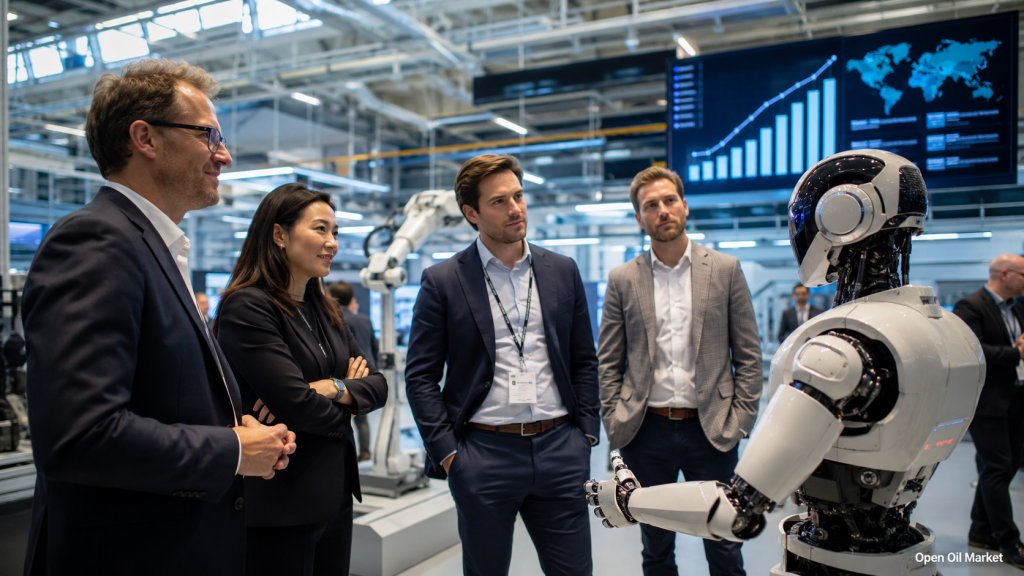
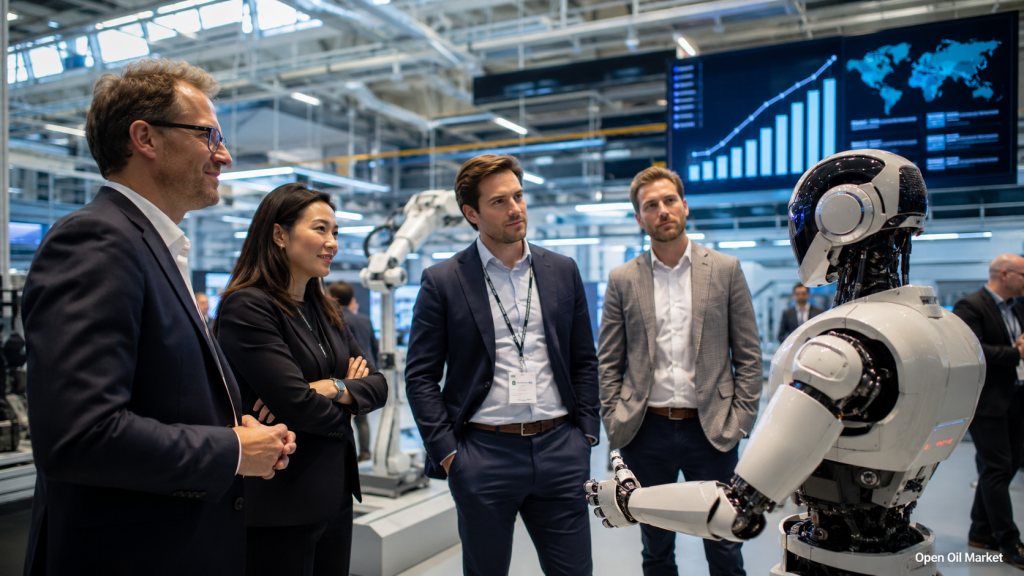
The significant round for NEURA Robotics of up to $1.4 billion has reinforced the thesis that robotics is transitioning from an experimental niche to a category of strategic AI infrastructure. The company is developing a cognitive robotics platform where robots need to learn, share skills, and operate in real environments — in manufacturing, warehouses, healthcare, and the service economy.
For venture funds, this sector is attractive for several reasons:
- Robotics addresses the labor shortage issue in manufacturing and logistics;
- Physical AI creates long-term barriers to entry through data, sensors, manufacturing, and integration with clients;
- Large corporate investors are willing to participate in such rounds not only for financial returns but also for access to technologies;
- Startups in robotics could become targets for strategic acquisitions by industrial, cloud, and semiconductor companies.
Against this backdrop, deals in industrial robotics, humanoid robotics, and AI-native automation will remain in the spotlight for funds in the coming months.
AI Infrastructure: Demand for Computing Supports High Valuations
The $350 million Series B deal for TensorWave, with a valuation of around $1.55 billion, underscores another important trend: AI infrastructure is emerging as an independent venture market. The company is developing AMD-based AI cloud solutions and is focusing on high-performance computing for training and inference of models.
For investors, this sector appears particularly vital because the demand for AI applications is directly tied to the availability of GPUs, data centers, electricity, and specialized cloud services. Whereas venture funds previously primarily financed the software layer, an increasing amount of capital is now flowing into the underlying infrastructure: computing, memory, networks, cooling, data centers, and inference cost optimization.
A key question for funds is whether such startups can maintain profitability amid high capital intensity. The winners will be companies that secure long-term contracts, access to scarce equipment, and consistent capacity utilization from corporate clients.
Enterprise Software Remains Viable, but Quality Requirements Have Increased
The NinjaOne round exceeding $400 million with a valuation of $12.3 billion demonstrates that the market is not writing off enterprise software, despite concerns that AI may disrupt some traditional SaaS models. A vital detail is that the company exhibits strong revenue growth, profitability, and demand from large corporate clients.
For investors, this means that SaaS as a category is not disappearing but changing its evaluation standards. Venture funds will now favor companies that:
- Exhibit stable revenue and a clear path to profitability;
- Tackle critical challenges within corporate infrastructure;
- Can integrate AI into their products without undermining their business models;
- Maintain high customer retention and expansion contract levels.
In other words, investors are increasingly reluctant to pay merely for user growth. In 2026, proven economic efficiency and the ability of a product to remain indispensable for business are more critical.
Financial Infrastructure and Blockchain Making a Comeback Driven by Institutional Demand
Digital Asset raised $355 million for the development of the Canton Network — blockchain infrastructure for regulated financial markets. The involvement of large banks, infrastructure players, and investors from traditional finance indicates a shift towards blockchain's interest moving away from speculative crypto-projects towards asset tokenization, settlements, clearing, and institutional capital markets workflows.
For venture funds, this is an important signal: fintech and blockchain remain investment-worthy, provided they are integrated into real financial market processes. The most promising appear to be startups that assist banks, brokers, exchanges, and asset managers in transitioning assets, settlements, and reporting into a more efficient digital infrastructure.
Space and Defense Technologies Strengthening Their Position in Europe
ICEYE secured €450 million in an initial Series F round at a valuation exceeding €10 billion. With the inclusion of a secondary part, the total deal volume exceeded €1 billion. The company is developing satellite infrastructure for Earth observation and synthetic aperture radar, making it a significant asset at the intersection of space tech, defense tech, and sovereign intelligence.
For the global venture market, this confirms the growing interest in technologies related to national security, autonomous reconnaissance, infrastructure monitoring, and geopolitical resilience. European deep tech startups are gaining more opportunities for large rounds if their products are incorporated into the strategic objectives of states and large industrial clients.
Geography of Capital: the US Dominates, but Europe and Asia Are Experiencing Point Breakthroughs
Despite the global nature of the innovation economy, the majority of capital in 2026 continues to concentrate in the US. This is especially visible in AI, where American companies receive disproportionately high funding shares. However, deals like NEURA Robotics, ICEYE, Sarvam AI, and Theker demonstrate that Europe and Asia can compete in niches where there are strong engineering schools, government demand, corporate partners, and access to specialized data.
For venture funds, the global strategy is becoming more complex. On one hand, the largest platform AI assets are in the US. On the other hand, attractive returns may emerge in regional deep tech companies addressing specific industrial, defense, logistics, financial infrastructure, and local language model challenges.
What This Means for Venture Investors and Funds
The main takeaway for investors is that the startup market is becoming increasingly polarized. Large funds and strategic investors are willing to finance category leaders at valuations of tens to hundreds of billions of dollars, but less differentiated companies will find it harder to attract capital on previous terms.
Venture funds should focus on several directions:
- AI Infrastructure: computing, data centers, specialized clouds, inference optimization tools.
- Physical AI: robotics, sensors, industrial AI systems, autonomous manufacturing processes.
- Enterprise AI: agents for finance, legal processes, cybersecurity, due diligence, and data management.
- Defense Tech and Space Tech: satellite analytics, reconnaissance, autonomous systems, critical infrastructure.
- Institutional Fintech: asset tokenization, blockchain for regulated markets, settlement infrastructure, and compliance.
What to Watch for in the Coming Weeks
In the coming weeks, the market will be monitoring whether the wave of mega-rounds will continue or if investors will start tightening their evaluations of multipliers. Signals from the IPO market, dynamics of AI valuations, activity of corporate investors, and the willingness of LPs to increase commitments to funds making capital-intensive bets will become particularly significant.
For venture investors and funds, the startup and venture investment news on June 16, 2026, sets a clear benchmark: capital flows to where startups can become the infrastructure for a new economy. The winners will not solely be companies with trendy AI wrappers but teams that combine technological advantage, market access, strong strategic partners, and a proven ability to scale in a global environment.