Global Energy Sector Enters a Highly Volatile Environment: Oil Prices Rise Due to Geopolitics, Gas Remains a Tool for Energy Security, and Electricity Emerges as the Main Asset of the New Industrial Economy
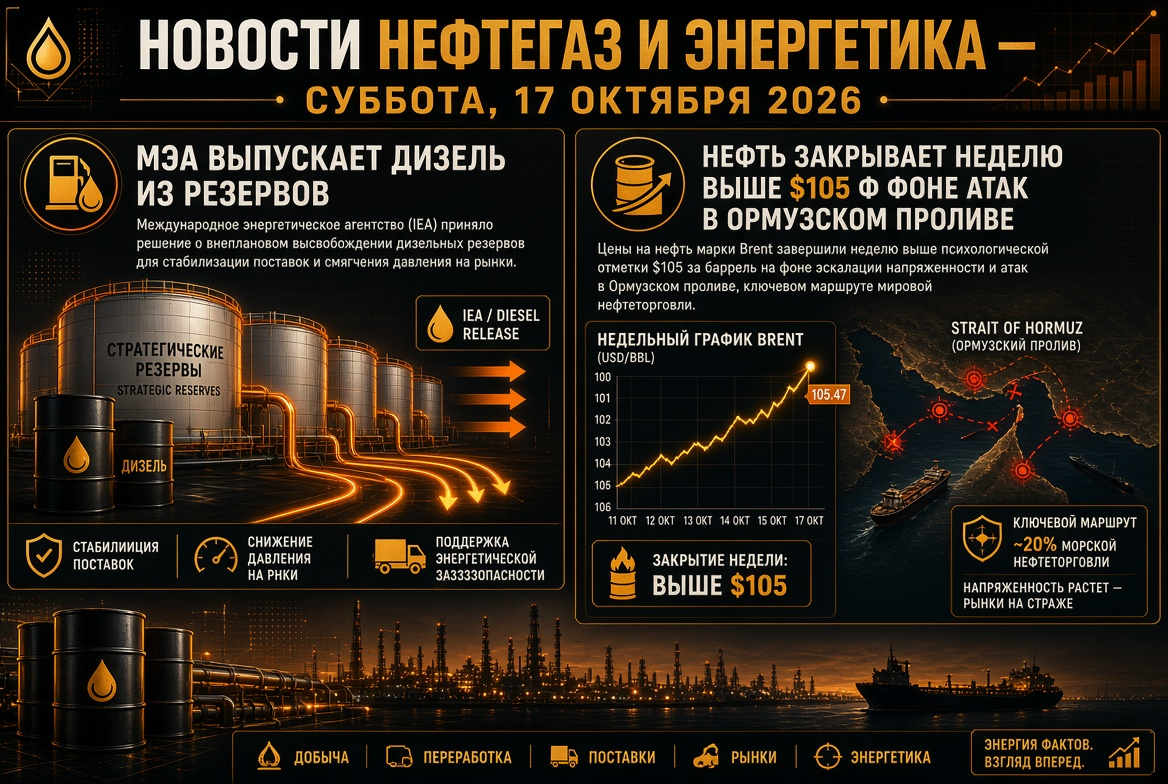
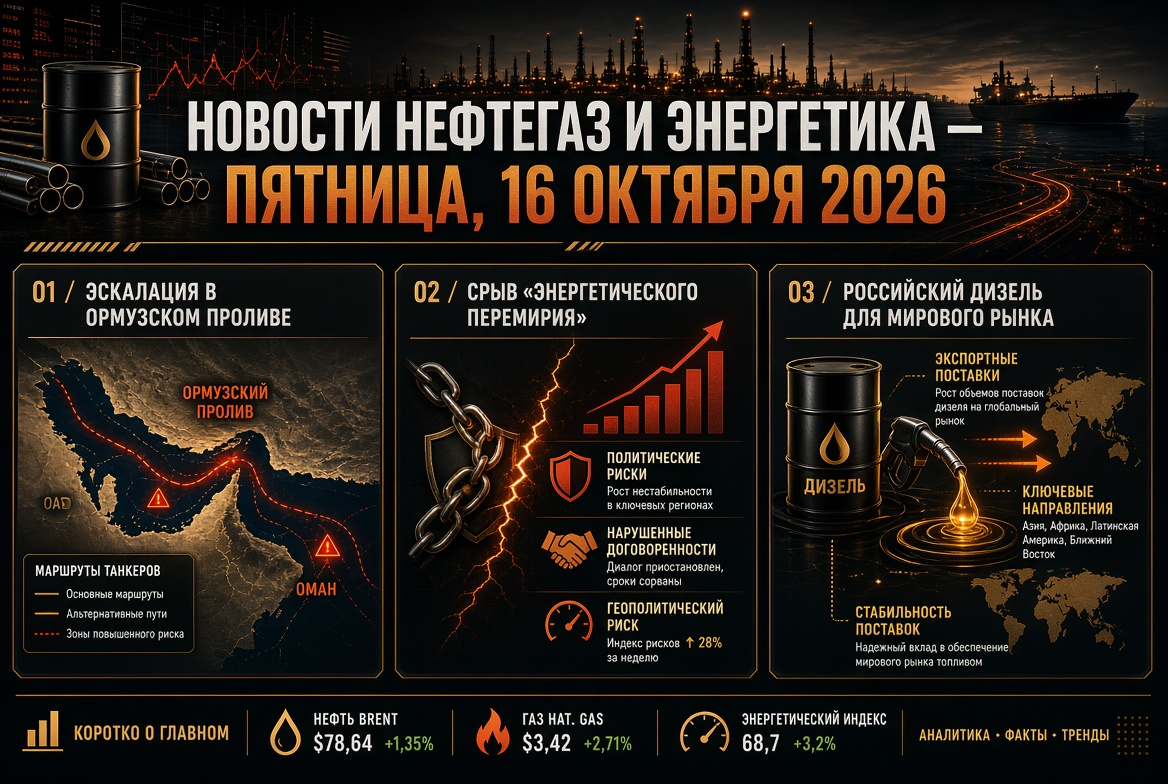
On Wednesday, July 15, 2026, the global energy market remains highly sensitive to geopolitical developments, logistics, and weather factors. For investors, oil and gas market participants, fuel companies, oil corporations, refinery operators, and electricity producers, the key theme of the day is the return of the risk premium in oil and petroleum products amid rising tensions surrounding the Middle East and shipping routes through the Strait of Hormuz.
Whereas the oil market was attempting to regain a scenario of oversupply at the beginning of July, by mid-month, traders were once again pricing in the risk of supply disruptions. Brent has risen above $84 per barrel, WTI has reached $79, and the structure of the Brent futures curve indicates a return to a scarcity of near-term supplies. This serves as an important signal not only for oil companies but also for refineries, the diesel market, jet fuel, marine fuel, and the entire petroleum product chain.
Oil: The Market Is Trading Risk, Not Balance
The main driver of the oil market is the geopolitical risk premium. The Strait of Hormuz remains a critical route for global oil and gas trade, traditionally accounting for a significant portion of Middle Eastern exports. Any reduction in tanker traffic is immediately reflected in Brent, WTI, and Middle Eastern grades like Oman, Dubai, and Murban prices.
For investors, this means that the baseline scenario for the oil market has shifted back from calm discussions of surplus to assessing the physical availability of raw materials. In the coming days, the market will focus not only on pricing but also on the following indicators:
- Movement of tankers through the Strait of Hormuz;
- The spread between near and distant Brent contracts;
- Crude oil inventories in the U.S. and OECD countries;
- Refinery throughput rates;
- Margins for diesel, gasoline, and jet fuel.
A key market signal is Brent transitioning into pronounced backwardation, where nearer contracts are more expensive than distant ones. This indicates that market participants are willing to pay a premium for immediate oil delivery. For oil companies, this structure supports cash flows, but it raises procurement costs for raw material consumers and refineries.
Oil Products and Refineries: Diesel Becomes a New Pressure Point
The oil products market appears tighter than the crude oil market. Diesel futures are rising faster than crude prices, while crack spreads—the refining margin—remain high. For refineries, this is a positive factor in terms of profitability, but for industrial consumers, logistics companies, the agricultural sector, and fuel operators, this translates into increased costs.
The situation is exacerbated by several factors:
- Reduced export availability of certain diesel batches due to strikes on refining infrastructure;
- Low commercial fuel stocks in specific regions;
- The summer season of high demand for gasoline, jet fuel, and diesel;
- Traders' redirection to more reliable supply routes;
- Increased insurance and freight costs for ships in high-risk areas.
For fuel companies and oil traders, this environment may lead to a reevaluation of procurement strategies. Contracts with guaranteed logistics, supplier diversification, and inventory management rise to prominence. Refineries with access to stable raw material bases and export channels gain a competitive advantage.
Gas and LNG: Asia, Europe, and the Middle East Compete for Flexible Volumes
The gas market remains just as crucial as oil. LNG has become the primary tool for global energy security in 2026: Europe continues to bolster storage ahead of the winter season, Asia competes for flexible shipments, while the Middle East serves as a key supplier to the global market.
For Europe, the main concern is the pace of filling underground storage. After several years of restructuring its gas balance, the region increasingly relies on LNG, pipeline supplies from Norway and North Africa, and the ability to purchase cargos on the global market without excessive price premiums. For Asia, the heat, industrial demand, and competition among Japan, South Korea, China, India, and Southeast Asian nations are of utmost importance.
U.S. LNG remains one of the key balancing sources. Predictions for U.S. LNG exports in 2026 suggest a rise to approximately 17 billion cubic feet per day, reinforcing the U.S.'s role as a global gas supplier. However, cargo direction depends on the price spread between Europe and Asia.
Electricity: The Main New Shortage Is Not Oil but Power Capacity
Global energy trends are rapidly shifting from "where to source fuel" to "where to secure stable electricity." The growth of data centers, artificial intelligence, industrial electrification, air conditioning, and charging infrastructure creates a new burden on energy systems.
In the U.S., further record power consumption levels are expected in 2026-2027. The primary drivers are data centers, industry, electric vehicles, heat pumps, and summer cooling peaks. For energy companies, this opens a new investment cycle: gas power plants, solar generation, energy storage, grid modernization, and direct contracts with large consumers become strategic assets.
For energy investors, this signifies the emergence of a new class of infrastructure projects: electricity is no longer merely a utility but rather a foundational platform for the digital economy.
Renewable Energy: Growth Continues, but Politics and Grid Limitations Are Constraints
Renewable energy maintains structural growth. Solar power, wind generation, and battery storage systems remain key investment areas. In Europe, the share of renewables in several energy systems has reached record levels, with Germany obtaining more than half of its electricity consumption from renewable sources in the first half of 2026.
However, the renewable energy sector is entering a more complex phase. Whereas earlier, the primary concern was the cost of solar panels and wind turbines, the key limitations now appear different:
- Grid capacity;
- The speed of connecting new projects;
- The cost of energy storage;
- Regulatory stability;
- The availability of long-term power purchase agreements.
For investors, not only the growth of installed renewable capacity matters but also the quality of the business model: projects with storage, corporate PPAs, access to grids, and a clear regulatory framework will be valued higher than isolated solar or wind stations without flexibility.
Coal: Global Decline is Slow, Regional Differences Persist
Coal remains a significant part of the global energy sector, particularly in Asia. Despite the long-term trend toward energy transition, coal generation still plays a role as a backup power source during periods of high demand, low renewable energy output, or expensive gas prices.
China and India remain the primary centers of global coal demand, although the growth of renewables is gradually limiting the increases in coal generation. In the U.S. and select Asian countries, coal may temporarily receive support during periods of rising gas prices or when there is a lack of grid flexibility. For investors, this creates a dual scenario: in the long term, coal remains under pressure from climate policies, but in the short term, it continues to be significant for energy security.
Raw Materials Sector: Oil, Gas, Coal, and Metals Are Again Linked by the Common Theme of Supply Security
The raw materials sector in mid-July is viewed through the lens of supply reliability. Oil reacts to developments in the Middle East, gas responds to LNG competition, coal addresses the need for backup generation, and electricity faces a lack of grid infrastructure. This underscores the central role of the energy sector within the macroeconomic landscape.
For global investors, three key consequences are particularly significant:
- Energy inflation may once again become a factor for central banks;
- Companies with access to extraction, refining, and logistics realize valuation premiums;
- Energy consumers will increasingly enter into long-term contracts for oil, gas, petroleum products, and electricity.
Corporate Sector of the Energy Industry: Big Oil Benefits from Volatility but Reevaluates Its Energy Transition
Large oil and gas companies are benefiting from high oil prices, strong results in oil trading, and improved refining margins. However, the sector is becoming more cautious regarding low-carbon assets that do not yield quick returns or strategic synergies with gas, LNG, and electricity.
The areas of focus remain:
- Transactions involving gas assets in North America;
- Investments in LNG and export infrastructure;
- Refining margins;
- Debt reduction among major oil and gas companies;
- Capital reallocation from weak areas of energy transition to projects with clear returns.
This does not equate to a complete abandonment of renewables, but the project selection process is tightening. The market demands that oil and gas companies operate with capital discipline, stable free cash flow, and the ability to generate profits amid volatility rather than mere declarations of intent towards energy transition.
What Matters for Investors on July 15, 2026
Wednesday, July 15, might be the day the market finally confirms: energy security is once again valued more highly than expectations of long-term oversupply. For investors, oil and gas industry participants, fuel companies, oil firms, refinery operators, and electricity producers, the focus should be on practical indicators rather than headlines.
Key parameters to monitor include:
- Brent and WTI: Maintaining Brent above $80 per barrel confirms a stable risk premium.
- Oil Spreads: Strong backwardation indicates tension in near-term supplies.
- Diesel and Oil Products: Rising crack spreads support refineries but pressure fuel consumers.
- LNG: Cargo redistribution between Europe and Asia will affect gas prices.
- Electricity: Demand from data centers and summer load peaks strengthen the investment case for grids, gas, renewables, and storage.
- Coal: Remains a backup power source, especially in fast-growing demand countries.
The main takeaway for the global energy market is that oil, gas, electricity, renewables, coal, petroleum products, and refineries can no longer be analyzed in isolation. Energy has become a unified risk system, where geopolitics impacts oil, oil influences inflation, gas affects electricity, and electricity determines the competitiveness of industry and the digital economy.