Global Oil, Gas, and Energy Market Update - March 17, 2026: Hormuz, Risk Premium, and Restructuring of the Global Energy Balance
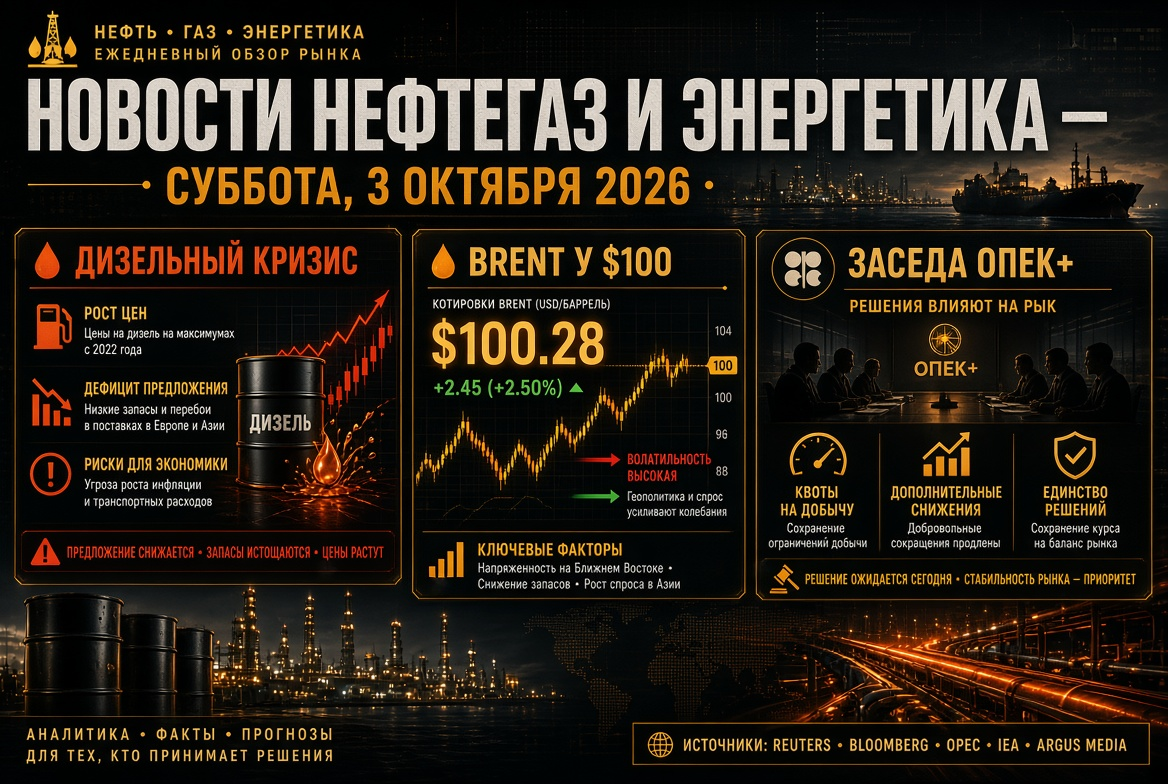
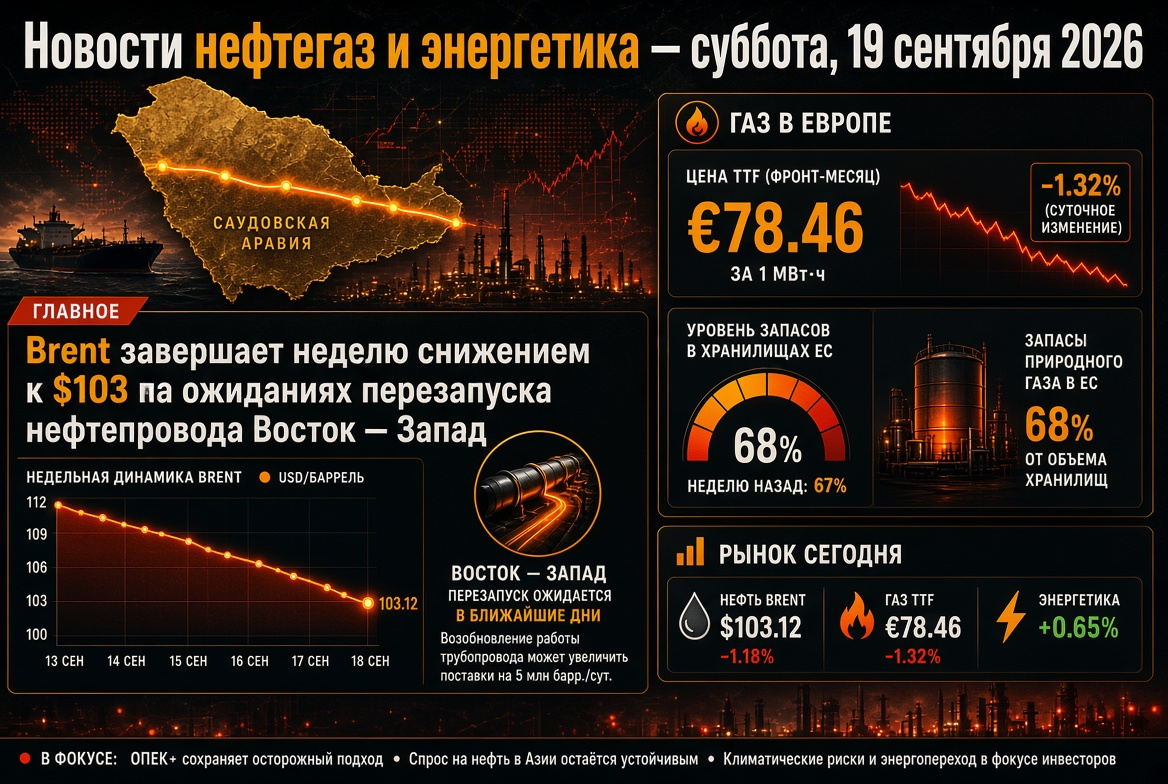
The global fuel and energy complex is entering a phase of heightened turbulence as of March 17, 2026. A key topic for investors, oil companies, gas traders, refineries, power generation, and commodity market participants is the impact of disruptions through the Strait of Hormuz and their effects on oil, gas, petroleum products, coal, LNG, and electricity. The oil market remains extremely sensitive to any signals regarding physical supply, while energy sectors across various regions are increasingly reacting not just to raw material prices, but also to logistics, fuel availability, and the resilience of energy systems.
For the global fuel and energy market, this signifies a shift from discussions about a soft balance of supply and demand to a more rigid agenda: where barrels will be lost, how quickly supplies will adjust, which refineries will face feedstock shortages, what will happen to diesel and jet fuel, and who will benefit from the rise in volatility in oil, gas, and energy markets. For investors and fuel companies, it is crucial to understand not only the price levels of oil and gas but also the market structure: spreads, premiums on petroleum products, refinery utilization, generation profitability, and the redistribution of LNG flows between Europe and Asia.
Oil: The Market Operates Under a Logic of Supply Deficit and High Geopolitical Premium
In the oil sector, a key factor for tomorrow is not the pace of demand growth but the actual availability of crude oil in the global market. Brent crude remains in a zone of heightened volatility as traders assess the scale of supply losses in the Middle East, the potential duration of disruptions, and the ability of alternative routes to partially compensate for the lost volumes.
Currently, three circumstances are critical for the oil market:
- A segment of Middle Eastern production and exports remains under pressure due to logistical constraints and security risks;
- Investment banks and commodity analysts are revising their forecasts for Brent upward, strengthening expectations for higher oil prices in the second quarter;
- Even with a partial restoration of shipping, the market has already priced in a substantial risk premium for oil, gas, and petroleum products.
For oil companies, this indicates an improvement in the short-term pricing environment for the upstream segment, while simultaneously increasing pressure on refining, trading flows, and downstream margins. For the global oil and gas sector, this represents a significant pivot: the market is once again trading not only based on fundamental balances but also on the resilience of the entire supply chain.
OPEC+, Strategic Reserves, and New Supply Balance
The next question for the energy market is how quickly the lost volumes can be compensated. Formally, some producers have reserves, but the physical realization of these capabilities depends on export logistics, available routes, and the condition of terminals. This is especially critical for countries whose oil and petroleum products traditionally transit through narrow transport corridors.
In this context, the importance of coordination between exporters and consumers is growing. International mechanisms have already shifted toward mitigating shocks through strategic reserves, which temporarily reduces the risk of panic in the oil and petroleum markets. However, investors must understand: strategic reserves can smooth out peaks in tension but cannot replace stable exports over an extended period.
- If disruptions are short-term, the oil market may have a chance for a partial correction downward.
- If restrictions drag on, the risk premium in oil will persist longer, and price quotes will remain structurally above previous expectations.
- If additional export nodes are impacted, the market will transition from a state of tension to one of pronounced physical deficiency.
For oil and gas market participants, this means that as of March 17, attention will not only focus on statements from OPEC+ but also on any signs of recovery in marine logistics, terminal load, and stock dynamics.
Gas and LNG: Asia Intensifies Competition for Molecules, Europe Loses Comfortable Balance
The natural gas and LNG markets have emerged as the second major focus after oil. The redistribution of LNG flows is already intensifying competition between Europe and Asia. Whereas the European market previously relied on relatively stable LNG imports, Asian buyers are now more actively capturing free cargoes, with some LNG shipments changing destination en route.
For the global gas market, several implications arise:
- Asian LNG prices receive additional support;
- Europe faces the risk of rising gas supply costs ahead of the next injection cycle;
- Importing countries find themselves competing harder for spot LNG, which increases price volatility across the entire system.
In the medium term, this raises the strategic value of new LNG projects, including export capacities outside Middle Eastern routes. For investors in oil, gas, and energy, this is an important signal: natural gas and LNG are once again perceived not merely as transitional fuels but as elements of energy security.
Refineries and Petroleum Products: Diesel, Jet Fuel, and Export Restrictions Surge to the Fore
The most painful aspect of the current shock is not crude oil but rather petroleum products. The refining and fuel supply segment now appears the most vulnerable. For refineries, the rising cost of feedstock coincides with supply instability, meaning consumers face the risk of price spikes for diesel, jet fuel, and certain industrial fuels.
For the global petroleum products market, the situation is evolving in the following directions:
- A portion of refining capacity in the Persian Gulf is already operating under constraints or at reduced utilization;
- Asian refining margins have surged, particularly for diesel and aviation fuel;
- Some countries have begun to limit fuel exports to protect domestic markets;
- Major Asian refineries are reducing their throughput due to more challenging access to Middle Eastern crude.
For energy market participants, this means that crude oil pricing metrics are no longer sufficient for evaluating the situation. Key indicators have shifted to diesel spreads, refinery utilization, the existence of export quotas, shipping logistics condition, and the availability of middle distillates. Currently, petroleum products hold the greatest potential to impact inflation, transportation, agriculture, industry, and electricity generation.
Electricity, Renewables, Coal, and Nuclear: Energy Systems Reprioritize Reliability
The electricity sector is responding to events more swiftly than might be apparent. As gas and petroleum products grow more expensive, countries with high import dependence are increasing reliance on coal, nuclear generation, and domestic energy sources. This practically means that even with ongoing renewable energy growth, reliability of power supply takes precedence in the coming weeks.
Several trends are already observable in the energy sector:
- Some Asian countries are prepared to temporarily increase output at coal and nuclear plants;
- The discussion about the role of renewables is shifting from deployment rates to integration quality into the grid, predictability of generation, and balancing costs;
- There is an increased focus on grid infrastructure and system flexibility, as the demand for electricity continues to grow globally.
Renewables remain a critical structural trend in global energy; however, the current environment shows that solar and wind generation are effective only in conjunction with strong networks, storage facilities, gas flexibility, nuclear capacity, or backup thermal generation. For investors, this means that not only pure renewable energy producers will benefit, but also companies involved in networks, storage, system integration, and reliable base generation.
Regional Picture: Asia, Europe, and the U.S. Enter Different Phases of One Energy Shock
Currently, Asia appears the most vulnerable to the LNG, petroleum products, and coal markets. For China, India, South Korea, Japan, and Southeast Asian nations, both price levels and the physical availability of fuel are critical. Europe is more focused on whether it can maintain a stable gas balance and avoid another spike in diesel and electricity prices. The U.S. appears relatively more stable due to its own oil and gas production; however, the influence of global price premiums on the domestic fuel and energy market is becoming increasingly evident.
Globally, the energy market is entering a phase where regional disparities will only widen. Some economies will benefit from energy resource exports and high prices for oil, gas, coal, and petroleum products. Others will face rising import costs, a reassessment of fuel balances, and additional inflationary pressures.
Implications for Investors, Oil Companies, and Energy Market Participants
As of March 17, 2026, the fundamental takeaway for the oil and gas market indicates that the sector remains strong in terms of investment potential, but a gap is rapidly growing between winning and losing segments.
- Upstream companies, LNG suppliers, coal exporters, select trading houses, and refineries with access to alternative feedstocks could remain in the positive.
- Import-dependent economies, the aviation sector, logistics, certain petrochemicals, and refiners lacking flexible feedstock baskets remain under pressure.
- In the electricity sector, there is increasing interest in networks, storage, nuclear generation, and projects designed to enhance system reliability.
For fuel companies, oil firms, refineries, and investors, the primary focus now should not be on abstract forecasts for Brent prices but rather on monitoring logistics, feedstock availability, premiums on petroleum products, gas balances, and the condition of electricity systems in key regions worldwide.
Conclusion
News from the oil and gas sector for Tuesday, March 17, 2026, revolves around a single central theme: the global fuel and energy complex is moving toward a more rigorous risk management regime. Oil, gas, LNG, coal, electricity, renewables, petroleum products, and refineries are now more closely interconnected through logistics, inventories, and political decisions. For the global audience of investors and market participants, this signifies that the energy sector is once again becoming not just a cyclical story but a key indicator of the resilience of the global economy and international trade.