Oil Market: First Weekly Correction in Three Weeks
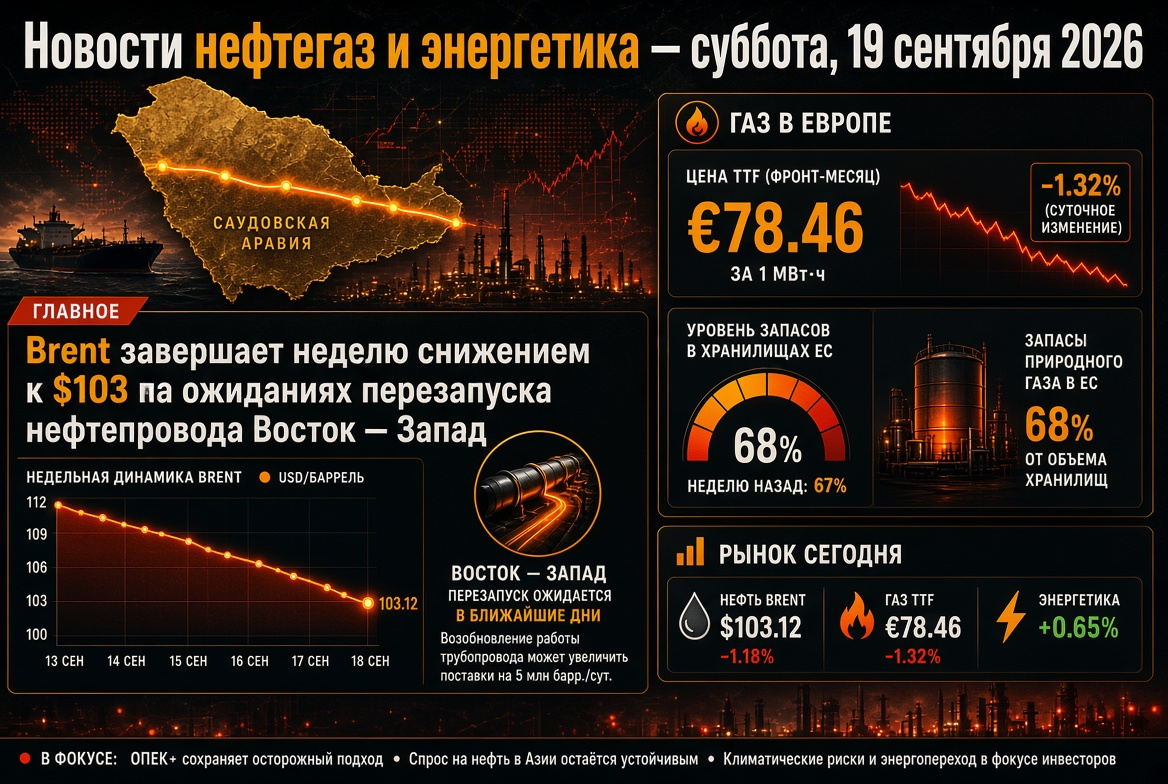
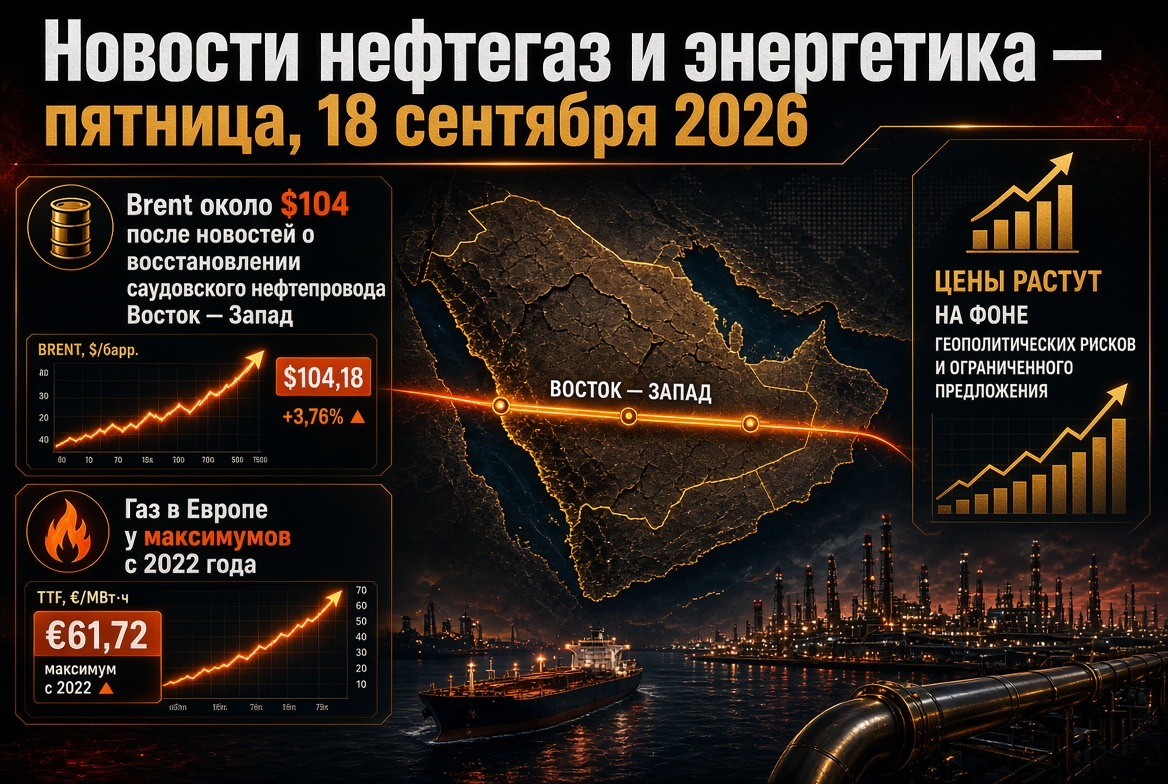
On Friday, oil prices declined for the third consecutive session: Brent fell to $102.5–103.5 per barrel, with WTI dropping to around $100, briefly dipping below this level. By the week’s end, Brent lost about 2%, although prices had reached $108 on Monday, nearly a four-month high.
- Wednesday: a nearly 3% decline to $105.7 — the sharpest in three weeks — following news of an upcoming partial restart of the Saudi Arabia East-West pipeline.
- Thursday: Brent closed at $104.82, WTI at $101.91 per barrel.
- Monthly Overview: WTI gained about 18–19%, Brent around 13%; oil prices are over 50% higher compared to a year ago.
Analysts agree that the fundamental picture does not justify Brent trading below $100 for an extended period. The futures curve remains in deep backwardation: the December contract is nearly $5 cheaper than the November contract — the market is paying a premium for immediate delivery.
Middle East: East-West Pipeline, Red Sea, and Hormuz
The East-West pipeline, with a capacity of up to 7 million b/d, is the main bypass of the Strait of Hormuz, through which up to 5 million b/d have flowed in recent months. After drone attacks, three pumping stations were damaged, and shipments from Yanbu were halted. Riyadh expects to restore about half of the capacity in a matter of days; full recovery will take five to six weeks.
- Bypass Routes: Saudi Arabia is offering additional batches to Asian refineries via ship-to-ship transfers at the Omani port of Sohar.
- Red Sea: The Houthis have captured Mocha, Perim Island, and Hanish and declared a blockade of Saudi ports; the parties exchanged strikes across the border again on Thursday.
- Hormuz: The strait is virtually closed to commercial shipping, there are no direct negotiations between the US and Iran, and the maritime blockade of Iranian ports continues.
- Production: Saudi Arabia reported a decline in production in August to its lowest level since 1990.
The IEA warns that supply disruptions are already forcing consumers to reduce their demand for oil.
Petroleum Products and Refineries: Diesel Remains the Center of Shortage
- The crack spread for diesel in the U.S. reached a record $117.97 per barrel on Wednesday; European gasoil is at historic peaks.
- Exchange diesel in New York is around $5.05–5.25 per gallon; retail prices in the U.S. hit a record $6.23 per gallon, with gasoline at $4.32.
- Distillate stocks in the U.S. have increased for the third consecutive week: +1.6 million, to 107.9 million barrels — the first signal of cooling.
Diesel in Europe is approximately 70% more expensive than February levels. For refineries outside the conflict zone, this is a period of super margins, while for fuel companies, aviation, and logistics, it represents a shock in costs.
Gas and LNG: Europe Enters Heating Season with 68% Stocks
TTF futures rose 1.5–2% on Friday, reaching €77–78 per MWh, after €82 on Wednesday; year-on-year, gas prices in Europe have increased by about 140%. EU storage is filled to about 68% — 16 percentage points below the five-year average and near two-decade lows.
- Qatar: Force majeure on LNG supplies has been extended until November; around 17% of Ras Laffan’s capacity is offline, with repair estimated to take three to five years.
- Asia: Spot LNG prices are at $26–28 per million BTU — the highest since 2022; LNG demand in the region may decline by 3–10% by year-end, as some South Asian buyers turn down expensive offers.
- Norway: Scheduled maintenance is temporarily reducing pipeline supplies.
- U.S. Henry Hub is around $2.86 per million BTU; the record spread supports U.S. LNG exporters.
Russia and Ukraine: Energy Ceasefire Not Confirmed, Fuel Exports Limited
The agreement announced by Washington on September 14 to cease strikes on energy assets is practically ineffective: in a week, refineries in Syzran and Yaroslavl were attacked, and strikes on Ukrainian infrastructure continue. Moscow called the idea "good," while Kyiv is ready for de-escalation with guarantees from partners.
- The export ban on diesel for producers is reportedly extended until the end of October; for non-producers, the ban is effective until January 31, 2027.
- A complete ban on gasoline exports is in place until January 31, 2027; jet fuel export restrictions remain in effect until November 30.
- Following drone attacks, six major Russian refineries have reduced output.
For the global petroleum products market, the absence of Russian diesel is one of the factors behind the record premium in middle distillates.
Asia: India and China Compete for Available Barrels
Russian oil imports to India in August decreased to approximately 2.1 million b/d from 2.7–2.8 million b/d in July due to refinery maintenance, reduced availability of crude, and aggressive purchases by Chinese processors. The pullback in Brent from its peaks gives India some breathing room — the rupee hovers around 95.8 to the dollar. Conversely, the yuan has strengthened to a four-year high, reducing the cost of energy imports for China.
Electricity, Renewables, and Nuclear: Structural Shift Accelerating
- Renewables: According to the IEA, renewable generation is expected to grow by about 1000 TWh per year until 2030, with over 600 TWh coming from solar generation; the share of low-carbon sources in global electricity is projected to rise from 42% to 50%.
- Nuclear: Uranium is around $90 per pound; the U.S. and Saudi Arabia have signed a civil nuclear agreement, and South Korea has completed the Saeul 3 reactor. Meanwhile, summer droughts have limited the operations of nuclear power plants in Europe.
- Bottleneck: Delivery times for large gas turbines exceed the construction cycle of the power plant itself.
Expensive gas is improving the economics of renewables and storage, however, rising interest rates are making capital more expensive for grids and new projects.
Coal: Insuring Asia's Energy Systems
Thermal coal in Newcastle remains around $145 per ton. Northeast Asia is replacing expensive LNG with coal and nuclear generation, supporting demand for exporters — Australia, Indonesia, Russia, and South Africa. The long-term trend remains unchanged: according to IEA forecasts, the share of coal in global generation is expected to decrease from 34% in 2025 to 27% by 2030, which is why major producers are hesitant to invest in new mines.
Macroeconomics: Rates Rise Amid Energy Inflation
On September 16, the Federal Reserve raised its rate by 25 basis points to 3.75–4.00% — the first increase since 2023; on Friday, the Bank of Japan also raised its rate. The yield on 10-year U.S. bonds is around 4.95%. The number of drilling rigs in the U.S. has increased to 591 (450 oil, 132 gas) from 539 a year ago: shale companies are responding to prices but cautiously.
What to Monitor for Investors and Energy Market Participants
- The actual restart of the East-West pipeline and resumption of shipments from Yanbu.
- Shipping through the Hormuz and Bab-el-Mandeb straits, and new strikes on infrastructure.
- Status of the energy ceasefire between Russia and Ukraine and the state of Russian refineries.
- Official announcement of the extension of the diesel export ban from Russia.
- Dynamics of TTF, rates of injection into European underground gas storage, and competition with Asia for LNG.
- Crack spreads for diesel and weekly inventory statistics in the U.S.
The base scenario for the coming days projects Brent in the range of $98–108 per barrel, with high sensitivity to news from the Middle East. Petroleum products and gas remain the most strained segments of the global energy market.