Global Oil, Gas, and Energy Sector News for Thursday, January 15, 2026: Oil, Gas, Electricity, Renewable Energy Sources, Coal, Oil Products, and Refineries. Key Developments in the Global Energy Market, Trends, and Factors for Investors and Industry Participants.
At the beginning of 2026, global oil and gas markets are showing signs of a growing surplus, while renewable energy continues its record growth trajectory. Oil prices remain under pressure due to a surge in production in the U.S. and other regions, and demand for hydrocarbons is constrained by a slowing global economy. At the same time, governments and companies are ramping up investments in "clean" energy, leading to a historic reduction in coal's market share and the first decline in coal generation in China and India in over fifty years. In such conditions, investors and industry players are analyzing the balance of power between fossil fuel surplus and energy transition prospects.
Global Oil Market
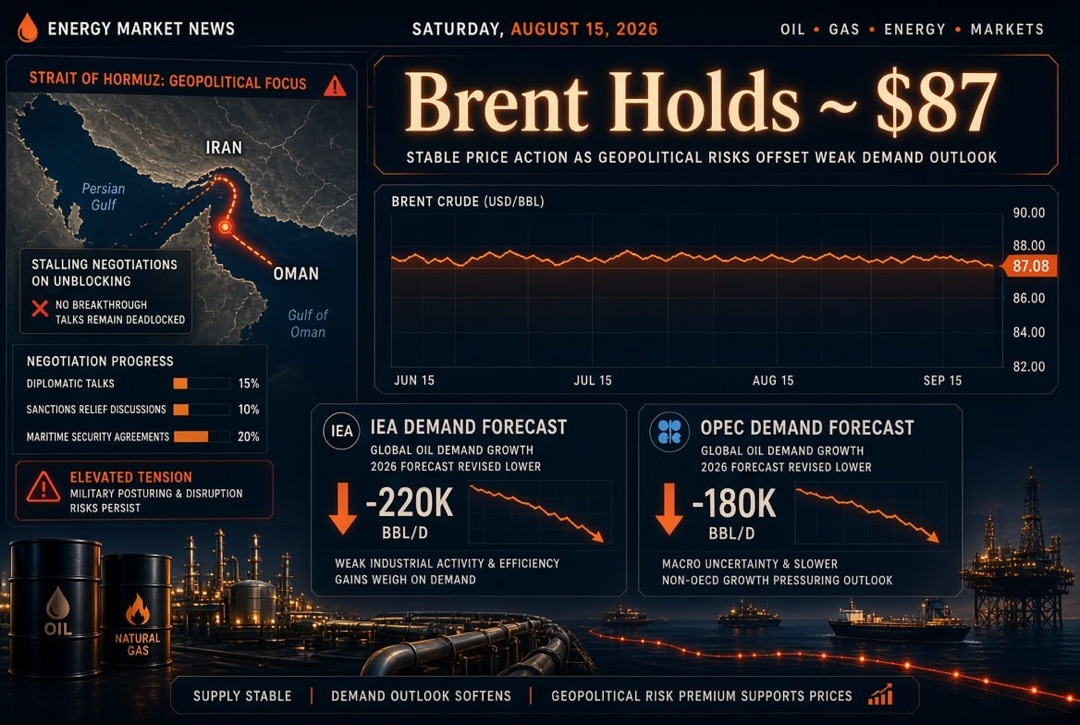
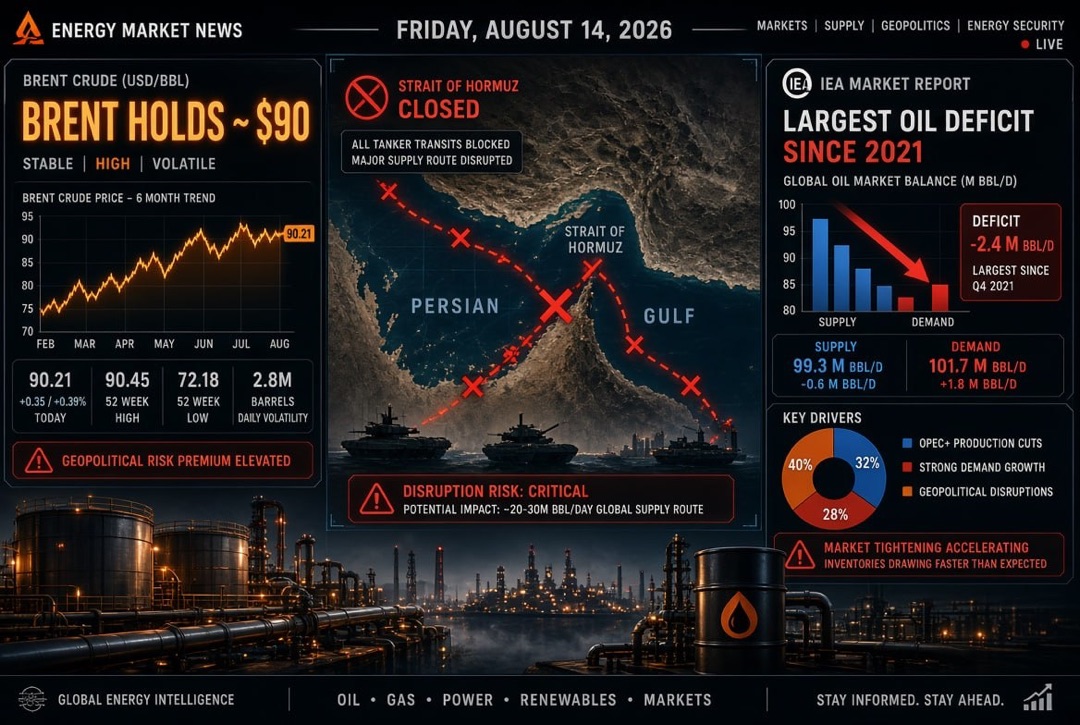
In January, Brent crude is trading around $60–65 per barrel, while U.S. WTI is at about $58–60. In the fourth quarter of 2025, prices decreased compared to the peak levels of the previous year. Experts predict that the average price of Brent in 2026 will be around $60 per barrel, and WTI around $58. At the OPEC+ meeting on January 4, it was decided not to alter the established production quotas to limit market volatility. Nevertheless, fundamental factors indicate an oversupply:
- A December 2025 analyst survey showed expectations for an average Brent price of around $61/barrel and WTI at $58/barrel in 2026.
- New production has come online in the U.S., Canada, and Latin America, increasing export volumes into the market.
- Last week, OPEC+ maintained production without cuts, focusing efforts on stabilizing prices rather than artificially inflating them.
- Russia plans to keep oil and gas condensate production at 2024 levels (around 10.3 million barrels per day), contributing to stable supply.
As a result, the outlook for supply-demand balance remains weakly optimistic: even with unplanned disruptions (in Venezuela, Iran, etc.), oil surplus threatens to suppress prices. Meanwhile, global oil futures continue to fluctuate amid geopolitical risks and moderate demand forecasts. The oil market is moving in a mode of careful monitoring of OPEC strategies, inventory data, and the global economic situation.
Overproduction and Geopolitics
According to the International Energy Agency (IEA), in 2026, oil supply is expected to exceed demand by approximately 3–4 million barrels per day, dubbed the "year of global surplus." Global production has significantly increased in recent years due to shifts in the U.S., Canada, Brazil, and the Emirates. On the other hand, OPEC representatives and some producers argue that the market is relatively balanced. Key factors contributing to the oversupply and associated risks include:
- The IEA forecasts a global demand deficit of about 4% from production levels, while OPEC expects a market close to equilibrium.
- China is actively replenishing its strategic oil reserves: purchases in the global spot market have risen, partially absorbing the surplus.
- Global oil inventories on tankers have reached peak levels since the 2020 pandemic, indicating rising onshore storage.
- Sanctions against Russia and Iran limit their oil exports (e.g., U.S. restrictions on tankers), but significant price increases have yet to materialize.
- Localized conflicts (strikes in Venezuela, instability in Libya) create uncertainty around supplies, but their impact on the global balance is limited.
Thus, the oil surplus in the market continues to exert pressure on prices. Investors are watching for signals regarding additional production cuts: while supply exceeds demand, any sharp easing of OPEC+ policies or new sanctions could change the situation in the latter half of the year.
Natural Gas and LNG Market
Seasonal demand is tempering natural gas prices. In the U.S., gas at the Henry Hub is trading at around $3–4/MMBtu due to a mild winter and surplus production. In Europe, prices remain around $10–12/MMBtu (TTF) due to reduced inventories in storage and heating needs. The international LNG market is also on the brink of oversupply: tens of millions of tons of new export capacity are scheduled to come online in the coming years. Key trends in the gas sector include:
- Global LNG exports are sharply expanding: by 2026–2027, over 90–100 million tons of new capacity is scheduled to come on board (Qatar North Field, Golden Pass, Scarborough, projects in Africa, etc.), leading to a "seller's market" with excess supply.
- According to Bernstein analysts, spot prices for LNG could decrease from ~$12 to ~$9/MMBtu as new plants come online. The primary burden of falling prices will fall on exporters, while consumers (especially in Asia and Europe) will benefit from cheaper fuels.
- The U.S. remains the largest LNG exporter: by 2026–2029, its share could rise to ~70% of supplies to the EU (up from 58% in 2025), considering the EU's plans to phase out Russian gas by 2027–2028.
- Inventories in European gas storage are historically low (around 82% of capacity in October); a drop to 29% by the end of the season is possible if cold weather persists, adding volatility to gas prices.
- Production of associated gas is increasing in regions like Perm, U.S., and others: new pipelines to the coast are enhancing gas supplies for LNG production and domestic markets.
Eventually, the gas market is balancing between record supplies and seasonal demand. Asia generates about 85% of the growth in LNG demand, but this has stabilized. Europe is importing record volumes of LNG in preparation for a phase-out of Russian supplies. Despite the oversupply, current cold temperatures and pipeline restrictions may keep prices at a moderate level heading into winter.
Coal Sector
Coal generation in key economies is showing signs of stagnation for the first time. According to energy analysts, in 2025, coal power generation declined in both China and India (by 1.6% and 3.0%, respectively). This has been enabled by a record increase in solar and wind capacity, surpassing the growth in electricity demand. Key observations in the coal market include:
- For China and India, 2025 marked the first year since 1973 where total coal generation fell amidst rising energy consumption.
- The cause is the explosive growth of "clean" generation: in just eleven months of 2025, solar and wind generation added around 450 TWh, exceeding the 460 TWh rise in consumption.
- Nevertheless, China has actively imported coal for the heating season: December coal imports rose 12% year-on-year to cover short-term demand and replenish stocks.
- Global coal prices remain high due to limited development of new mines and sustained demand in several countries (e.g., South Africa and Southeast Asia).
- The paradigm shift is evident: as renewable energy continues to grow, coal's share in the energy balance will gradually decline, potentially leading to a "peak" in coal generation by the end of the decade.
Thus, the coal sector is entering a phase of gradual reduction. Despite seasonal demand fluctuations, coal's role in the global energy landscape is diminishing, while the demand for alternative energy sources is increasing.
Renewable Energy and Electricity Sector
The global energy sector continues a massive transition to renewable sources and electrification. In 2025, China set a record for solar and wind capacity additions (over 500 GW of new installations total), doubling any previous figures. However, the International Energy Agency (IEA) has lowered its global renewable energy growth forecast to 2030 by over 20% (to 4,600 GW), indicating a slowdown in the U.S. and Europe. Key trends in the electricity sector include:
- Electricity demand is expected to grow by about 4% annually until 2027, driven by a boom in data centers, electric vehicles, and climate control in developing economies.
- Technological advancements: the costs of solar panels, wind turbines, and batteries continue to decline, enhancing the competitiveness of renewables and electric transportation.
- Grid flexibility: due to increased variable generation, operators are intensifying the implementation of smart grids and new load forecasting tools (e.g., AI consumption forecasts). In scenarios of capacity constraints, large consumers (data centers) are increasingly investing in on-site generation and battery storage.
- Government policies: despite a trend of scaling back support programs in some countries, overall decarbonization plans for most major economies remain intact. China, the EU, and the U.S. are committed to further developing renewable energy, although the pace may vary.
Consequently, energy systems are balancing between rising demand and the development of renewable technologies. Capacity reserves are increasing, but improving grid reliability remains a challenge for 2026, as financial and technological constraints hinder rapid transition.
Oil Products and Refining
The market for oil products remains tight in the diesel segment and more balanced for gasoline and jet fuel. European refineries are running at full capacity due to diesel shortages, prompting governments to impose a ban on importing oil products from Russia (starting in 2025) and promoting increased refining in other regions. Key characteristics include:
- The diesel margin continues to rise: in 2025, it surged by approximately 30% due to export restrictions from Russia and reduced supplies following infrastructure strikes.
- The margin for gasoline and jet fuel is steadier, as global demand for light fuels remains stable; companies offset differences by increasing supplies from the U.S. and Asia.
- Transnational projects (e.g., pipelines for cheaper crude types) have allowed some companies to optimize logistics costs.
- Looking ahead, investors are paying attention to environmental product standards: there is an increasing implementation of mandatory mixtures of bio-components and sulfur reduction requirements, which also affects refinery modernization plans.
Overall, the oil products segment is characterized by steady demand and structural changes: refineries are operating at high capacity, and market participants are reorienting part of the fuel production towards more eco-friendly mixtures and other products.
Strategies of Major Oil and Gas Companies
Global oil and gas companies continue to adapt their strategies to new realities: spending caution persists alongside readiness for long-term growth in energy demand. Key trends in the corporate sector include:
- CAPEX reduction: major players (Exxon, Chevron, TotalEnergies, etc.) have cut capital expenditure plans for 2026 by approximately 10%, optimizing projects and securing savings.
- BP and Shell: BP announced the write-down of $4–5 billion in low-return projects in the low-carbon energy segment and significantly reduced budgets for "green" initiatives, focusing efforts on oil and gas production.
- Despite this, most companies maintain long-term optimism: investments in exploration and the development of new fields are being pushed to the late decade (2030s), with significant production plans still in place.
- In the Middle East and Asia, national oil companies (like Aramco, ADNOC, CNPC, etc.) are increasing capital investments in upstream projects, preparing for long-term demand for hydrocarbons.
- Mergers and acquisitions: financially stable companies are considering acquiring competitors' assets to take advantage of current market volatility and strengthen their positions.
Thus, major oil and gas players are demonstrating a balanced approach: a strict optimization of expenses in the short term and an expansion of resource bases in the long term. This creates conditions for possible consolidation and reassessment of priorities in developing new technologies and assets.
Outlook and Forecasts for 2026
A balanced conclusion to the winter-spring season of 2026 will be critical for the fuel and energy complex. Most analysts believe that the early months of the year will be characterized by surplus, and price growth prospects depend on the supply balance and climate. Key takeaways and expectations include:
- 2026 could become a "year of abundance" for fuels: the excess supply of oil and gas in the first half of the year will pressure prices. The average price of Brent is expected to be around $55–60/barrel (WTI around $55), with sharp deviations possible only in the event of new conflicts or supply disruptions.
- Demand for hydrocarbons is limited by moderate economic growth and accelerating transitions to alternatives. Electrification of transport and industry is gradually reducing oil demand growth, and the phasing out of coal from energy is inducing long-term shifts in the fuel balance.
- Energy efficiency policies and the fight against climate change are influencing the strategies of countries and companies: alongside ensuring energy security, there is an increase in climate ambitions (development of renewable energy, preservation of fossil fuel reserves as strategic resources).
- By the end of 2026, markets could gain clarity regarding the balance: if rising supplies offset moderate demand, prices could stabilize at lower levels, giving investors time to rebalance their portfolios.
In summary, as of January 15, 2026, the global energy markets are characterized by a surplus of raw materials that restrain prices, alongside unprecedented development in "clean" energy. Investors and companies continue to carefully monitor the balance between the new "green" paradigm and the traditional oil and gas business model, preparing for changes in the structure of global energy distribution.