Oil Market: Brent Balances Around $100
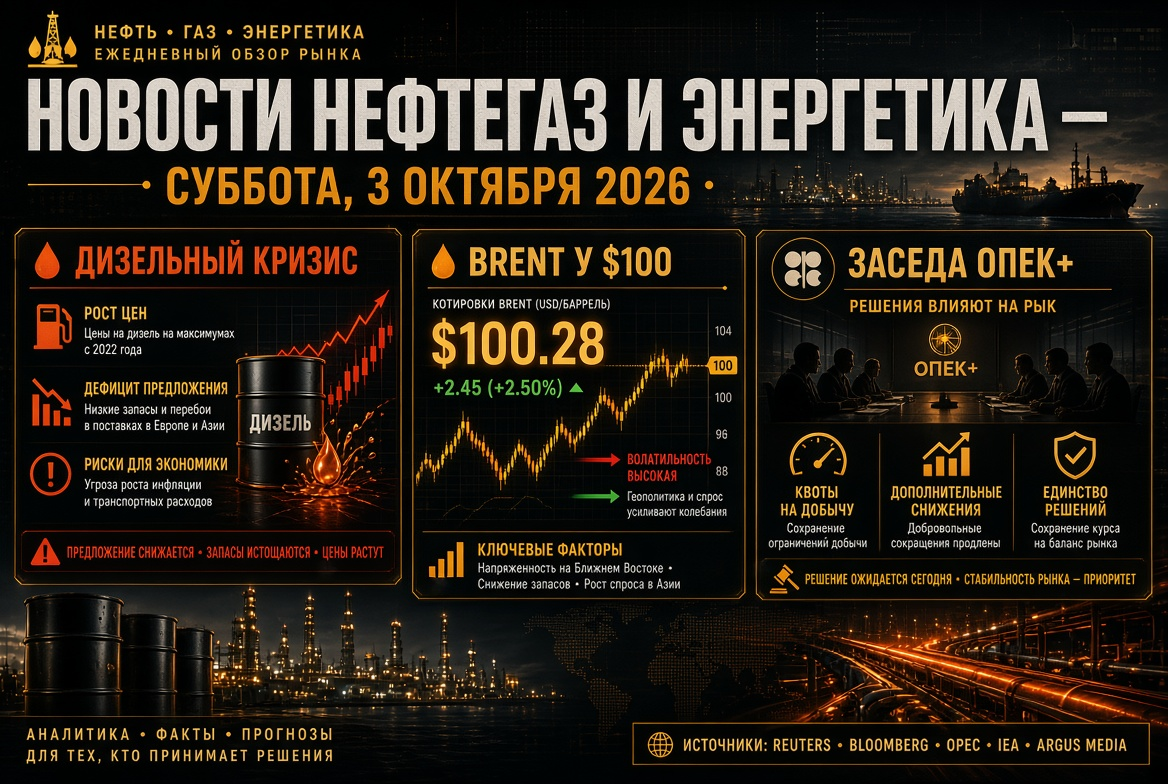
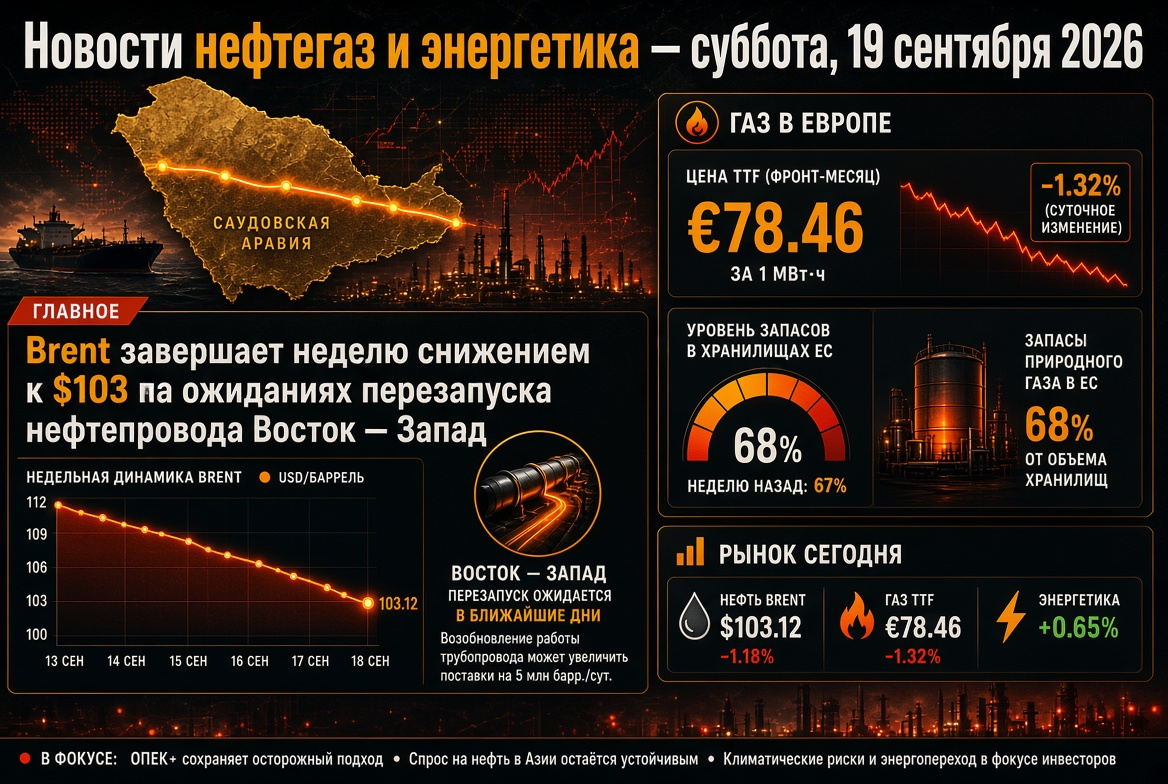
Oil prices are ending the week with high volatility. On Friday, Brent fell by approximately 2.5%, to just below $100 per barrel, while WTI dropped nearly 4%, approaching $89. The day before, Brent was holding above $102. Despite this correction, oil remains about 1.5 times more expensive than it was a year ago.
Prices are influenced by a range of opposing factors:
- Reserves: The European Commission is discussing with IEA participants the timeline for a new coordinated release of strategic reserves.
- Restoration of Exports: Non-Iranian oil shipments through the Strait of Hormuz returned to pre-war levels of 13.5 million barrels per day at the end of September, aided by convoyed vessel passage.
- Security Risks: This week, three tankers in the strait were struck by unidentified projectiles, and negotiations between the U.S. and Iran remain stalled.
- Stocks: According to the U.S. Department of Energy, global oil reserves have decreased by approximately 400 million barrels since the beginning of the year.
OPEC+: Meeting on October 4 and the 2027 Quota Issue
On Sunday, October 4, seven key members of OPEC+—Saudi Arabia, Russia, Iraq, Kuwait, Kazakhstan, Algeria, and Oman—will hold their monthly meeting. According to sources, the quotas for November will remain unchanged. Formal target levels have long diverged from reality: the actual output of the alliance is about 5 million barrels per day below pre-war levels, as Gulf countries are unable to fully export raw materials.
The main intrigue is shifting towards 2027: the alliance is completing an audit of production capacities, based on which new baseline production levels will be determined. For oil companies and investors, this is a question of long-term market share distribution.
Oil Products and Refineries: Diesel Becomes the Main Shortage
The market for oil products today is tighter than that for crude oil. Diesel fuel is setting price records in many countries, exceeding $6 per gallon in the U.S. Within just a few days, the supply has contracted in several directions:
- China has suspended the export of gasoline, diesel, and jet fuel for October, except for shipments to Hong Kong and Macau. Domestic fuel reserves have fallen to multi-year lows, with a decision on resumption expected after the holidays ending on October 7.
- Russia has extended the ban on diesel exports for producers until October 31.
- India: An explosion at a major export-focused refinery has led to the cancellation of several tenders.
- The U.S. is considering a ban on diesel exports if Germany and France do not release fuel from reserves. American refineries are operating at approximately 97% capacity, and Washington acknowledges that the ban could increase gasoline prices.
Germany and France hold approximately 35% of the EU's strategic diesel reserves, estimated at 39 million tons—more than two months' worth of consumption. Analysts estimate that the American ban would hit Latin America the hardest. The UN warns that global fuel subsidies may exceed $1 trillion.
Gas and LNG: Europe Enters Winter with Storage Deficits
The European gas market remains one of the most vulnerable segments of the energy sector. Prices at the TTF hub are holding around €73 per MWh, approximately double last year's figures. EU underground storage is filled to only 71.5%—around 20 percentage points below seasonal norms.
- Germany has instructed SEFE to inject an additional 8 TWh of gas into storage.
- The EU is considering a one-year deferment of methane regulations for imported gas to avoid restricting LNG supplies.
- The head of Japanese firm JERA has warned that LNG prices have yet to reach their potential peak.
- LNG imports to China have decreased for the second consecutive month, while Pakistan is exploring direct purchases for power plants.
Long-term investments in the sector are accelerating: ConocoPhillips has signed a 20-year LNG contract with Venture Global, and Shell has approved the second phase of LNG Canada, which will double the project's export capacity.
Coal: Prices in China Reach Three-Year Highs
Coal is once again serving as a safety resource for the energy systems of Asia. The benchmark price for thermal coal at the Qinhuangdao port has risen for 11 consecutive weeks, reaching 986 yuan (about $147) per ton—a three-year high. Since mid-July, prices have increased by 24% due to reduced domestic production following safety inspections and a near 25% decrease in imports from Indonesia.
Coal accounts for nearly half of electricity generation in China, and authorities have called on mines to maintain stable production. In India, the IEA expects coal demand to grow by 4.2% this year, reaching 1.353 billion tons.
Electricity, Renewables, and Nuclear Energy
Global electricity demand is growing at its fastest pace in 15 years—driven by data centers, artificial intelligence, and electrification. Grids and generation are struggling to keep up with consumption, particularly in emerging markets.
- India: The electricity deficit in September reached 560 million kWh—the highest since August 2023. Nearly 40% of coal plants are operating at critically low fuel levels. Renewable energy generation increased by 25.1%, but its share in total generation fell to 17%.
- Nuclear Energy: Amazon has signed a 20-year supply agreement for nuclear electricity with Constellation, and uranium prices have reached historical highs.
- Europe: Three EU countries advocate for a new renewables target by 2040.
The energy crisis strengthens the case for renewables, energy storage, and nuclear generation as tools for energy security rather than just climate policy.
Asia: India and China Adjust Import Strategies
India is increasing its purchases of Middle Eastern oil while reducing Russian supplies, as its refiners seek tankers for voyages through the Strait of Hormuz. New Delhi emphasizes that high prices are caused by chaos in shipping rather than a lack of raw materials. The rise in oil prices has already resulted in an outflow of $3.2 billion in foreign investments from Indian markets. Analysts have also lowered their projection for Chinese oil imports in the fourth quarter by 400,000 barrels per day. Taiwan has allocated $13 billion to shield consumers from high energy costs.
Russia: Export Restrictions and Internal Fuel Market
The Russian oil products market remains under stringent regulation. In addition to the ban on diesel exports for producers until the end of October, there are bans on gasoline exports until the end of January and restrictions on jet fuel exports until November. Authorities explain these measures by the high demand during the harvest season and the need to replenish stocks after drone attacks on refineries. Retail gasoline prices have risen by about 21% since the beginning of the year, while the antitrust agency is investigating dozens of independent gas station networks.
What to Watch for Investors and Energy Sector Participants
- October 4: OPEC+ decision on November quotas and signals regarding 2027 parameters.
- October 7: Conclusion of holidays in China and potential resumption of fuel exports.
- IEA and EU Reserves: Volume and timing of oil and diesel releases.
- U.S. Decision on diesel export ban and refinery margin reactions.
- Strait of Hormuz: Shipping safety and the status of U.S.-Iran negotiations.
- Weather in Europe: Early cold weather with storage at 71.5% could sharply increase gas and electricity prices.
The baseline scenario for the coming days is a continuation of high volatility: oil is responding to news about reserves and the situation in the Hormuz, while oil products, gas, and coal remain structurally in deficit. For oil and fuel companies, this means high refining margins; for consumers and importers, it signifies ongoing price pressure.