Current News in Oil, Gas, and Energy as of April 19, 2026: Oil, Gas, LNG, Refineries, Electricity and Global Energy Trends
The global energy sector approaches April 19 in a state of sharp but still incomplete reassessment. Oil has moved out of a phase of panic into a phase of nervous volatility: the market is simultaneously accounting for a partial easing of logistical risks in the Middle East, weak demand, and still high geopolitical premiums. For the oil and gas sector, this means one thing: the previous logic, where oil prices rose almost automatically in the face of any conflict, no longer works in a straightforward manner. Now, investors, oil companies, refineries, traders, and energy holdings are looking not only at the barrel price but also at the supply chain, refining margins, availability of LNG, resilience of electricity grids, and the pace of new renewables and storage capacity installations.
The main theme of the day for the global market is not just the cost of raw materials but the price of resilience for the entire energy system. This is why oil, gas, and energy news in April 2026 is shaped on multiple levels: production, transportation, refining, electricity, renewable generation, coal, and energy security of the largest economies.
Oil: The Market Has Emerged from Shock but Remains in the Risk Zone
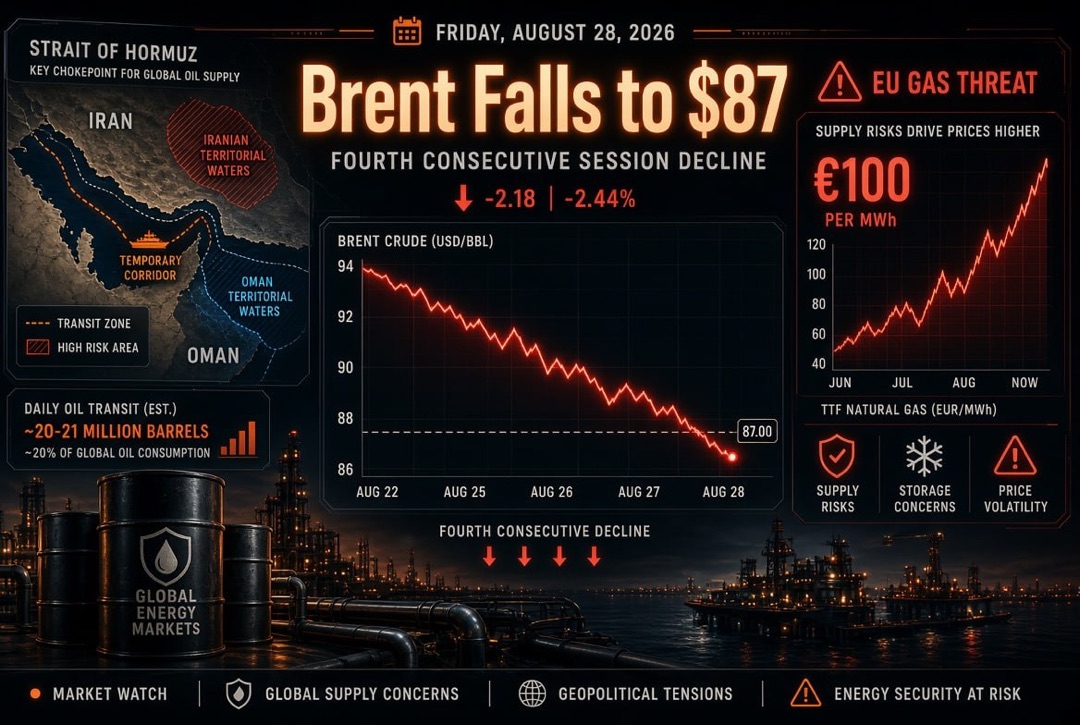
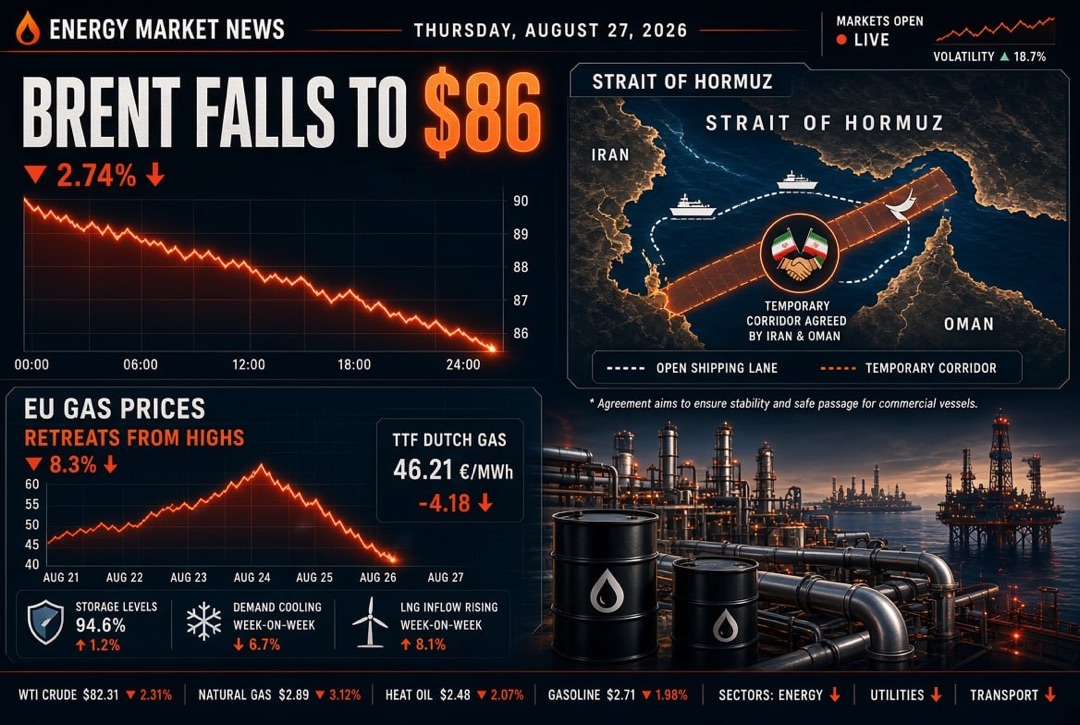
The oil market is ending the week with a strong correction following a recent spike. This does not mean a return to calm. Rather, the global oil market is shifting into a mode where any news regarding transportation routes, supply insurance, and actual availability of Middle Eastern barrels can instantly change the pricing trajectory.
For market participants, three conclusions are currently important:
- The geopolitical premium persists but is no longer solely dominant. The market has begun to refocus on actual demand rather than just the risk of shortages.
- Demand appears weaker than early-year expectations. This limits the potential for a new lengthy rally in oil prices, even with persistent nervousness.
- Volatility will remain high. This creates revenue opportunities for oil companies but complicates refining, logistics, and export planning.
From an investor's perspective, today’s oil and gas market indicates that while the price per barrel remains important, more crucial is the stability of supply routes and the actual speed of returning physical supplies.
OPEC+: Formally More Oil, Actually More Uncertainty
OPEC+ continues its gradual adjustment in production limitations; however, the actual capacity of the market to quickly ramp up supply remains uneven. On paper, the alliance signals a controlled increase in supply, but the physical market continues to evaluate not declarations but available volumes and timelines for logistics recovery.
This creates a dual effect for the global energy sector. On one hand, a softer scenario for oil prices is forming in the second quarter. On the other hand, each new supply is evaluated by the market with adjustments for infrastructure risks, insurance, shipping, and quality of crude. As a result, the oil market in April 2026 remains a market of high uncertainty rather than excess supply.
Gas and LNG: Europe is Physically Better Protected than Psychologically
The gas market appears less dramatic than the oil market, but its internal vulnerabilities are greater than they seem. Europe is entering the injection season with reduced inventories, making the cost of filling storage a key factor in the coming months. Formally, there is no immediate risk of shortage, as supplies are diversified and the roles of Norway, the U.S., and global LNG remain significant. However, the price risk is still substantial.
Here are the key trends for the gas and LNG market:
- European companies will seek to commence injections earlier to avoid a summer price spike;
- Asia remains Europe’s main competitor for spot LNG cargoes;
- Any disruptions in Middle Eastern logistics continue to impact premium Asian importers and gas-dependent electricity markets;
- Long-term, the market anticipates an expansion of LNG supply, primarily from North America, but in the short term, this does not mitigate the nervousness.
Particularly telling is the Asian context: for economies like Japan, the issue of LNG is directly linked not only to fuel imports but also to summer reliability of the energy system amid increasing loads. For global oil and gas markets, this is an important signal: gas is no longer simply a “transitional” fuel but a cornerstone of energy security.
Refineries and Oil Products: The Weak Link of the Week is European Refining
The oil products and refinery segment is currently providing perhaps the most practical signals for the market. While oil quotes can be explained by geopolitics and news flows, refining margins reveal the economic reality of the sector. This reality in Europe has deteriorated: expensive oil has not been fully passed on to the prices of end fuels, meaning that pressure on refiners has increased.
For European refineries, this means an increased risk of reduced utilization, particularly for less complex plants. If weak margins persist, refining in the region could become one of the main points of tension in the energy sector as early as the second quarter. This is significant for the diesel market, supply chains of oil products, and the inflation backdrop in the industrial sector.
Asia presents a different picture. China reduced its oil product exports in March, as well as LNG imports, indicating stricter regulation of external flows and cautious domestic demand. For the global market, this means that the Chinese factor in 2026 operates not only through oil imports but also through changes in behavior in fuel, refining, and gas markets.
In the U.S., the situation remains more stable: refinery utilization remains high, gasoline output remains strong, partially alleviating global tensions in the fuel market. Nonetheless, even here, the sector depends on whether international logistics remain stable in the coming weeks.
Electricity: Demand Grows Faster than Old Risks Disappear
In 2026, global energy is increasingly shifting from merely discussing oil and gas to the question of who will meet the growing demand for electricity. This is particularly evident in the U.S., where electricity consumption continues to hit record highs. The drivers are clear—a surge in data centers, artificial intelligence, electrification, and new industrial loads.
This shifts the investment logic of the entire sector. Now, the focus is not only on hydrocarbon extraction but also on networks, balancing capacities, gas generation, storage, and systemic resilience. The European agenda supports this same trend: following major outages and investigations surrounding the performance of networks, the quality of energy system management rises to parity with fuel price issues. For investors, electricity is no longer a secondary sector within the energy landscape but becomes an equal driver of capital investments.
Renewables and Storage: The Energy Transition No Longer Disregards Security but Serves it
The renewable sector in April 2026 appears not as an ideological project but as a tool to reduce dependence on volatile oil and gas markets. Europe is accelerating tenders and support for new capacities, including offshore wind and solar generation. Concurrently, interest in energy storage is rising, as without it, even rapid integration of renewables does not resolve peak load and reliability issues.
For the global energy market, this indicates a crucial shift: renewable energy, batteries, and grid projects are increasingly viewed not separately from traditional energy but as part of its new architecture. In other words, renewables are no longer competing head-on with conventional energy—they are becoming a means to reduce dependence on price shocks in oil, gas, and LNG.
Coal: Not a New Bet but a Temporary Insurance
In 2026, coal is receiving short-term support as a backup source of stability, particularly where energy systems are pressured by expensive gas or rising electricity consumption. However, this does not represent a backward shift in global energy. Rather, it speaks to the tactical retention of some coal generation and reserves where they are necessary for reliability.
A telling example is India, where high coal inventories are viewed as a protective element against summer demand spikes. For the global market, this means that coal remains part of the energy balance but not its future. The main capital will still flow into gas, networks, renewables, storage, and more efficient refining.
What’s Important for Investors and Energy Sector Participants in the Coming Week
In the coming days, the oil, gas, energy, and raw materials sectors will operate not under a single indicator but several parallel signals. Key points to monitor include:
- Oil: Will Brent remain below the psychologically significant zone of a new surge and will the downward momentum persist post-correction;
- Gas and LNG: Will the injection into European storage accelerate and how will Asian buyers behave in the spot market;
- Refineries and Oil Products: Will Europe begin cutting back on refining utilization and how will this impact diesel and gasoline;
- Electricity: What new signals will grid regulators and operators provide regarding the assurance of load growth;
- Renewables and Storage: Will the acceleration of projects continue as a response to expensive traditional energy.
The primary takeaway for April 19, 2026, is clear: the global energy sector remains in a phase of structural tension. Oil, gas, electricity, renewables, coal, and oil products can no longer be analyzed in isolation. Those companies and investors who look not only at commodity prices but also at the interconnections across the entire energy chain—from the wellhead and LNG terminal to refineries, electricity grids, and end consumers—will succeed.