Key Oil and Gas and Energy News as of February 13, 2026: Price Dynamics of Brent and WTI, TTF and Henry Hub Gas Markets, Sanction Risks, Refineries and Petroleum Products, Electricity, Coal, and Renewable Energy. A Global Energy Sector Overview for Investors and Companies.
As of Friday, February 13, 2026, the global energy sector is entering a session with a mixed bag of signals: oil demand forecasts are turning more cautious, yet geopolitical factors, sanctions, and logistical disruptions are heightening volatility in oil, gas, and petroleum products. In Europe, electricity and carbon regulation are back in the spotlight, while coal in Asia faces spot risks due to export uncertainties. Below are key indicators and events significant for investors, oil and gas companies, refineries, and trading in global markets.
- Oil: Prices hover around psychological levels, but the supply-demand balance appears less constrained on paper than in physical trading.
- Gas: Europe enters the injection season with increased regulatory premiums and sensitivity to LNG and weather; the U.S. remains on a separate curve with its own storage cycle.
- Electricity and Renewables: ETS policies and energy costs for industries are becoming market factors alongside commodities.
- Refineries and Petroleum Products: Margins are supported by structural capacity shortages and localized disruptions, yet infrastructure risks are growing.
Market in Numbers: Key Prices for Oil, Gas, Electricity, and Coal
| Indicator | Price | Change for the Day | Commentary |
|---|---|---|---|
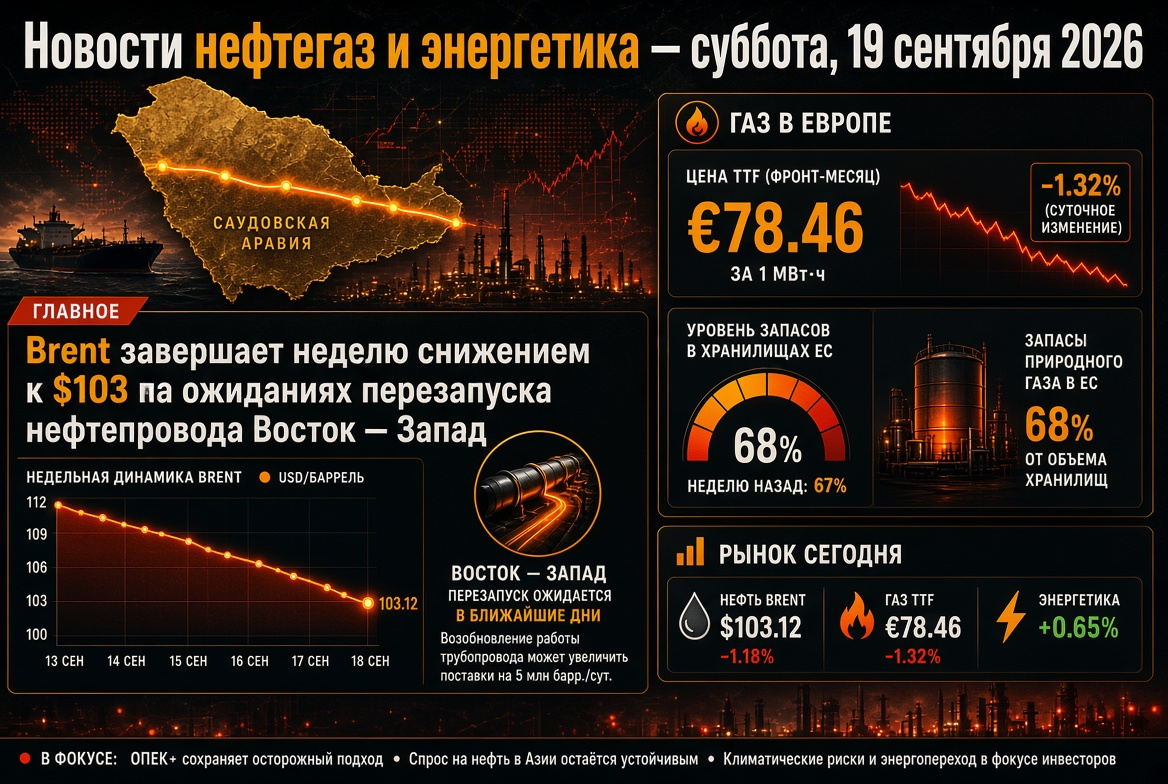
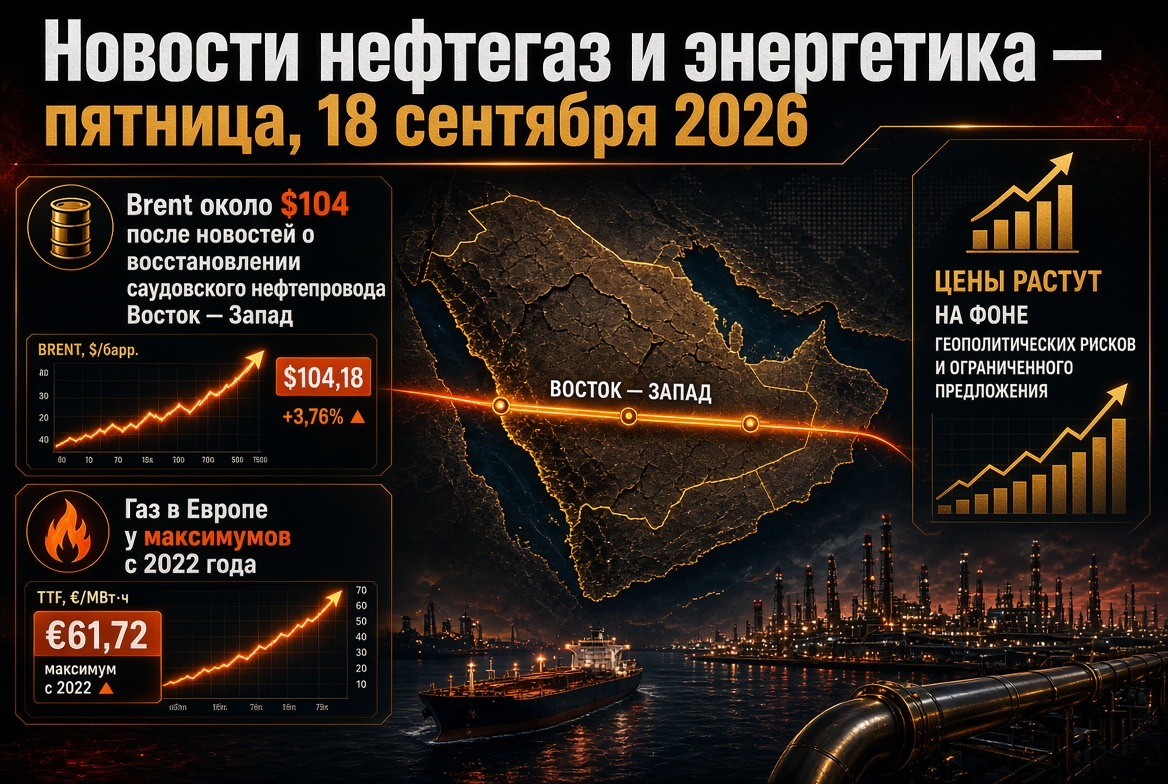
| Brent Oil | $69.21/barrel | -0.27% | Global oil benchmark; risk premium depending on sanctions and logistics |
| WTI Oil | $64.55/barrel | -0.12% | U.S.; sensitive to stocks and refinery utilization |
| Henry Hub Gas (NYMEX, NGH26) | $3.246/MMBtu | +2.75% | U.S.; influences electricity prices and demand from generation |
| Dutch TTF Gas (CME, TTFH6) | €32.885/MWh | +2.23% | Europe; driven by LNG, weather, regulation, and stocks |
| Coal (Newcastle Benchmark) | $115.00/ton | ≈+0.09% | Indicative level for the seaborne coal market; important for electricity and Asia |
Oil: Demand Revision vs. "Hard" Geopolitics
Market Balance and Demand Expectations
The focus lies on the dissonance between macro forecasts and trading reality. Revisions in demand forecasts and expectations of a supply surplus establish a baseline for "range-bound" oil on a weekly horizon. However, within the physical supply chain, the risk premium remains due to sanctions, restrictions on "gray" flows, as well as infrastructure threats along routes and at processing locations. For investors, this means that even moderate oil prices may accompany high intraday volatility and wider spreads among grades.
Sanctions, Hormuz, and Risk Premium
The sanctions factor is becoming a key driver of "availability" of barrels, rather than just their price. New restrictions on carriers and trading chains heighten the importance of insurance, compliance, and access to port infrastructure. In the coming sessions, the market will be particularly sensitive to signals regarding de-escalation or, conversely, to news about the expansion of restrictions and incidents in global logistics choke points.
Gas and LNG: European Risk Profile and American Curve
For global energy, gas remains both a "transitional" and strategic commodity: it determines electricity margin and the competitiveness of industries in Europe, while in the U.S., it serves as a bridge between production and LNG exports. The European TTF strengthens amid sensitivity to weather and the status of LNG supplies, as well as to regulatory constraints on Russian volumes and their marketing.
- Europe: The market is entering the pre-season for injection, where gas prices easily respond to any signals about LNG availability and potential contract limitations.
- U.S.: Henry Hub continues to be a hostage to seasonal storage dynamics and short-term weather shocks; influence is exacerbated by rising demand from generation and export infrastructure.
Electricity and Carbon: ETS as a Market Factor
In 2026, electricity increasingly reacts not only to the fuel balance (gas/coal) but also to political-regulatory signals. Discussions about adjustments to ETS and the industry's struggle to lower costs are bringing "politics" back into the forward curves equation. Practically, this means that investors in generation and networks will evaluate not only CAPEX and fuel prices but also the degree of regulatory predictability.
Global Linkage of "Gas → Electricity → Industry"
For global geo-targeting, two effects are significant. First is the relative cost of electricity between regions (Europe vs. U.S./Asia), influencing capital migration into energy-intensive industries. The second is the resilience of networks and power availability: extreme weather and military risks heighten price spikes and increase the value of flexibility (balancing capacities, storages, rapid repairs).
Petroleum Products and Refineries: Margins Rise, but "Physics" Become More Fragile
The petroleum products segment receives support from structurally limited refining: the global base of refineries is growing slower than the need for reliable fuel supply. Against this backdrop, any shutdown of a major refinery—whether due to an accident, maintenance, or force majeure—quickly impacts diesel and gasoline spreads, as well as premiums on regional prices.
- U.S.: The recovery of margins for independent refiners boosts interest in sector stocks and "crack spread" strategies.
- Eurasia: Risks of attacks on infrastructure and refinery shutdowns are again becoming a pricing factor for petroleum products and logistics.
- Europe: Changes in ownership and management regimes of refineries amplify the role of sanction compliance and corporate governance.
Renewables and Energy Transition: Adjustments to Goals and the Hidden Cost of Networks
Renewables remain a strategic focus, but the pace and structure of the transition increasingly depend on network constraints and policy. Adjustments to national plans in Europe demonstrate that "planned" trajectories for capacity installation are not guaranteed: the market is increasingly pricing in project delays, increased connection costs, and subsidy revisions.
- For investors in renewables, a key risk is not only the cost of capital but also the speed of grid connectivity and cost distribution rules.
- For industry—predictability of electricity costs and availability of long-term PPAs/contracts.
Coal: Asian Spot Risks and the Role of Fuel in Energy Balance
Despite the increasing share of renewables, coal remains a "backup" fuel for electricity in many economies, particularly in Asia. Any export restrictions and disruptions in spot supplies quickly become price impulses—and through them, they influence gas, demand for petroleum products in generation (fuel oil/distillates), and overall energy inflation.
Key Takeaway for the Energy Sector
The coal market in 2026 is significant not just as a "long-term bet" but as a source of shortfalls and shocks that transfer to gas and electricity through fuel substitution.
Logistics, Sanctions, and Insurance: Where Supply Chains Can "Break"
Oil and gas trading in 2026 is increasingly dependent on the throughput of choke points and the status of vessels. Under the pressure of sanctions, the role of the "shadow fleet" is growing, routes are becoming more complicated, and transaction costs—from insurance to port procedures—are rising. In the short term, the market will react to any changes in transit status in Hormuz and to the expansion of sanction lists, including measures against third country infrastructure and ports.
What Investors Should Monitor on Friday, February 13, 2026: Scenarios and Ideas for Charts
For the investor audience and corporate planning in oil, gas, and energy, it is critical not only to consider "absolute prices" but also the market regime: range/trend, liquidity, compliance risk, and the likelihood of force majeure events.
Checklist for the Session
- Oil: Holding Brent around $70 and the dynamics of grade spreads (signal for the availability of "clean" barrels).
- Gas: Resilience of TTF above/below €30–35/MWh as an indicator of the European stress mode; reaction to news about LNG.
- Electricity: Any announcements regarding ETS and support mechanisms for industries; influence on utility stocks and power forward curves.
- Refineries and Petroleum Products: News about repairs/shutdowns of refineries and margin dynamics; fuel logistics risks.
- Coal: Signals about normalization/enforcement of export restrictions in Asia as a driver for spot prices.
Where Charts/Diagrams Would Be Appropriate (Do Not Insert Images)
- Line chart: Brent and WTI over 30 days + marking key news (sanctions/incidents/reports).
- Spread diagram: TTF vs. Henry Hub (in conversion) as an indicator of regional gas imbalances.
- Bar chart: indicative levels of coal/gas/ETS and their contributions to electricity costs by region.
- Map-scheme: logistical choke points (Hormuz, key ports/hubs) with a qualitative assessment of sanction risk.
For February 13, 2026, the base scenario for commodity markets appears to be "moderately oversupplied" according to modeling, yet "premium" regarding risks in real deliveries. For participants in the energy sector, the optimal strategy remains a combination of hedging in oil and gas, compliance discipline, and increased attention to infrastructure risks concerning refineries and fuel logistics.