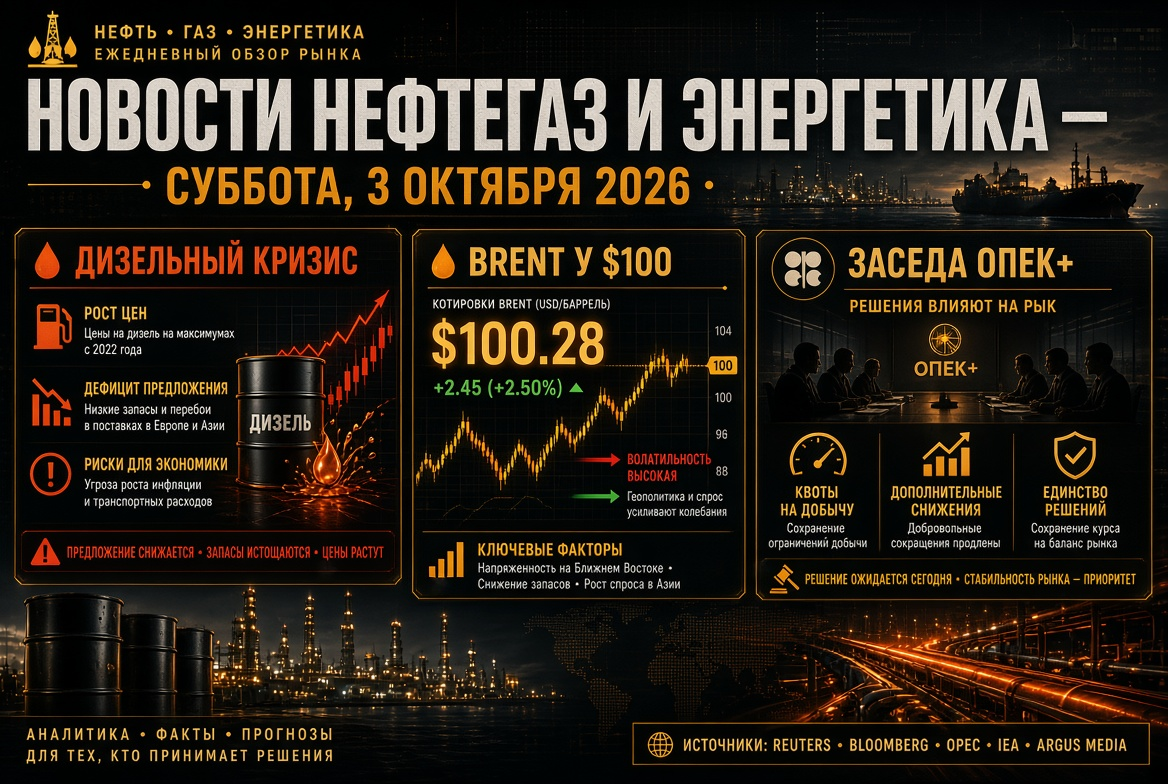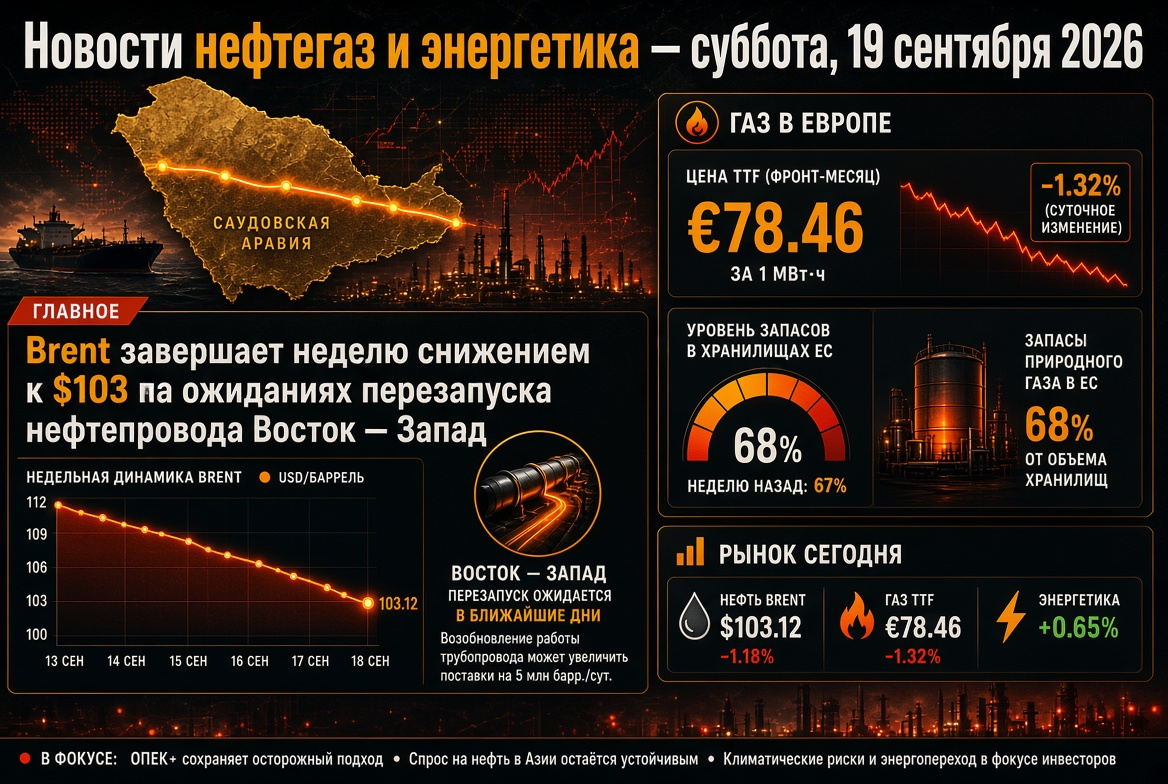
Current News in Oil and Gas and Energy on March 23, 2026: Rising Geopolitical Premium in Oil, Tensions in the LNG Market, Situation with Refineries and Oil Products, Electricity, Renewables, and Energy Security
The global oil and gas market enters a new week amidst heightened volatility. For investors, oil companies, gas players, refineries, fuel traders, and participants in the electricity sector, the primary factor remains the rising geopolitical premium in raw and energy assets. Oil, gas, diesel, LNG, and electricity are increasingly responsive not only to the physical balance of supply and demand but also to risks in logistics, maritime supply, processing, and the resilience of energy infrastructure.
Against this backdrop, oil and gas, together with energy, have become the focal point of the global macroeconomic agenda. Several key issues dominate the world market: the dynamics of Brent and WTI prices, the status of supplies through key maritime routes, the resilience of LNG exports, refinery utilization, the balance of the diesel market, and the acceleration of investments in renewables, nuclear energy, and energy efficiency. For the broader audience of the global market, this signifies one crucial point: the oil and gas sector once again dictates inflation, logistics, industrial activity, and investment flows.
Oil Market: Oil Is Once Again Trading as a Geopolitical Risk Asset
The week begins for the oil market under a firmly established risk premium. For the global oil and gas sector, this shift means a movement away from fundamental surpluses or deficits towards concerns regarding the physical availability of barrels. In this context, even limited supply disruptions can instantly trigger upward price movements.
- Oil continues to be sensitive to the risks of maritime logistics disruptions.
- The risk premium extends not only to crude oil but also to petroleum products.
- For oil companies and traders, the stability of export corridors has become a critical indicator.
For investors in the energy sector, the current market configuration suggests that short-term price increases are supported not only by speculative impulses but also by expectations of supply disruptions. Meanwhile, high oil prices are starting to impact fuel costs, refining margins, and inflationary expectations in the world's largest economies.
OPEC+ and Oil Supply: The Market Is Watching Real Availability Rather Than Plans
Formally, the market still orients itself towards OPEC+ decisions; however, in the current phase, participants are primarily evaluating the real capacity to ramp up export supplies quickly and deliver additional volumes to end buyers. Even if certain countries are prepared to increase production, bottlenecks remain in transportation, export terminals, insurance, freight, and route capacities.
This creates a significant shift for the oil market. Previously, discussions centered around quotas and OPEC+ discipline; now, the focus is on the quality of available capacities and the speed at which additional barrels can be brought to the market. This is why oil and petroleum products maintain heightened sensitivity to any news from the Middle East, Asia, and Europe.
Gas and LNG: Global Market Tensions Intensify Competition Between Asia and Europe
The gas and LNG segment remains one of the most vulnerable areas in global energy. For Europe, Asia, and developing markets, the issue of LNG supply is once again strategic. While oil can be partially replaced by reserves and redirected flows, the gas market is more tightly linked to infrastructure, contracts, regasification, and seasonal balances.
This week, the following factors hold particular significance:
- The rerouting of specific LNG cargoes towards more premium markets;
- Increased competition between Asian and European buyers;
- The risk of rising gas costs for electricity generation and industry;
- Pressure on the cost of electricity generation in import-dependent regions.
This is especially important for the electricity market, as gas often remains the marginal price generator. Consequently, rising gas prices are quickly transmitted to tariffs, electricity costs for industry, and overall inflation. This is why investors are paying more attention not only to gas extraction but also to the entire value chain — from liquefaction and tanker logistics to regasification and network capacity.
Refineries and Oil Products: Diesel, Jet Fuel, and Refining Margins Take Center Stage
The refining sector presents an equally significant situation as the crude oil market. This week, refineries and fuel companies are characterized by rising average distillate values. Diesel, jet fuel, and other petroleum products are becoming key indicators of shortage, as they most profoundly reflect disruptions in supply chains.
The oil products market is currently characterized by three trends:
- Expanding refining margins amid expensive distillates;
- Rising premiums on diesel and jet fuel;
- Increased focus on refinery utilization in Europe, Asia, the US, and the Middle East.
Should part of the Middle Eastern refining capacity continue to operate under constraints, this will intensify pressure on import-dependent regions. For Europe, the issue is particularly sensitive, as the motor fuel and diesel market relies not only on domestic refining but also on a stable external influx of products. In this environment, shares of refining, logistics, and fuel trading may receive additional support, while consumers and industries will face rising costs.
Electricity and Energy Security: Fuel Costs Once Again Alter the Logic of Energy Markets
Global electricity markets enter the week with a growing imbalance between decarbonization goals and physical reliability needs. For many countries, the issue now revolves not only around the price of megawatt-hours but also on which sources can ensure guaranteed power delivery amid expensive gas and unstable external supplies.
Implications for the Energy Sector
- Countries are increasingly returning to the topic of backup thermal generation;
- Interest in nuclear energy as a source of base load is rising;
- Renewables continue to expand but are increasingly considered alongside storage, networks, and reserves;
- Energy security is becoming as important as the climate agenda.
For investors, this indicates a broader circle of beneficiaries. In addition to classic oil and gas companies, attention may also turn to network operators, equipment manufacturers for the electricity sector, energy storage companies, and projects related to generation and infrastructure modernization.
Coal and Alternative Sources: The Market Is Seeking Any Available Resource
Although global energy trends are moving towards a lower-carbon model in the long term, in the short cycle, the market exhibits a pragmatic approach once again. When oil, gas, and LNG prices rise, and supplies become complicated, demand for coal and other available fuels receives temporary support. This is particularly evident in countries where energy resilience is prioritized over solely environmental goals.
At the same time, renewables maintain strategic appeal. Solar and wind generation, green ammonia, hydrogen projects, and industrial electrification are perceived not only as climate strategies but also as means to reduce dependence on imported fuel. However, for many markets, the reality remains that a rapid shift away from traditional energy resources without reliable alternatives increases systemic risk.
Corporate Context: Oil and Gas Companies Shift Focus to Supply Chain Resilience and Cash Flow
For the largest players in oil, gas, energy, and refining, the current environment creates an ambiguous yet potentially favorable setting. On one hand, high prices for oil, gas, and petroleum products support revenue and cash flow. On the other hand, risks related to logistics, insurance, capital expenditures, equipment assurance, and the resilience of export infrastructure are on the rise.
In the corporate agenda of the energy sector, the following points are gaining prominence:
- Cost control and working capital management;
- Flexibility in the supply of oil, gas, and petroleum products;
- Diversification of sales markets;
- Maintaining investment discipline in production, refining, and electricity;
- Parallel investments in renewables, low-carbon projects, and energy security.
For market participants, this means that in the coming weeks, companies with a solid balance sheet, access to raw materials, in-house logistics, efficient refineries, and a diversified portfolio of assets in oil, gas, electricity, and petroleum products will stand out.
What Matters for the Market on March 23: Key Takeaways for Investors and Energy Sector Participants
As of Monday, March 23, 2026, the global oil and gas and energy market enters a phase where news flow is capable of altering pricing scenarios faster than usual. Oil, gas, LNG, diesel, electricity, coal, and renewables do not operate as isolated segments any longer: they are increasingly interconnected through logistics, inflation, energy security, and industrial demand.
The key takeaways for the start of the week are as follows:
- Oil maintains a strong geopolitical premium;
- The gas and LNG market remains tense and sensitive to any disruptions;
- Refineries and the petroleum products market, especially diesel, are becoming critical pressure points on the global economy;
- Electricity generation is increasingly dependent on gas prices and the availability of backup generation;
- Renewables, nuclear energy, and infrastructure modernization are strengthening their positions as elements of long-term resilience.
For investors, fuel companies, oil firms, and professional market players in the energy sector, this necessitates close monitoring not only of barrel prices but also of the entire value chain: from oil and gas extraction to refining, oil products, electricity, and end demand. This linkage will dictate the behavior of the global energy sector in the coming days.