Global Energy Sector as of May 14, 2026: Market Situation for Oil, Gas, LNG, Refined Products, Refineries, Electricity, Renewables, and Coal. Key Factors for Investors and Energy Companies
The global fuel and energy complex, as of Thursday, May 14, 2026, is entering one of the most tense phases in recent years. The primary topic of discussion among investors, market participants, oil companies, fuel companies, and refinery operators is not only the high price of oil, but also the growing shortfall in refining capacities, refined products, and logistical resilience. Oil continues to remain above the psychologically significant level of $100 per barrel, the gas market is increasingly reliant on LNG, electricity prices are rising in fuel-deficient regions, and renewable energy sources (RES) are evolving from a climate agenda into an integral component of energy security.
For a global audience, this day is significant as energy once again becomes a central factor in inflation, industrial margins, and investment strategies. Oil, gas, electricity, coal, refined products, refineries, and RES are becoming increasingly interconnected: a disruption in one segment quickly translates to another.
Oil Market: Prices Remain High Due to Supply Shortages
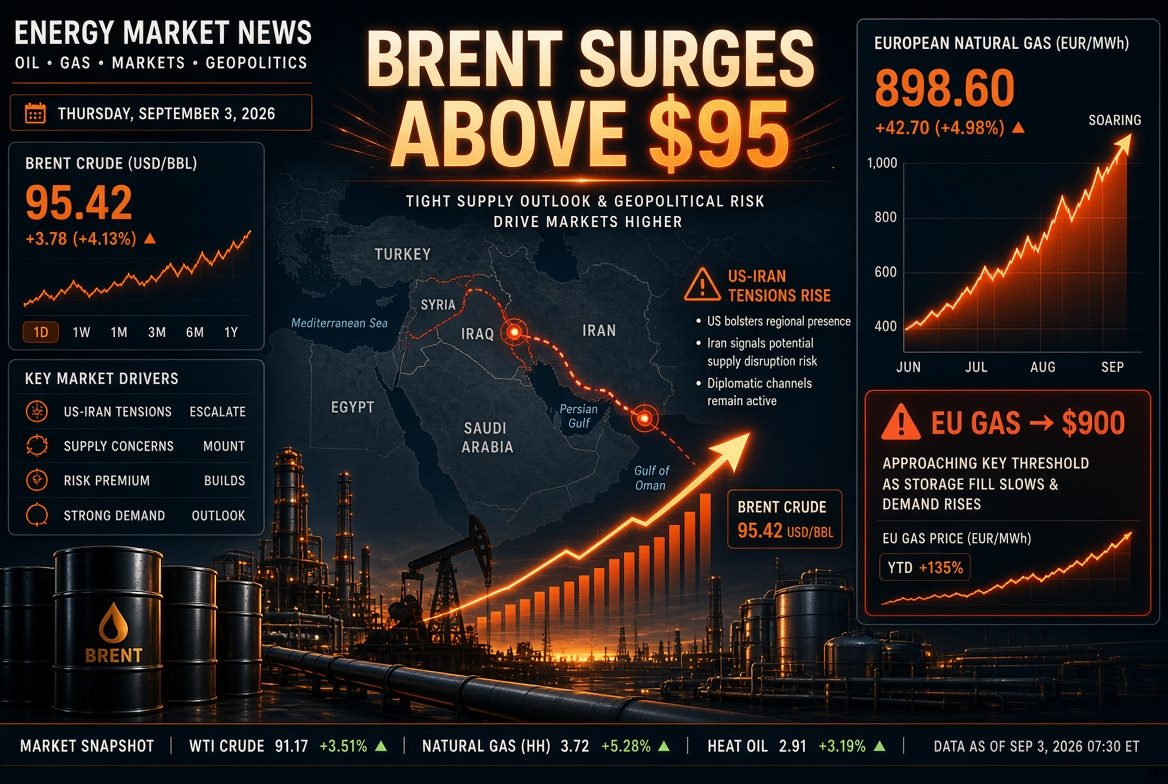
The oil market is maintaining heightened volatility. Brent is holding above $100 per barrel, while American WTI is also trading in the triple-digit range. The principal driver is limited supply from the Middle East, uncertainty surrounding shipping routes through the Strait of Hormuz, and expectations of a prolonged recovery in production.
For oil companies, this market landscape appears formally favorable: high oil prices support revenue, cash flow, and investment programs. However, the situation is more complex for refineries and fuel companies. The high cost of raw materials coupled with limited availability of certain grades of oil complicates load planning, increases procurement risks, and intensifies competition for alternative supplies.
- For upstream companies, the key factor is the ability to quickly ramp up production outside of geopolitical risk zones.
- For traders, access to the tanker fleet, insurance, and flexible logistics is crucial.
- For refineries, the availability of suitable feedstock and margin stability for diesel, gasoline, fuel oil, and jet fuel are essential.
Oil Forecasts Diverging: IEA Cautious, OPEC Remains Optimistic
The market is witnessing a widening divergence among assessments from major energy agencies. The International Energy Agency (IEA) cites the pressure of high prices, declining consumption in petrochemicals and aviation, as well as the risk of reduced global oil demand in 2026. In contrast, OPEC maintains a more positive outlook, anticipating an increase in consumption, albeit revising forecasts downwards.
For investors, this is an important signal: the oil market is currently moving not according to the classical model of “increased demand – increased price,” but rather through a crisis-driven model of “limited supply – demand adapts.” In other words, high prices can simultaneously support the revenues of oil companies while undermining final fuel demand.
- If supplies recover faster than expected, oil prices may begin to correct downwards.
- If logistical and production disruptions persist, Brent may remain elevated.
- If demand begins to decline significantly, the market may transition to a scenario of high-priced oil amid a weak economy.
Refineries and Refined Products: The Main Risk Shifts from Crude Oil to Refining
A key issue at hand is the pressure on global refining capacity. Attacks on infrastructure, raw material supply restrictions, and forced reductions in refinery output have already led to a significant loss in global refining capabilities. This changes the structure of the crisis: while oil may be expensive, the market for refined products is becoming even more sensitive.
The situation is particularly tense in the medium distillates segment. Diesel, jet fuel, and gas oil are becoming indicators of industrial stress. For the transportation sector, aviation, agriculture, mining, and logistics, this implies an increase in operational costs. For refineries, it presents an opportunity for high margins, but only with a stable feedstock supply, consistent utilization, and access to export channels.
The refined products market is becoming increasingly divided between regions with excess refining capacity and those experiencing shortages. Europe and Asia are being compelled to search for alternative supplies more vigorously, including product from the US, Africa, and other regions. This intensifies competition for maritime logistics and elevates the significance of large, modern refineries with deep processing capabilities.
USA: Oil and Gasoline Inventories Decline Ahead of Peak Demand Season
The American market remains one of the key stabilizers of the global energy landscape. Recent data on inventories indicate a noticeable reduction in commercial oil and gasoline stocks in the US. Meanwhile, oil exports are increasing as the global market seeks alternatives to Middle Eastern supplies.
For fuel companies, this means that the summer driving season in the US may commence from a lower base of inventories. If gasoline stocks continue to decline, retail fuel prices could become an additional inflationary factor. For investors in the oil and gas sector, three indicators are pivotal:
- The dynamics of oil inventories at Cushing and the Gulf Coast;
- Utilization rates of American refineries and availability of heavy grades of raw material;
- Exports of gasoline, diesel, and crude oil amid global shortages.
Gas and LNG: Europe Increases Dependence on American Supplies
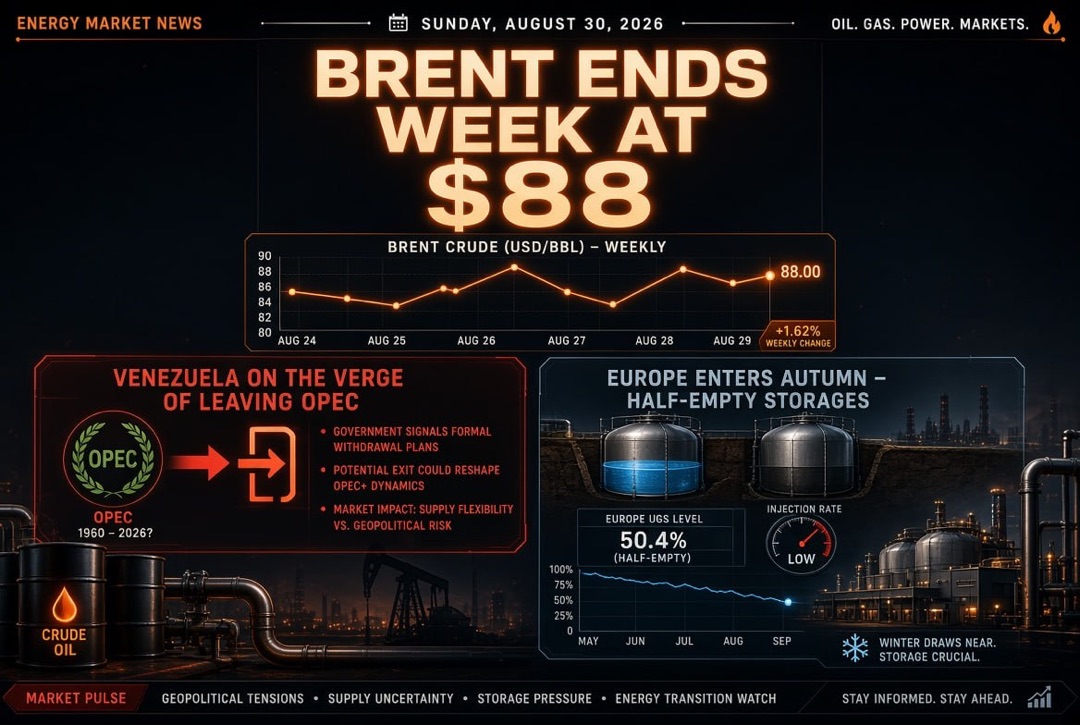
The gas market remains the second key area of risk. Europe has accelerated its transition from Russian gas to LNG, but this new energy security model creates a different dependency—on American liquefied natural gas. For European industry, this translates to increased sensitivity to global LNG prices, freight costs, weather, and competition from Asia.
Demand for gas in electricity generation may also rise if shortages of refined products and coal restrictions drive energy systems towards more flexible gas capacities. In this context, long-term LNG contracts are again becoming strategic assets: buyers are eager to secure supplies, while sellers gain the opportunity to lock in premium prices.
For investors in gas, LNG, and infrastructure, terminals for regasification, the LNG tanker fleet, pipeline interconnectors, and underground gas storage remain crucial.
Electricity: Demand Growth Becomes a Structural Factor
By 2026, electricity is increasingly influenced not just by weather, but by structural consumption growth. Data centers, artificial intelligence, electric vehicles, industrial automation, and air conditioning are forming a new demand base. This is particularly evident in the US, China, India, Southeast Asia, and Middle Eastern countries.
For energy companies, this opens up an investment cycle in generation, networks, energy storage, and backup capacities. However, for consumers and industries, the rising demand poses a risk of higher electricity prices, especially where the grid is lagging behind the addition of new capacities.
The energy sector is entering a period where shortages are emerging not only in the fuel market but also at the grid infrastructure level. Therefore, investments in power grids are becoming as important as investments in oil, gas, or renewable energy.
RES: Solar Energy Strengthens Its Position but Does Not Displace Gas
Renewable energy sources continue to grow rapidly. Solar generation is becoming the most dynamic segment of the global electricity market. In certain energy systems, solar power is already displacing coal in parts of the daytime balance, and by 2030, renewables and nuclear energy may approach half of global generation.
However, it is crucial for energy sector participants not to overestimate the pace of replacement for traditional resources. RES reduce the consumption of coal and gas during high generation periods but do not fully address the issue of power system reliability. Stability requires:
- Gas-fired plants as flexible reserves;
- Energy storage systems;
- Grid modernization;
- Inter-system electricity transfers;
- Forecasting generation and demand.
For investors, this means that not only solar and wind projects are attractive, but also the infrastructure surrounding them: networks, batteries, balancing capacities, and digital management systems.
Coal: Demand Returns as an Element of Energy Security
Coal remains a controversial yet resilient element of the global energy balance. Amid high gas prices, LNG shortages, and rising electricity demand, some countries continue to utilize coal as a backup resource. The situation is particularly crucial in Asia, where India and China maintain a high dependence on coal generation while simultaneously developing their own coal processing technologies.
India is focusing on coal chemistry and coal gasification to reduce dependence on LNG, ammonia, methanol, and fertilizer imports. This indicates that energy security in 2026 is becoming a priority over purely climate-focused logic. For coal companies, this provides a supportive factor, but in the long term, the sector remains under pressure from environmental requirements, capital costs, and competition from RES.
Key Considerations for Investors and Energy Companies
As of Thursday, May 14, 2026, the global market for oil, gas, electricity, renewables, coal, refined products, and refineries remains in a state of heightened uncertainty. The main takeaway for investors is that the energy sector is once again traded not only by financial multiples but also by the physical availability of raw materials, fuels, capacities, and logistics.
In the coming days, energy market participants should monitor the following factors:
- Brent and WTI prices, particularly their reactions to news from the Middle East;
- Utilization rates of refineries in the USA, Europe, Asia, and the Middle East;
- Stocks of gasoline, diesel, jet fuel, and crude oil;
- LNG supplies to Europe and Asia;
- Dynamics of coal generation in India and China;
- Rates of deployment for solar, wind, and network projects;
- Government decisions on fuel subsidies and consumer protection.
For oil companies, the current situation creates a window for high prices but simultaneously increases political and operational risks. For fuel companies, effective management of inventories and contracts is crucial. For refineries, the availability of feedstock and the ability to flexibly adjust product mixes are paramount. For investors, the choice lies between short-term gains from expensive hydrocarbons and long-term growth in electricity generation, LNG infrastructure, and RES.
Thus, the news in oil, gas, and energy on May 14, 2026, creates a stringent yet investment-rich backdrop: oil remains expensive, gas is a strategic resource, electricity is the new foundation for growth, RES is the primary direction for capital investment, while refineries and refined products represent the most sensitive link in the global energy sector.