Current News in Oil and Gas and Energy as of April 22, 2026: Oil, Gas, LNG, Electricity, Renewable Energy, Refineries, and Key Trends in the Global Fuel and Energy Complex
As of April 22, 2026, the global fuel and energy complex is operating under heightened sensitivity to logistics, geopolitics, and fuel prices. For the oil market, the key factor remains not just the formal balance of production and demand, but the physical availability of supply flows, the resilience of export infrastructure, and the ability of refineries to quickly adapt to new supply routes. In the gas and LNG sectors, there is a growing bifurcation of the market into regions with varying safety pricing, while in the electricity sector, there is an accelerated decoupling of tariffs from volatile gas prices.
For investors, oil companies, gas traders, refineries, energy holding companies, and renewable energy market participants, this signals that 2026 is no longer a year of “average scenarios.” Those who succeed will include not only resource owners but also companies with strong logistics, flexible refining capabilities, resilient procurement structures, and access to inexpensive generation. Below are the key events and trends shaping the agenda of the global fuel and energy complex as of April 22.
Oil Market: Prices Remain High, but Fundamentals Challenge Geopolitics
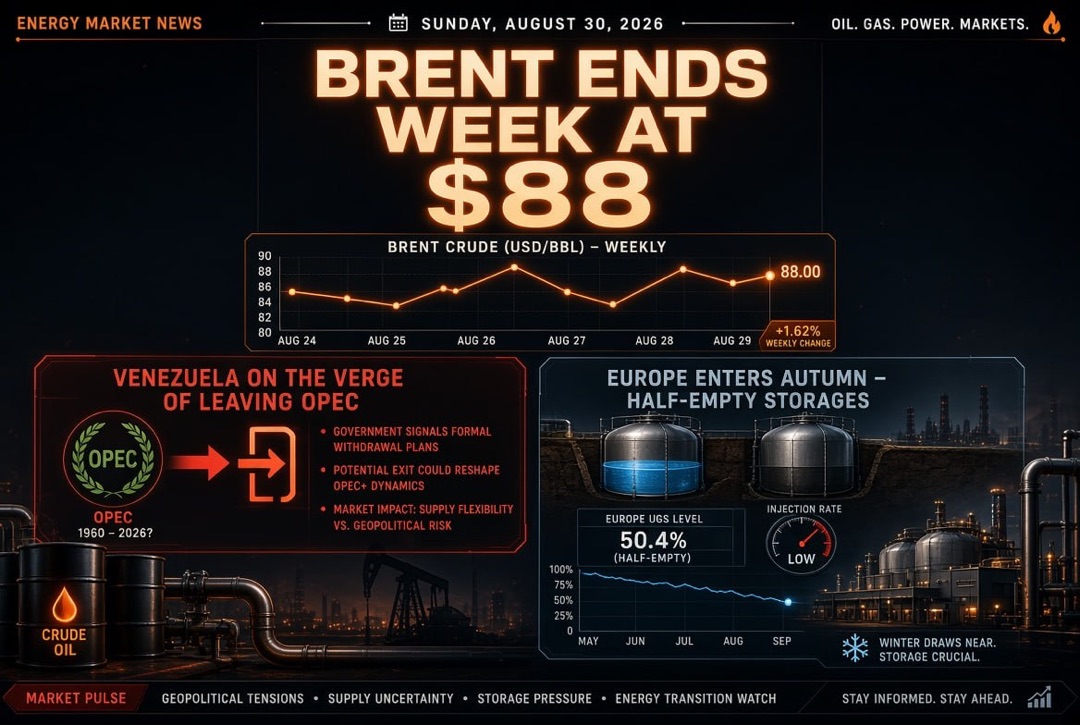
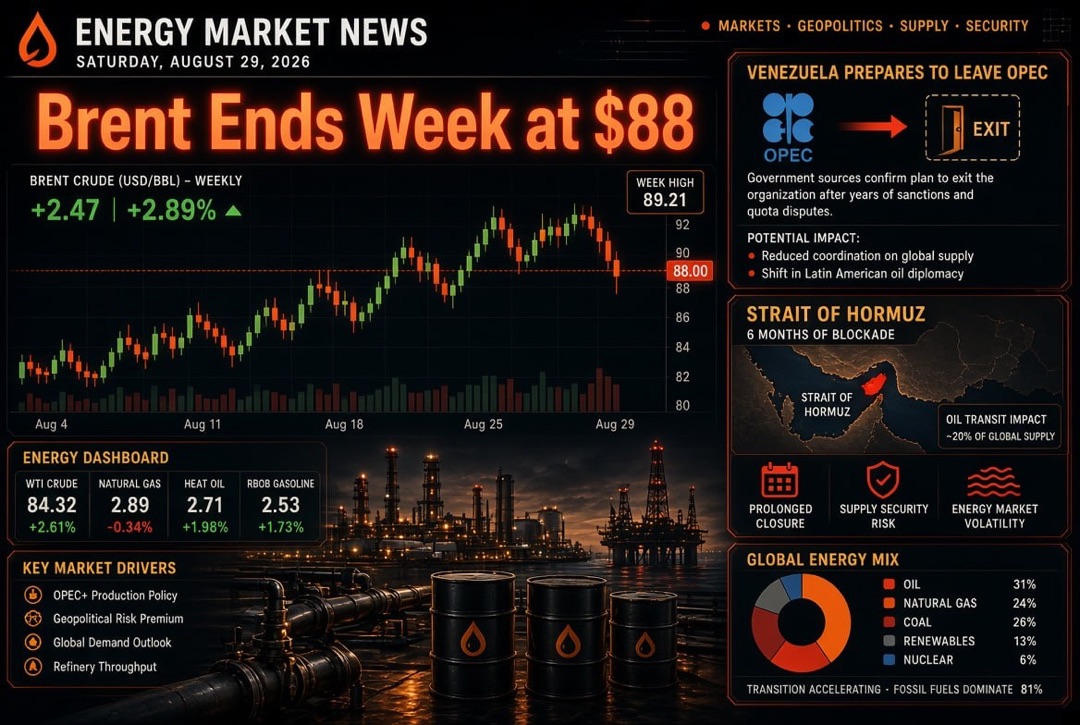
Oil retains a notable risk premium. The market continues to account for the possibility of supply disruptions; however, there is also an increasing factor of weakening demand. This creates an atypical configuration: prices remain high, but the long-term sustainability of such levels is increasingly questioned by traders and analysts.
- First Factor — the ongoing vulnerability of export routes and tanker logistics.
- Second Factor — OPEC+'s cautious approach, which formally reintroduces barrels to the market but does so very gradually.
- Third Factor — the deteriorating forecast for global oil consumption amidst high petroleum product prices, weakened industrial demand, and pressure on the transportation sector.
Against this backdrop, the oil market appears not as a classic bull cycle but rather as a market of stress reevaluation. Should logistics risks begin to ease, part of the geopolitical premium could quickly dissipate. However, until that occurs, even moderate supply disruptions continue to support Brent, petroleum products, and insurance rates on transportation.
OPEC+ and Supply: Formal Increase in Quotas Does Not Mean Rapid Growth in Physical Exports
For participants in the commodity sector, it is essential not only to pay attention to the headline regarding OPEC+ decisions but also to the real capability of alliance members to bring additional volumes to the market. The May production increase appears more as a managed political signal of willingness to stabilize the market rather than as an immediate influx of significant volumes of crude.
The key logic at present is as follows:
- The alliance maintains control over market expectations;
- Countries with overproduction expedite compensatory cuts;
- Physical logistics remain a limiting factor no less than the quotas themselves.
This is precisely why oil companies and traders are increasingly assessing not nominal production but the export viability of volumes. For the global oil market, this means an increased disparity between "paper" and actual supply. For oil companies, this entails recognizing the risk that the risk premium may vanish quicker than procurement strategies and contracts can adjust.
Russia, Ports, and Pipelines: The Infrastructure Factor Becomes a Price Driver Again
A pertinent issue for the fuel and energy market remains Russian oil infrastructure. A decline in production and disruptions in the export system enhance instability in the supply of specific oil grades and intermediates. This is significant for the global market, not only in terms of direct volume but also through its impact on flows to Europe, the Mediterranean, and Asia.
When ports, refineries, and pipeline routes come under pressure, the market experiences several effects:
- The cost of alternative logistics rises;
- Demand for more readily available export grades intensifies;
- Processors increase premiums for reliable supplies;
- Diesel, jet fuel, and other petroleum products respond more quickly than crude oil itself.
For refineries, this creates an environment where facilities with a flexible feedstock mix, access to marine terminals, and the ability to swiftly alter product outputs stand to gain. For oil companies, it serves as a reminder that in 2026, infrastructure is once again becoming part of the pricing model.
Gas and LNG: Global Market Becomes More Expensive for Importers and More Profitable for Suppliers with Established Infrastructure
The gas and LNG market is seeing increased regional asymmetry. Europe strives to maintain a high level of imports and build resilience, while Asia is acting much more cautiously, and the U.S. operates at nearly full export capacity. Consequently, the global gas landscape increasingly depends on who can quickly secure contract volumes and who must react to spot price spikes.
Currently, the global gas market is characterized by three trends:
- European buyers continue to maintain a high demand for LNG for energy security;
- Some Asian consumers are reducing spot activity and conserving volumes due to high prices;
- Additional supply flexibility is limited as major export capacities are already operating at high utilization.
This is particularly significant for electricity generation, chemicals, fertilizers, and gas generation. The gas market is becoming less comfortable for countries and companies relying on imports without long-term price shields. Simultaneously, there is growing attractiveness in projects related to regasification, storage, pipeline diversification, and flexible LNG portfolios.
Refineries and Petroleum Products: The Main Gains Shift from Extraction to Refining
One of the most notable trends in April has been the increasing importance of refining. While in 2025, the market often discussed extraction and quotas, the focus now centers on refineries, fuel exports, and margins for specific products. The situation appears particularly strong in diesel and aviation fuel, where shortages are felt more acutely than for crude oil.
For the petroleum products market, this means the following:
- Refineries with access to stable feedstocks gain advantages over processors depending on unstable Middle Eastern supplies;
- Refining margins are supported not only by oil prices but also by the physical shortage of certain fuel types;
- Diesel, marine fuel, and jet fuel become key indicators of tension within the fuel and energy complex.
For fuel companies and traders, this signals that profits in 2026 will be determined not only by the absolute price of oil but also by the ability to quickly capitalize on premium opportunities in the petroleum products market. For refineries, this represents one of the best operating periods in recent years, especially for those with export logistics and high refining depth.
Electricity: Europe Accelerates Decoupling Prices from Gas, While Nuclear Energy Gains New Support
The electricity market is changing as rapidly as oil and gas. In Europe, there is an increasing political and regulatory push to reduce final electricity prices' dependence on expensive gas, accelerate investments in grids and clean generation, and ensure that stable nuclear capacities do not exit the system prematurely.
This represents an important shift for the energy sector. Previously, renewable energy sources were viewed primarily as a climate project; however, they are increasingly becoming elements of price protection for industries and households. Nuclear energy, in turn, strengthens its status as a reliable source of baseload generation.
- For European utilities, this indicates a re-evaluation of tariff models and contracts.
- For industries, there is a potential for more predictable electricity costs in the medium term.
- For investors, there is heightened interest in grids, storage solutions, nuclear generation, and long-term contracts for low-carbon electricity.
Renewable Energy and Coal: The Energy Transition Continues, but the System Becomes More Pragmatic
The global energy sector is not abandoning renewable energy sources but is making the energy transition significantly more practical. Solar and wind generation continue to increase their share, but simultaneously, countries are more actively utilizing coal and nuclear energy where there is a need to swiftly address power shortages or replace expensive gas.
This is not a pivot away from the green agenda but rather an adaptation to the new reality. The essence of the process can be described as follows:
- Renewable energy sources remain the primary direction for expanding capacity and reducing dependence on imported fuels;
- Coal temporarily strengthens its position as a backup and crisis resource;
- Nuclear and storage solutions transition from "additional options" to systemic solutions.
For the renewable energy market, another important point is that low-cost equipment and increased interest in projects do not always equate to higher profitability for developers. In 2026, developers are increasingly hindered by tariff barriers, regulatory limitations, rising capital costs, and competition for access to grids. Consequently, investment selection in the renewable energy sector is becoming more stringent than before.
Key Indicators for Fuel and Energy Market Participants to Monitor as of April 22, 2026
For the global markets of oil, gas, electricity, renewable energy, coal, petroleum products, and refineries in the coming days, several indicators are critical:
- Negotiations concerning the Middle East — this will determine whether the current risk premium remains in oil and LNG.
- Practical implementation of OPEC+ decisions — the actual export flows matter more than the announced quotas.
- Condition of ports, pipelines, and refineries — logistics remain the main transmission mechanism for price shocks.
- Margins on diesel and jet fuel — this serves as the best indicator of tension in refining.
- Trends in gas and LNG in Europe and Asia — gas competition is becoming a key factor for electricity and industry.
The conclusion for the global fuel and energy complex as of April 22 is clear: the market remains nervous, but the structure of winners is already becoming apparent. Those companies that appear most resilient are those able to profit from logistics, refining, export flexibility, and access to low-cost electricity. The potential for high revenues persists in extraction, but it is increasingly the petroleum products, refineries, LNG infrastructure, grids, and low-carbon generation that are becoming the focal point of the new energy economy in 2026.