Global Startup and Venture Investment News for November 8, 2025: Record Deals in the AI Sector, Return of Mega Funds, IPO Market Revival, and Growing Interest in Crypto Startups. A Comprehensive Review for Venture Investors and Funds.
As of early November 2025, the global venture market continues its robust growth following several years of decline. Investors worldwide are once again actively funding technology startups — record-breaking deals are being closed, companies are preparing for IPOs, and the largest funds are returning to the market with substantial investments. Governments in various countries are enhancing support for innovation, striving to keep pace in the global technology race. As a result, private capital is flowing back into startup ecosystems, providing young companies with the resources needed for accelerated growth.
Data for the third quarter of 2025 confirms this revival: the global volume of venture investments for the quarter reached approximately $97 billion, representing a ~38% increase compared to the previous year and slightly surpassing the figures from the prior quarter. This marks the best quarterly result since 2021 and marks the fourth consecutive quarter with volumes exceeding $90 billion. Following the downturn in 2022-2023, startup funding has been steadily rising for four reporting periods, reflecting a return of investor confidence. The primary driver of this growth has been mega-rounds in the artificial intelligence (AI) sector; however, the recovery is evident across all stages, with late-stage funding showing significant year-on-year increases. Two-thirds of venture capital in the recent quarter went to startups in the U.S.; however, activity is also increasing in Europe, Asia, the Middle East, and other regions, underscoring the global nature of this upswing.
Venture activity is rising in virtually all parts of the world. The U.S. remains a leader, particularly in the rapidly growing AI segment. In the Middle East, investment volumes have nearly doubled over the past year, while in Europe, Germany has surpassed the U.K. in total venture capital for the first time in a decade. In Latin America, Mexico has outpaced Brazil in attracting investment. India, Southeast Asia, and the Gulf countries are attracting record flows of investments amid a relative decline in activity in China. The startup scenes in Russia and neighboring countries are striving to keep pace despite external constraints, with new funds and initiatives emerging to develop local ecosystems. Overall, the market is experiencing a global venture boom, although investors remain selective and cautious.
Below are the key events and trends shaping the current agenda of the venture market on November 8, 2025:
- Return of Mega Funds and Large Investors. Leading venture players are forming record funds and actively investing in startups, saturating the market with capital and increasing risk appetite.
- Record Investments in AI and a New Wave of Unicorns. Exceptionally large funding rounds are elevating startup valuations to unprecedented heights, particularly in the AI sector, resulting in the emergence of numerous new unicorns.
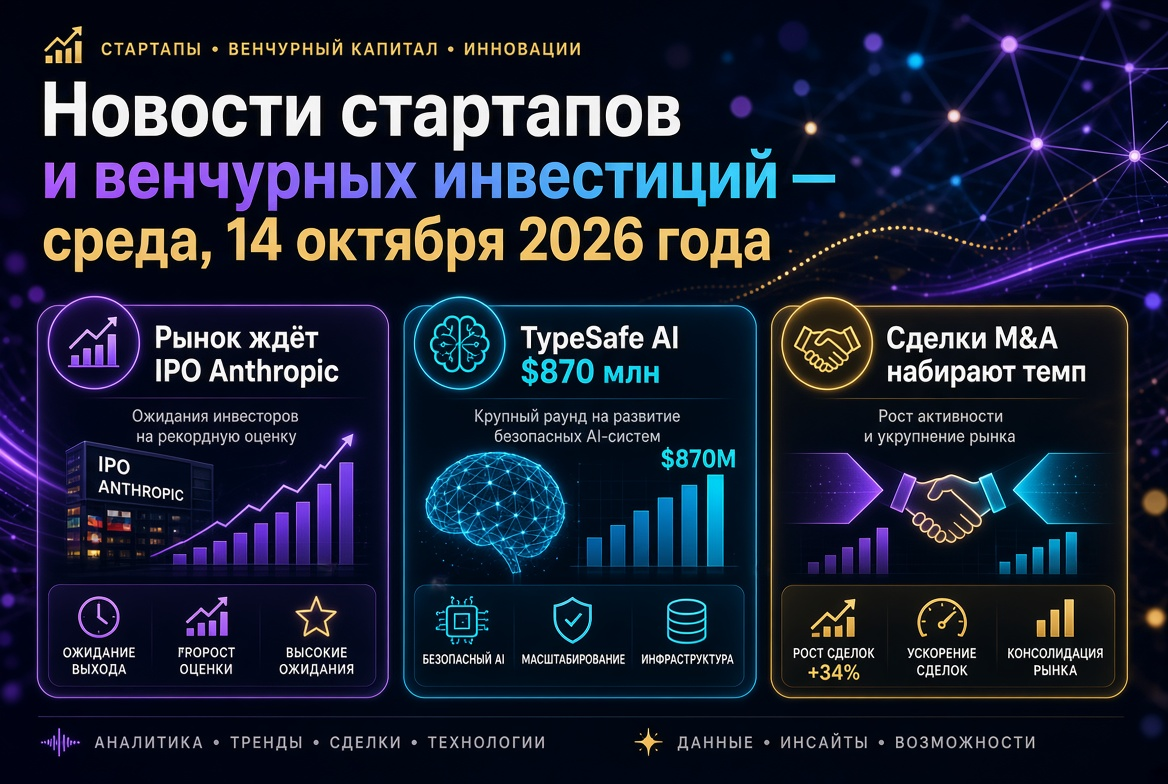
- Revival of the IPO Market. Successful public debuts of technology companies and new listing plans indicate that the long-awaited “window” for exits has reopened.
- Diversification of Sector Focus. Venture investments are flowing not only into AI but also into fintech, climate projects, biotechnology, space, and defense development, with renewed interest in crypto startups gradually returning.
- Wave of Consolidation and M&A. Major mergers, acquisitions, and strategic deals are reshaping the industry landscape, creating new opportunities for exits and accelerated growth for companies.
- Resurgence of Interest in Crypto Startups. Following an extended "crypto winter," the blockchain project sector is once again attracting significant funds and attention from both venture funds and large corporations.
- Local Focus: Russia and CIS Countries. New funds and programs for the development of local startup ecosystems are being launched in the region, gradually attracting investor attention despite sanctions and other limitations.
Return of Mega Funds: Big Money Back in the Market
The biggest investment funds and institutional players are triumphantly returning to the venture arena, signaling a renewed appetite for risk. Following a decline in venture fundraising in 2022-2024, leading VC firms are resuming capital raising and launching new mega funds, demonstrating confidence in market prospects. For instance, the Japanese conglomerate SoftBank has established the Vision Fund III with a volume of around $40 billion, focusing on cutting-edge technologies (with an emphasis on AI and robotics) after a lengthy hiatus. In October, American firm Sequoia Capital announced the creation of two new funds totaling $950 million (including $750 million for late-stage investments and $200 million for seed projects). Sovereign funds from the Gulf countries are also ramping up their investments, pouring billions of dollars into innovative companies globally. The emergence of such mega structures suggests that startups will soon have even more opportunities to secure funding as large investors prepare for another cycle of technological growth, accumulating significant "war chests" of capital.
Record Investments in AI and a New Wave of Unicorns
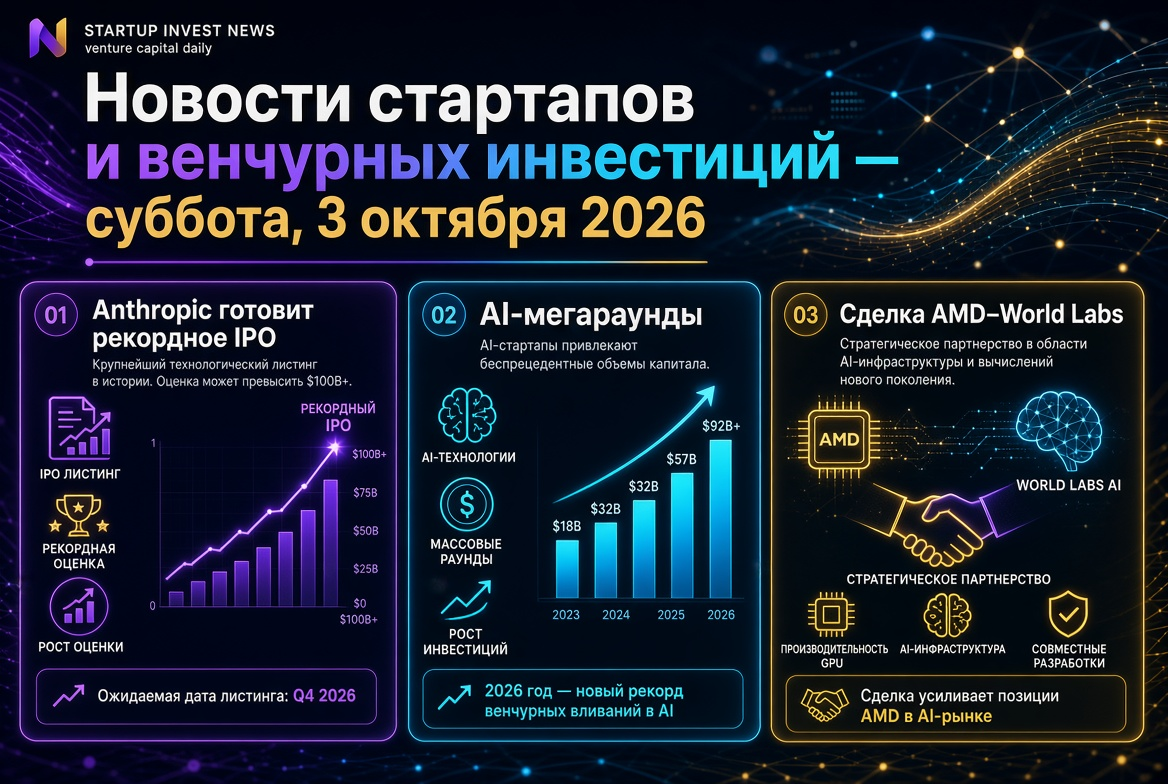
The artificial intelligence sector remains the main driver of the current venture boom, demonstrating unprecedented levels of funding. According to analysts, since the beginning of 2025, AI startups in the U.S. have attracted over $160 billion, accounting for roughly two-thirds of all venture fund investments in the country. By the end of the year, global investments in AI companies may exceed $200 billion — an unprecedented milestone for the industry. The combined valuation of the ten largest AI startups (including OpenAI, Anthropic, xAI, and others) has approached an astronomical $1 trillion. Investors attribute the excitement surrounding AI to its potential to radically enhance efficiency across various sectors of the economy, opening multi-trillion-dollar markets — from software automation to personal virtual assistants. Despite the risks of overheating and concerns about a potential "bubble," venture funds continue to actively invest in AI startups, eager not to miss the next technological revolution.
The surge of capital into AI is accompanied by the emergence of numerous new unicorns and a concentration of investments. A significant portion of funds is directed toward a limited group of industry leaders receiving the largest funding rounds. Recently, approximately 70% of all investments in American startups have gone to just a few companies in high demand among investors. For instance, in September, French generative AI developer Mistral AI raised around $2 billion, marking the largest funding round in the history of the European AI market. Even more impressive was American OpenAI, managing to secure $13 billion in funding in a single tranche — a record amount that has set new standards for the industry. Such giant deals inflate company valuations into astronomical figures. Nonetheless, the overall venture market benefits from this surge: capital and talent are concentrating around promising directions, which may lead to breakthroughs in the future, even if some currently funded projects do not meet expectations.
In recent weeks, several startups have announced significant investments, confirming the return of "big checks" to the market. Among notable examples:
- Harvey (USA) — raised $150 million at an $8 billion valuation for the development of a legal AI platform (lead investor: Andreessen Horowitz).
- Synthesia (UK) — $200 million at a $4 billion valuation for scaling up its AI video generation service (round led by GV — the venture arm of Alphabet).
- Fireworks AI (USA) — $250 million in a Series C round (valuation around $4 billion) to enhance its AI platform in genomics and healthcare.
- Legora (Sweden) — $150 million (valuation $1.8 billion) for the development of AI-driven legal software; the startup was founded in 2023 and has already entered the ranks of new unicorns.
- Armis (USA) — $435 million in a pre-IPO round at a $6.1 billion valuation to enhance its IoT cybersecurity platform (the round was led by Goldman Sachs with participation from CapitalG).
Revival of IPOs and Exit Prospects
Amid rising valuations and capital inflows, technology companies are once again eyeing the public markets. Following a two-year hiatus, the revival of IPOs as a viable exit strategy for venture investors is becoming apparent. Earlier in 2025, some unicorns successfully went public: for instance, the stablecoin issuer Circle listed with an estimated value of around $7 billion, and cryptocurrency exchange Bullish raised around $1.1 billion through its IPO, achieving a valuation of $5-6 billion. These debuts signal a renewed market appetite for new listings, particularly in fintech and cryptocurrency segments.
Now, major players are preparing to take advantage of the newly opened "window." Insider information suggests that OpenAI, the creator of ChatGPT, is considering an initial public offering as early as 2026, with a potential company valuation reaching up to $1 trillion — an unprecedented level for the tech sector. In the blockchain industry, ConsenSys (known for developing the MetaMask wallet) has hired banks JPMorgan and Goldman Sachs to prepare for its IPO scheduled for 2026. If it occurs, this would mark the first public exit of a major developer in the Ethereum ecosystem and be a significant event for the entire crypto industry.
Improved market conditions and gradual clarification of regulatory requirements also provide confidence to startups planning to go public. U.S. regulators are easing some uncertainties: for instance, the Securities and Exchange Commission (SEC) recently dropped its claims against ConsenSys regarding its crypto services, eliminating a major obstacle to its IPO. As a result, the largest private companies are once again viewing the public market as a real opportunity to raise capital and provide liquidity for investors. Experts predict that the number of high-profile tech IPOs will increase in the coming years as the market window remains open and valuation multiples favor exits.
Beyond AI: Healthcare, Climate, and Space
Despite the dominance of projects in the artificial intelligence sector, substantial funds are also flowing into other high-tech industries. Healthcare and biotechnology attracted approximately $15-16 billion in venture capital in the third quarter of 2025 — the third-largest figure after AI and IT infrastructure. A prime example of the synergy between technology and medicine is Fireworks AI, which secured $250 million for developing an AI platform for genomic medicine (integrating advancements in AI and healthcare). Venture funds are also actively supporting climate and "green" projects. For instance, Australian company Uluu raised 16 million AUD to create biodegradable plastic from algae, while Indian electric vehicle component manufacturer Tsuyo Manufacturing secured 40 million rupees to expand its production. Although the sizes of these deals are not comparable to the massive rounds in AI, they reflect sustained investor interest in sustainable development and eco-technologies.
Increased attention is also being devoted to space and other hard tech sectors. In Europe, the private space company segment is rapidly growing: Bulgarian satellite startup EnduroSat secured $104 million (with participation from funds like Google Ventures, Lux Capital, and others) to scale production of small satellites in response to global demand for affordable space communication solutions. Overall, deep-tech sectors are experiencing a rise: in 2025, major funding rounds for robotics, semiconductor components, and quantum computing systems collectively raised billions of dollars. While the investment volumes in these areas still lag behind the AI phenomenon, the distribution of venture capital is becoming increasingly diverse — from medicine and climate solutions to space and defense technologies — supporting a broad front of technological progress.
Consolidation and M&A: Mega Deals Reshape the Landscape
High startup valuations and fierce competition are driving a new wave of consolidation in the industry. Major mergers and acquisition deals are once again coming to the forefront, reshaping the market dynamics. Strategic M&A allows corporations and investors to accelerate growth, acquire new technologies, or enter adjacent markets, while for venture funds, large acquisitions provide much-needed exits.
Recently, a series of notable deals has underscored the trend of convergence between traditional financial institutions and the startup realm. For instance, in October, investment bank Goldman Sachs announced the acquisition of venture firm Industry Ventures for nearly $1 billion. This move represents one of the largest acquisitions in the venture sector and reflects the growing interest of banking capital in technology and startup assets. Additionally, leading tech giants are reviving their activity in the M&A market, taking advantage of more stable valuations: over the year, several industry leaders have acquired promising startups in a bid to strengthen their positions in AI, cybersecurity, and other key areas.
Consolidation is also touching upon the crypto technology sphere. Traditional financial corporations are showing interest in acquiring blockchain startups as the sector recovers. According to media reports, Mastercard is exploring the possibility of acquiring several crypto projects (including the infrastructure startup ZeroHash) for nearly $2 billion, signaling serious intentions from corporates to establish a foothold in the digital assets sector. Overall, the activation of merger and acquisition deals — from banking investments in venture platforms to substantial tech megadeals — indicates the "maturation" of the market. Major players are ready to expand their presence through M&A, which, in turn, opens more options for startups in terms of successful exits and integration into larger companies.
Resurgence of Interest in Crypto Startups
After an extended decline amid the "crypto winter," the market for blockchain startups is reviving: venture investments in the crypto industry are once again on the rise. In October 2025, funding for cryptocurrency and blockchain companies significantly increased. In the first week of October, startups in the sector collectively raised over $3 billion, marking a sharp jump compared to previous months. Leading the charge was American project Polymarket, which secured a record $2 billion (valued at approximately $9 billion) with backing from exchange operator ICE — one of the largest venture deals of the year outside the AI sector. Following closely, the financial prediction platform Kalshi raised $300 million (valued at around $5 billion), confirming the market's readiness to invest in new fintech solutions at the intersection of traditional markets and cryptocurrencies.
Overall, infrastructure solutions for digital assets are also beginning to receive support from venture funds. For instance, American startup Hercle, developing infrastructure for stablecoins, secured $60 million in funding. A number of other projects in the Web3 and business blockchain services sectors have also successfully closed funding rounds. Meanwhile, leading players in the crypto market are reaching a new level of maturity — beyond preparing for IPOs, such as ConsenSys with the involvement of major banks, institutional investors' interest in crypto assets is growing. Easing regulatory uncertainty in the U.S. (notably, progress in establishing rules for stablecoins and approval of Bitcoin ETFs) and the participation of traditional financial giants in funding rounds are reinforcing the return of capital to the digital technology sector. The crypto startup sector, having undergone a cleansing of speculative projects, is gradually regaining trust and re-entering the focus of venture investors.
Local Market: Russia and CIS Countries
Despite geopolitical constraints, efforts are underway to develop local startup ecosystems in Russia and neighboring countries. In an environment where international capital is largely inaccessible, local investors and institutions are focusing on the domestic market. Over the past year, several new venture funds have emerged in the country — according to industry reviews, the number of active funds has increased from approximately 35 to 43. This indicates that some Russian capital, "trapped" within the country, is beginning to flow into the technology sector, stimulating the creation of new investment teams and strategies. Corporate funds are appearing within large companies, as well as regional government funds focused on supporting innovation.
Development institutions — such as the Skolkovo Foundation, the Russian Venture Company (RVC), the Internet Initiatives Development Fund (IIDF), and others — have activated acceleration programs, competitions, and grants to compensate for the shortfall in external financing. In 2025, new startup studios were launched at leading universities, as well as regional venture funds with the support of local authorities. However, the overall volume of venture investments in Russia remains modest compared to global levels. Significant barriers persist: high interest rates and an economic stagnation complicate the attraction of private capital, while technology companies face restrictions in accessing international markets and technologies. Nevertheless, experts note that the most resilient Russian startups continue to evolve, focusing on the local market and niche solutions. In the long run, the formation of a domestic venture market — albeit forced — may lay the groundwork for future growth when external conditions improve.
Conclusion: Cautious Optimism
Following a year of impressive deals and a resurgence in investment activity, the prevailing sentiment in the venture market is one of cautious optimism. On one hand, the unprecedented surge in valuations and funding volumes — especially in the artificial intelligence segment — draws parallels to the dot-com era two decades ago. The risk of a "bubble" exists; some investors are urging prudence, pointing to the overheating of specific niches. On the other hand, many venture capitalists emphasize that such periods of excitement also have a positive effect: they concentrate immense financial resources and talent in emerging sectors, laying the foundation for future technological breakthroughs. Even if some projects inevitably fail, one or two exceptionally successful "hits" can compensate for numerous failures.
As we approach 2026, investors worldwide are striving to find a balance between the desire not to miss the next revolutionary idea and a sober assessment of risks. One thing is clear: the startup market has significantly revived after a challenging period. New records in funding volumes are being set, high-profile IPOs are on the horizon, and venture funds are once again forming large pools of capital. At the same time, the approach has become more selective — capital is primarily directed toward the most promising companies and sectors. The main intrigue remains whether high expectations regarding the AI boom will be justified and whether other sectors can catch up in funding attraction. For now, appetite for innovation remains high: both startups and investors are looking to the future with restrained but clear enthusiasm.