Latest Startup and Venture Investment News as of December 10, 2025: AI Investment Boom, IPO Revival, and Crypto Startup Renaissance. Insights for Investors and Funds.
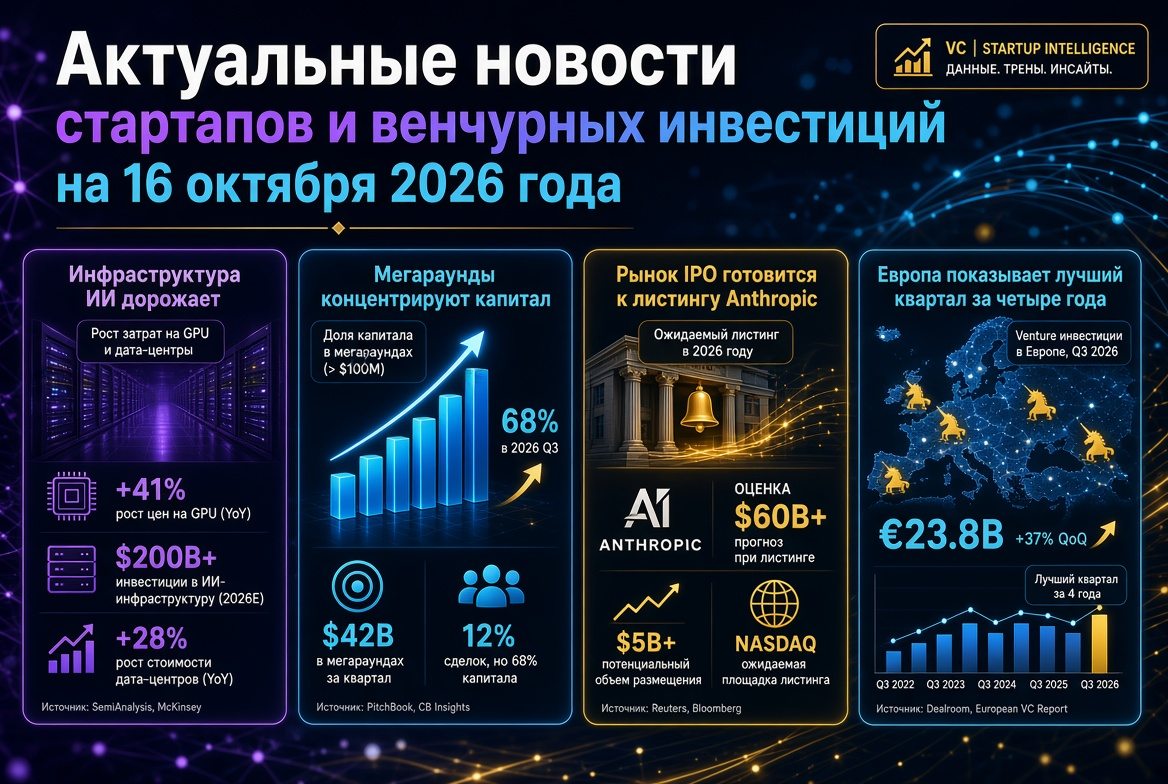
By mid-December 2025, the global venture market is demonstrating a robust recovery following several years of downturn. Industry analysts estimate that total venture investments reached approximately $100 billion in the third quarter of 2025—about 40% higher than the previous year—marking the best quarterly performance since 2021. The upward trend only strengthened in the autumn; in November alone, startups worldwide raised around $40 billion in funding (28% more than a year ago), and the number of mega-rounds hit a three-year high. The prolonged "venture winter" of 2022-2023 is behind us, and the influx of private capital into tech projects is accelerating. Large funding rounds and the launch of new mega-funds indicate a return of investors' risk appetite, although they continue to act selectively, focusing on the most promising and resilient startups.
The surge in venture activity is embracing all regions of the world. The United States firmly leads, particularly in the artificial intelligence segment. In the Middle East, investment volumes have increased dramatically thanks to the activation of sovereign funds, while, for the first time in a decade, Germany has outpaced the United Kingdom in total venture capital in Europe. In Asia, the primary growth is shifting from China to India and Southeast Asian countries, compensating for the relative cooling of the Chinese market. African and Latin American regions are also actively developing their tech ecosystems. The startup scenes in Russia and the CIS countries are striving to keep pace despite external constraints: new funds and support programs are being launched everywhere, laying the foundation for future growth. Overall, the global market is gaining strength, although its participants remain cautious and selective.
Below are the key trends and events in the venture market as of December 10, 2025:
- Return of Mega Funds and Large Investors. Leading venture funds are gathering unprecedented sums and flooding the market with capital, rekindling appetite for risk.
- Record Rounds in AI and a New Wave of "Unicorns." Extremely large investments in AI startups are inflating company valuations to unprecedented heights and spawning dozens of new "unicorns."
- Revival of the IPO Market. Successful public debuts of tech companies and new listing plans confirm that the long-awaited "window of opportunity" for exits is once again open.
- Diversification of Sector Focus. Venture capital is flowing not only into AI but also into fintech, biotech, climate projects, defense technologies, and other sectors.
- Consolidation Wave and M&A Deals. Major mergers, acquisitions, and partnerships are reshaping the industry landscape, creating new opportunities for exits and accelerated company growth.
- Renewed Interest in Crypto Startups. After a lengthy "crypto winter," blockchain projects are again attracting significant funding amid market growth and easing regulation.
- Local Focus: Russia and CIS Countries. New funds and initiatives are emerging in the region to develop startup ecosystems, although the overall volume of investment remains modest.
Return of Mega Funds: Big Money Back in the Market
The largest investment players are triumphantly returning to the venture arena, signaling a new round of risk appetite. The Japanese conglomerate SoftBank has formed its third Vision Fund, targeting advanced technologies (primarily projects in artificial intelligence and robotics) with an approximate volume of $40 billion. The American firm Andreessen Horowitz is attracting a record mega-fund of about $20 billion, focused on investments in late-stage AI companies in the U.S. Other notable Silicon Valley players are also increasing their presence; for instance, Sequoia Capital has announced a series of new early-stage funds totaling nearly $1 billion to support promising startups. Notably, even after a downturn, former "fast" investors are returning: the Tiger Global fund, renowned for its aggressive strategy in the past, is launching a new venture fund, Private Investment Partners 17, with a target of $2-3 billion, exhibiting a more restrained approach. Sovereign funds from Gulf countries are also active, pouring billions into high-tech projects and developing state mega-programs (for example, the construction of the "smart city" NEOM in Saudi Arabia). Concurrently, dozens of new venture funds are emerging worldwide, attracting substantial institutional capital for investments in tech companies. As a result, the market is once again saturated with liquidity, and competition among investors for the best deals has noticeably intensified.
Record Investments in AI: A New Wave of "Unicorns"
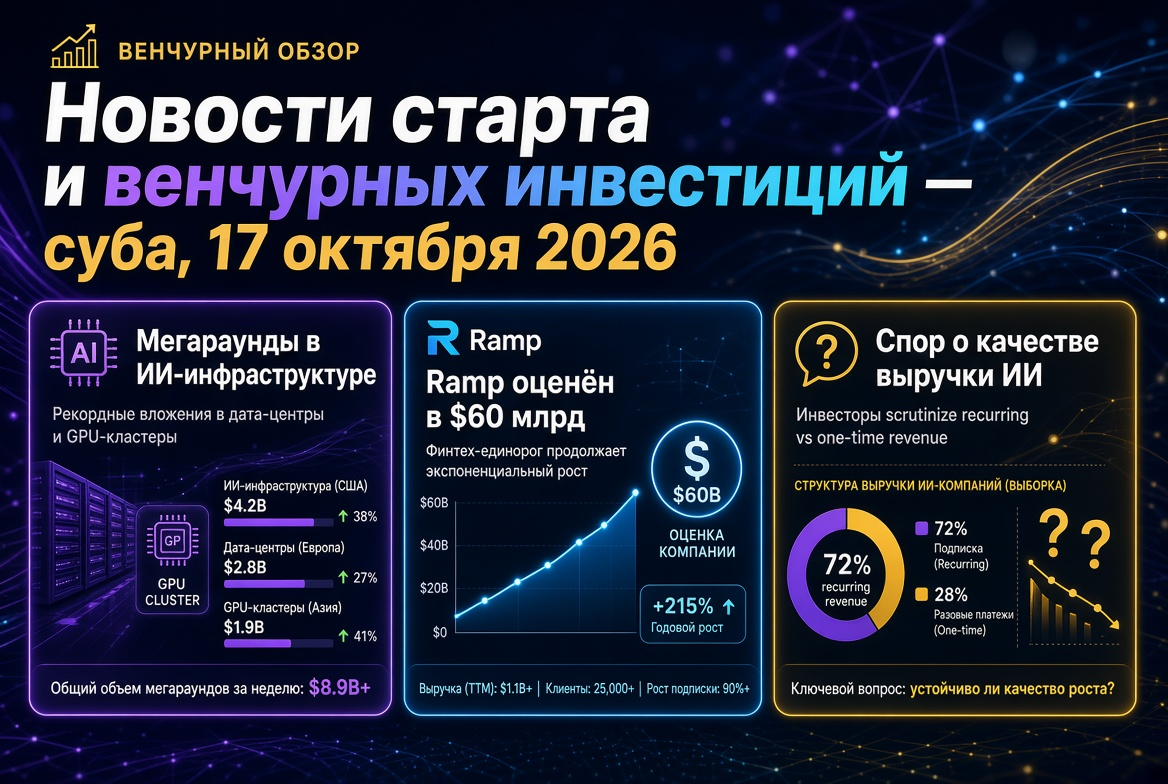
The artificial intelligence sector has become the main driver of the current venture upswing, demonstrating record levels of financing. By the end of 2025, global aggregate investments in AI startups are expected to exceed $200 billion—an unprecedented level for the industry. The frenzy surrounding AI is attributed to the potential of these technologies to radically enhance efficiency across multiple domains (from industrial automation and transportation to personal digital assistants), unlocking markets worth trillions of dollars. Despite concerns about overheating, funds continue to increase investments, fearing they may miss the next technological revolution.
The unprecedented influx of capital is concentrated around leaders in the race. The lion's share of funds is directed to a narrow circle of companies capable of becoming defining players in the new era of AI. For instance, Elon Musk's startup xAI has raised approximately $10 billion in funding (including debt instruments), while OpenAI, backed by major investors, has received over $8 billion at a valuation of around $300 billion—both rounds were significantly oversubscribed, underscoring the excitement surrounding top companies in the AI sector. It is noteworthy that venture investments are not only directed at final AI products but also at the infrastructure supporting them. The market is ready to finance even the "shovels and picks" of the new AI ecosystem: rumors suggest that one AI storage startup is negotiating a multi-billion dollar round at a very high valuation, indicating investors' readiness to invest in complementary infrastructure. The current investment boom is generating a wave of new "unicorns"—startups valued over $1 billion, most of which are tied to AI technologies. Although such large deals fuel discussions of potential bubble formation, they simultaneously direct colossal resources and talent into the most promising directions, laying the groundwork for future breakthroughs. Investor appetite for AI startups remains unabated.
In recent weeks, dozens of companies worldwide have announced substantial funding rounds. Among the most notable examples are the London-based generative video platform Synthesia, which attracted $200 million at a valuation of ~$4 billion, and the American cybersecurity developer Armis, which secured $435 million ahead of its IPO at a valuation of $6.1 billion. Both deals quickly elevated the companies to "unicorn" status, vividly demonstrating how swiftly large-scale funding can transform a startup into a billion-dollar enterprise. Investors around the globe are ready to invest massive sums in the AI race, eager to carve out their niche in this technological revolution.
Revival of the IPO Market: An Exit Window is Open Again
The global primary public offering market is emerging from a prolonged lull and is regaining momentum. After nearly two years of hiatus, a surge in IPOs has occurred in 2025 as a much-anticipated exit mechanism for venture investors. A series of successful public debuts of tech companies has confirmed that the long-awaited "window of opportunity" for exits is once more open. In Asia, Hong Kong has kickstarted a new wave of IPOs: in recent months, several major tech players have gone public, collectively attracting billions in investments. For instance, the Chinese battery manufacturer CATL successfully raised approximately $5 billion in an IPO, demonstrating that investors in the region are again eager to participate actively in public offerings.
The situation is also improving in the U.S. and Europe. The American fintech "unicorn" Chime recently debuted on the stock market: its shares rose approximately 30% on the first day of trading, signaling strong investor appetite. Soon after, the design platform Figma held a high-profile IPO, attracting around $1.2 billion at a valuation of approximately $15-20 billion; its stock also rose confidently in the initial trading days. In the second half of 2025, other notable startups—including the payment service Stripe and several highly valued tech companies from the U.S. and Europe—are preparing for their public market debut in the coming months.
Even the crypto industry is trying to capitalize on the revival; for instance, the fintech company Circle successfully went public over the summer (after its IPO, its shares skyrocketed), and the cryptocurrency exchange Bullish has applied for a listing in the U.S. with a target valuation of approximately $4 billion. The resurgence of activity in the IPO market is crucial for the venture ecosystem: successful public exits allow funds to realize profitable returns and redeploy the freed capital into new projects, supporting further growth in the startup industry.
Diversification of Industries: Investment Horizons Expand
In 2025, venture investments are encompassing a much broader range of sectors and are no longer limited to artificial intelligence alone. After the downturn of previous years, fintech is reviving: significant funding rounds are taking place not only in the U.S. but also in Europe and on developing markets, fueling the growth of promising financial services. Simultaneously, interest in climate technologies, "green" energy, and agtech is intensifying—these areas are attracting record investments in the wave of the global trend toward sustainable development and decarbonization of the economy.
Interest in biotechnology is also returning: the emergence of new promising developments in medicine and the growth of digital healthcare platforms are again attracting capital as company valuations in the sector recover. Furthermore, in light of heightened attention to security, investors are actively supporting defense tech projects—ranging from advanced drones to cybersecurity systems for military purposes. A partial restoration of confidence in the digital asset market has enabled some blockchain startups to regain financing. As a result, the diversification of sector focus is making the entire startup ecosystem more resilient and reducing the risks of overheating in specific segments.
Consolidation Wave and M&A: Market Consolidation
Inflated valuations of startups and fierce competition for promising markets are pushing the industry toward consolidation. In 2025, a new wave of major mergers and acquisitions was observed, reshaping the power dynamics within the technology landscape. For example, Google has agreed to acquire the Israeli cybersecurity startup Wiz for about $32 billion—a record amount for the Israeli tech industry. Similarly, other tech giants are eager to acquire key technologies and talent, sparing no expense for mega-deals.
The heightened activity in M&A and strategic deals signifies market maturation. Mature startups are merging with one another or becoming acquisition targets for corporations, while venture investors, in turn, receive the opportunity for long-awaited profitable exits. The current consolidation suggests that for the most successful players, a phase of business scaling is upon them, which may enhance efficiency and ensure scalability. The mega-deals of 2025, on one hand, provoke discussions about potential monopolization and the risks to competition, but on the other hand, they enable companies to innovate more rapidly and penetrate global markets, relying on the resources of larger combined entities.
Renewed Interest in Crypto Startups: The Market Awakes After the "Crypto Winter"
After a prolonged decline in interest towards cryptocurrency projects—the so-called "crypto winter"—the situation in 2025 has begun to change dramatically. A rapidly growing market for digital assets and a more favorable regulatory environment have led to blockchain startups once again attracting significant venture financing. According to PitchBook and other sources, the volume of investments in crypto startups has markedly increased compared to last year's lows. The largest cryptocurrency funds are resuming activity: for example, the firm Paradigm, co-founded by Coinbase co-founders, is forming a new fund of up to $800 million, focused on projects in the Web3 and decentralized finance sectors.
Significant deals in this area have also resumed. In recent months, several blockchain platforms and infrastructure crypto projects have closed funding rounds in the hundreds of millions of dollars. Institutional investor interest in crypto startups is returning amid rising prices of major cryptocurrencies (Bitcoin has been consistently holding multimonth highs in the second half of 2025) and the emergence of clear market regulatory frameworks in several jurisdictions. Although the level of venture investments in the crypto sector is still far from the peaks of 2021, the industry is clearly coming back to life. Startups developing blockchain-based solutions are once again able to attract capital for scaling their businesses. The revival of interest in crypto startups indicates that investors are willing to give this segment a second chance, anticipating new breakthrough models in fintech, decentralized applications, and digital assets.
Local Focus: Russia and CIS Countries
Despite external challenges, significant steps are being taken in Russia and neighboring countries to develop local startup ecosystems. Government and private institutions are launching new funds and programs aimed at supporting early-stage tech projects. In particular, the authorities in St. Petersburg recently discussed the creation of a city venture fund to finance promising high-tech companies—similar to the Republic of Tatarstan, where a fund of 15 billion rubles is already in operation. Major corporations and banks in the region are increasingly stepping in as investors and mentors for startups, developing corporate accelerators and their own venture divisions.
Although the overall volume of venture investments in Russia remains relatively modest, the most promising projects continue to receive funding. According to industry research, Russian startups attracted about $125 million in venture capital over the first nine months of 2025—30% more than the previous year. At the same time, the number of deals decreased (103 compared to 120 during the same period last year), and mega-rounds were virtually nonexistent. Industrial-tech projects, medical and biotech startups, and fintech led in terms of investment volume, with AI and machine learning solutions taking the top spot in technological focus—projects in this segment raised approximately $60 million, or nearly a third of all investments. Against the backdrop of reduced influx of foreign capital, government institutions are striving to support the ecosystem: the "Rusnano" corporation and the Russian Innovation Development Fund are increasing funding in the sector (in particular, "Rusnano" plans to direct about 2.3 billion rubles to startup projects by the end of the year). Similar initiatives are being implemented through regional funds and partnerships with investors from "friendly" countries. The gradual development of domestic venture infrastructure is already laying the groundwork for the future—by the time external conditions improve and global investors are able to return more actively to the local market. The local startup scene is learning to operate more autonomously, relying on targeted government support and the interest of private players from new geographic areas.
Conclusion: Cautious Optimism
As 2025 comes to a close, the venture industry is dominated by moderately optimistic sentiments. The rapid growth in startup valuations (particularly in the AI segment) evokes associations with the dot-com bubble era and creates certain concerns regarding market overheating. However, the current upswing simultaneously directs significant resources and talents into new technologies, laying the foundation for future breakthroughs. The startup market has evidently revived: record levels of financing are being recorded, successful IPOs have resumed, and venture funds have accumulated unprecedented reserves of capital ("dry powder"). At the same time, investors have become noticeably more discerning, favoring projects with robust business models and clear paths to profitability. The key question for the future—will high expectations from the AI boom be justified, and can other sectors compete with it in terms of investment allure? For now, the appetite for innovation remains high, and the market looks to the future with cautious optimism.