Current Startup and Venture Capital News as of March 12, 2026: AI Mega-Rounds, Growth in Defence Tech, Robotics, Fintech, and Selective IPO Window Openings on the Global Market
The key trends of the day for the global startup ecosystem can be summarized into several directions:
- AI startups continue to attract record funding rounds, with capital flowing not only into applications but also into computational infrastructure.
- Robotics and embodied AI are transitioning from experimental stages to practical implementation.
- Defence tech and cybersecurity are solidifying their positions as leading recipients of venture capital.
- Fintech and consumer platforms are regaining traction, but now with stricter requirements concerning unit economics.
- The IPO window is gradually opening, though investors remain selective about valuations and issuer quality.
AI Mega-Rounds Remain the Main Driver of the Venture Market
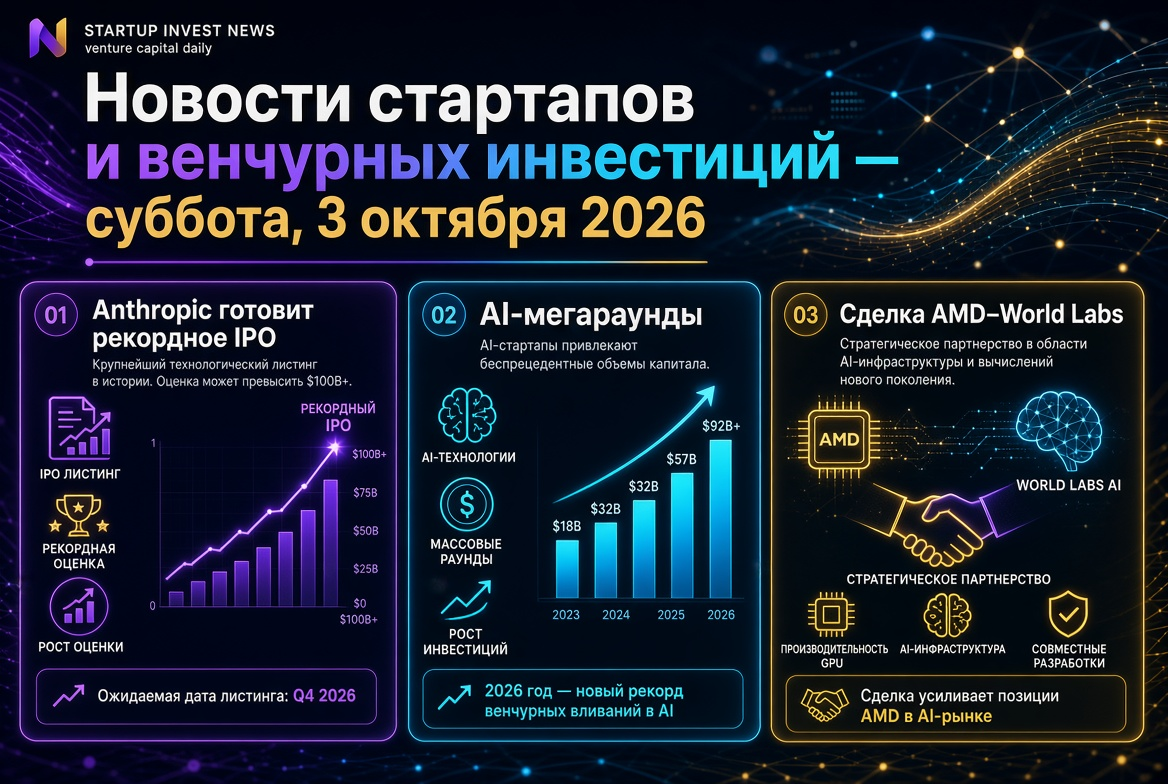
Artificial intelligence continues to set the tone for the entire venture investment market. In recent days, several large deals have confirmed that investor interest in AI startups remains strong, despite rising concerns over inflated valuations. Significant capital is still directed towards teams capable of building foundational models, infrastructure, and next-generation industry solutions.
Notably, funding is reaching not only well-known names but also projects with alternative technological approaches. This indicates that the market is no longer solely betting on a single narrative for AI’s development. Investors are willing to finance both fundamental research and vertical corporate products, as well as infrastructure to meet future demand. As a result, startups in AI are increasingly becoming not just objects of venture fashion, but the core of a new industrial and corporate architecture.
Robotics and Embodied AI Transition to Practical Phase
A second significant shift in March 2026 is the growing interest in robotics. Venture capital is increasingly stepping beyond purely software solutions and heading towards companies that integrate artificial intelligence with the physical world: industrial automation, autonomous logistics, and robots for warehouses, ports, airports, and manufacturing sites.
This is particularly important for investors, as this area is forming the next layer of technological value following the boom of language models. If 2024-2025 were characterized by a race for AI software, 2026 is increasingly seen as the beginning of a competition for AI hardware, real automation, and robotic platforms. For the venture market, this means elongating investment cycles, but simultaneously offering the opportunity to build companies with higher barriers to entry for competitors.
Defence Tech and Cybersecurity Solidifying Their Leadership
The segments of defence tech and cybersecurity are rapidly strengthening their positions. For global funds, this is no longer a niche story, but a full-fledged asset class supported by government budgets, corporate demand, and the geopolitical agenda. Capital flows toward technologies that are directly linked to the security of infrastructure, networks, data, and physical objects.
Particularly noteworthy is the fact that large deals are occurring not only at early stages but also in M&A. This indicates that corporations are willing to acquire mature startups for strategic amounts, meaning venture investors once again see a clear exit logic. Against the backdrop of rising defence expenditures in the US and Europe, interest in defence tech, military systems, drones, surveillance systems, and cybersecurity solutions is likely to remain one of the major trends throughout 2026.
AI Infrastructure Becomes a Separate Attraction for Capital
Another structural trend is the increasing investment in infrastructure startups. This encompasses not only chip developers but also companies building AI data processing centers, cloud platforms, specialized computing power, and software layers to accelerate model deployment. For the global venture market, this is fundamentally important: the winners of the new cycle will be determined not only by model quality but also by access to energy, chips, and computing capacity.
In Europe, this topic is especially pronounced as the region seeks to reduce dependency on external suppliers and develop its technological sovereignty. As a result, capital is increasingly flowing into startups that are building local AI infrastructure, semiconductor solutions, and platforms for corporate integration of artificial intelligence. For investors, this indicates a shift of focus from "pure software" to more capital-intensive but strategically protected growth models.
Fintech and Consumer Scale-ups Return, but Without Previous Euphoria
Interest in fintech and rapidly-growing consumer platforms is re-emerging in the startup market. However, unlike the cycles of 2020-2021, the current venture investments are directed towards companies with clearer revenue streams, stable margins, and disciplined spending. Investors are no longer willing to pay a premium just for user base growth rates; they now seek cash flow, protection from competition, and a viable roadmap to public markets.
This is why companies operating at the intersection of technology and everyday demand—such as payment processing, e-commerce, B2B financial services, embedded finance, tools for cross-border transactions, and digital platforms with high loyalty among affluent audiences—are faring better. The venture market remains interested in such assets, but the evaluation of their quality is now more stringent and professional.
Asia and the Middle East Strengthening Their Venture Architecture
A significant geographic shift in 2026 is that more capital is being generated within the regions themselves rather than solely flowing from Silicon Valley. India is building up its domestic institutional base for private markets, Japan is creating mechanisms to support late-stage startups, China is reforming frameworks for growth companies, and Gulf countries are expanding fund-of-funds programs while attracting international VC teams.
For the global startup ecosystem, this signifies a strengthening of multipolarity. The next cycle of unicorns is likely to form not only in the US but also in India, Japan, the Middle East, and select European clusters. For international funds, this presents both a diversification opportunity and the need to understand local regulatory regimes, currency risks, and the specifics of national capital markets more deeply.
IPO Window is Cracking Open, but Exits Remain Selective
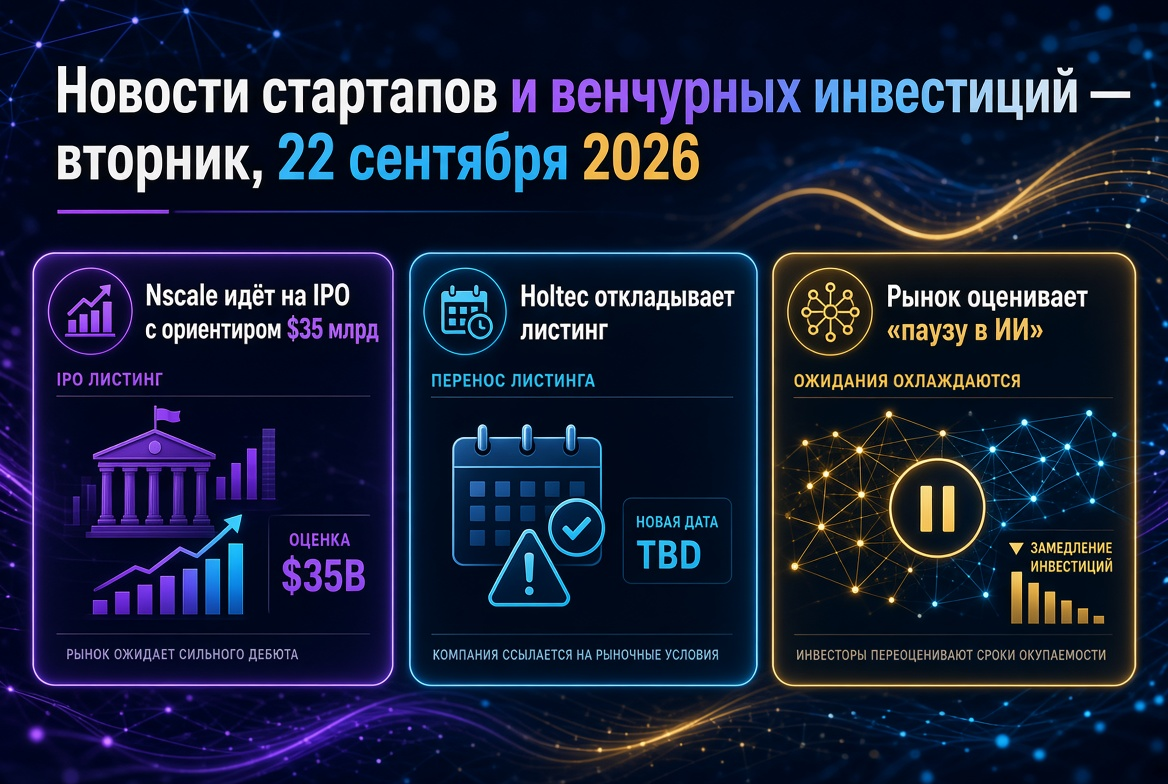
One of the most crucial topics for venture investors as of March 12, 2026, is the state of the exit market. Formally, the IPO window is no longer closed; new issuers are entering the market, and interest in certain deals remains high. However, this market cannot be described as fully recovered. Investors are only accepting those offerings where they see a strong brand, business scalability, clear economics, and a coherent story for future profitability.
A mixed picture is emerging: quality assets are capable of attracting capital even in a volatile market, while more contentious stories are forced to reduce valuations or cut offering sizes. Concurrently, the role of private markets and secondary access instruments to late rounds is increasing, providing funds with additional liquidity even in the absence of a traditional IPO. For the venture market, this is a positive signal, but it is too early to speak of a full return to generous multiples.
Key Considerations for Venture Investors and Funds
In the near term, several key markers for the market remain:
- Quality of AI Assets. Importance lies not just in brand recognition but also in access to computing resources, data, corporate clients, and sustainable demand.
- Growth of Defence and Infrastructure Budgets. Defence tech, cybersecurity, chips, neo-clouds, and data centers could emerge as the primary beneficiaries of the new investment cycle.
- State of the Exit Market. Any successful IPO of a major fintech, biotech, or technology platform could quickly uplift sentiment across the entire venture market.
Overall, as of Thursday, March 12, 2026, the startup and venture capital market appears constructive. Capital is returning, but it is doing so deliberately and selectively. The winners will not be the loudest startups, but those capable of proving technological advantage, a scalable model, and the right to long-term valuation. For funds, this signifies a more complex but also higher-quality cycle, in which discipline once again becomes as important an asset as growth speed.