Global Startup and Venture Investment News for January 5, 2026: Record Rounds in AI, Mega Fund Activity, Tech IPOs, M&A Deals, and Key Venture Market Trends for Investors and Funds.
At the beginning of 2026, the global venture market continues to gain momentum following a robust surge in the previous year. Investors around the world are once again actively funding technology startups, reflected in record fundraising rounds and the return of major players with billion-dollar funds. Key trends include the dominance of artificial intelligence, new "unicorns" across various sectors, revitalization of the IPO market, and large-scale mergers and acquisitions. At the same time, support for innovation from governments and corporations is strengthening, laying the groundwork for further growth. Despite the overall optimism, market participants remain cautious, focusing on quality growth and sustainable business models for startups.
Below are the key events and trends shaping the venture market agenda as of January 5, 2026:
- The Return of Mega Funds and Large Investors. Top venture funds are raising record amounts and once again saturating the startup ecosystem with capital.
- Record Rounds and AI Dominance. The field of artificial intelligence is attracting the lion's share of investments, setting new historical financing highs.
- Diversification of Startup Sectors. Venture investments are growing not only in AI but also in fintech, biotech, green technologies, defense projects, and other segments.
- Revival of the IPO Market. Successful public offerings of tech companies have resumed, opening windows of opportunity for profitable exits.
- Consolidation and M&A Deals. Major tech corporations are actively acquiring startups, reshaping the industry landscape and promoting the consolidation of players.
- Globalization of the Venture Market. Capital is increasingly penetrating new regions: the Middle East, Southeast Asia, Africa, and Latin America are forming new tech hubs.
- Russia and the CIS: Local Trends. New funds and support programs are being launched in the region, although the total volume of venture investments remains modest compared to global figures.
- Cautious Optimism and Strategy for 2026. Investors are preparing for a potential market slowdown, focusing on the resilience of startups and building reserves.
The Return of Mega Funds: Big Investments Back in Action
Major venture investors are returning to the arena with substantial-sized funds, signaling a renewed appetite for risk. Following a relative lull in recent years, several mega funds have announced record capital raises. Japan's SoftBank launched a new Vision Fund III, amounting to around $40 billion, focusing on investments in advanced technologies (AI, robotics, etc.). American giant Andreessen Horowitz (a16z) has announced plans to raise up to $10 billion for new funds focused on AI and defense startups. Sovereign wealth funds from oil-rich Middle Eastern countries are also ramping up: regional governments are pouring billions into tech projects, aiming to transform their economies into innovation hubs.
- SoftBank Vision Fund III: a new mega fund with a size of ~$40 billion aimed at investing in tech startups worldwide (focusing on AI and robotics).
- Andreessen Horowitz (a16z): raising around $10 billion for a series of funds to finance the next wave of AI startups and national security and defense companies.
- Middle East: sovereign funds of Saudi Arabia, the UAE, and Qatar are increasing venture investments, directing oil profits into major tech deals and funds.
- Increase in 'Dry Powder': US and European venture funds have accumulated hundreds of billions in uninvested capital ready to be deployed as promising deals arise.
Record Rounds and Dominance of the AI Sector
The artificial intelligence sector remains the primary driver of the venture market. In 2025, investments in AI startups reached historical highs: analysts estimate the total amount invested in this area to be around $150–200 billion (almost half of all venture investments for the year). Major companies raised unprecedented funding to develop AI infrastructure and products. For instance, OpenAI secured approximately $40 billion—the largest private round in history—valuing the company at around $500 billion. Competing project Anthropic attracted $13 billion, while Elon Musk's startup xAI garnered $10 billion in investments. Moreover, Meta acquired Scale AI (a data preparation platform) for nearly $15 billion, strengthening its position in the AI ecosystem.
The capital influx has concentrated in a narrow group of AI leaders, leading to unprecedented growth in their valuations. Investors are keen to ensure these companies have "fortress" balances—substantial cash reserves in anticipation of future market corrections. Many AI-focused startups are conducting new rounds every few months, competing for talent and computational resources. Despite the risks of overheating, the appetite for investments in artificial intelligence remains robust.
- OpenAI: raised around ~$40 billion (with contributions from SoftBank and other investors), bringing the company's valuation to ~$500 billion.
- Anthropic: secured $13 billion in funding across several rounds, solidifying its status as one of the AI market leaders.
- xAI (Elon Musk's project): attracted approximately $10 billion for developing its own AI models and infrastructure.
- Meta and Scale AI: Meta invested around $14–15 billion in acquiring Scale AI, gaining access to its data processing technologies for neural networks.
- Capital Concentration: around 50% of all venture investments in 2025 went to the AI sector, creating hundreds of new billionaires among founders (Elon Musk's wealth increased to nearly $650 billion, while NVIDIA CEO Jensen Huang's rose to $159 billion).
Investment Diversification: Not Just AI
The rapid growth of AI does not mean a halt to investments in other sectors: venture capital is actively diversifying across industries. Following last year's downturn, fintech has notably revived: large funding rounds are taking place not only in the USA but also in Europe, Latin America, and Asia. Climate technologies and "green" energy are attracting record amounts amid a global trend toward sustainability. Biotechnology is returning to investors' focus due to new medical developments and successful IPOs of biotech companies. Defense and space startups are drawing increased attention against the backdrop of geopolitical tensions—government and corporate funds are actively financing security-related developments. Even the crypto industry has begun to show signs of life: market stabilization has led some blockchain projects and Web3 startups to once again attract venture financing.
- Fintech Boom: global fintech startups are attracting significant investments (for example, the Mexican payment service Plata raised $250 million, with its valuation increasing to $3.1 billion).
- Climate Projects: sustainable development funds are investing billions in climate fintech solutions, renewable energy projects, and eco-friendly agritech.
- Biotech and Medicine: new drugs and medtech platforms are securing funding; the sector is emerging from a period of declining valuations (several biotech startups became "unicorns" in 2025).
- Defense Technologies: rising interest in startups focusing on cybersecurity, drones, space, and defense; governments are establishing dedicated funds for these areas.
- Crypto and Web3: following a prolonged downturn, some crypto startups are once again receiving investments; in 2025, the first "unicorns" emerged at the intersection of blockchain and fintech.
The IPO Market is Reviving: A Window of Opportunity for Exits
In the second half of 2025, the initial public offering (IPO) market saw a notable revival, which was good news for venture investors seeking exits from their investments. Several highly valued startups successfully debuted on the stock market. In the USA, fintech service Chime went public, with its stock price soaring by several percentage points in the first days of trading. This was followed by the market debut of design platform Figma, which raised approximately $1.2 billion at a valuation of $15-20 billion. There was also the long-anticipated public offering of crypto-financial company Circle, whose stock significantly rose post-IPO.
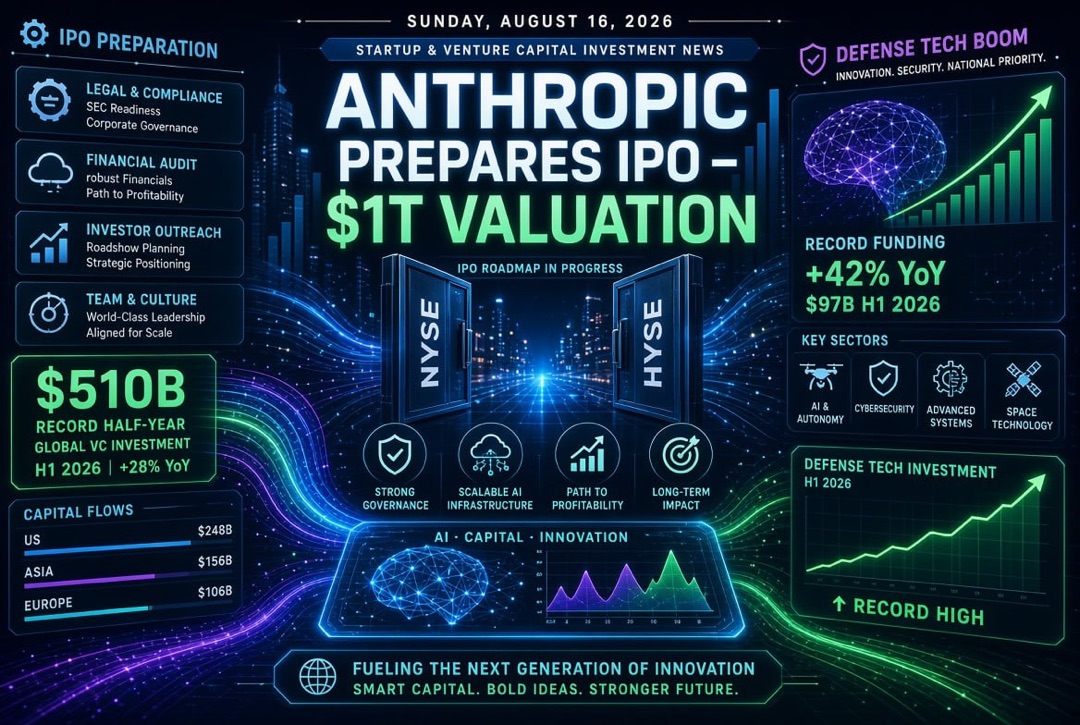
The trend is similar in other regions: in Asia, Hong Kong is leading the IPO activity, with several major tech companies making their market debuts recently, collectively raising billions of dollars. In Europe, companies are also renewing their plans to go public as market conditions improve. Successful IPOs not only yield profits for venture funds but also revive the belief that startups can again achieve liquidity through stock listings. Notable upcoming IPOs in 2026 include potential debuts from OpenAI, Anthropic, payment giant Stripe, and space company SpaceX, among other unicorns poised to capitalize on the opened window of opportunities.
- Chime (USA): successful IPO of the fintech unicorn, with stock rising approximately 30% on the first day of trading, confirming high investor interest.
- Figma: raised ~$1.2 billion upon going public, with a market capitalization reaching ~$15-20 billion; shares steadily rose post-listing.
- Circle: the crypto-financial startup went public, providing investors with the long-awaited exit; stock prices surged following the IPO.
- Upcoming IPOs in 2026: possible listings from companies such as OpenAI, Anthropic, Stripe, SpaceX, and other large startups if favorable market conditions persist.
Market Consolidation: Mergers, Acquisitions, and Mega Deals
Amid the high valuations of startups and intense competition for technologies, a wave of consolidation in the industry is gaining momentum. Major tech corporations and market leaders are not hesitant to spend tens of billions acquiring promising companies. One of the largest deals in 2025 was Google's agreement to acquire Israeli cybersecurity startup **Wiz** for approximately $32 billion—a record for the tech sector in Israel. Additionally, NVIDIA made two major deals: firstly, it invested $2 billion in Elon Musk's xAI project (aiming to secure chip supplies for its data centers), and secondly, it struck a ~$20 billion agreement with AI chip developer **Groq**, under which NVIDIA obtained rights to Groq's technologies, and the founder of the startup joined NVIDIA.
Such mega-deals signify the giants' desire to secure key technologies and teams, even if it requires paying premium valuations. M&A activity in the financial sector is also vibrant: major banks are expanding through the acquisition of fintech companies (for example, the merger of Huntington Bancshares and Cadence Bank for $7.4 billion). Overall, the heightened M&A activity indicates the maturation of the market: the most successful startups are either merging with each other to scale or becoming part of corporations’ strategies. Venture funds welcome such consolidation as it opens up exit opportunities and enables the return of invested capital.
- Google and Wiz: acquisition of the cybersecurity startup for ~$32 billion, which strengthened Google’s position in the cloud and security segment.
- NVIDIA and Groq: deal of ~$20 billion for acquiring assets and technologies from AI chip manufacturer Groq; the founder and key engineers of the startup moved to NVIDIA.
- NVIDIA–xAI Deal: investment of $2 billion from NVIDIA into Elon Musk’s AI project for infrastructure development (securing chips for the new data center).
- Banking Sector: Huntington Bancshares acquires Cadence Bank for $7.4 billion, highlighting the trend of merging traditional financial institutions with fintech assets.
- Strategic Investments: corporations are actively acquiring startups in AI, cloud services, fintech, and more, to keep pace in the technology race.
Globalization of the Venture Market: New Regions and Hubs
The venture boom is becoming genuinely global—as capital flows more actively into new geographies. Traditional startup ecosystem centers (the USA, Europe, China) still lead in investment volumes, but the growth in these areas is becoming less monopolistic. The Middle East, particularly the Persian Gulf countries, is turning into a powerful new tech hub: government investment funds from Saudi Arabia and the UAE are financing the creation of local "unicorns" and attracting foreign teams to their tech parks. In Asia, activity is shifting: **India** and **Southeast Asia** have set records in venture investments, while growth in China has somewhat slowed due to regulatory risks. Europe is also experiencing changes—Germany has overtaken the United Kingdom in the number and volume of venture deals for the first time in many years, solidifying Berlin and Munich as leading hubs.
Investments are reaching previously peripheral markets. In **Africa** and **Latin America**, the first unicorn startups have emerged, indicating an expansion of the global venture map. International funds are increasingly including strategies to seek projects beyond traditional locations to capitalize on new growth potential. This globalization positively impacts the overall resilience of the industry by distributing capital across a larger number of markets and reducing the overheating of individual segments.
- Persian Gulf: GCC countries (Saudi Arabia, UAE, Qatar) are investing billions in startups, creating a region for new technologies and attracting talent from around the world.
- India and SEA: volumes of venture investments are hitting records, surpassing those of China; new unicorns are emerging in e-commerce, edtech, and fintech in India, Singapore, and Indonesia.
- Europe: Germany has emerged at the forefront of Europe in venture investments, displacing the UK; France and Nordic countries have also strengthened their positions, supporting the startup scene.
- Emerging Markets: the first startups valued at >$1 billion have formed in Africa and Latin America (e.g., fintechs in Nigeria and Brazil), drawing attention from global funds.
Russia and the CIS: Local Initiatives Amid Global Trends
Despite external restrictions, efforts are being made in Russia and neighboring countries to develop their own startup ecosystems. In 2025, several new venture funds focusing on early-stage tech projects emerged in the region. For instance, two major funds totaling around 10–12 billion rubles have been launched with the support of state development institutions to finance local IT startups. Major corporations are also getting involved: Yandex announced a support program for nascent projects (the fund size is 500 million rubles, offering grants and marketing support to resident startups). Moreover, in the second half of the year, foreign investors were partially allowed to invest in Russian companies through special structures, which somewhat revived the capital inflow.
Nevertheless, the volume of venture investments in the Russian market remains modest compared to global figures. Estimates suggest that in 2025, the total volume of deals with Russian startups decreased by about 10% to ~7–8 billion rubles, with the number of deals dropping by a third due to sanctions and economic factors. Some successful local startups managed to attract funding: for example, the regional food tech project Qummy raised 440 million rubles at a valuation of around 2.4 billion rubles. The outlook for the future is cautiously optimistic: several Russian tech companies are considering the possibility of an IPO on the local market if conditions improve (VK Tech and others are among the candidates). Government and private initiatives aim to retain talent in the country and integrate local projects into global trends despite limitations.
- New Funds in Russia: venture funds totaling ~10 billion rubles have been launched for investments in Russian IT startups (with the support of the government and corporations).
- Yandex's Program: the tech giant allocated 500 million rubles for startup support (marketing budgets, mentorship, and privileged services for program participants).
- 2025 Statistics: the volume of venture deals in Russia was ~7.2 billion rubles (–10% from the previous year), with the number of deals declining by ~30% due to sanctions and limited access to international capital.
- Deal Examples: food tech startup Qummy raised 440 million rubles in investments; a number of companies (such as those in online education and SaaS) received funding from local business angels and funds.
- Potential IPOs: some Russian companies (VK Tech and others) have expressed readiness to consider an IPO as soon as market conditions allow, which could invigorate the local capital market.
Cautious Optimism: Venture Market Strategy for 2026
Entering 2026, the venture industry demonstrates a cautiously optimistic mood. Following the explosive growth of funding in 2025, many experts anticipate a potential slowdown in the pace—at least, such rapid ascents may not be repeated. In this context, investors and funds are reassessing strategies, emphasizing quality over quantity. The primary focus is on startups with sustainable business models and real revenue: the era of easy money for ideas without a verified economy has passed.
Venture funds are advising portfolio companies to build "buffers"—securing more capital while opportunities exist and creating financial reserves in anticipation of market corrections. In 2026, more stringent project selection is expected to become the norm: funds will be invested in a smaller number of startups but with higher potential. Nevertheless, across all key areas—from AI and quantum computing to climate technologies—capital remains accessible. Government programs and corporate ventures will continue supporting strategic sectors, opening additional opportunities for mature projects. Thus, with a prudent approach and a focus on efficacy, startups can still attract new investments even amid a more cautious market.
- Growth Forecasts: after a record 2025, a moderate slowdown in investment volumes is expected, but in absolute terms, capital in 2026 will remain at high levels.
- Profitability Priority: investors are demanding that startups demonstrate sustainable revenue and a clear path to profitability before investing significant sums.
- Building Reserves: funds advise startups to secure funding in advance and spend resources wisely to weather potential tough periods without new rounds.
- Investment Focus: key sectors (AI, fintech, biotech, defense, climate technologies) will continue to receive funding, although competition for capital will become more intense and project demands will rise.
- Role of Government and Corporations: further growth in the share of investments from government funds and corporate venture units is expected, especially in strategically important sectors—this may support the market even amid private VC caution.