The Global Venture Market Enters a New Phase: Capital Concentrates Around AI, Infrastructure, and Strategic Technologies
On Tuesday, April 28, 2026, startup and venture investment news once again shapes one of the key themes for the global capital market: artificial intelligence remains the primary magnet for venture funds, but the structure of deals is rapidly changing. Investors are increasingly looking beyond revenue growth and technological depth of startups to factors such as access to computing infrastructure, regulatory risks, team geography, intellectual property protection, and companies' ability to expand beyond software markets.
For venture investors and funds, the current landscape appears dualistic. On one hand, the market is witnessing a record influx of capital into AI startups, robotics, data infrastructure, autonomous systems, and enterprise software. On the other hand, the concentration of money in a limited number of mega-deals heightens the risk of asset overvaluation and makes the selection of startups more stringent. Companies that can prove not only technological novelty but also strategic significance for corporations, governments, and large institutional investors stand to benefit.
Venture Investments Set New Records, but the Market Becomes Less Uniform
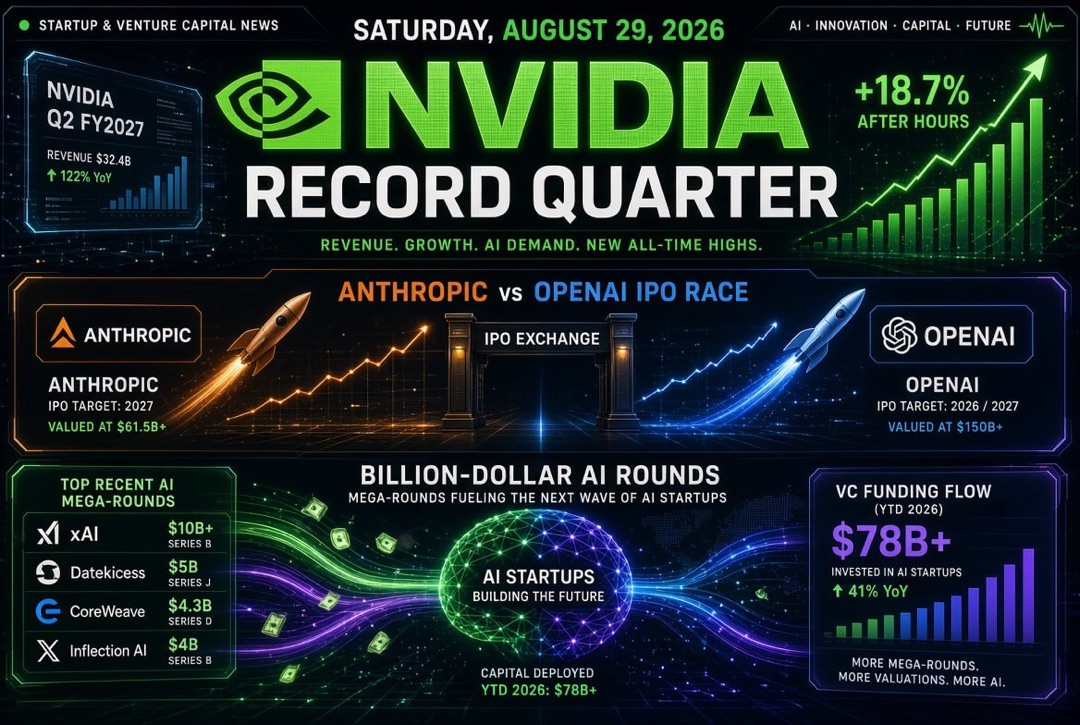
The global venture capital market started 2026 with unprecedented momentum. In the first quarter, the volume of venture investments surged, with the largest AI mega-rounds occupying a significant portion of the market. This serves as an important signal for funds: capital is returning to the tech sector, but distribution is extremely uneven.
A key feature of the current cycle is the widening gap between leaders and the rest of the market. Startups in artificial intelligence, cloud infrastructure, robotics, autonomous transportation, cybersecurity, and defense technologies are gaining access to capital at high valuations. Conversely, companies without strong technological differentiation face longer negotiations, declining multiples, and demands for quicker demonstration of commercial viability.
- AI startups continue to be the primary focus of venture investments.
- Funds are sharpening their focus on infrastructure, computing power, and data.
- Late-stage rounds are once again attracting large checks, but only with strategic demand in place.
- The early-stage market remains active, though investors are demanding stronger unit economics.
AI Mega-Rounds Set New Valuation Benchmarks for Tech Startups
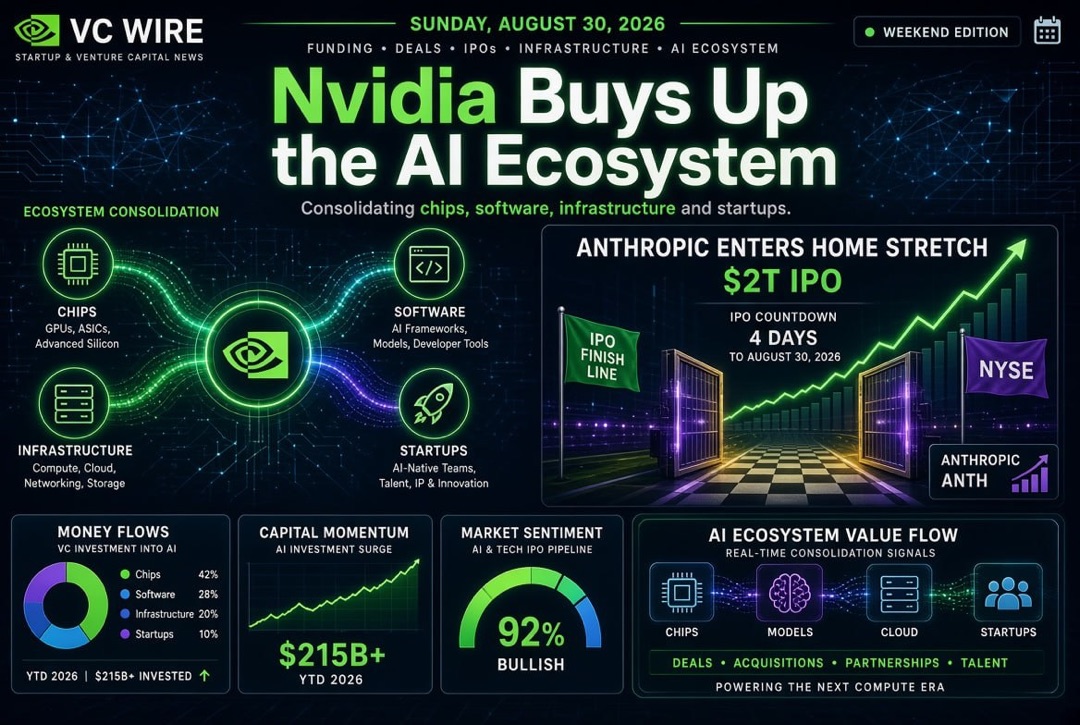
The largest deals surrounding OpenAI, Anthropic, xAI, Waymo, and other companies indicate that the venture market has effectively transitioned from a classic startup funding model to a strategic capital model. It is no longer merely about product development but about constructing technological platforms that require tens of billions of dollars for computing, data centers, chips, engineering teams, and global commercialization.
For venture funds, this signifies a shift in evaluation logic. If previously key metrics were user growth, ARR, margins, and time to market, now increasing importance is placed on:
- Access to cloud infrastructure and specialized AI chips;
- Availability of unique datasets for training models;
- Depth of the scientific team and research velocity;
- Partnerships with hyperscalers and large corporations;
- Regulatory resilience of the business across various jurisdictions.
This shift makes startup and venture investment news particularly crucial for funds: the market is rapidly reevaluating not just individual products but entire technological ecosystems.
Anthropic and Amazon Strengthen the Link Between AI Startups and Cloud Infrastructure
One of the most noteworthy deals in April was the new phase of collaboration between Amazon and Anthropic. Amazon plans to invest up to $25 billion in the AI startup, while Anthropic aims to leverage Amazon’s cloud infrastructure extensively over the next decade. For the market, this represents not just an investment in an AI model developer, but an example of how large tech corporations are transforming venture investments into long-term infrastructure alliances.
For funds, this case is significant for two reasons. First, it confirms that the largest AI startups are becoming dependent on access to computing power. Second, it illustrates how hyperscalers use venture investments as a tool for solidifying demand for their own chips, cloud services, and data centers. Consequently, capital in AI increasingly moves not in isolation but alongside infrastructure commitments.
Robotics Becomes the Next Major Direction After Generative AI
Amid saturation in the generative AI market, venture investors are increasingly turning their attention to robotics and physical AI. One notable event was the $110 million funding round for Sereact, which develops AI systems for robots capable of predicting the consequences of their own actions. This round shows that investors are starting to evaluate robotics not as a separate hardware niche but as an extension of the AI market into the physical realm.
Interest in robotics is strengthening across several segments:
- Warehouse automation and logistics;
- Manufacturing robots and industrial vision;
- Autonomous systems for the defense sector;
- Robots for healthcare, caregiving, and the service economy;
- AI models that manage physical processes.
For venture funds, this sector is appealing due to its higher barrier to entry. Unlike purely software startups, robotics companies require complex engineering, supply chains, hardware expertise, and access to real industrial clients.
AI Agents for Business Evolve into a New Layer of Enterprise Software
Another significant theme is the rise of startups creating AI agents for corporate processes. Factory secured $150 million at a valuation of around $1.5 billion to develop AI tools for engineering teams. This segment is becoming one of the most competitive areas within enterprise software, as corporations seek ways to automate development, testing, documentation, customer support, credit application analysis, and supply chain management.
For investors, the critical question is whether such startups can transition from impressive product demonstrations to sustainable integration within corporate processes. In later stages, funds are increasingly analyzing not just technology but the depth of integration into client workflows, retention levels, data security, and the ability of the product to replace part of the operating costs.
Creative AI and Consumer Products Remain Active but Require Specific Niches
The generative content market also remains active. ComfyUI raised $30 million at a valuation of around $500 million as it develops tools for more manageable generation of images, videos, and audio. This example demonstrates that investors are still willing to fund creative AI if the product offers users more control rather than simply replicating the basic functions of large models.
Consumer AI startups are in a more challenging position. User growth may be rapid, but monetization, audience retention, and competition with platforms remain significant risks. Consequently, funds are increasingly favoring companies operating at the intersection of consumer experience and professional application: design, marketing, video, development, education, analytics, and content management.
Regulatory Risks Become Part of Investment Assessment
The deal involving the Chinese AI startup Manus and the demands from Chinese regulators to cancel the acquisition by Meta has sent important signals to the market. For venture investors, this indicates that the geography of technology, development location, founders’ citizenship, data movement, and ownership structure may become critically important factors when assessing deals.
Venture funds engaged with AI, semiconductors, defense technologies, robotics, and quantum computing can no longer focus solely on products and markets. They must proactively consider:
- The likelihood of export restrictions;
- Risks of M&A transaction blockages;
- Data localization requirements;
- The political sensitivity of the technology;
- Possible restrictions for foreign investors.
This is particularly crucial for funds investing in startups with international teams and cross-border ownership structures.
Sovereign AI and State Capital Amplify Regional Competition
A trend towards sovereign artificial intelligence is gaining momentum in China, Europe, the USA, and Asian countries. State funds, strategic corporations, and national development institutes are increasingly participating in the financing of AI startups, robotics, quantum technologies, semiconductors, and defense solutions. This is reshaping the competitive landscape for venture funds.
On the one hand, state capital can accelerate the development of infrastructure and create demand for complex technologies. On the other hand, it can distort valuations, increase political risks, and limit the exit freedom of investments. For private funds, a crucial task becomes selecting companies that can attract strategic capital while maintaining flexibility, commercial independence, and international scaling potential.
What Venture Investors and Funds Should Watch For
The startup and venture investment news as of April 28, 2026, indicates that the market is in a phase of strong capital attraction but also heightened selectivity. AI remains the central focus of the venture economy, yet within the sector, a division is beginning between companies with real infrastructural value and startups built around short-term market hype.
Venture investors and funds should closely monitor several areas in the coming weeks:
- AI Infrastructure: data centers, chips, cloud contracts, and models with high computational demand.
- Robotics and Physical AI: startups merging artificial intelligence with real production, logistics, and industry.
- Enterprise AI: AI agents capable of reducing costs for large companies and integrating into critical business processes.
- Sovereign AI: projects supported by governments and strategic corporations.
- Regulatory Risks: deals in sensitive sectors where M&A may face restrictions.
The key takeaway for the market is this: venture investments are becoming aggressive again, but capital is primarily flowing into startups that can form the infrastructure of the future economy. For funds, this presents both an opportunity and a risk. The opportunity is to engage with companies shaping a new technological cycle. The risk is overpaying for assets whose valuation is solely tethered to expectations surrounding artificial intelligence. In 2026, the winners will not be the loudest startups but those who can demonstrate the sustainability of their business model, technological advantage, and strategic significance in the global market.