Startup and Venture Capital News for Friday, January 23, 2026: Record AI Rounds, the Return of Mega Funds, Revitalized IPOs, and Growth in Fintech, Biotech, and Climate Tech Investments.
The global venture market enters late January 2026 with a sense of cautious optimism. Following a period of risk re-evaluation in 2022-2024 and more selective funding in 2025, investors are once again ramping up activity, particularly in segments where a clear path to scaling and monetization is evident. Major funding rounds, the relaunch of venture funds, an increase in M&A deals, and anticipation of new public listings dominate the agenda. A key question for venture investors and funds this week is how to allocate capital among AI startups, fintech, biotech, and climate technologies in a changing rate environment and amidst competition for top talent.
Key Trends of the Day: What is Shaping the Startup Market in January 2026
Several enduring themes emerge from the news agenda, setting the tone for startup investments and impacting company valuations worldwide:
- Capital Concentration around Leaders: Venture investments are increasingly directed toward companies capable of rapidly capturing market share and forming ecosystems.
- Shift Towards Infrastructure: Demand is rising for compute power, data, security, and corporate platforms that support AI and digital transformation.
- Return of Exits: The revitalization of IPOs in 2026 and growth in M&A increase liquidity prospects for early investors.
- Geographic Diversification: The U.S. remains the center for mega deals, Europe is strengthening its role in deep tech, Asia is accelerating in corporate AI, and the Middle East is becoming more active as a capital source.
AI Startups: Mega Rounds and the Battle for Infrastructure
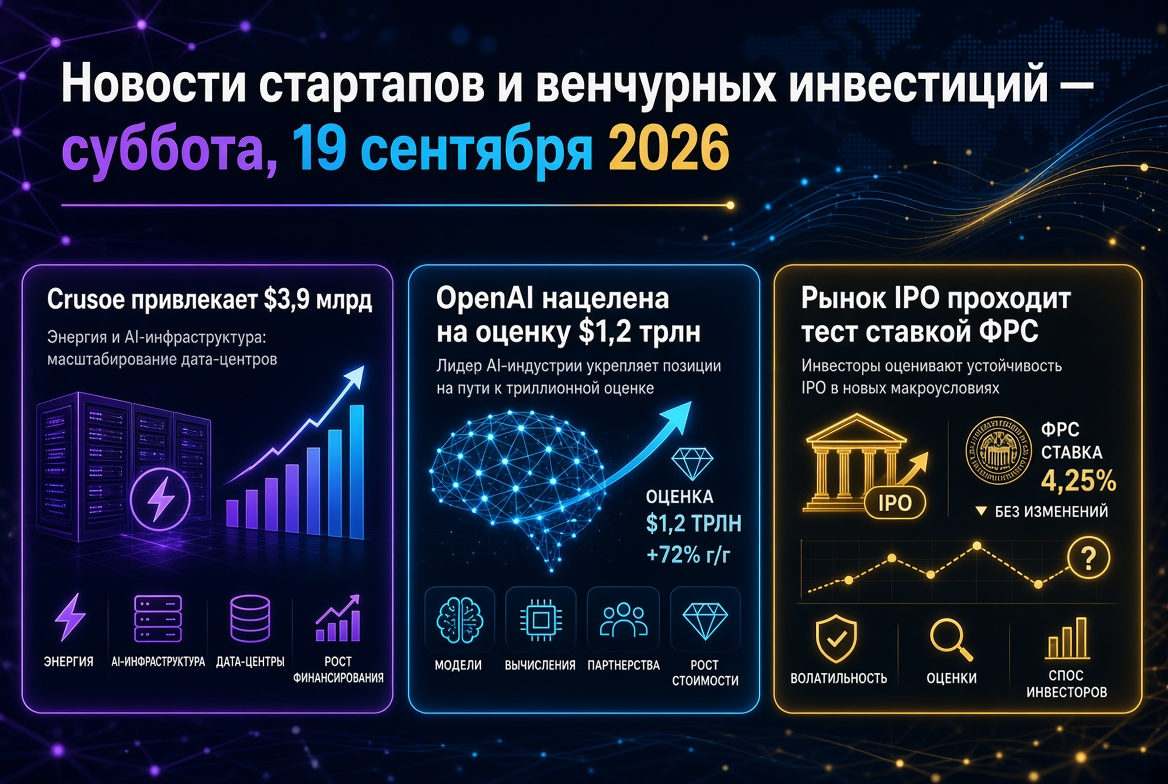
The AI startup segment continues to set the pace: large funding rounds in generative AI, agent systems, corporate automation, and AI infrastructure are capturing the attention of global investors. Venture funds are increasingly considering not only application products but also the infrastructure layer—models, data, training, compute optimization, as well as compliance and security tools.
This manifests in two key areas:
- Late Stages: An increase in the share of large checks aimed at scaling sales, international expansion, and strengthening entry barriers.
- Infrastructure Platforms: The demand for compute power and specialized solutions for corporate clients leads to rising valuations for projects that reduce the cost of AI implementation.
For investors, it is crucial to monitor revenue quality and contract structures: long-term subscriptions, the share of enterprise clients, margins, and dependence on cloud providers become critical when assessing risk.
Venture Funds and “Big Money”: A Mega Fund Relaunch
The beginning of 2026 sees enhanced fundraising efforts from major players. The return of mega funds is increasing competition for deals and may accelerate the closing of funding rounds. At the same time, the structure of new funds is changing: capital is more frequently segmented by areas (AI, defense and security, biotech, climate technologies), facilitating positioning and helping LPs manage risk more effectively.
Geographically, different motivations are noticeable:
- U.S. — Focus on AI and cybersecurity, betting on rapid scaling and readiness for IPOs in 2026.
- Europe — Growing interest in industrial tech, deep tech, and defense technologies amidst government programs and demand for technological sovereignty.
- Asia — Accelerating corporate strategies in AI and fintech, where large ecosystems provide swift market access.
- Middle East — The role of capital supporting big deals and the formation of new technology hubs.
IPO 2026: A Broader Window for Public Offerings
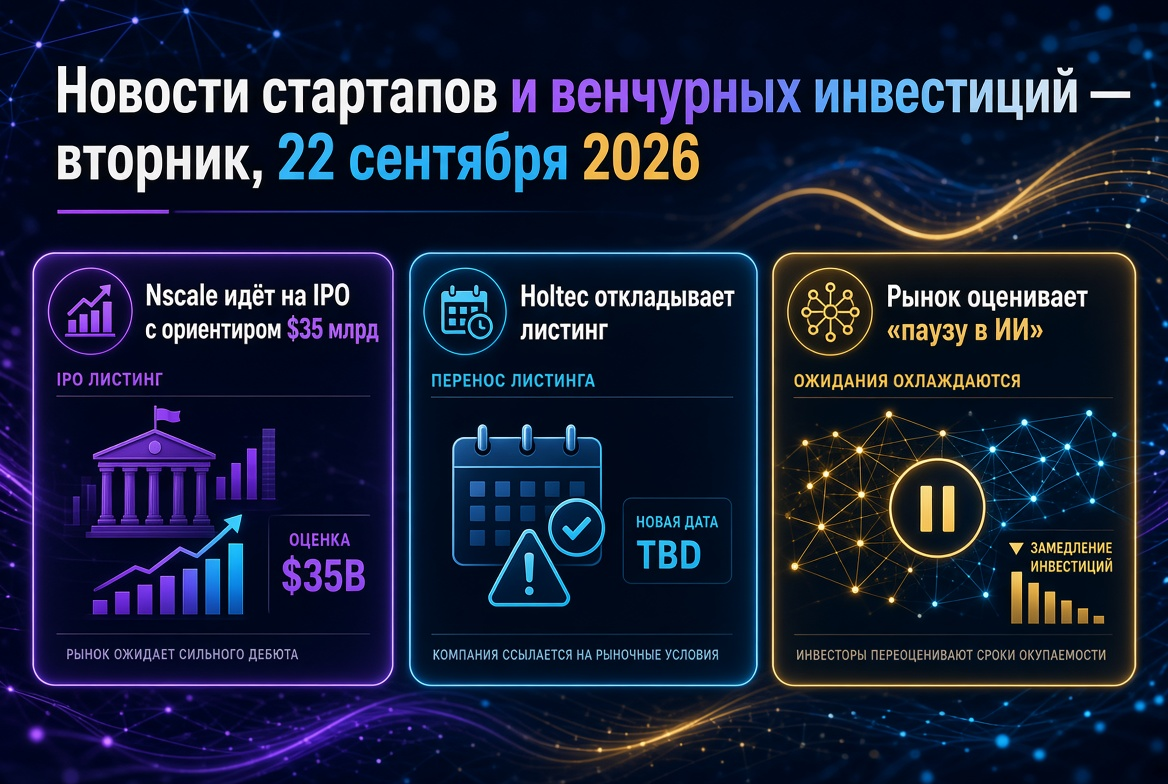
The revitalization of public markets is enhancing the value of the “growth story” for mature companies. Investors are again willing to pay a premium for predictable revenue, high customer retention, and a clear pathway to profitability. For the startup market, this signifies a renewed motivation for scaling and more active preparation for listing.
Companies considering IPOs in 2026 typically demonstrate:
- Revenue with sustainable growth and transparent sales economics;
- Clear unit metrics and a reduced burn rate without losing momentum;
- Diversification of clients across regions (U.S., Europe, Asia) and sectors;
- Control over regulatory risks and cybersecurity resilience.
This improves exit prospects for venture investors and funds, increasing the likelihood of secondary transactions where stakes are partially sold ahead of a public offering.
M&A and Consolidation: Corporations Accelerate Acquisitions
M&A activity is becoming one of the main channels for liquidity, especially in the corporate software, cybersecurity, fintech infrastructure, and niche AI solution segments. Major tech companies and industrial leaders prefer to acquire teams and products to reduce the time to market for new solutions and enhance competitive advantages.
Points for investors to consider when evaluating M&A likelihood include:
- Strategic Compatibility of the product with the potential buyer's stack.
- Unique Data or technological barriers that are difficult to reproduce.
- Legal Cleanliness: Rights to code, patents, compliance with data regulations.
- Implementation Quality in major companies—pilots and contracts often precede purchases.
Fintech and Payments: A Focus on Profitability and Infrastructure
Fintech is returning to the venture investment agenda but in a different capacity. Investors prefer models with greater sustainability: payment platforms, B2B finance, risk analytics, anti-fraud, and embedded finance. The focus is on companies that have demonstrated the ability to grow without excessive dependence on cheap capital.
Key metrics frequently discussed in funding rounds for fintech startups include:
- Cost of funding and quality of the credit portfolio (if applicable);
- Stability of commission income and share of recurring revenue;
- Regulatory readiness for scaling in the U.S., Europe, and Asia;
- Integrations with corporate clients and partners.
Climate Tech and Biotech: Long Cycles, but Rising Strategic Value
Climate technologies remain attractive despite stricter project economics requirements. Venture funds are increasingly selecting segments with clear commercialization paths: energy storage, infrastructure for power grids, industrial efficiency, carbon capture, and ESG reporting software platforms. In biotech and medtech, there is a noticeable rise in interest in companies at the intersection of AI and science—accelerating research, molecular design, and analysis of clinical trial data.
For these sectors, it’s important for investors to consider:
- The length of the revenue cycle and dependence on regulatory stages;
- Partnerships with corporations and government programs;
- Protection of intellectual property and quality of the scientific base;
- International expansion potential (U.S., Europe, Asia).
What This Means for Venture Investors and Funds: Practical Conclusions
The agenda for Friday, January 23, 2026, confirms that the startup market is becoming more mature and structured. Venture investments are returning to growth, but capital is being allocated selectively, prioritizing revenue quality, defensible advantages, and readiness for exit through IPOs in 2026 or M&A. In the coming weeks, investors should focus on the following actions:
- Review the portfolio for risk levels: separate companies needing additional runway from potential candidates for secondary share sales.
- Enhance AI expertise: evaluate not only the product but also the value of the infrastructure, data access, and legal risks.
- Monitor the liquidity market: activity in public markets and M&A deals sets benchmarks for valuations and exit timing.
- Diversify geography: The U.S., Europe, and Asia offer different growth profiles, while capital from the Middle East is increasingly becoming a catalyst for major deals.
Overall, the current startup news indicates that the window of opportunity for investments in startups is widening in 2026—especially for teams that combine technological advantage, clear monetization, and disciplined execution.