Current Startup and Venture Capital News as of March 3, 2026: Mega Rounds in AI Infrastructure, Investments in Chips and Cybersecurity, Venture Capital Market Trends, IPOs and M&A, Analytics for Funds and Global Investors
Venture capital in 2026 is increasingly diverging into two streams: mega rounds for AI leaders and disciplined funding for "real" B2B focused on rapid revenue generation. On the side of large deals, there is an anticipation of platform dominance and network effects. Meanwhile, the middle market demands sustainable unit economics and clear contracts, particularly in cybersecurity, industrial software, and infrastructure.
- Shift in Focus: from "growth at any cost" to controlling critical components—models, data, computation, distribution.
- New Anchors for Funding Rounds: strategists (clouds, chip makers, telecom operators) and infrastructure funds.
- Increasing Pressure on Valuations: a premium is maintained for assets demonstrating clear leadership and technological barriers, while discounts are applied to repetitive products lacking differentiation.
Artificial Intelligence: Mega Rounds Around "Open" Models and Corporate Adoption
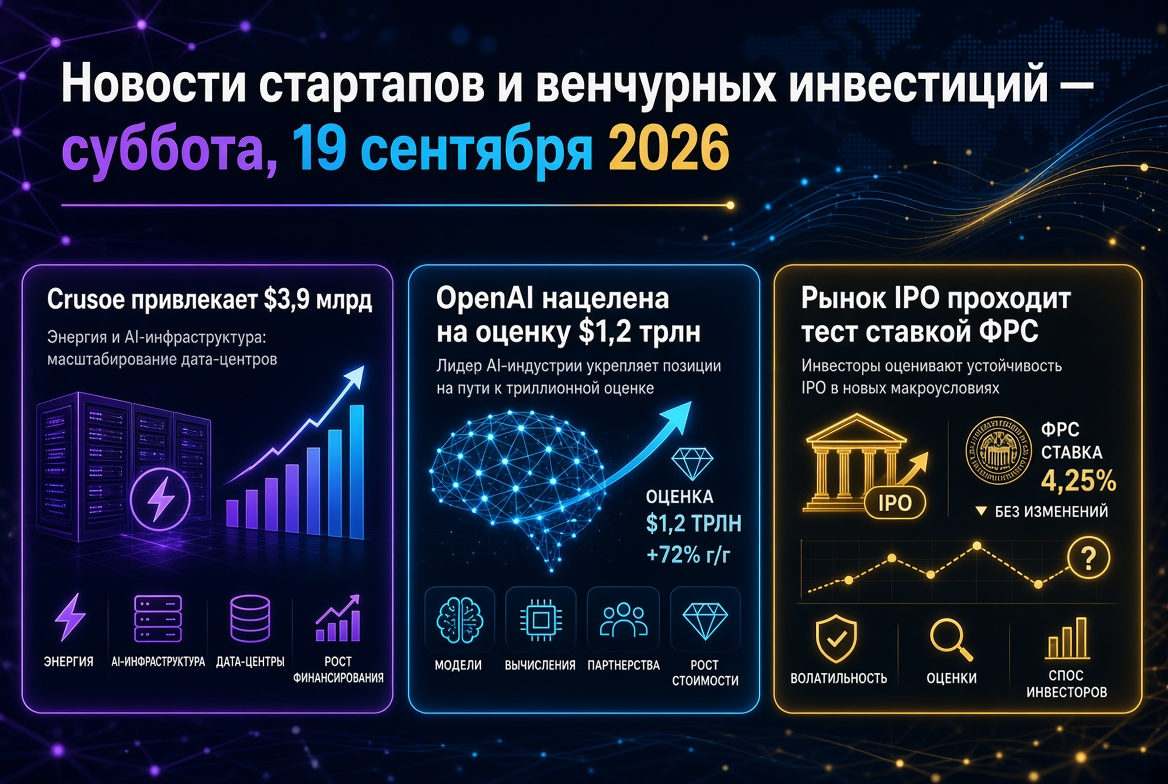
The most discussed topic among global venture investors is the resurgence of mega valuations in the AI segment, albeit with a different logic: demand is shifting towards those capable of delivering scalable applications and reducing inference costs. In this context, large funding rounds are coalescing around fundamental model developers, "AI-as-a-platform" companies, and developer tools.
What Matters for Venture Funds
- Model Differentiation: quality, security, and adaptability speed to various domains (finance, industry, medicine).
- Inference Economics: token cost and production efficiency are becoming critical KPIs for evaluation.
- Distribution: partnerships with cloud providers and enterprise channels increase the likelihood of a "winner takes all" market scenario.
Chips and Computing: Betting on Alternatives and Optimization Instead of "More GPUs"
The infrastructure race is intensifying interest in AI hardware and system software. Venture investments are flowing not only to chip manufacturers but also to companies that enhance the utilization and compatibility of computing parks: orchestration of mixed clusters, compilers, profiling, memory, and network optimization.
- Alternative Accelerators: funds are looking for teams that can offer better inference costs in specific scenarios (enterprise chat, analytics, recommendations).
- Partnerships as Signals: implementation contracts in data centers (e.g., in Japan and the US) are becoming more important than "paper" valuations.
- System Layer: software for distributing AI loads across different types of chips—one of the most practical directions in deep tech in 2026.
Cybersecurity and the Defense Technological Cycle: Demand Supported by Budgets
Cybersecurity remains a "quiet beneficiary" of the AI boom: the more models and automation there are, the greater the attack surface. Funding rounds are growing for critical infrastructure protection, IoT device security, and in sectors where cybersecurity overlaps with national security. For investors, this domain offers more straightforward monetization: long-term contracts, regulatory requirements, and high lifetime value (LTV).
Subsegments with Frequent Investment Committee Approval
- OT/ICS protection (industrial networks, energy, transportation).
- Security for embedded devices (automobiles, medical equipment, sensors, "smart" factories).
- Platforms for managing software supply chain risks (SBOM, dependency control, access policies).
Fintech: Rounds Become "Pragmatic," and Growth Comes Through Infrastructure
In global fintech, venture capital is becoming more cautious about "neo-bank narratives" and aggressive marketing. However, deals in B2B infrastructure are reviving: anti-fraud, compliance, payment orchestration, embedded finance for SaaS, and credit scoring for SMEs. In 2026, investors are increasingly demanding proof of portfolio quality, resilience to macro cycles, and transparent metrics on defaults.
- RegTech/AML: demand is rising due to increasingly complex regulations in Europe, the US, and a number of Asian markets.
- Payment Infrastructure: focus on conversion, fault tolerance, and multi-provider schemes.
- Credit Products: an advantage lies with teams that possess data and risk control, rather than merely a user interface.
Climate Tech and Industrial Technologies: Less Hype, More CAPEX-Focused Projects
Climate tech in 2026 is moving from lofty promises to project realism: industrial startups are attracting venture investments where there are partnerships with industry and a clear trajectory for commercialization. Corporate venture funds and infrastructure investors are increasingly involved in deals. Directions capturing attention include:
- Optimization of energy consumption in data centers and cooling systems.
- New materials and energy storage technologies.
- Software for improving manufacturing efficiency and monitoring emissions (MRV platforms).
Europe: The Shortage of Mega Rounds Compensated by the Growth of Deep Tech Funds
The European startup market at the beginning of 2026 appears more "fund-centric": large venture investments in the region largely depend on the emergence of substantial funds and anchor LPs. At the same time, Europe is strengthening its position in deep tech and climate tech, where engineering competencies, university ecosystems, and access to industrial partners are crucial. For global funds, this presents an opportunity window for deals at more rational valuations—especially in the Series A–C stages.
India and Southeast Asia: Growth at the Intersection of Mobility, Logistics, and Consumer Services
In Asia, venture capital continues to seek scale in markets with a large internal user base. India and Southeast Asian countries remain active in electric mobility, delivery, payments, and SaaS for small businesses. Key questions for funds involve local competition, regulatory frameworks, and the startup's ability to achieve profitability quickly amid high growth rates.
US and Middle East: Strategic Money Strengthening Market Influence
The US market continues to set the tone in AI funding rounds, as well as in deals around semiconductors and cloud infrastructure. Concurrently, the role of capital from Middle Eastern countries is increasing: the involvement of sovereign funds and major investment platforms is becoming a structural factor for large rounds and late-stage funding. For venture investors, this means:
- increased competition in top deals and a rise in the "leadership premium" in valuations;
- more frequent mixed rounds (VC + strategists + sovereign investors);
- greater attention to governance issues, technology rights, and data access regimes.
IPOs and M&A: The Window is Ajar, but Quality Standards are Higher
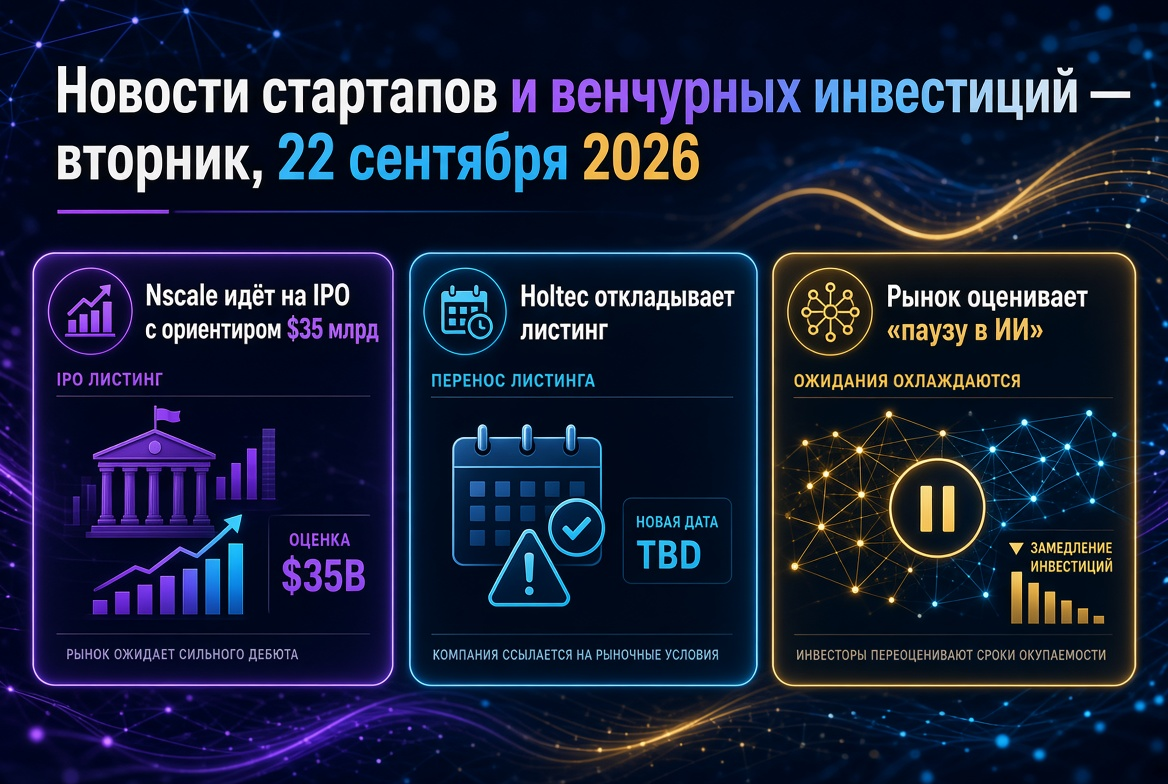
Public markets are gradually "digesting" the technology cycle; however, the IPO window for venture portfolios remains selective. In 2026, the chances for a successful listing are higher for companies with predictable revenues, clear margin structures, and sustainable growth, particularly in enterprise software and infrastructure. Meanwhile, M&A is becoming a viable liquidity scenario: major players are acquiring teams and technologies to accelerate their product roadmaps and solidify their positions within the AI stack.
Practical Checklist for Venture Funds This Week
- Assess where in the portfolio there are "bottlenecks" in computation and inference costs, and assist teams with partnerships.
- Strengthen requirements regarding security and compliance in AI products (data, models, rights, auditing).
- Reassess follow-on strategy: direct capital towards companies with superior sales economics and proven differentiation.
- For new deals—focus on those controlling critical layers (data/computation/distribution) and capable of scaling globally.
On March 3, 2026, venture investments are once again converging around AI infrastructure, chips, and cybersecurity, as well as disciplined B2B growth. For investors and funds, the decisive factors are efficiency, control over the technology stack, and the ability of startups to scale in global markets—from the US and Europe to India and Asian countries.