Startup and Venture Capital News as of May 4, 2026: AI Agents, Mega-Rounds, Corporate Venture Funds, Defence Tech, HealthTech, and New Capital Concentration in the Global Market
As of Monday, May 4, 2026, the global startup and venture capital market remains highly active, but the deal structure is becoming increasingly uneven. The primary focus for venture investors and funds is not merely the growing interest in artificial intelligence, but rather the sharp concentration of capital around AI infrastructure, agent platforms, defence tech, industrial AI, healthtech, and corporate solutions with a clear route to major customers.
Following a record-setting first quarter of 2026, venture capital has become noticeably more selective. Money is returning to the tech sector, but startups that can demonstrate not only technological novelty but also strategic significance are gaining the advantage: access to computing power, corporate data, defence contracts, medical infrastructure, or industrial supply chains.
AI Remains the Main Magnet for Venture Capital
The key agenda for investors is investment in AI startups. In the first quarter of 2026, global venture financing reached record levels, with the majority of capital directed towards companies related to artificial intelligence. This exacerbates the divide between market leaders and other technology startups.
For funds, this means a change in the selection model. Having an "AI component" in a presentation is no longer sufficient. Investors are increasingly evaluating:
- the startup's access to unique data;
- the cost of computations and the sustainability of unit economics;
- the capability of AI agents to replace real business processes;
- the presence of corporate clients and recurring revenue;
- regulatory and geopolitical risks.
The global startup market is transitioning from a phase of experimentation to a phase of infrastructure selection. It is not the loudest concepts that are winning, but the teams capable of integrating into critically important sectors.
Anthropic Sets a New Standard for the AI Mega-Round Market
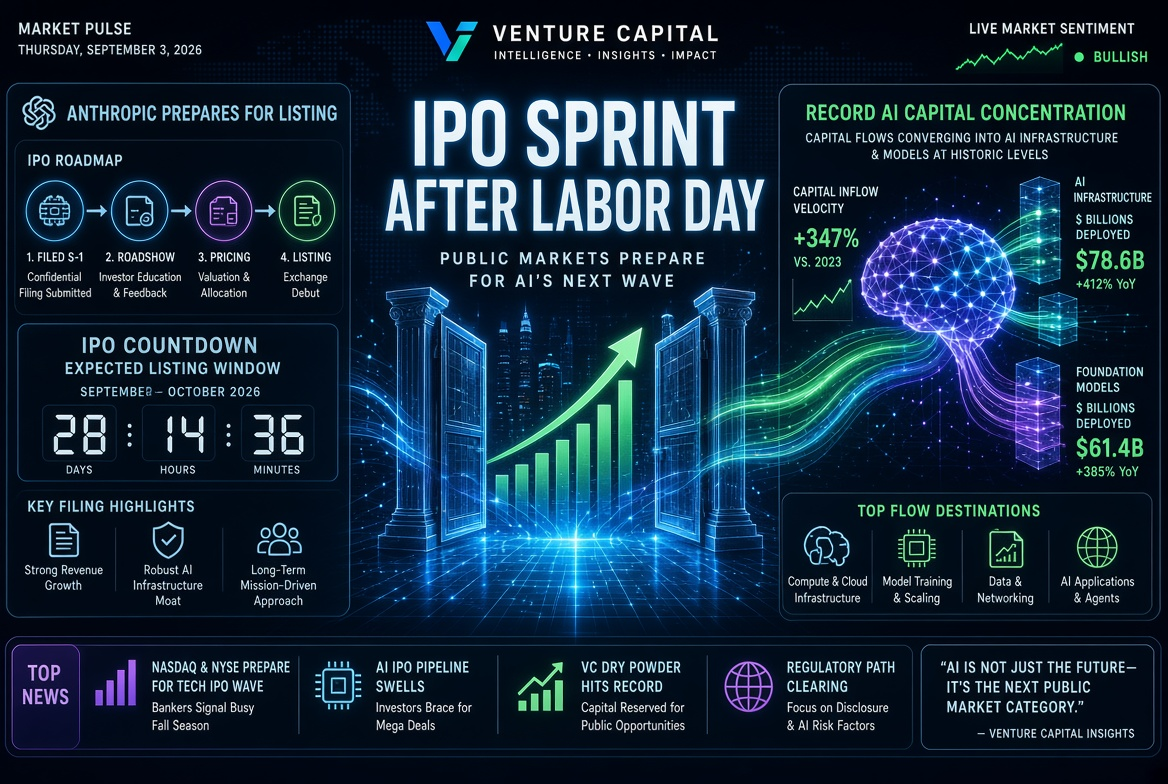
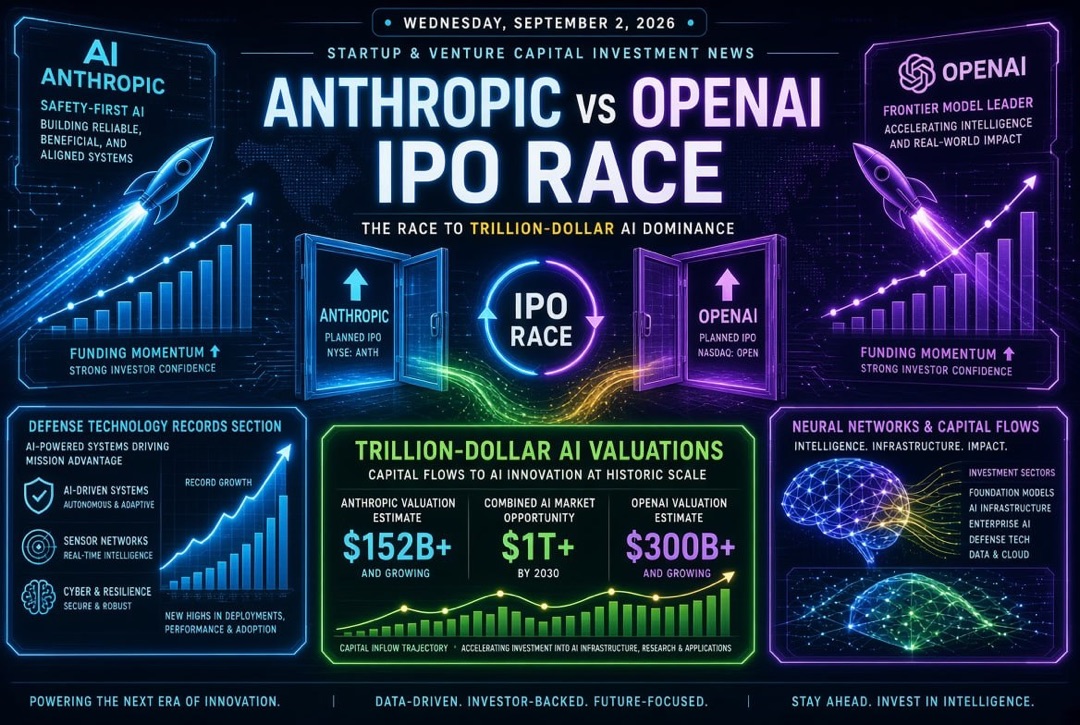
One of the central themes remains Anthropic. The company continues to attract attention from strategic investors and major tech partners amid the rapid growth in demand for Claude models and developer tools. For the venture market, this is an important indicator: the largest AI companies increasingly resemble infrastructure platforms rather than traditional software startups.
This creates a dual effect for investors. On one hand, such deals confirm the scale of the AI market. On the other, they draw a significant portion of capital into a limited number of companies, heightening competition for access to quality late-stage rounds. At the early stage, funds are forced to seek not the next "universal model," but vertical AI solutions capable of operating atop existing infrastructure.
Netomi Demonstrates Demand for Agent AI in the Corporate Sector
The Netomi deal has become one of the week’s important signals for the enterprise AI market. The startup raised $110 million in a Series C round, with investors including Accenture Ventures and Adobe Ventures. This underscores the growing interest in AI agents that not only respond to customer inquiries but can execute more complex operations in a corporate environment.
This deal is significant for venture funds for three reasons:
- corporate AI is increasingly being sold through partnerships with global integrators;
- customer support is emerging as one of the primary mass markets for agent solutions;
- investors are betting on platforms capable of rapidly scaling within large companies.
Netomi also demonstrates that the next phase of competition in AI will occur not just between models, but also between application platforms that can turn models into operational workflows.
Defence Tech and Space Tech Become Full-fledged Venture Classes
Defence technologies continue to strengthen their position in the venture agenda. The $650 million round for True Anomaly illustrates that defence tech and space tech can no longer be viewed as narrow niches. For funds, this represents a distinct direction complete with long contracts, high capital intensity, and strategic demand from governments.
Startups in the fields of autonomous satellites, space security, mission software, and defence infrastructure are gaining an advantage against a backdrop of rising geopolitical tension. Unlike the consumer technology market, where demand can shift rapidly, defence tech relies on long-term budgets and government programs.
Europe Struggles to Maintain its Position in the AI Race
The European venture ecosystem is gaining new momentum thanks to significant AI deals. One of the most notable examples is the British AI startup Ineffable Intelligence, which raised $1.1 billion in seed funding. For the European market, this is not just a substantial round but also a claim to participate in the global competition for fundamental AI platforms.
However, the European dynamic remains uneven. The volume of venture financing is increasing, but the number of deals is decreasing. This means capital is concentrating in fewer companies, and the barrier for new founders is rising. For funds, this necessitates a more stringent specialization: those who can identify strong teams before inflated valuations will come out on top.
HealthTech and AI in Medicine Evolve into Late-Stage Sectors
The $150 million round for Aidoc confirms the steady demand for AI solutions in medicine. Medical imaging, diagnostics, image analysis, and clinical workflows remain among the most mature applications of artificial intelligence.
For venture investors, healthtech is appealing due to a higher regulatory barrier, but also a greater quality of market protection. Startups that have secured clinical approvals, access to hospital networks, and proven efficacy can establish more sustainable revenue. In 2026, the AI healthcare sector is gradually shifting from pilot projects to scaling and preparing for potential IPOs.
Corporate Funds Increase Their Influence on the Market
A new wave of corporate venture capital is becoming a distinct market factor. BMW i Ventures launched a $300 million fund focused on agent AI, physical AI, industrial software, materials, manufacturing, and supply chains. This indicates that large corporations are seeking not only financial returns but also strategic access to technologies capable of transforming their core business.
A similar logic is evident in the deals involving Hightouch, JuliaHub, and Netomi. Investors are increasingly backing startups operating at the intersection of data, AI agents, and corporate automation. For funds, this is an important signal: the optimal exit might not only be through an IPO but also through strategic partnerships, corporate integrations, or M&A.
Regulatory Risks Become a Component of Venture Evaluation
The situation with Manus and the attempted deal with Meta highlights the rising political and regulatory risks in the artificial intelligence sector. For global funds, this means that ownership structure, team origin, development location, intellectual property jurisdiction, and data movement are becoming as crucial as revenue or growth rates.
Investors will pay particular attention to startups in sensitive areas: AI agents, semiconductors, defence technologies, autonomous systems, and data infrastructure. In 2026, due diligence becomes more comprehensive: funds are evaluating not just the product but also the political stability of the deal.
What Venture Investors and Funds Should Pay Attention To
As of May 4, 2026, the key takeaway for the startup and venture capital market is simple: capital exists, but it is now more discerning. Investors are willing to pay high valuations for companies at the epicenter of the AI transformation but are weaker in their response to startups without technological barriers and a clear path to scaling.
In the coming weeks, funds should monitor several trends:
- new mega-rounds in AI infrastructure and agent platforms;
- the growth of corporate venture funds;
- deals in defence tech, space tech, and industrial AI;
- regulatory restrictions on cross-border M&A;
- preparations of late-stage AI and health tech companies for the public market.
The global venture industry is entering May 2026 with strong demand for tech assets but with a more stringent segmentation. For venture investors and funds, this represents a market of opportunities where a decisive advantage lies in the ability to differentiate a long-term infrastructure company from the next startup using AI as a marketing facade.