Global Startup and Venture Investment Overview as of November 4, 2025: Major AI Deals, IPO Resurgence, Growing Venture Funds, and New Technology Hubs Formation.
As of early November 2025, the global venture market continues to demonstrate a strong recovery following a prolonged downturn. Investors worldwide are once again actively funding technology startups—record-breaking deals are being made, and IPO plans are back in the spotlight. Major players are returning with substantial investments, governments are ramping up support for innovation, and private capital is once again flowing into the startup ecosystem.
Venture activity is on the rise across all regions. North America remains the leader (especially in the artificial intelligence sector, which accounts for the lion's share of investments), but other parts of the world are gaining momentum. The Middle East has seen a significant surge in investments, with sovereign funds backing the formation of its own tech hubs. In Europe, the market demonstrates resilience: Germany has outpaced the UK in deal volume for the first time, with early-stage funding particularly strong there. Asia presents a mixed picture: China is showing signs of recovery after a weak period, although its activity still lags behind the peak levels of 2021-2022. At the same time, India and Southeast Asia are attracting significant capital amid a relative decline in China. The startup ecosystems in Russia and neighboring CIS countries strive to keep pace, despite external constraints. A global venture upswing is unfolding at a new stage of development, although investors remain selective and cautious.
Below are the key events and trends shaping the venture market landscape as of November 4, 2025:
- Capital Influx and Return of Mega Deals. Leading venture funds are raising record amounts, with major investors actively reinvesting, saturating the market with capital and reigniting risk appetite.
- Dominance of AI Investments and New Unicorns. Unusually large funding rounds are skyrocketing startup valuations, particularly in the AI segment, giving rise to a new wave of unicorns.
- IPO Market Resurrection. Successful public listings of tech companies confirm that the long-awaited "window" for exits has reopened, allowing investors to anticipate liquidity.
- Expansion of Sector Focus. Venture capital is directed not only towards AI, but also into fintech, climate and “green” projects, biotechnology, defense R&D, and even revived crypto startups.
- Consolidation through M&A Deals. A new wave of mergers, acquisitions, and strategic investments is reshaping the industry landscape, creating opportunities for exits and accelerated growth for the strongest players.
- Global Hubs and Regional Growth. The Middle East, Southeast Asia, Latin America, and other regions are strengthening their positions on the venture map, attracting record capital against the backdrop of slowdown in China.
- Russia and CIS: Local Initiatives. Despite restrictions, new funds and startup support programs are being launched in the region to stimulate the development of local ecosystems and attract investor attention.
Return of Mega Funds: Big Money Back in the Market
Major investment players are triumphantly returning to the venture scene, indicating a renewed risk appetite. Japanese firm SoftBank, for instance, is launching a new Vision Fund III, approximately $40 billion in size, focused on advanced technologies (primarily AI and robotics). Sovereign funds from Gulf nations are also stepping up: they are pouring billions into tech projects and rolling out state mega-programs to support the startup sector, creating their own "Silicon Valleys" in the Middle East. Concurrently, a multitude of new venture funds is being established worldwide, attracting significant institutional capital for investment in high-tech sectors.
Well-known Silicon Valley venture firms are also increasing their presence. American funds have amassed unprecedented stockpiles of uninvested capital (commonly known as "dry powder")—hundreds of billions of dollars ready to be deployed into new projects. This influx of liquidity into the startup market sets the stage for mega deals. Multi-million and even billion-dollar funding rounds are becoming a routine occurrence again, significantly boosting the valuations of promising companies and enhancing competition among investors to gain entry into the best projects.
Record Investments in AI: A New Wave of Unicorns
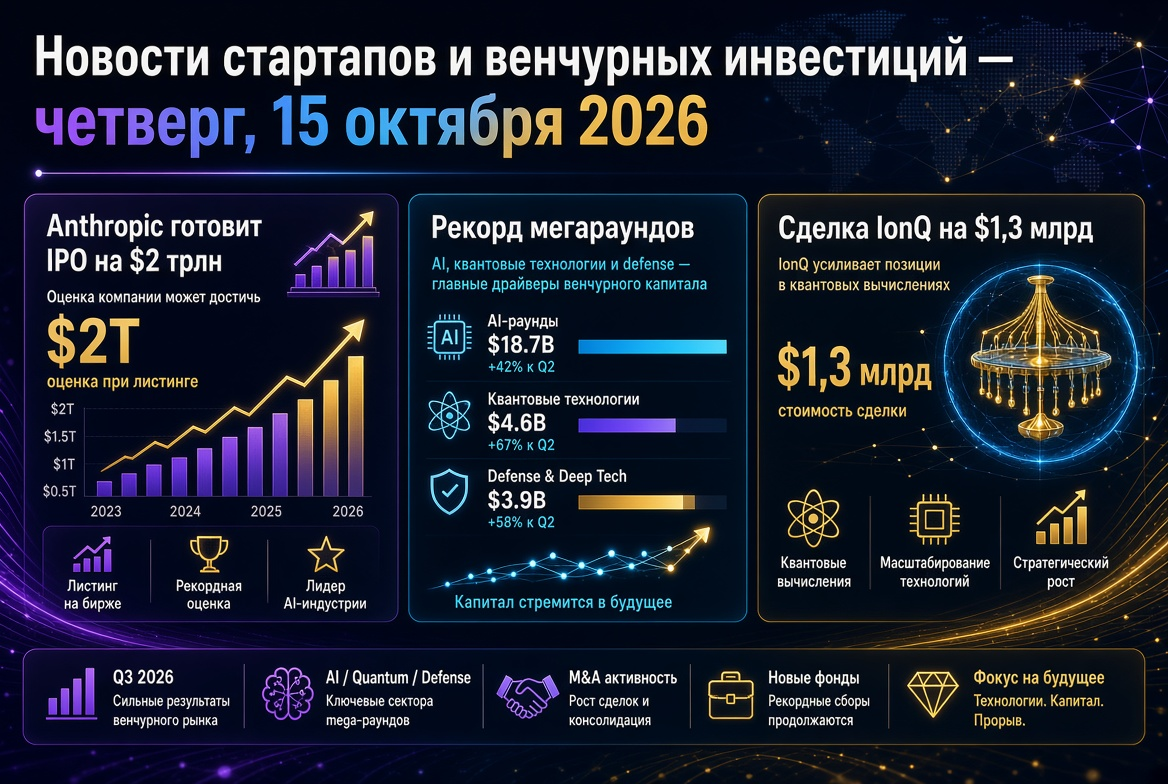
The field of artificial intelligence is the main driver of the current venture rise, demonstrating record funding volumes. Investors are eager to fund AI startups with colossal sums, pushing their valuations to unprecedented heights. In the last quarter alone, several companies working on generative AI and foundational models raised billions in funding: among them are California's Anthropic (approximately $13 billion), Elon Musk's xAI (~$5.3 billion), French Mistral AI ($2 billion), and several others. As a result, almost half of all venture investments currently flow into the AI sector, with a small group of AI companies absorbing the lion's share of the total capital raised.
With such massive capital influx, AI startups are quickly entering the “unicorn” club with valuations exceeding $1 billion. The global list of private unicorn companies has expanded significantly with dozens of new AI players in just a few months, substantially increasing its collective valuation. Major tech corporations are also investing in AI infrastructure: a notable deal was Microsoft’s $9.7 billion investment in the Australian startup IREN, which focuses on cloud computing resources for AI tasks. This arms race in the AI space is drawing in more investors eager not to miss the next breakthrough and fuels the sense that we are witnessing a historic surge in interest in artificial intelligence.
IPO Market Awakens: Window of Opportunities for Exits
The global primary public offering (IPO) market is emerging from silence and regaining momentum. After a few years of virtually closed "windows" for exits, venture investors finally have a chance to realize profits: a wave of large tech IPOs indicates that trust in public markets has returned. In recent months, several unicorns have successfully debuted on the stock exchange with valuations exceeding $1 billion. One of the most anticipated was the entry of Swedish fintech giant Klarna onto the New York Stock Exchange with a capitalization of around $15 billion—significantly up from its last private valuation in 2022 (approximately $6.7 billion), though still below its peak valuation from 2021.
In the U.S., a highlight was the IPO of software developer Figma, which captured investor attention after its sale deal was canceled. The American cybersecurity company Netskope also had a successful listing, along with several Asian firms (including automaker Chery Automobile in Hong Kong). In total, more than a dozen venture firms with unicorn valuations went public on global stock markets in the third quarter, and the trend has continued into this fall. Companies are eager to take advantage of the favorable moment: a rising stock market and sustained demand for tech issuers are creating a "window of opportunities" for new IPOs. If macroeconomic conditions remain stable, experts predict further increases in IPO activity towards the end of 2025 and into 2026.
Diversification of Investments: Beyond AI
In 2025, venture investments encompass an increasingly broad range of sectors and are no longer limited to just artificial intelligence. Following last year's downturn, interest in fintech projects is resurging: significant investments are flowing into startups in digital finance, banking, and payments. For instance, in the U.S., the payment platform SavvyMoney raised $225 million, while in Europe, neobanks and buy-now-pay-later services are thriving. Moreover, a strong impetus is seen in climate and environmental technologies: "green" startups in renewable energy, waste recycling, and emissions reduction are attracting substantial funding amidst a global focus on ESG and sustainable development.
Interest in biotechnology is also returning. Startups in medical technology and pharmaceuticals (ranging from new treatment methods to genetic research) are regaining investor attention, as evidenced by increased funding in the sector—healthcare and biotech attracted nearly $16 billion globally in the past quarter. Amid geopolitical changes, there is a remarkable focus on defense and aerospace developments: funds are supporting companies involved in drones, satellites, cyber security systems, and other "dual-use" products. The cryptocurrency industry, which experienced a downturn, is getting a second wind—some crypto startups and blockchain platforms are once again beginning to attract capital as the market for digital assets stabilizes. Hence, venture capital is now distributed much more widely across various sectors of the economy.
Consolidation and M&A Deals: Scaling Up Players
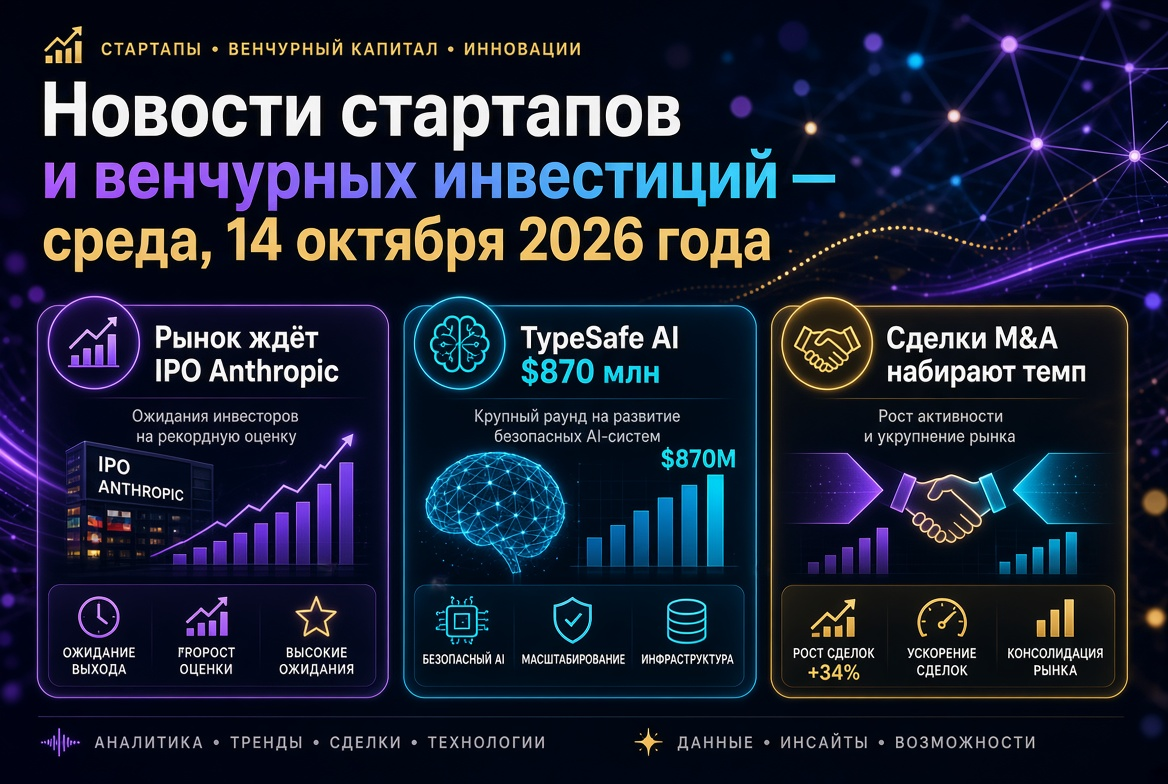
High startup valuations and fierce competition are pushing the industry toward consolidation. Major merger and acquisition deals are once again taking center stage, consolidating key players and reshaping the technology sector landscape. Following relative inactivity in previous years, corporate giants and unicorns with solid cash reserves have intensified their acquisitions of promising projects to strengthen their positions and gain access to new technologies.
In the third quarter of 2025, the volume of global M&A deals involving venture companies reached one of the highest levels in recent years. Nine startups were acquired for over $1 billion each. Among the most notable examples are OpenAI’s acquisition of California-based AI startup Statsig to enhance its developments and Workday's purchase of the German AI platform Sana Labs. In Europe, several "exits" through sales were recorded: significant M&A deals occurred in fintech, cybersecurity, and medtech (for instance, Israeli AI company Noma Security attracted a strategic investor, and Swedish Sana was acquired in an international deal). Additionally, in the cryptocurrency sector, American exchange Coinbase is negotiating the acquisition of London-based fintech startup BVNK for approximately $2 billion—this move aims to consolidate the stablecoin market. The wave of mergers provides investors with much-needed liquidity and enables the most successful players to scale their businesses, although the total number of independent startups is decreasing in the process.
Regional Growth: New Venture Hubs
Venture activity is becoming increasingly global—new regional hubs of innovation are emerging. The Middle East has transformed into one of the fastest-growing venture markets: Gulf countries, previously focused primarily on investing abroad, are now actively developing their own ecosystems. In the UAE and Saudi Arabia, tech parks and funds are being launched to support local startups, leading to several record deals. For instance, in Dubai, the startup Xpanceo raised $250 million to develop "smart" contact lenses, and the Saudi fintech project Hala secured $157 million to expand its payment platform—a sum unprecedented for the region previously.
The Asian venture market is also showing improvements outside of China. In Southeast Asia, Singapore has taken a leading role: the investment volume in Singaporean startups has nearly tripled compared to last year, thanks to several large funding rounds (for example, $220 million for local eSIM service provider Airalo). In India, startup funding has slightly decreased in recent months but remains significant in absolute terms, while large funding rounds in semiconductors and robotics have taken place in South Korea and Japan (the Korean project Rebellions raised $250 million for AI chip development). Israel continues to maintain its status as a global innovation hub, despite a slight decrease in investment volumes compared to the peak year of 2021.
Europe, while trailing the U.S. in funding volumes, remains stable and gradually increases its activity. The total investment volume in European startups in the last quarter exceeded $13 billion (equal to the previous quarter and 22% higher than a year ago), with around 60% of that amount going to early-stage rounds. The continent's startup scene is diversifying: beyond London and Berlin, significant deals are occurring in Paris, Stockholm, Tel Aviv, and other tech centers. Notably, four of the nine global M&A deals valued at over $1 billion in the last quarter involved European companies—indicative of the maturity of several local players. Additionally, Latin America contributed to global growth: in Brazil, the volume of venture investments increased by nearly 50% over the summer, once again placing the country at the forefront of the region. Thus, the global venture map continues to expand—capital is increasingly being allocated to various corners of the globe in search of talented teams and promising ideas.
Russia and CIS: Local Initiatives Amid Global Trends
Despite external constraints, startup activity is reviving in Russia and neighboring countries. Regional investors and corporations are launching new funds and programs to develop local startup ecosystems in line with global trends. Over the past year, the Russian venture investment market has begun to emerge from stagnation: according to the Moscow Innovation Cluster, the volume of venture investments in Russia increased by nearly 91% in the first half of 2025 compared to the same period in 2024 (to $87 million). While absolute figures are still modest, the positive trend is evident—with the number of active investors growing by over 20%, and an increasing number of projects receiving funding.
In the context of many foreign funds exiting, local players are stepping into the void that has been left behind. Private and state venture funds are now providing the lion's share of investments in startups, while the role of business angels has diminished due to high risks and costly capital. A key trend is the concentration of resources on more mature and sustainable companies. For instance, the state-funded Moscow Venture Fund has collaborated with several private funds and corporations during the recent Moscow Startup Summit to close five deals totaling approximately 500 million rubles, investing in startups with already validated business models. Major technology companies are also getting involved: Yandex launched a small business support program worth 500 million rubles (providing advertising credits and preferential services for emerging companies), and Sberbank's ecosystem continues to operate a corporate accelerator for fintech projects.
Beyond Russia, the venture movement is also thriving in other former CIS countries. In Kazakhstan and Uzbekistan, new funds and startup accelerators have emerged over the past year, and plans are in place to hold a Central Asian Venture Forum in 2026 to attract international investors. Thus, the region aims to integrate into the global venture capital market, leveraging its strengths—from AI developments to traditionally strong areas in fintech and agri-tech. Although external factors impose limitations, local initiatives inspire cautious optimism and instill hope for further growth in the startup ecosystems within the post-Soviet space.
Cautious Optimism and Quality Growth
As of early November 2025, the venture market demonstrates moderately optimistic sentiments. Successful IPOs and major investment rounds indicate that the worst period of decline is behind us, and the ecosystem is entering a new phase of development. However, the current upswing is characterized by a more measured approach compared to the frenzied boom of previous years: investors are evaluating opportunities more scrupulously, capital is concentrated in the most promising companies, and startups are expected to maintain a more rational unit economy and a clear path to profitability.
Venture capital is now primarily growing in-depth rather than in breadth—focusing on quality growth. The market has learned lessons from past "bubbles" and overheating: the valuations of many companies have been adjusted to more realistic levels, making them more attractive for long-term investments. The consolidation of players underscores the pursuit of efficiency and sustainability, while the expansion of sector focus signals that innovative opportunities exist across a diverse array of fields. If no new external shocks occur, experts expect that the trend of moderate growth will persist: venture investments may continue to rise in 2026, but without excessive euphoria, focusing instead on the quality of projects. Thus, the startup and venture capital market is entering the new year with cautious optimism, balancing high expectations of technologies (particularly AI) with a more sober and rational approach to investing.