Global Startup Market as of April 18, 2026: Where Venture Investments Are Headed, Why Funds Are Doubling Down on Late-Stage Investments, and Which Segments Are Becoming the Main Beneficiaries of the New Cycle
By mid-April 2026, the startup and venture capital market is entering a phase where headline growth no longer signifies an evenly distributed recovery across the entire ecosystem. Venture capital is returning quickly but is becoming increasingly selective in its distribution. Major funds and institutional investors are focusing on AI, computing infrastructure, enterprise software, robotics, physical AI, fintech, and technology companies that are already close to scaling, IPO, or strategic exit.
For venture investors and funds, this represents a significant shift. While previous years saw the market oriented towards a wide flow of early-stage deals, the current focus is on mature startups with strong revenue, corporate demand, and clear monetization scenarios. Early stages have not disappeared, but competition for capital is intensifying, and the criteria for team quality, product, and unit economics have become significantly stricter.
Main Theme of the Day: The Market Is Growing, but Money is Flowing to a Narrow Circle of Winners
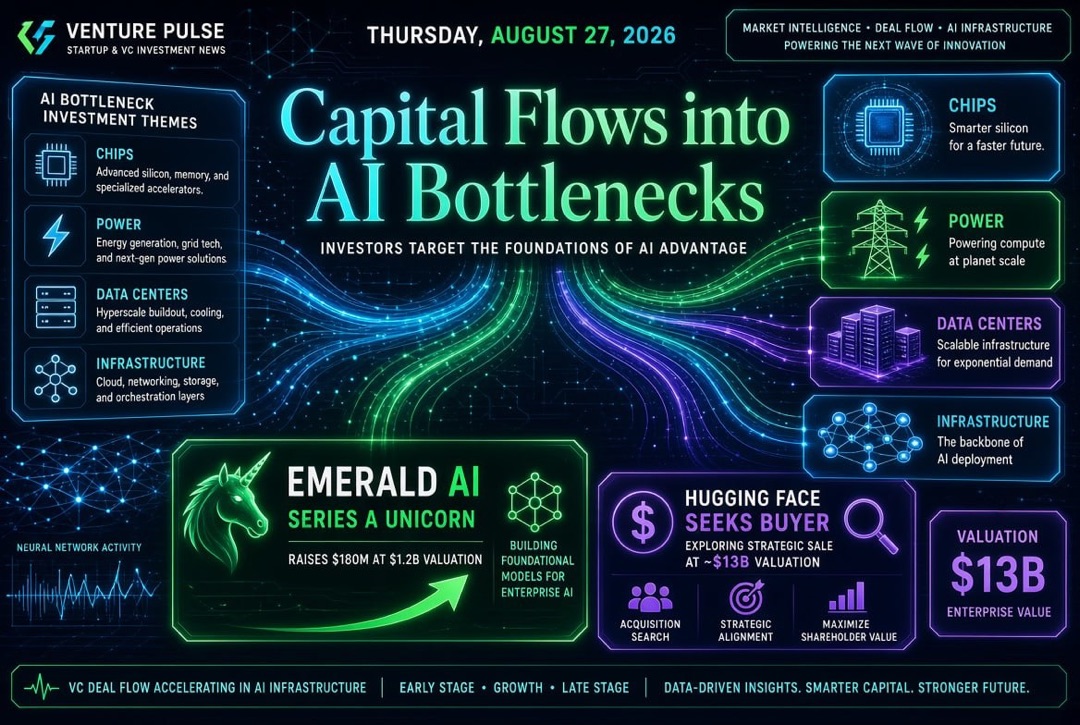
The key takeaway for the global startup market on Saturday, April 18, 2026, is crystal clear: venture investments are accelerating; however, this growth is fueled not by broad normalization but by the concentration of capital in a limited number of directions. These include:
- AI startups and infrastructure for artificial intelligence;
- late-stage and growth companies poised for scaling;
- enterprise AI and automation platforms for the corporate sector;
- semiconductors, on-device AI, robotics, and supply chain software;
- M&A targets for large corporations seeking not just a product but a technological advantage.
This is why the startup market currently appears strong in terms of deal volume but tough in access to capital. For the top companies, this is a favorable environment. For others, it is a period where venture capital is becoming significantly more selective.
Late-Stage Funds Are Regaining Initiative
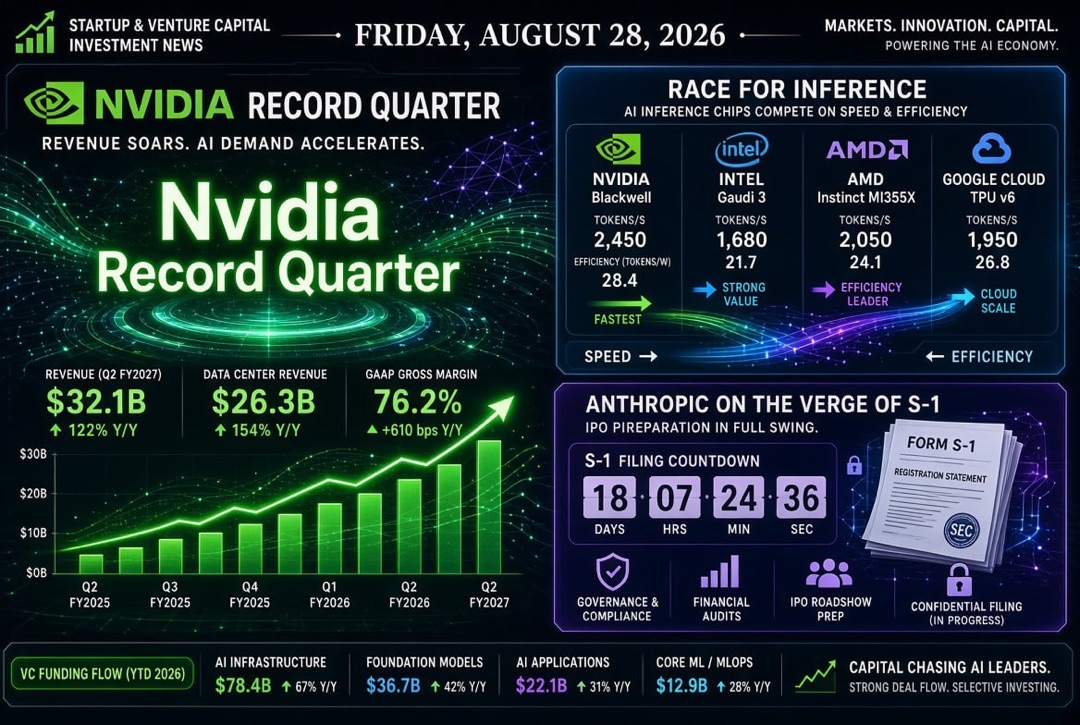
In 2026, major funds are effectively validating a new investment model: substantial funding is gravitating toward late-stage firms where revenue, corporate clients, and exit scenarios are already visible. This changes the very logic of the venture market. Now, not only potential ideas matter but also the ability of a startup to quickly transform into an infrastructural asset or a target for IPO, secondary deals, or strategic acquisition.
In practice, this creates a new hierarchy for venture investors:
- Priority is given to companies with a validated product-market fit;
- Valuation premiums are awarded to those working at the intersection of AI and corporate efficiency;
- Fund managers are actively increasing exposure to growth rounds, not just classical seed stages;
- Market metrics become less indicative because a few giant transactions distort the overall picture.
This serves as a significant signal for funds: headline records in venture investment volumes do not imply that the entire startup space is equally liquid. On the contrary, the market is becoming two-speed.
Enterprise AI and Automation Emerge as the Main Areas of Applied Demand
The most notable practical trend in April is the shift of interest from abstract AI promises to products that are integrated into the business processes of clients. Startups capable of automating expenses, engineering design, supply chains, internal analytics, and decision-making are receiving markedly greater attention from investors and strategic buyers.
Why this is important for the venture market:
- Corporations are no longer satisfied with "AI for the sake of AI" — they need measurable ROI;
- Enterprise software is regaining a stronger investment profile;
- Startups with practical effects are easier to turn into M&A targets;
- Funds are increasingly evaluating companies based on the depth of integration into clients' workflows rather than just user growth rates.
It is in this logic that the market begins to reassess not just generative models but AI solutions capable of genuinely reducing costs, hastening operations, and becoming part of corporate infrastructure.
New Rounds Confirm: Capital Flows to Applied and Infrastructure Stories
The fresh venture agenda indicates that investments are being allocated not only to frontier AI companies but also to applied startups with clear business models. The focus is on enterprise engineering, supply chain AI, growth software for companies, and automation of financial and operational solutions.
For investors, this means several things at once:
- The market is still ready to fund growth stories with large checks;
- Valuations are rising for startups operating in the corporate sector;
- The next wave of value creation is forming around "AI plus execution," rather than merely around the interface to the model.
In other words, 2026 reinforces not just the market for AI startups but also the market for companies capable of turning artificial intelligence into the operating system of businesses. For venture funds, this is a more reliable investment thesis than betting solely on consumer hype.
Asia Gives Strong Signals for IPOs and Technological Sovereignty
The Asian startup market remains one of the key areas for growth. China is ramping up support for AI, robotics, and semiconductors, while South Korea is forming its own trajectory for chip startups and on-device AI. For global investors, this signifies that Asia is no longer an additional region but an independent source of technological leaders and future exit deals.
Particularly important is that the Asian agenda is now built around three key areas:
- The growth of government and quasi-government capital in strategic technologies;
- Preparing mature startups for IPO;
- The transition from local winners to companies aspiring for global scale.
This enhances competition for capital while simultaneously expanding the pool of potential leaders for international funds. For investors focused on the global landscape, the Asian market in 2026 is no longer peripheral but one of the central directions for venture capital allocation.
Europe Gains Ground but Remains a Market of High Selectivity
The European venture investment market also appears stronger than it did a year ago; however, here, there is a noticeable concentration of capital around AI, deep tech, industrial software, chip-related solutions, and climate-linked infrastructure. Europe is becoming less of a mass venture market and increasingly a platform for a limited number of technologically strong companies that can thrive amid the region's push for digital and industrial autonomy.
For funds and LPs, this makes Europe appealing for several reasons:
- A strong engineering base and quality technical teams;
- A deep corporate demand for AI and automation;
- The growing role of government and quasi-market support tools;
- The emergence of new opportunities for scale-up companies, not just early stages.
As a result, Europe is strengthening its position as a marketplace for quality deals, although access to large rounds remains a privilege for a smaller number of startups.
M&A Becomes a Key Element of Venture Logic Again
Another key trend is the revitalization of strategic acquisitions. This is particularly important for the startup market because M&A returns a sense of liquidity to the ecosystem. When large corporations are willing to buy AI assets, automation platforms, and corporate software, the entire cycle of venture investments becomes more stable: founders gain an additional exit scenario, and funds have a more defined trajectory for capital return.
In 2026, the following sectors are most attractive for M&A:
- fintech and expense automation;
- enterprise AI with quick ROI;
- infrastructure software solutions;
- products that can be rapidly integrated into a large buyers' ecosystem.
For venture investors, this implies that startups' valuations will increasingly depend not only on revenue growth but also on their strategic compatibility with major platforms, banks, enterprise vendors, and technology corporations.
What This Means for Venture Investors and Funds
As of April 18, 2026, the strategy in the venture capital market appears increasingly pragmatic. Success is no longer merely about rapidly growing startups but about companies that meet several criteria:
- Operating in sectors with long-term structural demand;
- Possessing technology that is difficult to replicate quickly;
- Demonstrating tangible economic effects for clients;
- Having a pathway to scale revenue, IPO, or M&A;
- Being capable of becoming part of the infrastructure of the next technological cycle.
For funds, this represents a market of opportunities, but not a market of relaxed risk. For founders, this is a window to attract capital on favorable terms if the startup can demonstrate not only technological novelty but also commercial significance.
Thus, Saturday, April 18, 2026, marks a new reality in the venture market: startups are back in focus, venture investments are again substantial, but the main asset is not growth itself but the quality of that growth. This means that the next wave of capitalization will go to those who combine AI, infrastructure, corporate utility, and readiness for exit.