Current Startup and Venture Capital News as of December 8, 2025: The Return of Mega Funds, Record Investments in AI, a Wave of New Unicorns, Revival of the IPO Market, Consolidation, and Other Key Trends for Investors
As of early December 2025, the global venture capital market is showing resilient growth after a period of decline. Investors worldwide are once again actively funding technology startups—record-breaking deals are being made, companies are revisiting their IPO plans, and major funds are triumphantly returning to the market with substantial investments. Governments in various countries are ramping up their support for innovation and private capital attraction, which, combined with the revival of stock markets, is boosting venture activity. As a result, significant funds are flowing into the startup ecosystem, although venture investors remain selective, favoring quality business models.
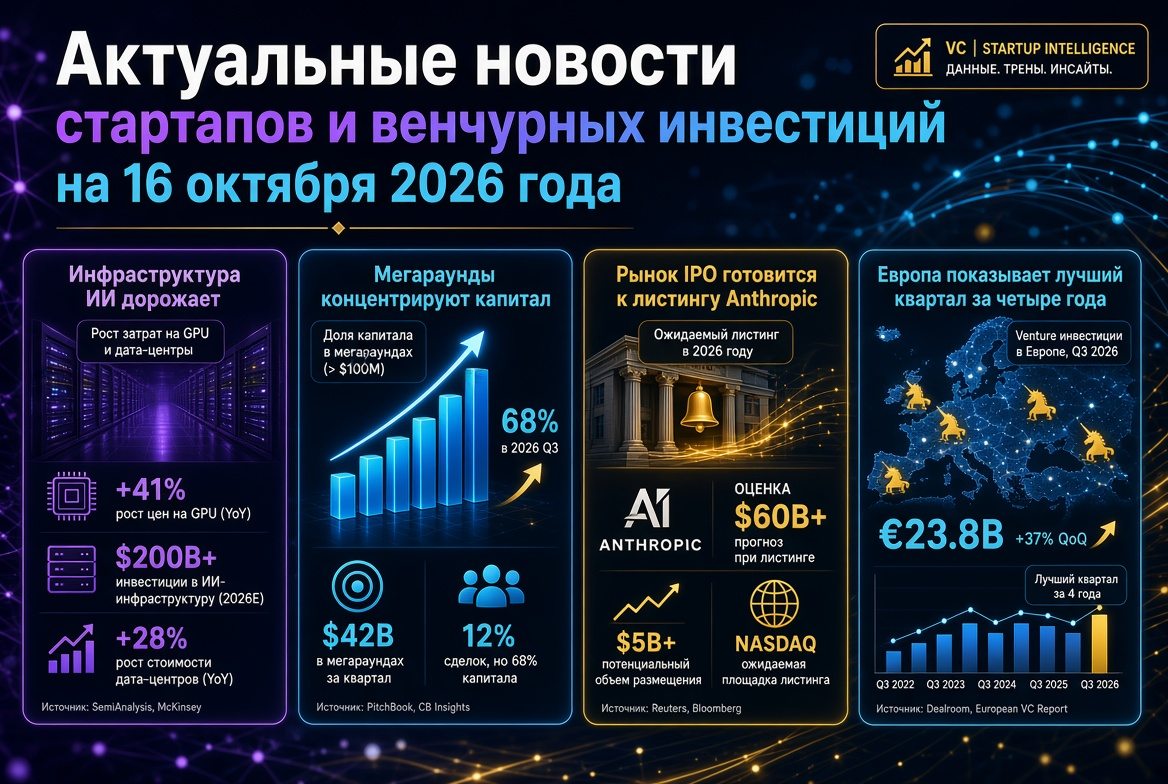
Recent data indicates that in Q3 2025, the global volume of venture investments reached approximately $97 billion—an increase of 38% from the previous year and slightly above the previous quarter's results. This marked the best quarterly result since 2021 and the fourth consecutive quarter of growth following the "venture winter" of 2022–2023. Mega rounds in artificial intelligence (AI) significantly contributed to this growth, although funding increases were noted across all stages. Venture activity is rising in most regions of the world: the U.S. continues to lead (particularly the thriving AI segment), investment volumes in the Middle East have multiplied over the year, and for the first time in a decade, Germany has surpassed the UK in total venture capital raised in Europe. In Asia, activity is uneven: India, Southeast Asia, and Gulf countries are attracting record flows of capital, while relative activity in China is on the decline. Despite external constraints, the startup ecosystems in Russia and the CIS are also striving to keep pace by launching new funds and projects to develop the local market. A new global venture rise is emerging, although market participants remain cautious and selective.
Below are the key events and trends shaping the venture market agenda at the beginning of December 2025:
- The return of mega funds and large investors.
- Record rounds in AI and a new wave of unicorns.
- Revival of the IPO market: an opportunity window for exits.
- Diversification of investments: not just AI.
- A wave of consolidation and M&A deals.
- Global expansion: a boom in new venture markets.
- Russia and CIS: local initiatives amid global trends.
- A renaissance of interest in crypto startups.
The Return of Mega Funds: Big Money Back in the Market
Major investment players are triumphantly returning to the venture arena, indicating a renewed appetite for risk. After several years of caution, leading venture funds are once again forming record-sized funds and increasing investments, flooding the market with capital. For example, the Japanese conglomerate SoftBank made a massive bet on artificial intelligence, leading a financing round for OpenAI totaling up to $40 billion and is now considering launching a new Vision Fund III. Sovereign funds from wealthy Gulf nations have also become more active, injecting billions into tech projects and developing government mega programs to support the startup sector, thus forming their own tech hubs in the Middle East.
Simultaneously, numerous new venture funds are being established worldwide, attracting significant institutional capital to invest in high-tech sectors. According to industry analysts, dozens of new venture funds focused on AI, climate technologies, fintech, biotech, and other areas have been launched in 2025 alone. Notable Silicon Valley firms are also increasing their presence: American funds have accumulated unprecedented reserves of dry powder—hundreds of billions of dollars ready to be deployed as market confidence grows. The influx of "big money" brings liquidity to the startup market, providing resources for new rounds and supporting the growth of promising companies’ valuations. The return of mega funds and large institutional investors not only intensifies competition for the best deals but also instills confidence in the industry regarding future capital inflows.
Record Investments in AI and a New Wave of Unicorns
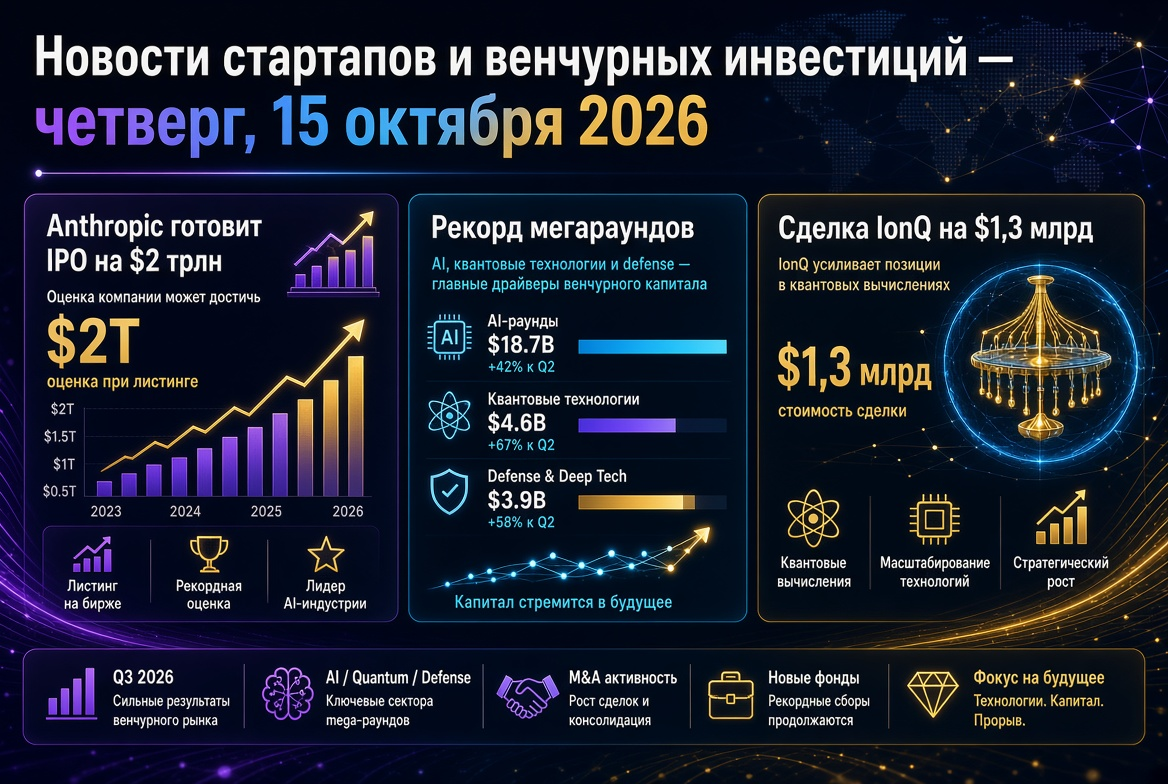
The artificial intelligence sector has become the main driver of the current venture boom, showcasing record funding volumes. Investors are eager to secure positions in AI leaders, redirecting colossal funds into the most promising projects. In recent weeks, an unprecedented financing round was recorded: Jeff Bezos's new AI startup, "Prometheus," focused on industrial "physical AI," attracted around $6.2 billion in its first funding round. For comparison, another generative AI startup, Anysphere (developer of the coding assistant Cursor), previously raised $2.3 billion this fall at an estimated valuation of around $29 billion. Large sums are also being drawn into infrastructure projects: for instance, the AI data center provider Lambda closed a round at $1.5 billion. Earlier this year, Elon Musk's xAI managed to raise around $10 billion (with the company’s valuation nearing $200 billion), while OpenAI attracted approximately $8.3 billion at a valuation of around $300 billion—both rounds were significantly oversubscribed, highlighting the excitement surrounding AI companies.
The current investment boom is giving rise to a wave of new unicorns—startups valued at over $1 billion. According to industry analysts, in 2025, at least 80 companies worldwide attained unicorn status, nearly doubling early-year expectations. Notably, most new unicorns are operating in AI infrastructure, cloud platforms, generative AI, and machine learning-based enterprise services. Concurrently, representatives from other industries (space tech, fintech, logistics, medtech) have also joined the unicorn ranks, ensuring that 2025 retains diversification in venture capital rather than merely transforming into a "year of AI."
Experts explain the current surge in valuations by several factors:
- rapid global demand for AI infrastructure and computational power;
- mass influx of investments into generative AI services and platforms;
- greater willingness of venture investors to take risks for technological leadership;
- desire of large corporations to "capture" promising technologies at early developmental stages.
Nevertheless, analysts caution that an increase in the number of unicorns does not assure market stability. Many of these rapidly growing companies still need to prove their business models' viability, monetize technologies, and achieve profitability. However, as long as investors' appetite for AI startups remains high, industry leaders will continue to attract funding under unprecedented terms.
The IPO Market Comes Alive: An Opportunity Window for Exits
The global market for initial public offerings (IPOs) is emerging from a lull and gaining momentum. In Asia, Hong Kong has sparked a new wave of IPOs: in recent months, several large tech companies have gone public, collectively raising billions of dollars in investments. For instance, Chinese battery manufacturer CATL successfully listed shares worth approximately $5 billion, demonstrating that regional investors are ready to actively participate in IPOs again.
The situation in the U.S. and Europe is also improving. American fintech unicorn Chime made its market debut—its shares soared about 30% on the first day of trading, signaling strong investor interest. Following it, the design platform Figma conducted a public offering, raising around $1.2 billion at an estimated valuation of approximately $15–20 billion; Figma shares also rose steadily in the early days of trading. In the second half of 2025, other notable startups, including payment service Stripe and several highly valued companies from the SaaS and AI sectors, are preparing for public market exit.
Even the crypto industry is looking to capitalize on the new IPO window: fintech company Circle successfully completed an IPO in the summer (its shares then saw significant growth), and cryptocurrency exchange Bullish has applied for a U.S. listing with a target valuation of around $4 billion. The resurgence of activity in the IPO market is crucial for the venture ecosystem: successful public exits allow funds to realize profitable exits and redeploy freed-up capital into new projects. The emergence of real exit opportunities through IPOs enhances investor confidence and stimulates funding inflows into earlier-stage startups.
Diversification of Investments: Not Just AI
In 2025, venture investments are encompassing an ever-broader range of sectors and are no longer limited to artificial intelligence alone. After last year's downturn, the fintech sector is reviving: large funding rounds are occurring not only in the U.S. but also in Europe and emerging markets, fueling the growth of new financial services worldwide. Simultaneously, there is an increasing interest in climate technologies and "green" energy—these areas are attracting record investments amid the global sustainable development trend. Appetite for biotech is also returning: the emergence of new drugs, biomedical platforms, and health services is once again attracting capital as industry valuations recover. Furthermore, following heightened attention to security, investors have begun backing defense tech projects (dual-use tech) focused on ensuring national and cyber security.
Consequently, the expansion of sector focus makes the entire startup ecosystem more resilient and reduces the risk of overheating in specific segments. Venture capital is now actively directed into diverse fields—ranging from finance and ecology to medicine and defense—thus increasing the chances of breakthrough innovations across various industries. This balance of interests helps prevent the formation of a bubble solely around AI and ensures healthier, more balanced market growth overall.
Consolidation and M&A Deals: Growing Players
Inflated valuations of many startups and fierce competition for markets are driving the industry toward consolidation. Major mergers and acquisitions (M&A) deals are once again coming to the forefront, reshaping the power dynamics in the tech sector. In 2025, for instance, Google agreed to acquire the Israeli cybersecurity startup Wiz for approximately $32 billion—a record sum for the Israeli tech industry. This mega-deal illustrates the willingness of tech giants to secure key technologies and teams to strengthen their positions in promising markets.
In addition to corporate acquisitions, notable activity is also observed among unicorns themselves: some mature startups are merging with each other or acquiring niche competitors to accelerate growth and expand their product lines. Overall, the current wave of acquisitions and major venture deals indicates market maturation. The industry is witnessing the consolidation of players: the most successful startups are either merging with each other or becoming acquisition targets for large companies. For venture investors, this, in turn, means the emergence of long-awaited opportunities for profitable exits. By achieving exits through M&A or IPO, funds can lock in profits and direct released capital toward financing the next generation of startups.
Global Expansion: The Boom of New Venture Markets
The recovery of venture activity is occurring not only in traditional hubs but also worldwide. Regions such as the Middle East and North Africa are setting records for capital attraction: according to the Magnitt platform, in Q3 2025, startups in the region raised about $1.2 billion, approximately 60% more than the previous year, and the total venture investment volume in MENA exceeded $2.7 billion in nine months (more than double year-on-year growth). For the first time, funding volumes for startups in the Middle East surpassed those in Southeast Asia, highlighting the formation of a new global magnet for venture capital.
The European market is also providing surprises: for the first time in years, Germany has emerged as the leader in Europe in terms of venture capital raised, surpassing the UK. This is attributed both to the rise in large deals in Germany (particularly in deep tech and industrial software) and to the relative decline in activity in London's tech scene. In Asia, the dynamics remain mixed: India and Southeast Asia continue to attract significant investments (especially in fintech and e-commerce), while the venture market in China remains tepid due to regulatory constraints and economic slowdown. Nonetheless, the overarching trend indicates that venture capital is pursuing global expansion. New markets, from the Middle East to Africa and Latin America, are increasingly integrating into the global startup ecosystem, attracting increasing attention and funding. For investors, this signifies an expansion of geographical opportunities and diversification of risks across different countries and regions.
Russia and CIS: Local Initiatives Amid Global Trends
Despite external constraints, a resurgence of startup activity is observed in Russia and neighboring countries. According to the Moscow Innovation Cluster, in the first half of 2025, the volume of venture investments in Russian projects grew by approximately 81% to around $83 million (while the overall number of deals has decreased, indicating larger check sizes and increased selectivity among investors). Several new venture funds with a total volume of about 10–12 billion rubles have been announced in the region, aimed at supporting early-stage tech projects. Serious capital is beginning to return to local startups: for instance, the Krasnodar-based food tech project Qummy raised about 440 million rubles in the latter half of the year at a valuation of around 2.4 billion rubles, marking one of the largest deals in the regional market in recent years.
Moreover, Russia has once again allowed foreign investors to invest in local startups, gradually restoring overseas capital interest in domestic projects. Although the volume of venture investments in the region remains modest compared to global levels, they are steadily increasing. Some large companies are contemplating bringing their tech divisions public when market conditions improve—for example, VK Tech hinted at a potential IPO in the foreseeable future. New state support measures and corporate initiatives (such as acceleration programs, grants, and joint funds involving state banks) are intended to give an additional boost to the local startup ecosystem and integrate it into global trends. The region aims to remain aligned with the global venture upswing, creating its own success stories and attracting the attention of international investors.
A Renaissance of Interest in Crypto Startups
Following a protracted "crypto winter," the blockchain startup market is reviving, and investors are once again turning their attention to crypto projects. In October 2025, financing for crypto startups reached its highest level in several years: projects raised billions of dollars in that month alone (more than $20 billion cumulatively since the year's start). Leading venture funds like Sequoia Capital and Andreessen Horowitz participated in the industry's largest rounds, indicating a restoration of confidence in this sector. The rise in valuations of digital assets is also fueling venture investors' interest in the blockchain space: at the beginning of November, Bitcoin surpassed the historic $100,000 mark for the first time (though it subsequently underwent corrections below this level). Additionally, the gradual clarification of regulations (such as the anticipation of the imminent approval of the first spot ETFs for Ethereum in the U.S.) is reducing uncertainty surrounding the crypto industry.
As a result, blockchain projects are again beginning to attract significant funds from both specialized crypto funds and large tech corporations. A sort of renaissance of crypto investment is occurring after a downturn. However, market participants are acting cautiously: despite the increased appetite for digital assets, investors maintain selectivity and prudence in project selection to avoid a repeat of past overheating. Funding is now concentrating only on the most promising crypto startups with clear use cases for technology, which should ensure more sustainable development for this rejuvenated sector.
Moderate Optimism and Quality Growth
By the end of 2025, moderately optimistic sentiments have solidified in the venture market. Successful IPOs and multi-billion rounds clearly demonstrate that the prolonged period of decline is behind us. Nevertheless, investors continue to act cautiously: funding is concentrated on startups with sustainable business models, proven economics, and genuine potential for profitability. Major capital inflows into AI and other sectors instill confidence in further market growth, but players are striving to avoid repeating the mistakes of past bubbles by diversifying portfolios and raising quality standards for projects.
Thus, the startup ecosystem is entering a new development cycle that is more mature and balanced. The return of large investors and a series of successful exits create a foundation for another wave of innovation; however, discipline and prudence in venture capital will determine the nature of this growth. Despite the heightened appetite for risky investments, the market's main focus remains on the quality growth of startups and the long-term sustainability of the entire venture industry.