Global Startup and Venture Capital News for November 10, 2025: Record Rounds in AI, Return of Mega Funds, and Resurgence of Crypto Startups. A Comprehensive Overview for Venture Investors and Funds.
Statistics confirm the revival of the venture market: in the third quarter of 2025, global investment volume reached approximately $97 billion (38% more than a year ago), marking the best quarter since 2021 and representing the fourth consecutive period of growth following the "venture winter" of 2022–2023. Investors worldwide are once again actively funding technology startups—record deals are being made, IPO plans are returning, and the largest funds are entering the market with significant investments. Governments in various countries are increasing support for innovation. As a result, private capital is flowing into startup ecosystems, providing young companies with resources for accelerated growth.
Venture activity is on the rise globally: the United States remains the leader (especially in AI), investment volumes in the Middle East have nearly doubled year over year, Europe is experiencing a resurgence (Germany has surpassed the United Kingdom in venture capital for the first time), and India and Southeast Asia are attracting record flows of investments amidst a relative downturn in China. The startup scenes in Russia and other CIS countries are also attempting to develop—new funds and programs are emerging in the region despite external constraints. Overall, the market is witnessing a global venture boom, although investors remain selective and cautious in project selection.
Below are the key events and trends shaping the current agenda of the venture market as of November 10, 2025:
- The Return of Mega Funds and Large Investors. Leading venture players are raising record funds and actively investing in startups again, saturating the market with capital and increasing risk appetite.
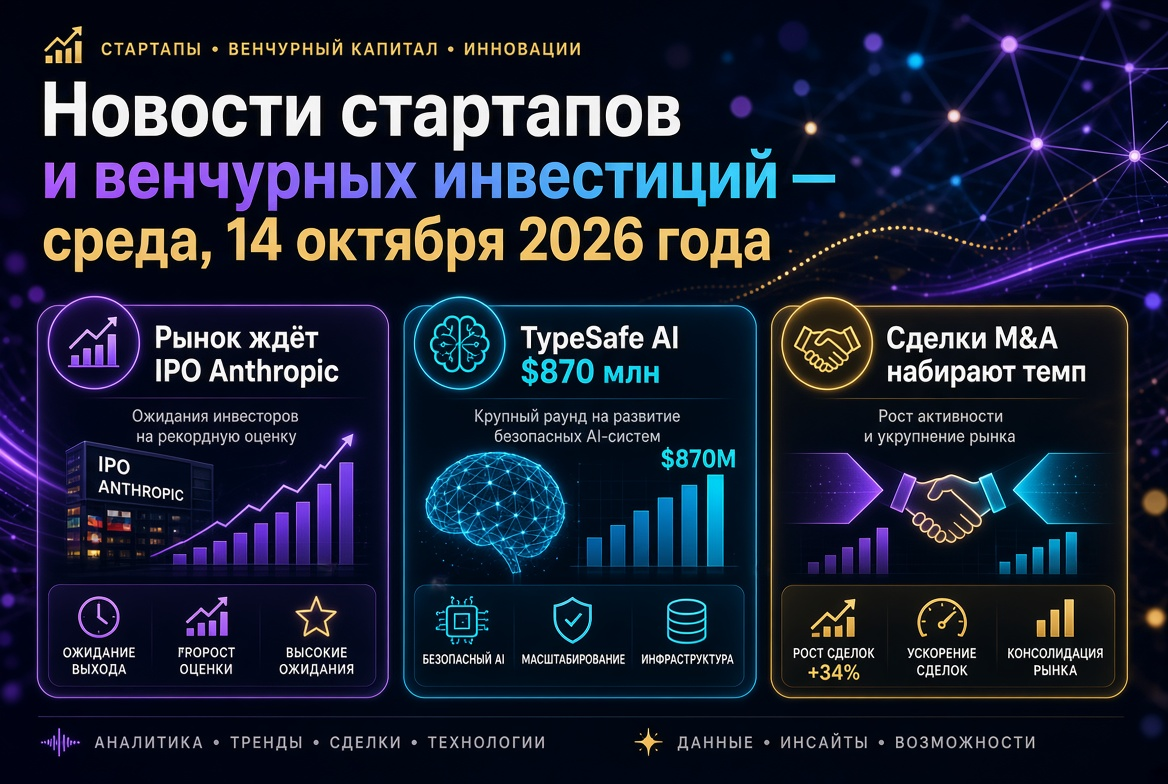
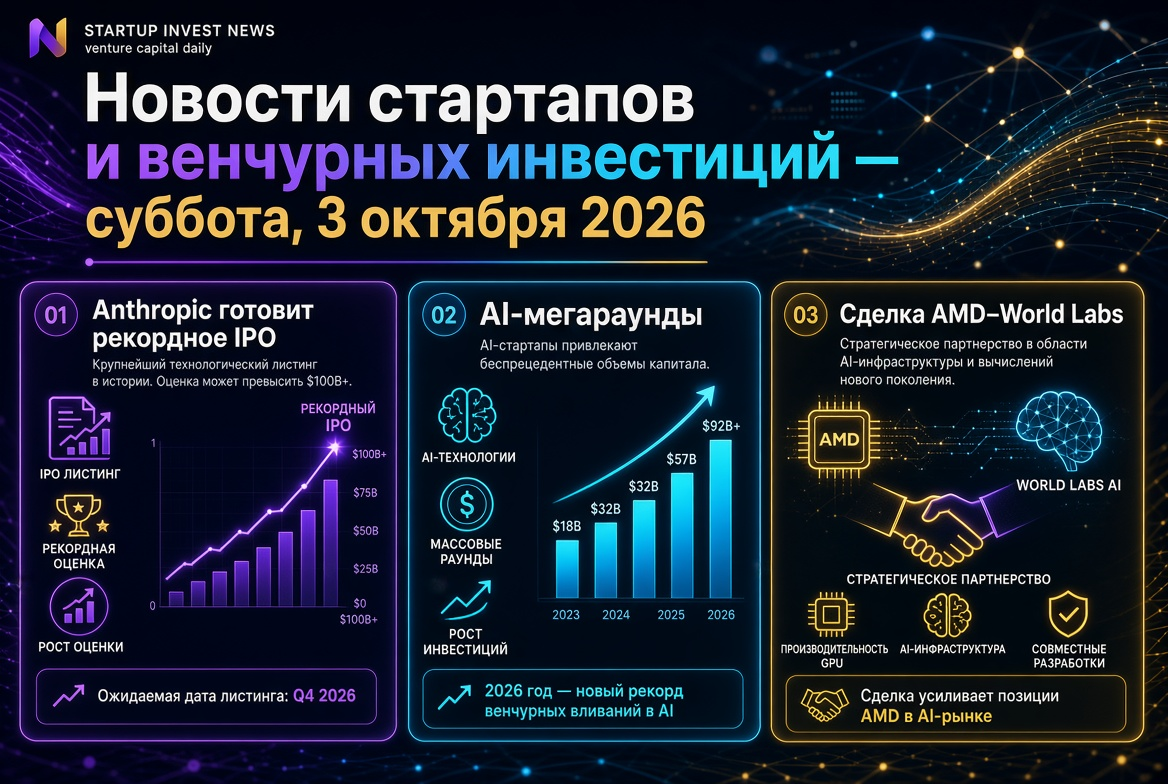
- Record Investments in AI and a New Wave of Unicorns. Extremely large financing rounds are elevating startup valuations to unprecedented heights, particularly in artificial intelligence, leading to a plethora of new unicorns.
- The Revival of the IPO Market. Successful market entries of tech companies and new listing plans affirm that the long-awaited "window" for exits has reopened for venture investors.
- Diversification Across Industries: Not Just AI. Venture investments are being directed not only towards AI but also into fintech, climate projects, biotechnology, space, and defense developments—the focus of investments is broadening.
- A Wave of Consolidation and M&A. Major mergers, acquisitions, and strategic deals are reshaping the industry landscape, creating new opportunities for exits and accelerated growth of companies.
- Renewed Interest in Crypto Startups. After a prolonged "crypto winter," blockchain projects are once again attracting significant funding and attention from venture funds and large corporations.
- Local Focus: Russia and CIS Countries. New funds and programs aimed at developing local startup ecosystems are launching in the region, gradually attracting investor interest despite sanctions and other constraints.
The Return of Mega Funds: Big Money Back in the Game
The largest investment funds and institutional players are confidently re-entering the venture arena, signaling a new uptick in risk appetite. After a downturn in venture fundraising during 2022–2024, leading VC firms are resuming capital raising and launching new mega funds, demonstrating faith in market potential. For instance, Japan's SoftBank has launched the Vision Fund III with approximately $40 billion (focusing on AI and robotics) after a hiatus, while American Sequoia Capital announced two new funds totaling around $950 million. Sovereign funds from Gulf countries are also ramping up, directing billions into innovative companies worldwide. The emergence of such mega-structures indicates that startups will soon have even more opportunities to secure funding.
Record Investments in AI: A New Wave of Unicorns
Artificial intelligence remains the primary driver of the venture uptick, displaying record financing volumes. In the United States alone, AI startups have attracted around two-thirds of all venture investments since the beginning of 2025, while global investments in AI may exceed $200 billion by year-end—an unprecedented level for the sector. The combined valuation of the ten largest AI companies is nearing $1 trillion. Investors attribute the fervor around AI to its promise of radically enhancing efficiency across various fields and opening up multi-trillion dollar markets—from software automation to personal assistants. Although experts warn of a potential "bubble," funds continue to invest actively, fearing they might miss the next technological revolution.
The massive influx of capital is accompanied by the emergence of numerous new unicorns and a concentration of investments among leaders. Currently, about 70% of venture investments in the U.S. are being funneled into a handful of companies. For example, French startup Mistral AI raised around $2 billion in September (a record for Europe), while American OpenAI secured a single tranche of $13 billion—a remarkable deal that skyrocketed its valuation. Such mega-rounds inflate valuations but simultaneously concentrate resources and talent in promising areas, potentially leading to future technological breakthroughs.
In recent weeks, several startups have announced massive investments, confirming the return of "big checks" to the market. Examples include:
- Synthesia (UK) — $200 million at a valuation of $4 billion for scaling an AI-based video generation service (with GV—Alphabet's venture arm—leading the round).
- Fireworks AI (US) — $250 million in a Series C round (valuation around $4 billion) to develop an AI platform in genomics and healthcare.
- Armis (US) — $435 million in a pre-IPO round at a valuation of $6.1 billion for enhancing an IoT device cybersecurity platform (the round was led by Goldman Sachs with participation from CapitalG).
The Revival of IPOs and Exit Prospects
Against the backdrop of rising valuations and an influx of capital, tech companies are once again eyeing public markets. After a two-year hiatus, an IPO renaissance is emerging as a long-awaited exit route for venture investors. For instance, fintech unicorn Circle has successfully gone public with a valuation of around $7 billion. This debut signals a renewed market appetite for new listings. Major private companies are also eager to seize the open "window." Insider reports suggest that ChatGPT developer OpenAI is considering an IPO in 2026 with a potential valuation of up to $1 trillion—an unprecedented level for the tech sector. Blockchain company ConsenSys (creator of the MetaMask wallet) is also preparing to go public in 2026. The improving market outlook and easing regulatory uncertainty (e.g., the adoption of stablecoin regulations and approval for Bitcoin exchange-traded funds) are instilling confidence in startups that the public market has once again become a viable option for attracting capital and securing exits for investors. Analysts predict that the number of high-profile tech IPOs will increase in the coming years, given sustained demand for new listings.
Diversification Across Industries: Not Just AI
Venture investments in 2025 are encompassing a much broader range of sectors and are not limited to AI startups. Healthcare and biotechnology attracted approximately $15–16 billion in venture capital in the third quarter—ranking third behind AI and IT infrastructure. Notably, there is a synergy between technology and medicine: startup Fireworks AI secured $250 million for the development of an AI platform for genomic medicine. Funds are also financing climate and "green" projects. For example, Australian company Uluu raised 16 million AUD to develop biodegradable plastic from algae. Attention is also being directed toward space technologies: Bulgarian startup EnduroSat secured $104 million for the production of small communication satellites. While the sizes of these deals are not comparable to the gigantic rounds in AI, they reflect a sustained interest in diverse innovations. The broadening of the industry focus is making the startup ecosystem more resilient and reducing the risk of overheating in specific segments.
Consolidation and M&A: Consolidation of Players
High startup valuations and intense competition are prompting a new wave of consolidation. Major merger and acquisition deals are coming to the forefront again, reshaping the industry landscape. For instance, in October, investment bank Goldman Sachs announced the acquisition of venture firm Industry Ventures for about $1 billion—one of the largest deals within the venture sector, reflecting the growing interest of bank capital in technology assets. Tech giants have also resumed activity, acquiring promising projects in AI, cybersecurity, and other areas in the context of stabilizing valuations. Consolidation is impacting the crypto industry as well: according to media reports, Mastercard is considering the acquisition of several blockchain startups for nearly $2 billion, aiming to strengthen its position in the digital assets space. Overall, the growth of M&A deals indicates a maturing market: major players are expanding through acquisitions, and startups are gaining more opportunities for profitable exits.
Renewed Interest in Crypto Startups
After a prolonged downturn due to the "crypto winter," the market for blockchain startups is reviving: venture investments in the crypto industry are once again on the rise. In October 2025, funding for cryptocurrency projects experienced a noticeable increase. The leading player was American project Polymarket, which secured a record $2 billion (valuation around $9 billion)—one of the largest deals of the year outside the AI sector. Overall, infrastructure solutions for digital assets are also beginning to receive support from venture funds. For instance, American startup Hercle, developing a stablecoin issuance platform, attracted $60 million in funding. Simultaneously, the crypto market is maturing—institutional investors are actively returning to the digital assets space. Easing regulatory uncertainty (the adoption of rules for stablecoins and approval of Bitcoin exchange-traded funds) and the participation of financial giants in funding the industry support the capital influx. The crypto startup sector, having undergone a cleansing from speculative projects, is gradually regaining trust and returning to the focus of venture investors.
Local Market: Russia and CIS
In Russia and neighboring countries, the startup ecosystem is also attempting to keep pace with global trends. Over the past year, several new venture funds have emerged—part of local capital has started to flow into the technology sector. State institutions and corporations have activated support programs, launching accelerators, funds, and grants for innovative projects. While the overall volume of venture investments in the region remains small and significant barriers persist (high interest rates, sanctions, etc.), the most resilient startups continue to develop, focusing on local niches. The gradual formation of a local venture market is laying the groundwork for the future when external conditions improve.
Conclusion: Cautious Optimism
There is cautious optimism in the venture industry. On one hand, the rapid growth of valuations (especially in the AI segment) resembles the dot-com bubble and raises warnings about overheating. On the other hand, such periods of excitement concentrate vast resources and talent in new fields, laying the foundation for future breakthroughs. By the end of 2025, it is evident that the startup market has revived: record financing volumes are reported, high-profile IPOs are on the horizon, and funds are forming large capital pools. Yet, investors have become more selective, directing funds towards the most promising projects. The main question for the future is whether the high expectations from the AI boom will be met and whether other sectors will catch up in terms of raised funds. For now, the appetite for innovation remains high, and market participants look ahead with moderate enthusiasm.