Startup and Venture Investment News — Thursday, December 4, 2025: Record AI Rounds, Return of Mega Funds, IPO Revival, M&A Surge, Interest in Crypto Startups, and New Unicorns
By early December 2025, the global venture capital market demonstrates a robust recovery from the downturn of recent years. According to analysts, during the third quarter of 2025, the total volume of venture investments reached approximately $97 billion—an increase of nearly 40% year-over-year, marking the best quarter since 2021. The upward trend continued into fall, with startups worldwide attracting about $40 billion in November alone (28% more than the previous year). The "venture winter" of 2022-2023 is now behind us, and the influx of private capital into tech startups is noticeably accelerating. Large financing rounds and the launch of new mega funds signal a return of risk appetite among investors, though they remain selective and cautious in their approach.
The venture boom is observable across all regions. The U.S. continues to lead (especially in the AI segment), investment volumes in the Middle East have doubled, Germany has surpassed the U.K. for the first time in Europe, and booming growth in India and Southeast Asia compensates for a relative decline in China. Tech hubs are emerging in Africa and Latin America, while the startup scenes in Russia and CIS countries are striving to keep pace despite external constraints. Overall, the global market is gaining strength, though investors are noticeably more selective—focusing on the most promising and resilient projects.
- Return of Mega Funds and Large Investors. Leading venture firms are raising unprecedented amounts of capital, replenishing the market with funds and enhancing risk appetite.
- Record AI Rounds and New Unicorns. Extraordinary investments in the AI sector send startup valuations soaring and lead to the emergence of a new generation of unicorns.
- Revival of the IPO Market. Successful public offerings of tech companies and new listing plans confirm that the long-awaited "window" for exits has reopened.
- Diversification of Sector Focus. Venture capital is flowing not only into AI but also into fintech, climate projects, biotech, defense technologies, and other sectors, broadening the investment horizon.
- Wave of Consolidation and M&A. Major mergers and acquisitions are reshaping the industry landscape, creating new opportunities for funds seeking profitable exits and accelerated company growth.
- Resurgence of Interest in Crypto Startups. After an extended "crypto winter," blockchain projects are regaining substantial funding and investor attention amid improved regulation and rising crypto asset prices.
- Local Focus: Russia and CIS. New funds and startup ecosystem support programs are emerging in the region, attracting investor interest despite ongoing restrictions.
Return of Mega Funds: Big Money Back on the Market
The largest investment players are triumphantly returning to the venture arena, signaling a new wave of risk appetite. After several years of stagnation, leading funds are resuming the gathering of record capital and launching mega funds, showcasing their faith in the market's potential. For instance, Japan's SoftBank is forming a new Vision Fund III with a target of around $40 billion, focusing on cutting-edge technologies (primarily AI and robotics). The American firm Andreessen Horowitz is raising a venture fund of approximately $20 billion, emphasizing investments in later-stage tech startups. Sovereign wealth funds from the Persian Gulf countries are also ramping up activity, pouring billions into innovative projects and developing state megaprograms to support the tech sector, thereby creating their own tech hubs in the Middle East. Concurrently, numerous new venture funds are emerging globally, attracting significant institutional capital for investments in high-tech sectors. The largest funds from Silicon Valley and Wall Street are also increasing their market presence.
Record AI Rounds and a New Wave of Unicorns
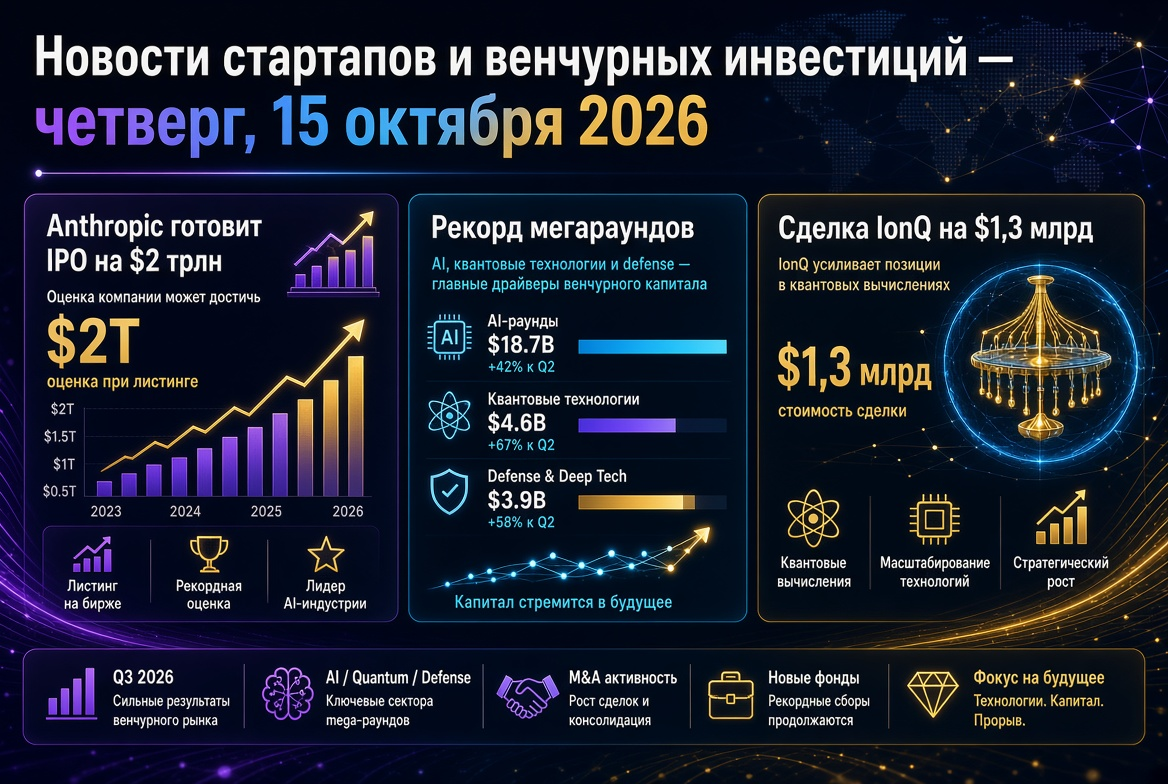
The AI segment has become the primary driver of current venture growth, demonstrating record funding levels. The lion's share of investments goes to a select few industry leaders. For example, the French startup Mistral AI raised approximately $2 billion, OpenAI secured around $13 billion, and Jeff Bezos's new venture, Project Prometheus, received $6.2 billion in initial investments; all these mega rounds have significantly inflated company valuations. Such deals inflate startup values but simultaneously concentrate resources on the most promising market players. Following the sector flagships, dozens of new unicorns—companies valued over $1 billion—are emerging, many of which are also linked to AI technologies. Investors are ready to allocate huge funds for the AI race, seeking to capture their share in this technological revolution.
Revival of the IPO Market and Exit Prospects
Against the backdrop of rising valuations and capital influx, tech companies are once again actively preparing for public market entries. After nearly two years of dormancy, a surge in IPOs has emerged as a key exit mechanism for venture investors. Several successful listings have confirmed the reopening of the "window of opportunity" for public offerings. For instance, American fintech unicorn Circle recently went public with a valuation of about $7 billion—this debut has restored confidence to the market, indicating that investors are once again willing to buy shares from new tech issuers. Following this, several large private companies are eager to take advantage of the favorable conditions. Even OpenAI is considering its own IPO in 2026, with a potential valuation of up to $1 trillion, which would be unprecedented for the sector. Improved market conditions and greater clarity in regulation (e.g., the adoption of stablecoin laws in various countries and the anticipated launch of Bitcoin ETFs) are instilling confidence in startups; the public market is once again a viable option for capital raising and exits for investors. The return of successful IPOs is vital for the entire venture ecosystem, as profitable exits allow funds to return capital to investors and direct resources to new projects, completing the investment cycle.
Diversification of Sectors: Broader Investment Horizon
In 2025, venture investments encompass a significantly broader range of industries and are no longer limited to AI alone. Following the downturn of previous years, fintech is experiencing a revival: large rounds are occurring not only in the U.S. but also in Europe and emerging markets, fueling the growth of new financial-technology services. Simultaneously, driven by sustainability, investors are increasingly funding climate and "green" projects—from renewable energy to waste recycling technologies. Aerospace and defense technologies are also gaining momentum: funds are increasingly investing in aerospace startups, drone systems, and cybersecurity projects. This expansion of investment focus significantly broadens the venture capital landscape: alongside AI innovations, venture capital is being directed en masse into fintech, ecological initiatives, biotechnology, defense, and other sectors. This diversity makes the startup ecosystem more resilient and mitigates the risk of overheating in a single market segment.
Wave of Consolidation and M&A Transactions
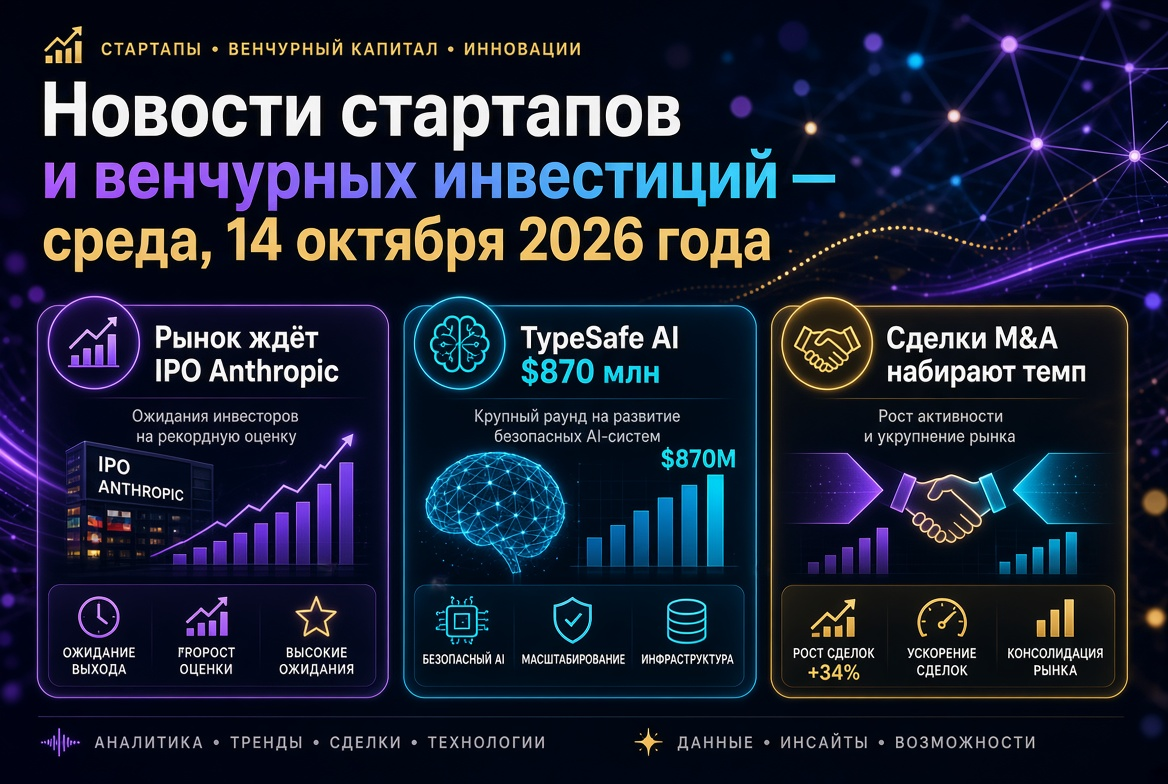
High startup valuations and fierce competition for markets have resulted in a new wave of mergers and acquisitions. Major tech corporations are once again intensifying strategic M&A efforts, seeking to acquire promising teams and innovations. For instance, Google has agreed to acquire the Israeli cybersecurity startup Wiz for approximately $32 billion—a record amount for Israel's tech sector. Such activity indicates that the ecosystem has matured: established startups are either merging with each other or becoming targets for acquisitions by larger players. For venture funds, this translates to much-anticipated profitable exits and a return of invested capital, reinforcing investor confidence and stimulating a new cycle of investments.
Resurgence of Interest in Crypto Startups
After an extended "crypto winter," the blockchain startup market is noticeably reviving. In the fall of 2025, funding for crypto projects reached its highest levels in several years. Regulators in many countries have clarified the rules of the game (basic laws on stablecoins have been adopted, and the first Bitcoin ETFs are anticipated), while financial giants are once again turning their attention to the crypto market—all of this has bolstered the influx of new capital. Additionally, Bitcoin's price has surpassed the psychologically significant threshold of $100,000 for the first time, fueling investor optimism. Blockchain startups that survived the culling of speculative projects are gradually restoring trust and once again attracting venture and corporate funding. Interest in crypto startups is returning, though investors are now much more discerning in evaluating business models and the resilience of projects.
Local Market: Russia and CIS Countries
In Russia and neighboring countries, numerous new venture funds have been established over the past year, while state structures and corporations have launched programs to support tech startups. Despite the relatively modest total volume of investments and ongoing barriers (high rates, sanctions, etc.), the most promising projects continue to attract funding. The gradual development of local venture infrastructure is already creating a foundation for the future—by the time external conditions improve and global investors can return to the region. The local startup ecosystem is learning to operate autonomously, relying on targeted support from the government and interest from private players in friendly countries.
Conclusion: Cautious Optimism
As of late 2025, the venture capital industry is dominated by moderately optimistic sentiments. The rapid rise in startup valuations (especially in the AI segment) resembles the dot-com boom era and raises certain concerns about market overheating. However, this current excitement simultaneously funnels significant resources and talent into new technologies, laying the groundwork for future breakthroughs. The startup market has evidently revived: record funding volumes are being recorded, new IPOs are on the horizon, and venture funds have amassed unprecedented reserves of capital. At the same time, investors have become notably more discerning, favoring the most promising projects with sustainable business models. The key question ahead is whether the high expectations for the AI boom will be justified and if other sectors can match its attractiveness. For now, the appetite for innovation remains high, and the market looks to the future with cautious optimism.