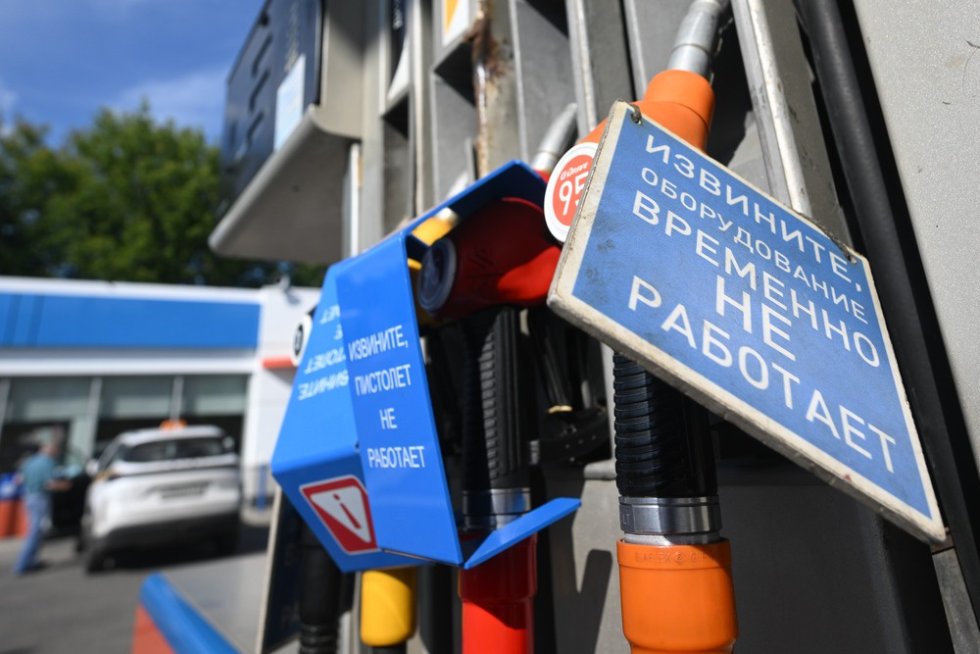
The government's first-ever ban on aviation kerosene exports will shield the market from unplanned fuel price spikes. The embargo will remain in effect until the end of November. According to the Cabinet, the decision is aimed at ensuring stability on the domestic market. Experts believe this will free up an additional roughly 2 million tonnes of fuel, but will not lead to lower airfare prices. At the same time, the measure is expected to cool wholesale exchange prices, allowing airlines to purchase fuel without the risk of a sharp seasonal spike, thereby preventing ticket prices from rising at an accelerated pace.
Temporary Ban on Aviation Kerosene Exports
The government has introduced a temporary ban on aviation kerosene exports for the first time, effective until November 30, 2026. The decision is intended to ensure stable conditions on the domestic fuel market, according to the Cabinet press service.
"The government continues its work to maintain reliable and uninterrupted fuel supply on the domestic market. A new decree introduces a temporary ban on the export of jet fuel from Russia, including fuel acquired through exchange trading. The restriction will be in effect through November 30, 2026, inclusive," the statement reads.
Exceptions will apply to batches of aviation kerosene placed under customs procedures before the decree came into force, deliveries under intergovernmental agreements, and fuel in technical tanks used by aircraft in transit, the Cabinet noted.
Russia also currently has a ban on gasoline exports for all market participants in effect until July 31, 2026. Until that same date, restrictions on the export of diesel fuel, marine fuel, and other types of gas oils remain in place for non-producers.
There is no official data on the volume of aviation kerosene production and consumption in Russia. Izvestia has sent a request to the Ministry of Energy. According to the U.S. Energy Information Administration (EIA), the Russian aviation kerosene market in 2024 amounted to 10.01 million tonnes per year, with production at 11.6 million tonnes. The surplus fuel was exported abroad.
According to Transport Minister Andrey Nikitin, there is currently no shortage of aviation kerosene in Russia.
"At the moment, there is no deficit whatsoever. In any situation, we proceed from the interests of our airlines," he said.
According to Tamara Safonova, General Director of the Independent Analytical Agency for the Oil and Gas Sector, traditional consumers of Russian-produced aviation kerosene are Kyrgyzstan, Tajikistan, Kazakhstan, and Armenia.
"Export deliveries outside the EAEU are gradually narrowing against the backdrop of growing domestic demand. For instance, in April 2026, no aviation kerosene was shipped by sea," she noted.
Earlier, media reported that Deputy Prime Minister Alexander Novak had instructed that several additional issues be addressed to stabilize the domestic fuel market. These include holding consultations with Belarus to increase gasoline supplies to Russia, as well as discussing the possibility of increasing import damping payments, including for Belarusian fuel, with a corresponding amendment to the Tax Code of Russia retroactively from June 1, 2026.
However, an industry source for Izvestia could not confirm this information. According to this source, Minsk is already supplying fuel to the Russian market, which is produced from Russian oil.
"Moreover, Russia pays the damping duty to Belarusian producers," the source noted.
Another Izvestia industry source believes that if the discussion concerns increasing damping payments, the Ministry of Finance is unlikely to agree.
"Last month, 207 billion rubles were paid out in fuel damping duties, compared to 15 billion rubles that oil companies paid in March," he noted.
According to the National Exchange Pricing Agency, 17.34 thousand tonnes of gasoline from Belarusian refineries were sold on the St. Petersburg International Mercantile Exchange in Russia between May 1 and May 22. This is 58 times more than in the same period in 2025.
Two Belarusian refineries—Mozyr and Novopolotsk—produce 3–3.5 million tonnes of gasoline per year, while domestic consumption is up to 1.2 million tonnes per year.
According to Ekaterina Kosareva, Managing Partner of VMT Consult, Russia produces over 40 million tonnes per year, with consumption at approximately 38–39 million tonnes per year.
Why the Cabinet Imposed the Aviation Kerosene Export Ban
Last week, as reported by Izvestia citing industry sources, the government was discussing a ban on the export of both diesel fuel and aviation kerosene. According to the publication's sources, this issue was raised at a meeting chaired by Deputy Prime Minister Alexander Novak.
Against the backdrop of the escalating Middle East conflict, demand and competition for Russian energy resources have surged sharply, experts noted. They considered such a measure as an export ban on fuel to be highly relevant given the overall situation on the global oil market, because as a result of the potential blocking of the Strait of Hormuz and rising oil prices, the petroleum products market becomes extremely attractive and profitable, creating a temptation for Russian oil companies to increase their fuel supplies to foreign markets.
"To prevent this temptation from being realized, the government is imposing the embargo, or at least considering such a possibility," noted Valery Andrianov, Associate Professor at the Financial University under the Government of Russia.
At the same time, experts leaned towards the view that if an export ban were to be imposed, it would likely be on aviation kerosene, as diesel fuel production in Russia is more surplus.
According to Ekaterina Kosareva, Managing Partner of VMT Consult, Russia produces approximately 80 million tonnes of diesel per year, consuming only about half of that volume. As for aviation kerosene, production is around 11–12 million tonnes, with consumption of about 10 million tonnes.
"Thus, the market will receive an additional volume of roughly 2 million tonnes of aviation fuel," emphasized Ekaterina Kosareva.
According to open-source data, 2 million tonnes of aviation kerosene is enough for 18,000 to 26,000 full refuelings of long-haul aircraft, or 66,000 to 133,000 refuelings of narrow-body (medium-haul) passenger aircraft. Russia's civil aviation performs between 2,100 and 2,300 flights daily, meaning this volume would be sufficient for approximately two to three months of flight operations for the entire country.
According to Oleg Panteleev, Executive Director of the industry agency AviaPort, viewing the 2 million tonnes as a volume that cannot be exported due to the ban does not automatically mean a corresponding increase in domestic consumption.
"According to statements from the Ministry of Transport and industry representatives, no fuel shortage is expected. However, there are also no grounds to forecast a significant increase in domestic traffic volume by the end of the year. Consequently, there are no prerequisites to believe that significantly more fuel will be needed," he noted.
Nevertheless, having reserves is a factor of strategic stability and is necessary, the expert believes. It also remains unclear whether the expert estimate of 2 million tonnes accounts for the fact that fuel deliveries to foreign markets may continue under intergovernmental agreements.
Dmitry Gusev, Deputy Chairman of the Supervisory Board of the Association "Reliable Partner," believes that systematic work is needed, including mechanisms like the damping duty for airlines.
"First and foremost, reserves should be built up, and secondly, price risks should be hedged to prevent potential kerosene shortages during certain periods. In this context, closing off aviation fuel exports serves as a preventive measure aimed at saturating the domestic market," the expert noted.
However, he believes that overall, greater autonomy is expected from economic actors—they must understand that to grow aviation fuel consumption, they need to make purchases and hedge risks proactively, without shifting these tasks onto the Ministry of Energy and the government.
According to Valery Andrianov, in recent years, Russia has seen a surplus of aviation kerosene, meaning production (about 11.6 million tonnes per year) exceeded domestic consumption (approximately 8.5–9 million tonnes).
"At the same time, consumption is characterized by high unevenness—it increases from June to August, during the summer holiday period. Accordingly, 2–2.5 million tonnes per year were exported. The main destinations were Central Asian countries—Kazakhstan, Kyrgyzstan, Tajikistan—as well as Turkey, the Middle East, and Asia," the analyst noted.
Izvestia has sent inquiries to all major Russian oil companies and airlines.
Impact of the Cabinet's Decision on the Market
According to the St. Petersburg International Mercantile Exchange, the price of aviation fuel on over-the-counter trades rose by 7.14% from the beginning of May, from 78,991 rubles per tonne on May 1 to 84,634 rubles on May 31. As of May 25, one tonne of aviation kerosene cost 96,776 rubles.
According to Sergey Tereshkin, General Director of Open Oil Market, the excise tax on aviation kerosene has remained unchanged for almost 10 years: a rate of 2,800 rubles per tonne has been in effect since 2017. For comparison, the excise tax on Class 5 gasoline increased from 10,130 rubles per tonne in 2017 to 17,959 rubles per tonne in 2026, and the excise tax on diesel fuel rose from 6,800 rubles to 12,738 rubles over the same period.
"The existence of a fixed excise tax should have a stabilizing effect on the cost of aviation kerosene. However, in practice, exchange prices have risen from 80,000 to nearly 100,000 rubles per tonne over the past two months. The export ban may slow down the price increase, but prices are unlikely to return to previous levels anytime soon," the expert emphasized.
According to Valery Andrianov, the export ban will insure against the risks of an aviation kerosene shortage in the country. Halting exports will allow reserves to be built up ahead of the peak summer aviation season, the Izvestia source believes.
An industry source told the publication that currently, the share of fuel in the price of an airline ticket is not a fixed value; "it fluctuates significantly depending on the price of kerosene."
According to him, it represents "approximately 25–30% of the ticket price, but can be lower when prices fall and higher during sharp increases."
"As for ticket prices, the embargo on aviation kerosene exports will not lead to their reduction. Other factors are putting pressure on their cost: the rising expense of servicing and repairing aircraft under sanctions, a shortage of spare parts, and general inflation. However, at the same time, the embargo will prevent the sharp price increases that could have occurred in the event of an acute kerosene shortage on the domestic market," said Valery Andrianov.
In his opinion, the export ban is likely to cool wholesale prices on the St. Petersburg Exchange, allowing airlines to purchase fuel without the risk of a sharp seasonal price spike. Consequently, ticket prices will not rise at an accelerated pace. While domestic consumption will not grow in physical volumes, the market will be reliably insured against shortages.
Source: Izvestia