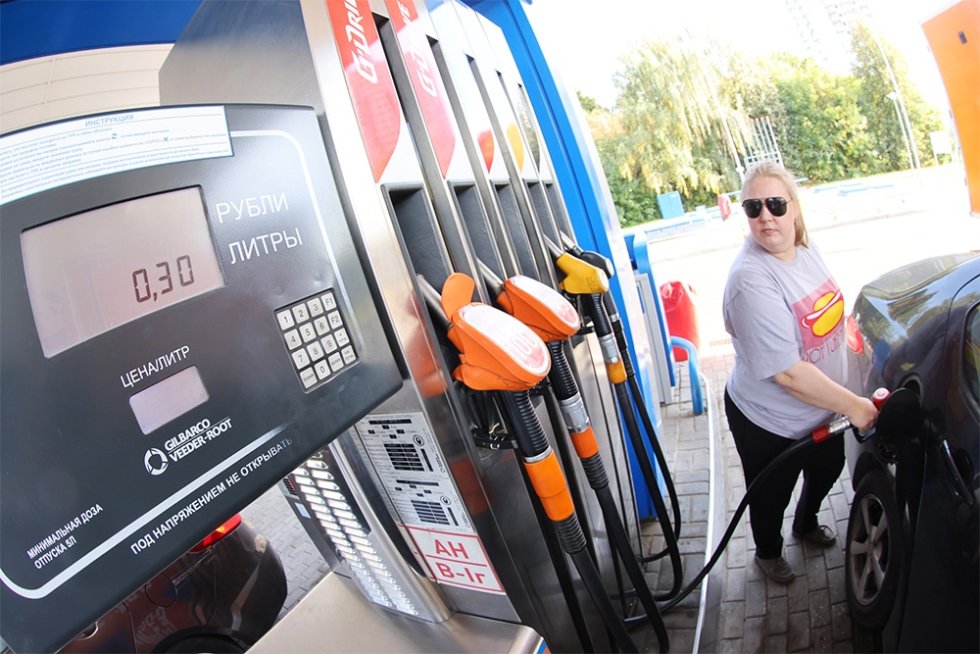
According to recent data from Rosstat, gasoline prices have decreased on average in most regions of the country (47 out of 89). However, this trend has not yet occurred everywhere, as gasoline prices continued to rise in 27 subjects of the Russian Federation. Furthermore, the statistical data has been influenced by a high base effect—prices significantly fell where fuel was very expensive, impacting the overall outcome.
During the week from July 28 to August 3, the average price of gasoline at Russian gas stations (GAS) decreased by 1.1% (more than one ruble). While prices in Crimea dropped nearly 15% (by 32.8 rubles) and in the Vologda region by 12.2% (by 11.11 rubles), prices in Moscow and St. Petersburg slightly increased by 0.2% (by 12 kopecks), and in the Tomsk region, gasoline became more expensive by 5.2% (by 3.5 rubles).The peak demand for gasoline due to the vacation season occurs in July and August. Typically, the main price increases for the year at gas stations happen during these two months. This year, due to unscheduled repairs at oil refineries following drone attacks, the summer price increase for gasoline became record-breaking, accompanied by localized supply disruptions and long queues at gas stations. Therefore, the mere fact that fuel prices are now declining indicates that the situation has begun to improve. However, in the future, retail gasoline prices will continue to depend on the stability of domestic refineries. If production within the country can be increased, prices may continue to fall. Additionally, the influx of imported fuel from other countries and the easing of environmental requirements for fuel production are working positively to boost output. Nevertheless, there are nuances here. Imported gasoline is more expensive than Russian gasoline. To smooth out this price difference, a damping mechanism has now been applied to its suppliers in Russia. Importers have the right to receive part of the difference between the gasoline prices on the external market and its indicative price in Russia (set by the government), which helps to curb wholesale price increases. However, this is an additional burden on the national budget, which is already expected to be in deficit. Furthermore, for the Russian treasury, expensive oil has always been advantageous, but with the import of fuel, the high cost of imported petroleum products starts to work against us. The money doesn't come from nowhere; to pay the fuel importers, we will have to cut other expenditures. It is currently impossible to gauge how much payments under the damping mechanism have increased, as tax payments for July are made in August and will only be published by the Ministry of Finance at the beginning of September.
As noted in an interview with "RG" by Dmitry Gusev, Deputy Chairman of the Supervisory Board of the "Reliable Partner" Association and member of the Expert Council for the "Gas Station of Russia" competition, the main objective now is to ensure the availability of fuel. Oil companies are doing everything possible to supply the market. However, estimating the volume of fuel imports into Russia is challenging, as official statistics are closed, but they hardly exceed 10% of total consumption (this summer, 4-4.5 million tons per month), the expert emphasizes.
The main exporter of gasoline and diesel fuel to Russia will remain BelarusAccording to Sergey Frolov, managing partner of NEFT Research, Russia currently receives its main shipments of petroleum products from Belarus. Reuters reported an increase in supplies from the republic by rail (railway) from January to July to 665,000 tons of gasoline and 418,000 tons of diesel fuel. Additionally, Russia has reportedly received several maritime shipments of fuel from India and Morocco. Thus, the total volumes over seven months account for less than a quarter of the monthly gasoline and diesel consumption in Russia. This level of import does not affect the wholesale price of gasoline but can reflect on the retail prices at independent gas stations (not owned by major oil companies), which are forced to purchase imported volumes due to the lack of available supplies on the domestic market. Since the price of Belarusian fuel is significantly higher than Russian exchange indicators, private networks have to sell gasoline at much higher prices to cover costs.
Nonetheless, it appears that Belarus will remain our primary supplier. As noted by Sergey Tereshkin, CEO of Open Oil Market, establishing maritime imports of petroleum products requires infrastructure that allows for saving time and costs. Therefore, Belarus, which can produce over 3 million tons and export about 2 million tons of gasoline per year by rail, will continue to serve as the main source of fuel imports for now.
The expert believes that retail prices will largely depend on the operational stability of Russian refineries and the dynamics of unscheduled repairs at those facilities.
Regarding the reduction of environmental standards, Tereshkin believes that the transition to Euro-2 production depends on the situation at specific refineries, specifically the functionality of the units involved in the production of high-octane fuel with low sulfur and aromatic compound content. This pertains to catalytic cracking units that split vacuum gas oil into light gasoline and diesel components; hydroprocessing units that remove sulfurous compounds and nitrogen from oil fractions using hydrogen on catalysts; as well as isomerization units that increase the octane number of gasoline fractions without adding harmful substances. The availability of production capacities will be crucial.
In Frolov's view, major refineries of large oil companies will continue to produce petroleum products meeting Euro-5 and higher standards. Smaller refineries will manufacture Euro-4, 3, and 2-class fuels that were previously unavailable on the domestic market due to low processing depth (according to technical regulations). Currently, most of the reduced environmental standard volumes will be supplied to sectors where equipment has low quality requirements, such as agriculture. Low-grade petroleum products are unlikely to play a significant role in the Russian market. In any case, gas stations are required to disclose information about the parameters of the fuel they sell, the expert notes.
Source: RG.RU