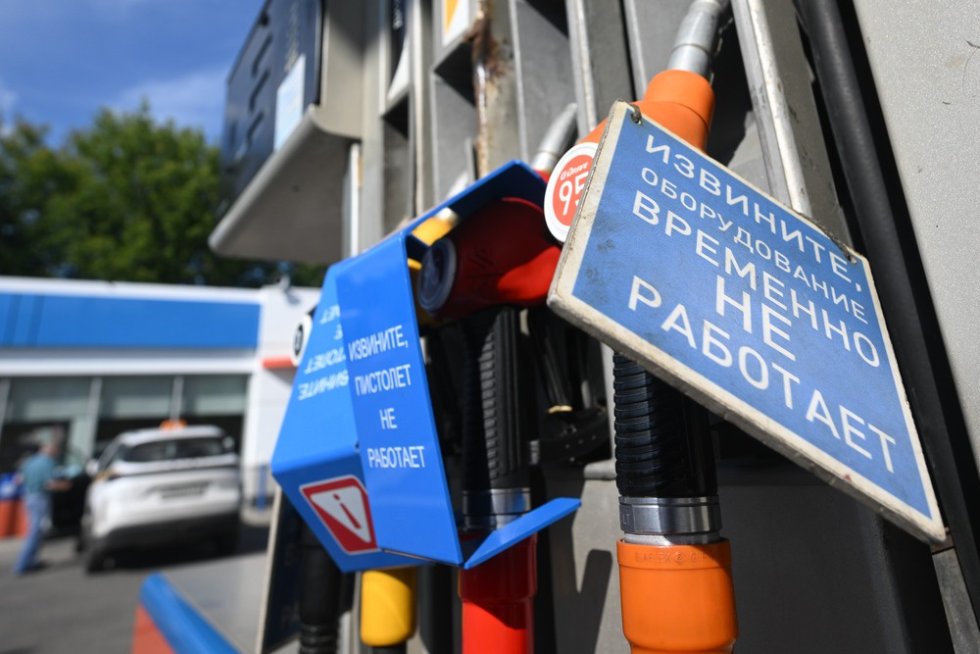
The domestic gasoline production capacity only exceeds the internal demand by 10-15%. In contrast, we produce diesel fuel at a volume that is 40-50% higher than the domestic demand, making it a key export commodity in the petroleum product lineup.
Currently, a complete ban on gasoline exports is in effect until July 31. Only producers, that is, oil refineries (OR), are allowed to export DF, while traders are prohibited from doing so. On June 23, Deputy Prime Minister Alexander Novak remarked that authorities are considering the possibility of implementing a complete embargo on DF exports, calling the situation in Russia’s fuel market "challenging but manageable."
The arising situation is connected to unplanned maintenance at ORs due to intensive drone attacks in May and June. Fuel production volumes have declined, forcing buyers to switch suppliers and facing transportation difficulties.
The problem lies in the fact that data on gasoline and DF production in Russia are kept confidential. We do not know the exact extent of the production decline; hence, we rely on external sources of information. According to a rather pessimistic estimate from Reuters, production has dropped by 25%. Even if we accept this figure, such a reduction is critical for the domestic market for gasoline but reportedly not as critical for DF.
Yuri Stankevich, Deputy Chairman of the State Duma Committee on Energy, noted in an interview with "RG" that a complete ban on DF exports is a stringent and somewhat radical measure; therefore, its effect will depend on the duration and regulatory parameters. In the short term, it could stabilize wholesale prices and partially ease retail pressure. However, in Russia, fuel station prices are largely regulated by a damping mechanism (subsidies to oil producers from the budget for supplying fuel to the domestic market at prices lower than export rates) and tax burdens. Therefore, a sharp price drop should not be expected—rather, a slowdown in growth or moderate correction.
Stankevich is confident that there is currently no systemic shortage of diesel in Russia. Periodic local disruptions do occur due to logistics issues, refinery maintenance, or seasonal demand spikes (harvesting, northern deliveries). The export ban does not resolve the logistics problem by itself. While it will increase domestic resources, if the bottlenecks are railway transportation or regional infrastructure, the acceleration of delivery will be limited.
According to Sergey Frolov, managing partner of NEFT Research, the most severe shortage observed in the fuel market in modern history exists in Russia. A deficit is experienced in all major fuel types, excluding liquefied petroleum gases (LPG) and fuel oil. The expert believes that no prohibitions will solve this issue. In the case of DF, which has traditionally had a systemic production surplus, the situation will only lessen the issue's urgency.
A similar assessment of the ban is offered by Dmitry Gusev, Deputy Chairman of the Supervisory Board of the "Reliable Partner" Association and a member of the Expert Council of the "Gas Stations of Russia" competition. He is confident that this measure will replenish DF reserves and assist agricultural producers and industrial consumers.
The ban on DF exports does not directly affect gasoline supplies and prices. However, it serves as a serious signal for ORs that they must curb price increases for all types of fuel by any means necessary. Sergey Tereshkin explains that the export ban on DF will be much more sensitive for Russian ORs than the ban on gasoline exports. Diesel remains one of the two key export petroleum products—alongside fuel oil—but the margin for production and export of fuel oil is lower than for diesel.
Hence, ORs cannot overlook the directive from above. The caveat is that the export ban on DF poses risks for the national oil refining sector. Stankevich believes that should oil companies lose their export margin on diesel (traditionally a more profitable product), their overall refining profitability could decline. This intensifies the dependency on damping payments for gasoline. In an adverse market scenario, such an approach could exert additional pressure on the budget or necessitate adjustments to regulatory mechanisms. Moreover, there is the risk of market oversaturation if the ban lasts longer (more than 1-2 months) and coincides with a period of weak internal demand.
Tereshkin holds a similar view. The export ban on DF will yield results only if it is short-lived—not exceeding one quarter. Otherwise, the industry will witness not only a reduction in oil refining but also a decrease in extraction.
As Stankevich points out, a decrease in OR load will lead to a proportional reduction in the production of all petroleum products, including gasoline. Therefore, under a prolonged ban on DF exports, there could be an indirect impact on gasoline supply—not due to falling demand, but due to technological reductions in refining.
Frolov, however, offers a differing assessment of the situation. He asserts that there is no talk of oversaturation at present; it is essential to prevent a collapse in the domestic market. He believes that the resilience of the oil industry is nearly depleted, and eventually, it will be easier not to repair ORs than to impose one and face another blow shortly thereafter. Regarding gasoline and aviation fuel, urgent measures were required yesterday—measures that the Ministry of Energy proposed back in March. This package of measures would have prevented the limitation on fuel for individuals (in some places, it is currently not sold to them), and the allocation of volumes based on their significance for the functioning of the entire transport system.
Only a prompt saturation of the market with imported fuel during the maintenance of the non-operational ORs can resolve the issue of physical access to resources and price reduction, Frolov believes. Until then, even administrative measures may not curb price hikes in wholesale or retail.
It is important to note that, alongside the ban on DF exports, the government is considering other measures to support the domestic fuel market. According to media reports, these include amendments to the Tax Code that would allow some (authorized) companies supplying imported fuel to receive damping payments. This would offset the cost difference between imported and domestic fuel. There is also contemplation of subsidy payments for medium and small ORs that produce gasoline by blending straight-run gasoline (the primary product of oil refining) with other components.
Gusev expressed a distinctive opinion, suggesting a strategic approach to the issue—reducing gasoline consumption in the country while promoting other types of fuel. This could be accomplished by abolishing the Utilization Fee, VAT, and tariffs for importing diesel passenger cars into Russia. This would increase diesel consumption while reducing gasoline demand.
Source: RG.RU