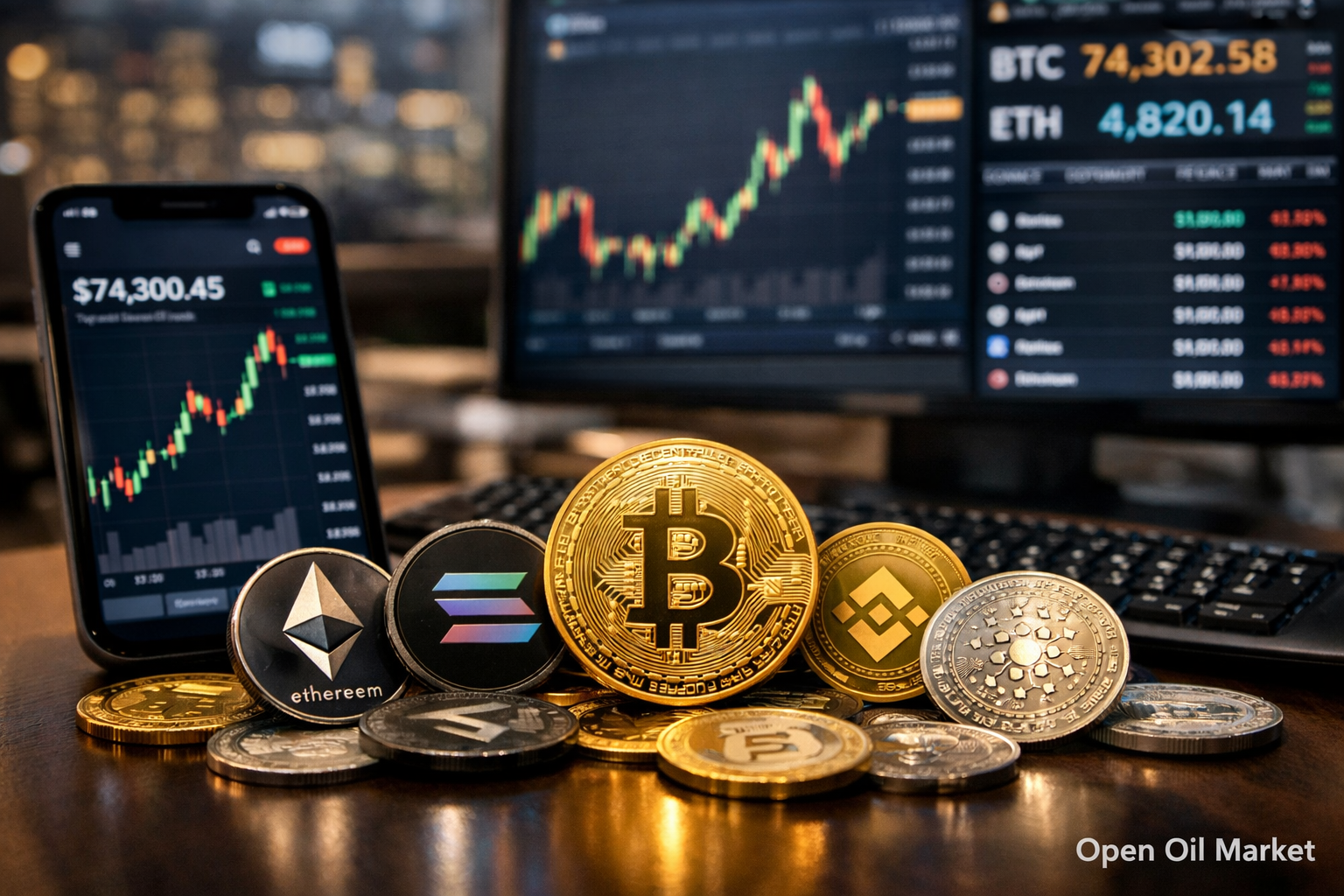
Cryptocurrency News for Wednesday, January 21, 2026: Bitcoin at $100,000 Mark, Altcoin Growth, Institutional Investments, Regulation, and Review of the Top 10 Most Popular Cryptocurrencies Worldwide.
As of the morning of January 21, 2026, the global cryptocurrency market is strengthening after a volatile end to the previous year. Bitcoin is once again trading around the psychologically significant mark of $100,000, leading to a total capitalization of digital assets exceeding $3.5 trillion (substantial growth compared to a year ago). Ethereum remains stable above $4,000, retaining much of the gain accumulated over the past year. Following the leading coins, the largest altcoins have also seen price increases; investor optimism is bolstered by expectations for a softer monetary policy from the U.S. Federal Reserve and further positive shifts in industry regulation. As overall market volatility decreases, some traders are shifting their focus to altcoins, many of which are holding their positions and ready for further growth under favorable conditions.
Bitcoin: Approaching the Psychological Barrier at $100,000
After a rapid rally and subsequent correction last fall, Bitcoin (BTC) is consolidating near this key level once again. Back in early October, BTC reached an all-time high of approximately $126,000, but subsequently dropped to around $90,000 amidst external factors (including heightened U.S.-China trade disputes). By the end of 2025, selling stabilized, and now the largest cryptocurrency is trading around $100,000, striving to confidently maintain its position above this psychological barrier. The current price is about 10% higher than December's lows, indicating a return of buying activity. Bitcoin continues to hold a market share of approximately 55-60%, reinforcing its status as "digital gold" and a primary benchmark for the industry. Experts note that BTC's correlation with stock indices remains elevated, indicating inflows of traditional capital into the cryptocurrency market. Many analysts anticipate that further easing of monetary policy and the expansion of crypto-ETFs in the U.S. could provide Bitcoin with renewed momentum to reach new highs in 2026.
Ethereum: Steady Growth Amid ETF Launch
Ethereum (ETH), the second-largest cryptocurrency by market capitalization, demonstrates sustained growth following the late 2025 correction. In early October, Ethereum rose to approximately $4,800 (near record levels), then declined, but by January 2026 confidently surpassed $4,000. ETH is currently trading in the range of $4,300–$4,400, maintaining about 14% of the total market capitalization. Ethereum's fundamental positions remain strong: the network processes millions of transactions daily, serving as the foundation for thousands of decentralized finance (DeFi) applications and NFT platforms. Institutional investors continue to increase their presence in Ethereum; at the end of 2025, the first spot ETF on Ethereum launched in the U.S., attracting significant funds into this asset. According to industry analysts, the influx of capital into ETH-based funds in the early weeks of January even surpassed that of Bitcoin funds. Additional investor interest is also fueled by staking: with Ethereum's transition to Proof of Stake (PoS), coin holders earn approximately 4-5% annual returns, enhancing the asset's appeal. Strong demand from major players and the impact of the ETF launch allow Ethereum to confidently maintain its achieved levels and approach historical highs.
Altcoins: Continued Rally in the Market
The broad altcoin market supports the overall upward trend we are witnessing at the beginning of the year. Prices for most major alternative cryptocurrencies in the top 10 have increased by 3-7% over the last 24 hours. The total capitalization of altcoins (excluding BTC) has once again exceeded $1.5 trillion, reflecting a fresh influx of capital into the sector. Many leading altcoins are trading close to their multi-year highs. For instance, Ripple (XRP) is holding steady around $2.50–$3.00, close to its peak values from 2017. Investors view the legal clarity regarding XRP's status in the U.S., following Ripple's victory over the SEC last year, as a positive factor that has restored confidence in the token, reestablishing it among the market leaders by capitalization. Binance Coin (BNB) is approaching its all-time high: the token of the largest crypto exchange, Binance, is currently worth around $900, showing growth amid the overall market revival. Despite ongoing regulatory scrutiny of Binance, the exchange's ecosystem remains one of the most active in the industry, with BNB still widely used for fee payments and DeFi applications.
Platform tokens tied to developing blockchain ecosystems are also showing good dynamics. Solana (SOL) has risen in price to approximately $200 over the past few weeks, a level not seen in several years. The Solana project is attracting attention due to its high-tech capabilities (high transaction speed and low fees) and news regarding the potential approval of the first spot ETF on SOL in the U.S. Additional momentum has come from Solana's integration into traditional businesses: for example, Visa's payment network has started using its blockchain to process stablecoin transactions, which has enhanced trust in the platform. Another top 10 representative, Cardano (ADA), has surpassed the psychologically significant level of $1.00 for the first time since 2022. Over the past month, ADA has appreciated by more than 20%, driven by expectations of an ETF launch based on Cardano and recent network upgrades that have improved smart contract scalability. The cryptocurrency Tron (TRX) has also firmly established itself among the ten largest coins. The TRON network has become one of the primary hubs for the issuance of stablecoins (a significant portion of USDT circulates on its blockchain due to minimal fees), while the growth of DeFi applications has further strengthened the platform's position. Investors have also been encouraged by Tron Foundation's announcement of a buyback of TRX tokens worth up to $1 billion for its reserves—an initiative demonstrating the team's confidence in the asset's long-term value. A noteworthy mention goes to Chainlink (LINK): last week, trading started in New York for the first ETF based on the oracle tokens of Chainlink, sparking a surge of interest in the coin. The price of LINK saw double-digit growth in the following days, showing that investors are willing to look beyond the largest crypto assets in search of promising projects.
Institutional Investments at Record Levels
One of the key trends in the current market is the increasing involvement of institutional investors. In 2025, the first exchange-traded cryptocurrency funds (ETFs) for Bitcoin and Ethereum launched in the U.S., significantly easing access for large players to digital assets. As of early 2026, capital inflows into these products have reached record levels. According to analysts, only in the first half of January, cumulative investments in cryptocurrency funds exceeded $1.3 billion, reflecting an increased risk appetite from financial institutions. Asset managers and hedge funds continue to increase their cryptocurrency allocations, viewing BTC and ETH as strategic assets for diversification. Notably, interest extends beyond the two largest coins: the expansion of the ETF lineup to assets like Solana and Chainlink signals readiness among institutions to invest in promising altcoins as well. Furthermore, public companies are also enhancing their presence in the crypto market— for instance, MicroStrategy, led by Michael Saylor, increased its reserves to a record ~210,000 BTC over the past year, serving as an indicator of long-term confidence in the corporate sector. The activity of institutional players provides additional liquidity to the market and contributes to a reduction in volatility, gradually transforming cryptocurrencies into a fully-fledged class of investment assets.
Regulation: Global Shifts and Unified Rules
In the past year, a clearer and more favorable regulatory environment for the crypto industry has emerged worldwide, and this progress continues into 2026. In the U.S., the first comprehensive law on digital assets has come into effect, laying the groundwork for market regulation at the federal level. The document establishes strict requirements for stablecoin backing (issuers of USD-pegged coins must hold 100% dollar backing and undergo regular audits), introduces the concept of cryptocurrency exchanges under legal frameworks, and outlines investor protection rules. Simultaneously, U.S. financial regulators are easing their approach to the sector: the SEC and CFTC have launched “regulatory sandboxes” for blockchain startups, and spot trading of cryptocurrencies has been greenlit on licensed exchanges. Collectively, U.S. policy has become significantly more favorable toward digital assets, stimulating industry development in one of the largest global markets.
The European Union has begun its phased implementation of a unified set of rules, MiCA (Markets in Crypto-Assets). This new regulation standardizes the treatment of crypto assets across all EU countries, requiring mandatory registration for crypto companies, imposing disclosure requirements, ensuring consumer protection, and combating money laundering. The first licenses based on MiCA standards have already been issued, making the European crypto market more transparent and mature. The unified regulatory framework allows for the legal provision of crypto services throughout the EU, attracting major fintech players and banks into the sector. Asia is also keeping pace: as of January, Hong Kong has introduced licensing for stablecoin issuers with full backing requirements, strengthening the city's position as a crypto hub. Other centers in the region—such as Singapore and the UAE—are also easing regulations in competition for blockchain business attraction. Meanwhile, major global corporations continue to integrate cryptocurrencies into the traditional financial system. Payment giants Visa and Mastercard are expanding support for digital currency operations within their networks, with platforms like PayPal already allowing tens of millions of merchants to accept cryptocurrency payments. Such initiatives strengthen the connection between classical finance and the crypto sphere, confirming that digital currencies have firmly entered the global financial mainstream.
Market Outlook: Expectations and Risks
As we approach the second half of the decade, investors cautiously evaluate the prospects of the cryptocurrency market. On one hand, the factors driving last year’s growth—easing monetary policy, inflows of institutional funds, and technological innovations—continue to be in play. If the macroeconomic situation remains favorable, many predict that in 2026 Bitcoin and major altcoins could approach historical highs or even surpass them. On the other hand, the events of late 2025 reminded us of the ongoing risks. A potential downturn in the economic environment (for instance, due to global slowdowns or geopolitical instability) could temporarily cool investors' risk appetites. A new wave of speculative excitement outside the crypto market (for example, surrounding high-tech stocks) could also divert some capital. Nonetheless, the industry enters 2026 in a more mature state: the involvement of large corporations, progress in regulation, and successful DeFi implementations instill confidence that even in the face of short-term upheavals, the cryptocurrency market can relatively quickly recover and attract even more investments. Overall, the balance of expectations remains positive, though experts advise investors to maintain moderate caution in light of the still high volatility of this asset class.
Top 10 Most Popular Cryptocurrencies
- Bitcoin (BTC) — the first and largest cryptocurrency. BTC is currently trading around $100,000 after recovering from December's lows; its market capitalization exceeds $2.0 trillion (≈57% of the entire market).
- Ethereum (ETH) — the leading altcoin and platform for smart contracts. ETH is priced at approximately $4,200, significantly higher than the levels at the end of 2025; its capitalization is around $500 billion (≈14% of the market). Ethereum maintains its second-place position by capitalization, strengthening its position due to widespread use in DeFi and systematic network development.
- Tether (USDT) — the largest stablecoin pegged to the U.S. dollar (1:1). USDT is widely used for trading and settlements in the crypto market, with a capitalization of around $170 billion; the coin steadily holds a value around $1.00, ensuring high liquidity for entering and exiting volatile positions.
- Ripple (XRP) — the token of the Ripple payment network for cross-border settlements. XRP is trading around $2.70, with a market capitalization of approximately $140 billion. The legal clarity regarding XRP's status in the U.S. following the SEC case has restored confidence in the token, bringing it back to the market leaders by capitalization.
- Binance Coin (BNB) — the token of the largest crypto exchange Binance and the native token of the BNB Chain. BNB is currently valued at around $900, approaching its all-time high; its market capitalization is around $130 billion. Despite regulatory pressure on Binance, the token remains in the top 5 due to its wide applicability within the exchange’s ecosystem and DeFi services.
- Solana (SOL) — a high-performance blockchain platform for decentralized applications. SOL is trading around $200 per coin (market cap ~$85 billion), having recovered to levels unseen since 2022. Interest in Solana is supported by expectations for the launch of an ETF on this asset and the growth of its ecosystem of projects (including Solana's integration into global payment systems).
- USD Coin (USDC) — the second-largest stablecoin, backed by reserves in U.S. dollars (issuer — Circle). USDC’s price is maintained at around $1.00, with a capitalization of approximately $65 billion. USDC is widely used by institutional investors and in DeFi protocols due to the transparency of reserves and increased trust from regulators.
- Cardano (ADA) — a blockchain platform with a scientific approach to development. ADA is trading at about $1.15 (market cap ~$40 billion) following a recent price surge. Cardano is attracting attention with plans to launch its own ETF and a strong community that believes in the long-term growth of the project, despite ongoing volatility.
- TRON (TRX) — a platform for smart contracts and multimedia dApps, particularly popular in Asia. TRX is holding steady around $0.35; its market value is approximately $32 billion. TRON has entered the top 10 largest coins thanks to the success of its stablecoin ecosystem (the TRON blockchain is used for the issuance and rapid transfers of USDT) and the growth of DeFi applications. Investor confidence has further been augmented by the announcement of a significant TRX buyback to replenish the project fund’s reserves.
- Dogecoin (DOGE) — the most well-known meme cryptocurrency, originally created as a joke. DOGE is around $0.22 (market cap ~$33 billion) and enjoys the support of a dedicated community as well as periodic attention from celebrities. Although Dogecoin has no supply cap and continues to be highly volatile, it remains among the top ten coins, displaying remarkable resilience in investor interest.