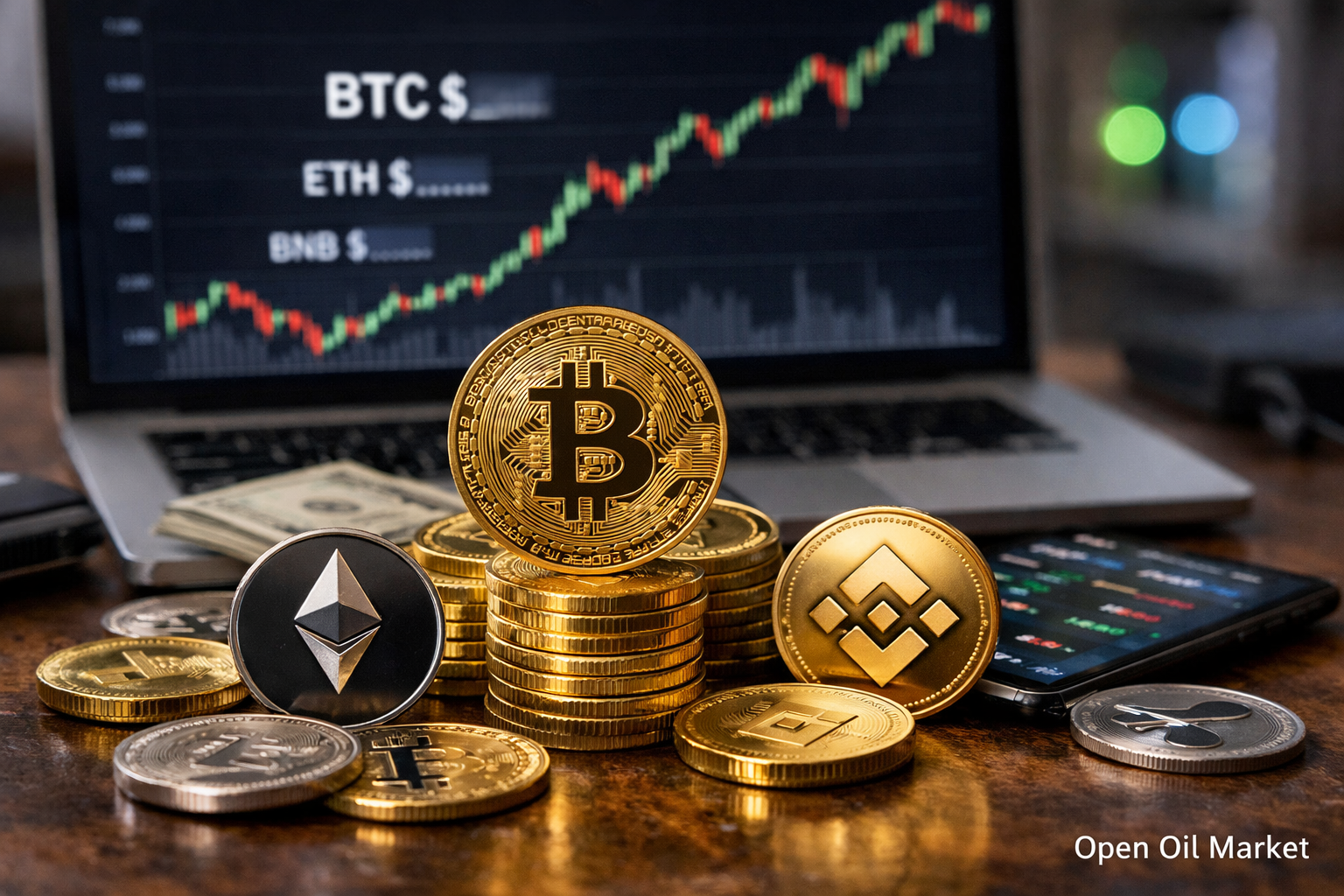
Current Cryptocurrency News as of February 25, 2026: Outflows from Bitcoin ETFs, Increasing Role of Derivatives, Ethereum Foundation Staking, and Dynamics of Top 10 Cryptocurrencies. A Global Overview of the Digital Asset Market for Investors.
In a "risk-off" environment, the cryptocurrency market behaves like a high-beta segment: correlations within the sector are rising, and even strong fundamental stories are temporarily overshadowed by the mechanics of liquidations and rebalancing activities. An additional indicator is the sentiment metrics, which are currently in the "extreme fear" zone, reflecting the tendency of most participants to prioritize capital protection over aggressively buying the dip. For investors, this environment rewards discipline, liquidity monitoring, and a scenario-based approach.
- Resilience Signal: A slowdown in liquidations and a tightening of intraday volatility typically precede recovery.
- Risk Signal: An increase in sell-side supply amidst weak demand makes recoveries brief and "technical."
- Practice: Maintain a portion of your portfolio in stablecoins and avoid excessive leverage until flows normalize.
Bitcoin: ETF Flows, Institutional Demand, and "Price" Formed by Derivatives
Bitcoin remains the central axis of the digital asset market, providing clear insights into how institutional investors manage risk. Spot Bitcoin ETFs are continuing to exhibit a prolonged negative sentiment regarding flows: we are witnessing a multi-week trend of outflows and a noticeable reduction in exposure through the largest funds. This does not negate the long-term thesis of BTC's "legitimization," but it does support a cautious outlook in the short term, emphasizing the importance of monitoring daily flows, volatility, and the "quality" of movement near key levels.
Concurrently, a structural shift is intensifying: volatility management and price "opening" are increasingly shifting towards regulated derivatives. For global investors, this mitigates regulatory and operational access risks but makes "derivative mechanics" an essential part of analysis: futures curves, margin requirements, and position concentration can accelerate movements both downward and upward.
- What to watch for investors: The pace of ETF outflows, liquidity condition in the spot markets, and changes in open interest structure.
- What to watch for traders: Funding rates and liquidity concentration at round levels, where stop cascades are more likely to occur.
Ethereum: Treasury Staking and New Logic in Capital Management
Ethereum continues to serve as the fundamental infrastructure for DeFi and tokenization, with key news concerning ETH increasingly tied to network economics and capital management rather than mere "hype." One of the most discussed topics is the initiation of staking a portion of treasury reserves by one of the key organizations within the ecosystem: the process began with a deposit of 2,016 ETH and plans to increase this volume to approximately 70,000 ETH, redirecting rewards back into the treasury. For the market, this is a significant signal: a major holder is converting part of an asset from a potential source of sales into a long-term income position.
For investors, this emphasizes two key points. First, yield is becoming the foundational metric for a mature cryptocurrency market—both for protocols and for organizations managing treasuries. Second, the importance of operational risks is growing: the choice of validator infrastructure, reliability of processes, compliance requirements, and transparency of reserve management policies. In such conditions, not only L1 networks but also L2 ecosystems and modular solutions are competing for transactional activity and fees.
Cryptocurrency Regulation and Stablecoins: The Year's Pressure Point
Cryptocurrency regulation in 2026 increasingly influences risk assessment, as it pertains to the fundamental architecture of the market: who controls the "on-ramp" and "off-ramp," who is responsible for the transparency of stablecoin reserves, and where the boundaries lie between banks and crypto platforms. In the world's largest economy, negotiations on a framework bill concerning market structure remain tense: a contentious point is the yield on stablecoins, which the banking sector views as a threat to its deposit base, while crypto platforms consider it a key element of their competitive offering.
In several major jurisdictions, a unified regulatory regime for crypto services is progressing from "the letter of the law" to a stage of mass licensing and oversight. For international investors, this means stricter requirements for service providers, more formalized disclosure rules, and heightened attention to market exit procedures for companies that do not plan to comply with new standards.
Security: Bridges and Operational Failures Back in Focus
Even in the "mature" digital asset market, security remains a systematic factor, especially in cross-chain infrastructure. Incidents involving individual bridges and the "white-hat" reward practices as a means of recovering funds and mitigating reputational damage are hot topics in the market. Simultaneously, the sector is frequently reminded that major incidents in DeFi often stem not from smart contract vulnerabilities, but from human factors—device compromises, key leaks, and weak access procedures. For investors, this leads to a straightforward conclusion: technological risk in cryptocurrencies is not an abstraction but a part of the daily cost of capital.
- Reducing Risk: Limit the share of high-risk DeFi positions and avoid bridges with a short operational history.
- Verification: Assess not only code audits but also the operational maturity of the team (keys, processes, access control).
What to Watch Tomorrow: Macro Catalysts and "Quality" of Movement
In the coming days, the market will be more affected by external catalysts rather than specific blockchain news that determine investors' willingness to assume risk. On Wednesday, the annual economic policy review from the world's largest economy will be released by an international financial institution, accompanied by press commentary on its outcomes. Such evaluations can impact currencies and yields, which in turn affects the entire spectrum of risk assets, including cryptocurrencies. Additionally, regional inflation releases and communication from monetary authorities will remain in focus, as expectations regarding interest rates typically set the "temperature" for risk assets.
For investors, the key task is to assess the "quality" of movement: a rebound on declining volume and without improvements in the structure of derivatives often proves to be unstable. A more constructive signal occurs when ETF outflows slow, funding stabilizes, and the pace of forced sales decreases.
Top Ten Most Popular Cryptocurrencies for Investors
Below is a list of the most popular and liquid assets that form the core of the global cryptocurrency market (based on capitalization and turnover). This list is convenient for daily monitoring and building a risk framework for portfolios: stablecoins provide liquidity, while the largest L1 assets represent a bet on the development of the blockchain economy.
- Bitcoin (BTC) — the key market indicator and the primary asset attracting institutional attention.
- Ethereum (ETH) — the infrastructure for smart contracts, DeFi, and tokenization.
- Tether (USDT) — the fundamental stablecoin for trading liquidity.
- XRP (XRP) — a highly liquid asset with a pronounced "payments" history.
- BNB (BNB) — the ecosystem token of a large application infrastructure.
- USD Coin (USDC) — a stablecoin that is crucial for corporate cases and DeFi.
- Solana (SOL) — an L1 focused on performance and consumer applications.
- TRON (TRX) — a network with a significant share of stablecoin transactions.
- Dogecoin (DOGE) — a highly volatile asset sensitive to market sentiment.
- Bitcoin Cash (BCH) — a payment narrative within the Bitcoin ecosystem.